Connect appliances to the station
Choose what has to keep running during a blackout — we will work out how long the station lasts and whether it can carry the load. Choose appliances — we will work out how long the station lasts.
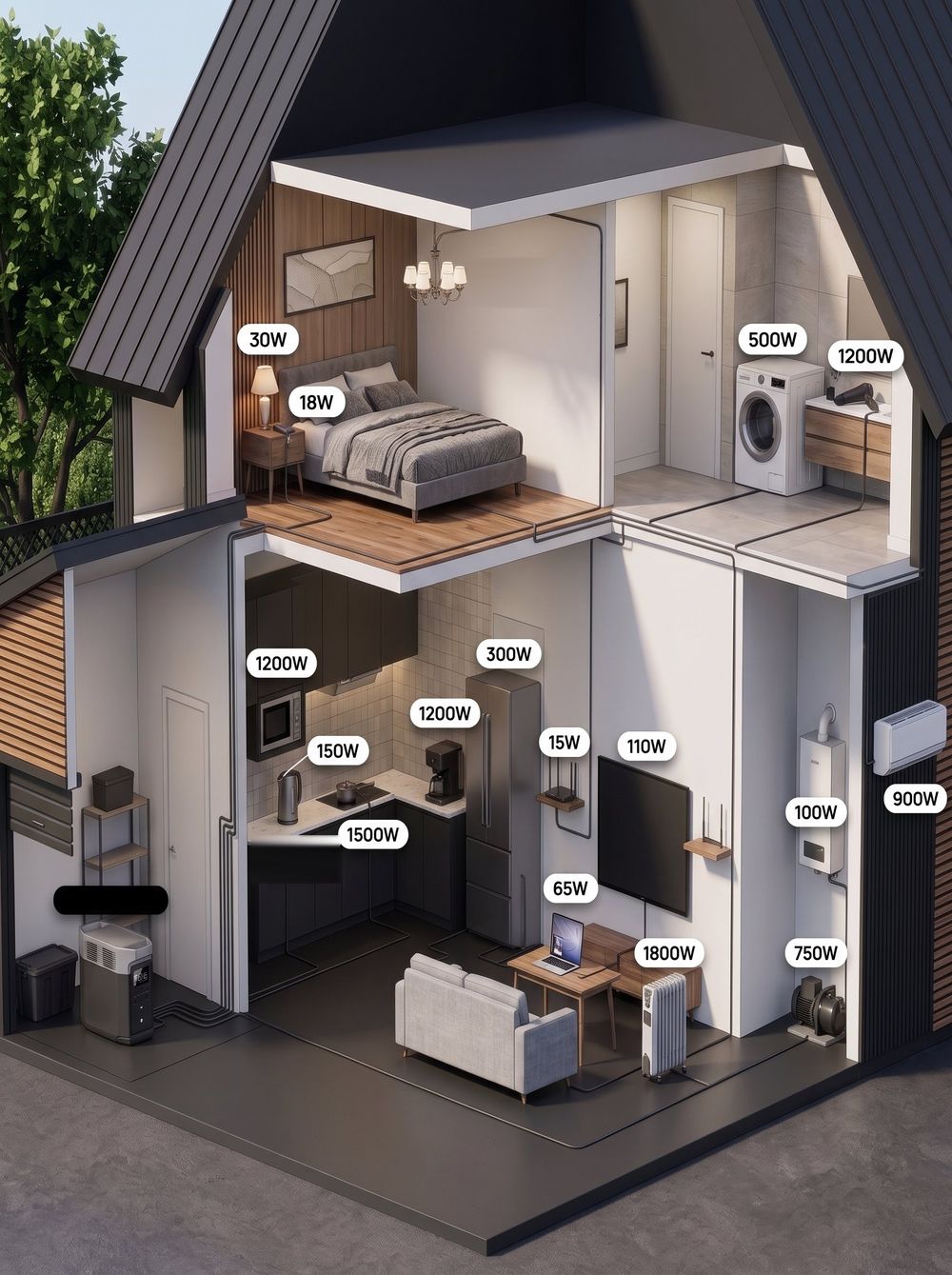
An estimate: 85% of the station capacity (inverter efficiency) divided by the total power of the appliances; charge is shown after a 4-hour blackout. Real figures depend on how the appliances are used.
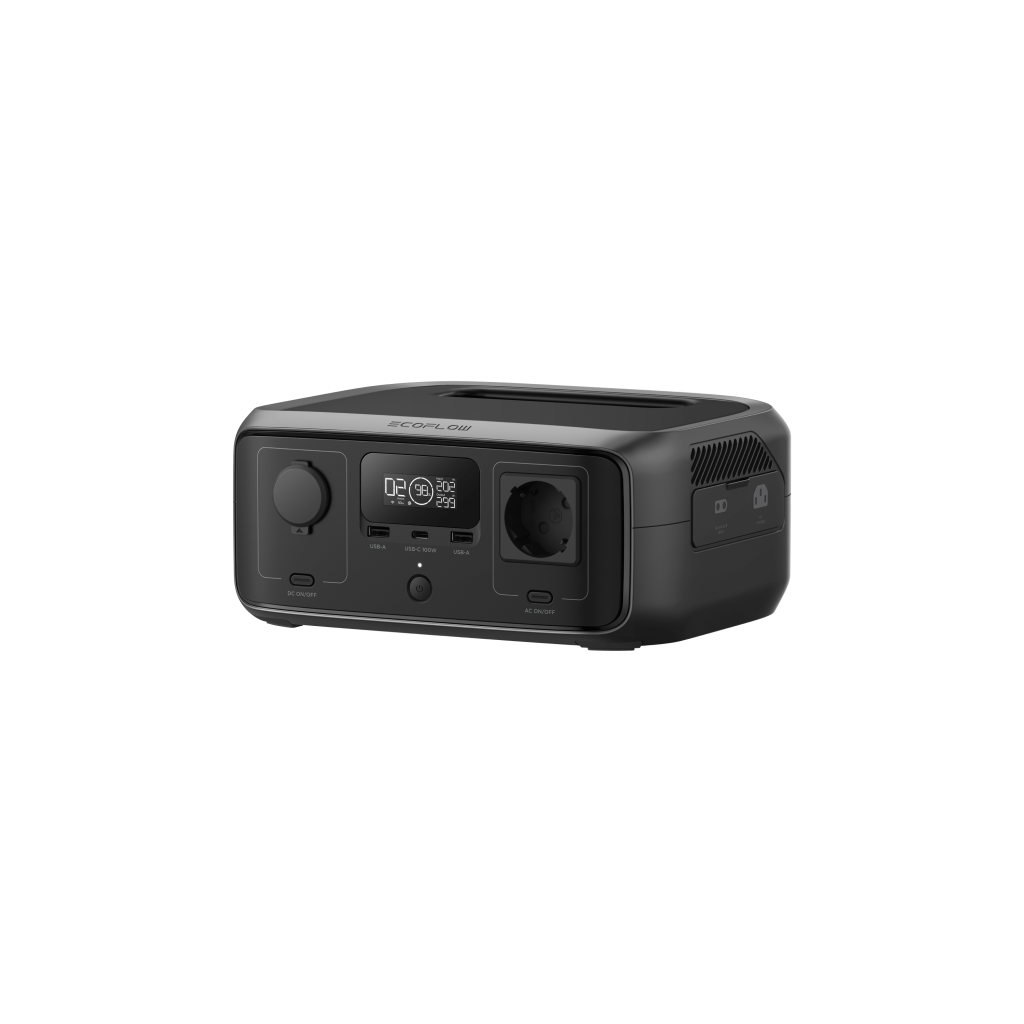
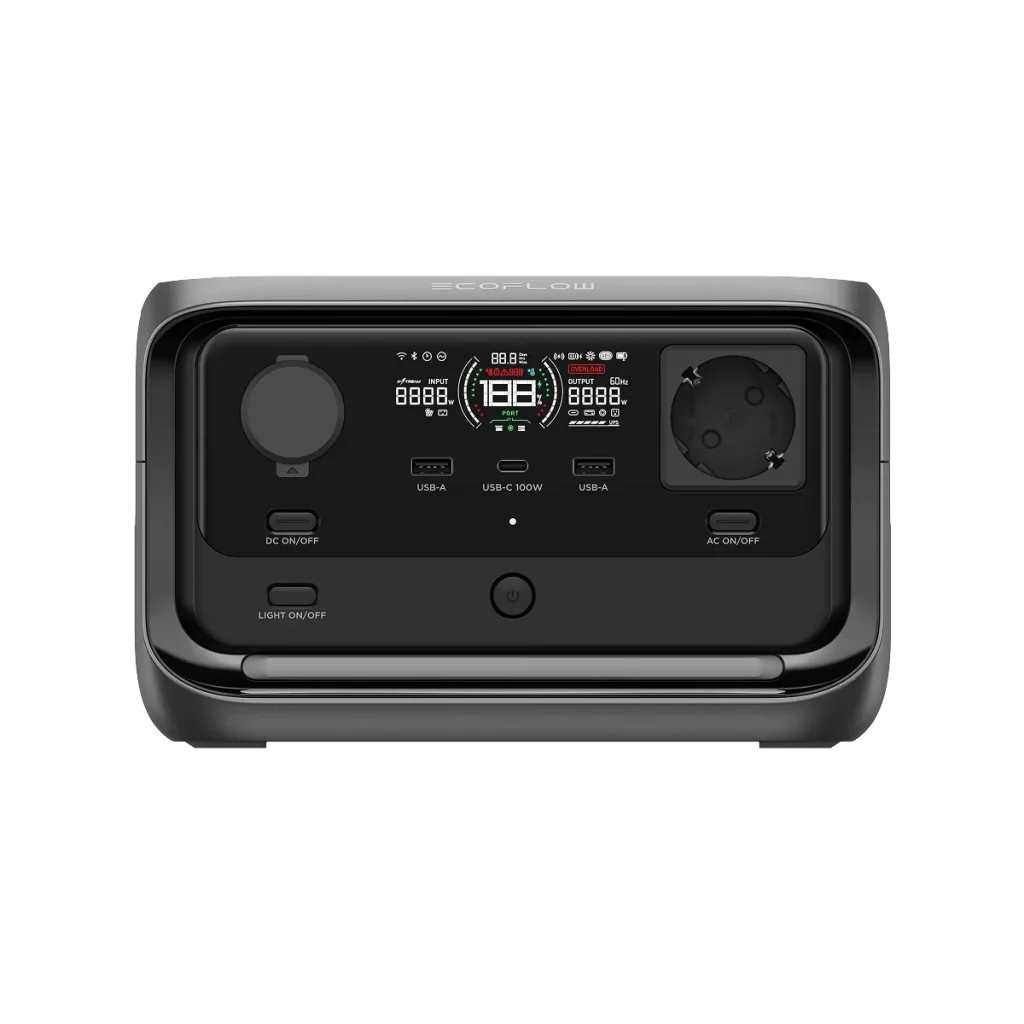
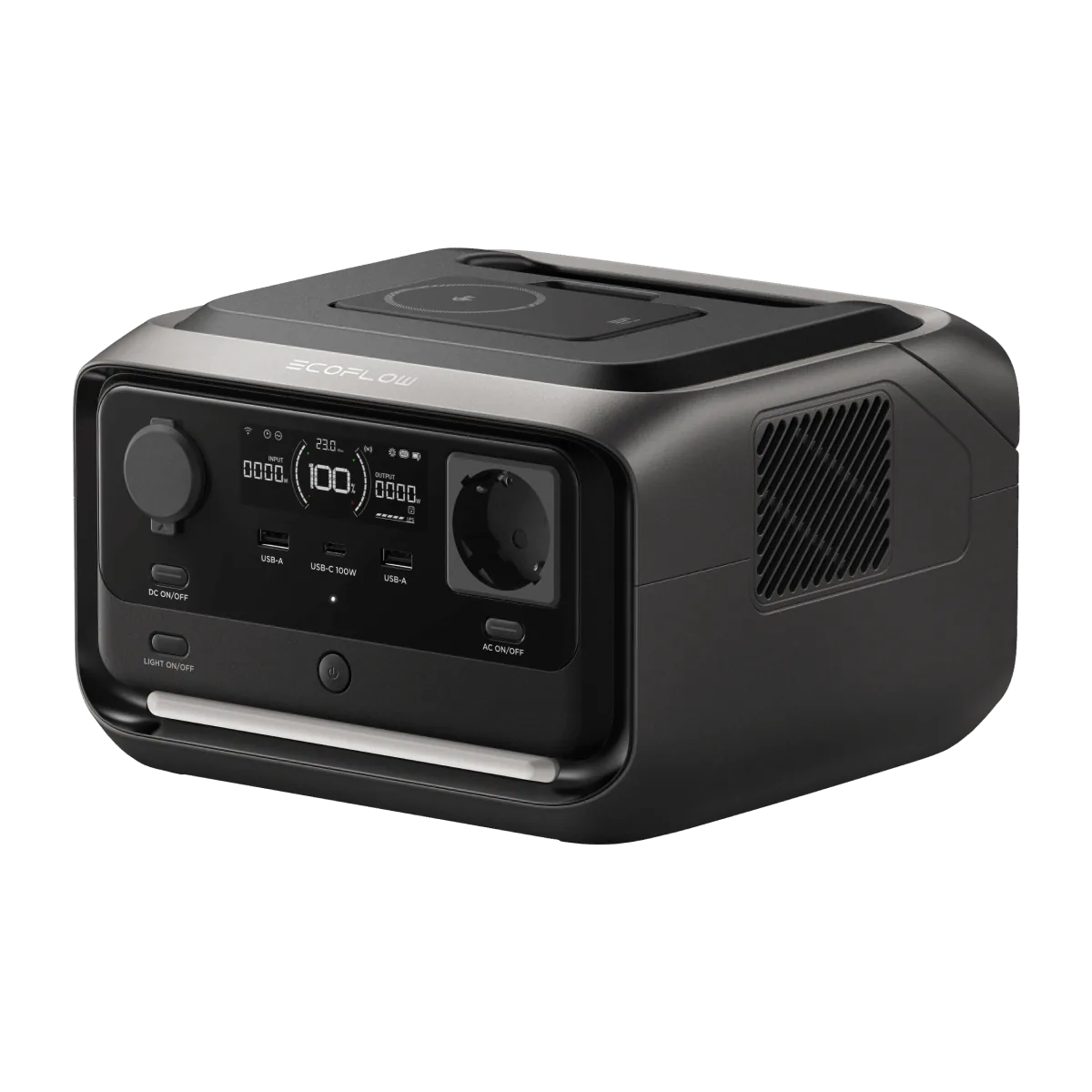
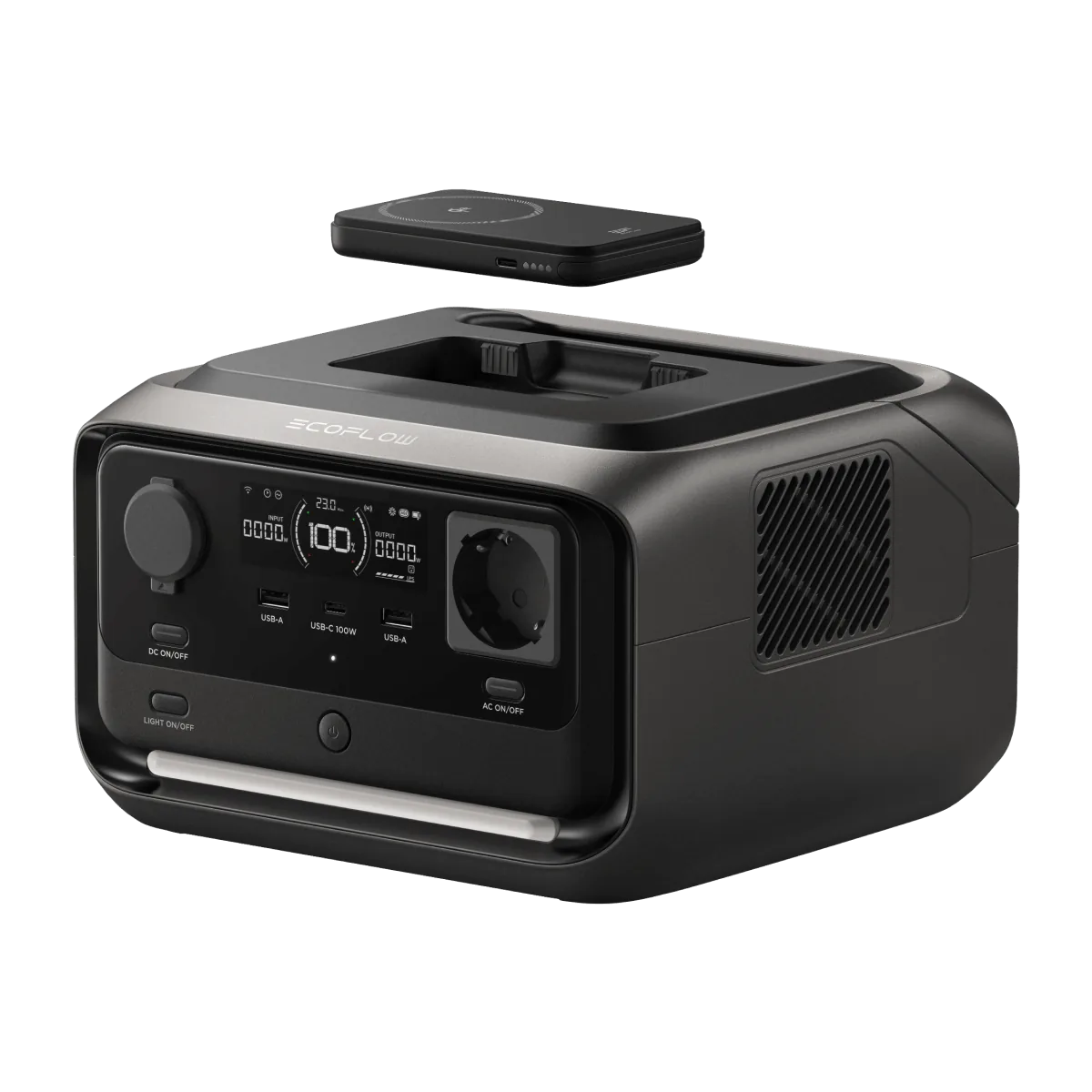
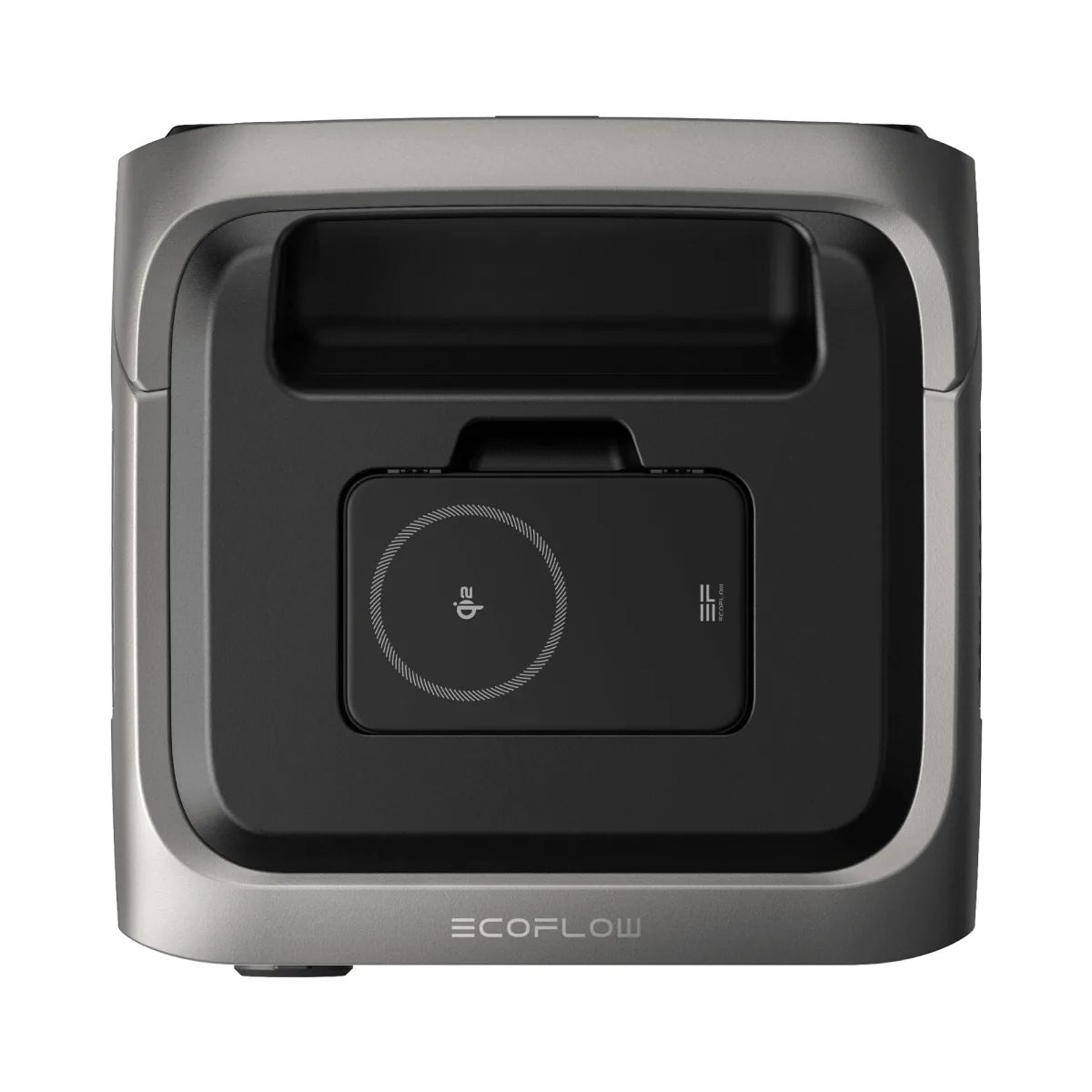
The RIVER 3 Plus Wireless is a compact 286 Wh station with a removable magnetic 5000 mAh EcoFlow RAPID power bank built into the lid. While the power bank sits in its niche it charges from the station and works as a wireless charging pad for a phone. When you need to leave the house, you take it off and carry it with you. For those who have decided to buy an EcoFlow RIVER 3 Plus Wireless, it is worth knowing right away: everything else — capacity, inverter, outlets, charging speed — is the same as the regular RIVER 3 Plus.
During outages the station keeps a router, laptop, lamps and small appliances running, and the phone lies on top and charges without a cable. From a socket it fills in about an hour, so the short windows of mains power on the schedule are enough to be ready again.

Wireless and the regular RIVER 3 Plus: what is the difference
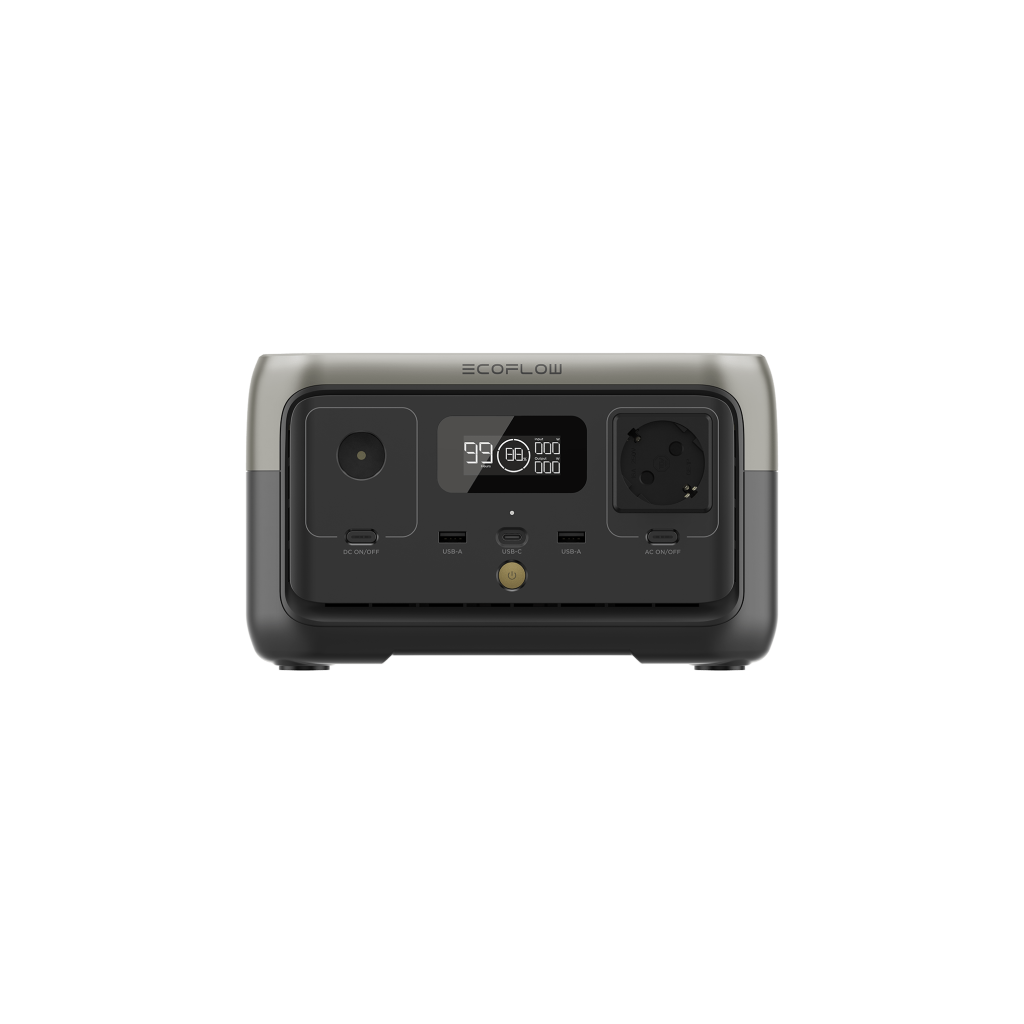
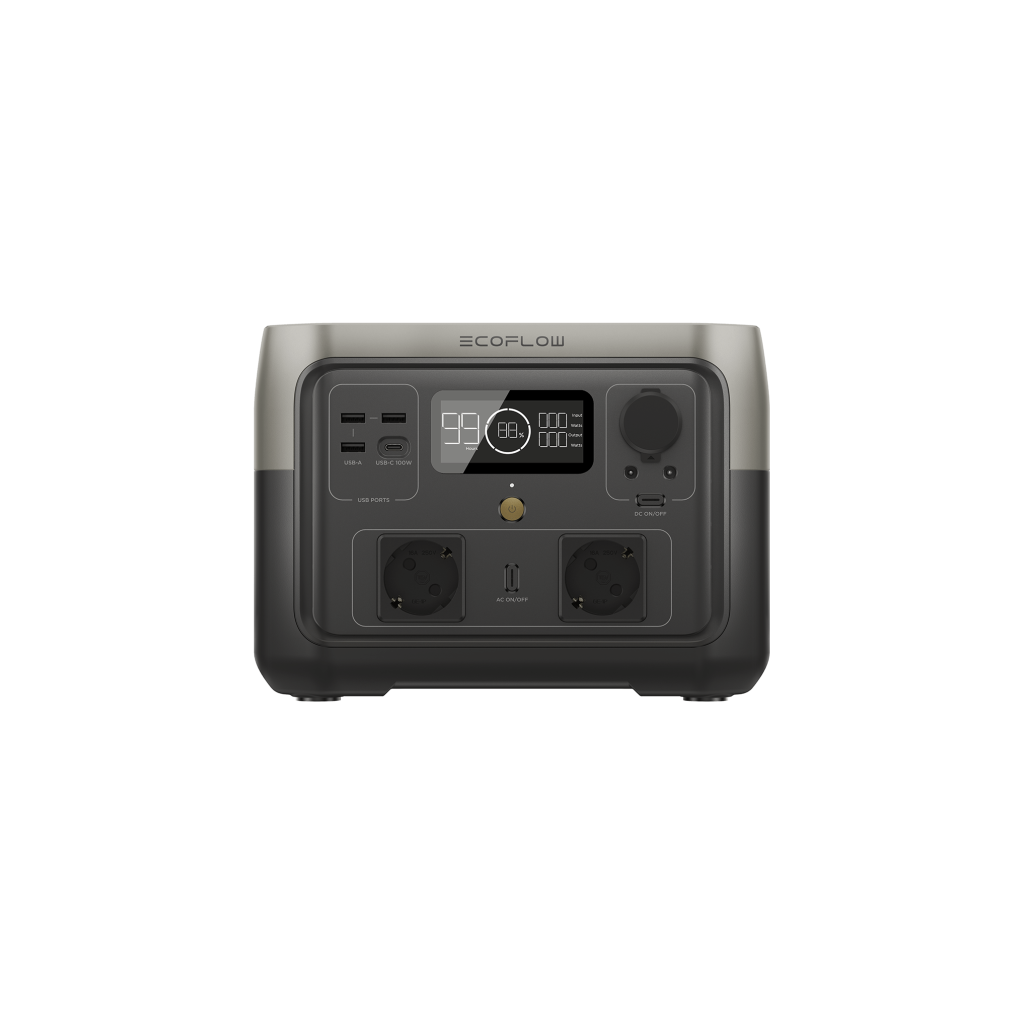
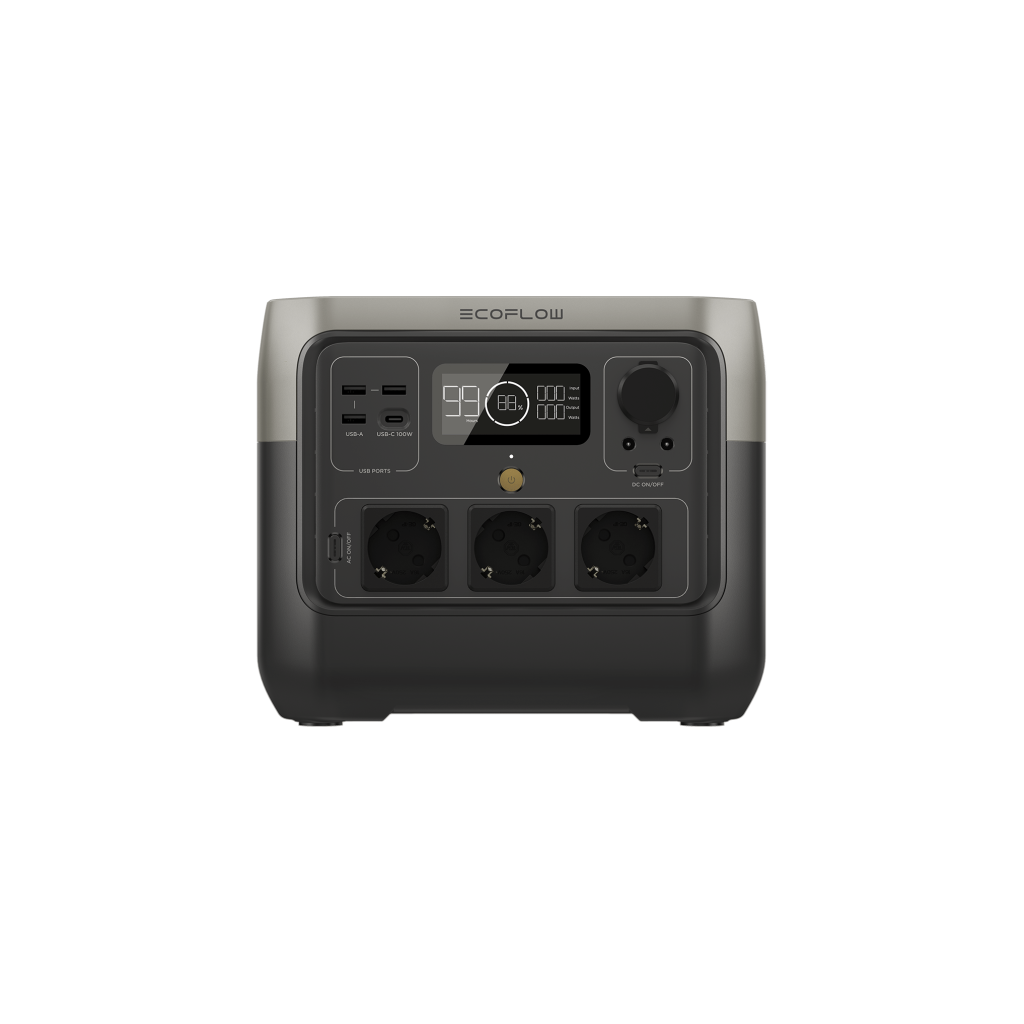
According to EcoFlow’s official data, both stations have 286 Wh of LiFePO4, 600 W rated power, three 230 V outlets, two 12 W USB-A, a 100 W USB-C and a 126 W car socket. The difference is concentrated in the top part of the case. Below is only what EcoFlow’s page and the model’s manual confirm.
- the lid holds a removable magnetic RAPID power bank of 5000 mAh with 15 W Qi2 charging and its own 30 W cable;
- a niche on the lid with pogo pin contacts: the station itself tops up the power bank at 12 V / 2 A when it is switched on;
- a slightly greater height: 234 × 232 × 156 mm versus 146 mm for the regular Plus according to the EU page;
- weight per the manual is about 5.2 kg versus 4.7 kg for the regular version;
- a different model code in the manual (EF-RV-H04-1), a 5-year warranty on the station and 2 years on the power bank.
The set of ports, UPS mode, solar input and battery expansion are the same. If you do not need the power bank and wireless charging, the EcoFlow RIVER 3 Plus handles the same tasks.
Why people choose the RIVER 3 Plus Wireless
The phone charges right on the lid
It is enough to put a smartphone with wireless charging or earbuds on the power bank in the niche. In EcoFlow’s test, 15 W Qi2 charges an iPhone 15 Pro to 50% in 42 minutes, while a standard 7.5 W Qi pad takes 82 minutes. A separate power brick on the bedside table becomes unnecessary.

A power bank that is always charged
The RAPID inserts into the lid and stays there even when the station is carried. You take it off in the morning and it is full, because it charged from the station all night. The magnetic mount, built-in stand and 30 W USB-C cable let you charge a phone on the move; according to EcoFlow, an iPhone 15 Pro Max reaches 50% through the cable in 25 minutes.
600 W inverter, heaters up to 1200 W
The inverter delivers 600 W rated, and X-Boost mode lets you switch on heating appliances up to 1200 W at reduced power. A coffee maker, a kettle up to 1200 W in X-Boost mode, a blender or a soldering iron are within the station’s ability.
UPS with switching up to 10 ms
A router, PC or NAS are powered through the station all the time: as soon as the mains disappears, the battery takes over, and it takes no more than 10 ms. At the back there is a USB-B port, and a USB-B to USB-A cable for connecting to a PC is in the box, so the computer receives the outage signal.
Quiet and with its own light
The noise level is stated at up to 30 dB, so the station can be left on in a bedroom. At the front there is a built-in light strip with warm light and three modes; it helps when the lights go out in the evening.
What equipment it runs and for how long
EcoFlow gives results of its own lab tests for this model. They are guides: the real time depends on the device, the temperature and the battery charge.
| Device | Power | Run time |
|---|---|---|
| Travel router | 10 W | 20.4 h |
| Drone (charging) | 40 W | 5.8 h |
| Car fridge | 60 W | 3.9 h |
| Game console | 100 W | 2.2 h |
| Fridge | 120 W | 1.9 h |
| Desktop PC | 600 W | 20 min |
After inverter losses about 240 Wh remains of the 286 Wh; divide this number by the consumption of your device. For example, an optical terminal together with a 20 W router will give almost half a day of internet, and a 60 W laptop will run for about 4 hours. This is an estimate, not a guaranteed result.
For light loads EcoFlow states X-GaN Power technology, which doubles the run time of low-power devices, such as a 3 W lamp or a router. For a boiler, heater or washing machine 286 Wh is too little: such appliances either will not start or will drain the station in a few minutes.
A typical evening without power
Suppose the outage lasts 4 hours. A router with an optical terminal (20 W), an LED lamp (10 W) and a laptop (50 W) together take about 80 W, so over 4 hours roughly 320 Wh is needed. That is more than the 240 Wh of usable reserve, so the laptop should be connected for 2–2.5 hours, while the internet and lights are left to the end. Meanwhile the phone charges from the power bank on the lid and takes almost nothing from the station’s reserve. The calculation is approximate.
How it works
From a socket the station charges through the supplied cable: an input of up to 360 W with X-Stream technology gives 0–100% in about an hour. From a petrol generator it charges just as fast. From a 220 W solar panel (11–55 V, XT60i connector) a full charge takes about 1.5 hours in ideal conditions, and from a car socket about 3.3 hours. The solar cable and panel are sold separately.
An hour and a half from the sun is the result for a panel that really delivers 220 W. In practice generation depends on the angle, clouds and season, so it is sensible to allow 3–4 hours of a clear day and noticeably more in winter. The main limit is voltage: a panel or a series connection of panels must not exceed 55 V.
The power bank charges from the station automatically when it is switched on and the power bank is not full. A detached RAPID is topped up from any 30 W USB-C charger: according to EcoFlow, to 70% in under 33 minutes.
The capacity can be increased with an extra battery that goes under the station and connects through contacts without cables. The RIVER 3 Plus EB300 of 286 Wh or EB600 of 572 Wh fit, the maximum being 858 Wh. The battery has its own 140 W USB-C and can work separately from the station.
Through the EcoFlow app over Wi-Fi or Bluetooth you can see the charge and consumption, change the charging speed and set a schedule and charge limits. The LiFePO4 battery is rated for 3000 cycles, after which at least 80% of the capacity remains; the battery pack is stated as IP54.
What to compare the RIVER 3 Plus Wireless with
| Plus Wireless | RIVER 3 Plus | RIVER 3 | |
|---|---|---|---|
| Capacity | 286 Wh | 286 Wh | 245 Wh |
| Power | 600 W | 600 W | 300 W |
| Qi2 power bank | yes, 5000 mAh | no | no |
| Expansion | up to 858 Wh | up to 858 Wh | no |
The EcoFlow RIVER 3 Plus is the same station without the niche and power bank. A logical choice if you do not need wireless charging or already have a power bank.
The EcoFlow RIVER 3 is lighter and more compact, but has 300 W and one 230 V outlet, and a battery cannot be added to it. It is enough for hikes with phones and a lantern.
If you need more energy right away, look at the EcoFlow RIVER 3 Max Plus Wireless: the same Wireless with an EB600 battery, 858 Wh together. Without the power bank such a reserve is given by the RIVER 3 Max Plus.
Who the RIVER 3 Plus Wireless suits and who it does not
It suits you if:
- you charge your phone wirelessly every day and want a full power bank at hand;
- you need a quiet reserve for a router, laptop or a PC with an outage signal;
- the station is carried often: to a car, a country house, a tent;
- you plan to start with one station and buy a battery later.
Better another option if:
- you do not need the power bank — the regular RIVER 3 Plus gives the same specifications;
- you need to run a fridge or boiler all night — you will need 858 Wh or more, or a DELTA series station;
- your equipment constantly consumes over 600 W.
FAQ
Can the station be used without the power bank?
Yes. The power bank only occupies the niche on the lid and does not affect the outlets and ports. A detached RAPID works as an ordinary power bank, while the station keeps powering equipment as usual.
Which phones charge wirelessly?
Those that support Qi or Qi2. EcoFlow shows iPhones and AirPods in its official materials; devices with Qi2 get the maximum 15 W, others as much as they support.
Does the power bank charge when the station is off?
No. According to the manual, the station tops up the power bank through the pogo pin contacts when it is itself switched on. A detached power bank can be charged from a 30 W USB-C.
Is the RIVER 3 Plus Wireless suitable as a UPS for a computer?
Yes, for a short reserve. Switching takes under 10 ms, and through the USB-B port a computer or NAS receives power data. According to EcoFlow, a 600 W PC runs from the station for about 20 minutes, which is enough to save work and shut down.
How do I use the RAPID power bank separately from the station?
As an ordinary magnetic power bank. It attaches to a phone with a magnetic mount and charges it wirelessly at up to 15 W, has a built-in stand, and for faster charging its own USB-C cable of up to 30 W. When you return, put it in the niche on the lid and the station will top it up itself.
How many batteries can be attached?
One: the RIVER 3 Plus EB300 or EB600. With the EB600 you get 858 Wh, which is the maximum for this station.
Can it be charged from the sun in winter?
Yes, but more slowly. Charging is allowed at a temperature from 0 to 45 °C, discharge from -10 to 45 °C, so in frost it is better to bring the station into the warm.
What is in the box?
According to the EU page, the box contains four items: the station itself (the power bank is already in it), a mains cord, a USB cable for connecting to a PC and documents. The solar cable must be bought separately.
Summary
The RIVER 3 Plus Wireless is a RIVER 3 Plus that also holds a charged power bank and charges a phone without a cable. If this format suits you and you are ready to buy an EcoFlow RIVER 3 Plus Wireless, add it to your cart. Torn between the Wireless, the regular Plus or a bundle with a battery? Write which equipment you plan to power through the contacts page and we will advise.