Connect appliances to the station
Choose what has to keep running during a blackout — we will work out how long the station lasts and whether it can carry the load. Choose appliances — we will work out how long the station lasts.
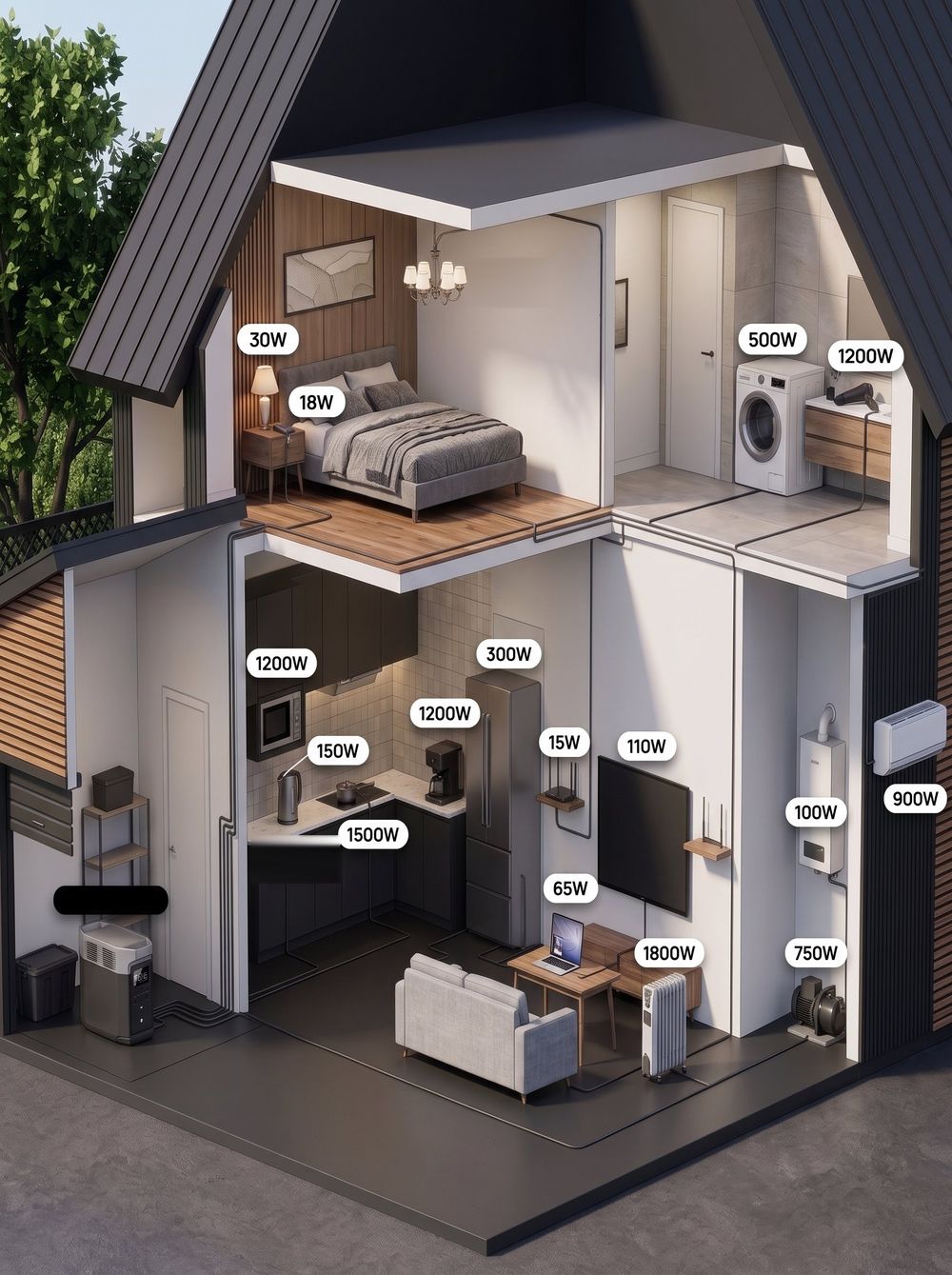
An estimate: 85% of the station capacity (inverter efficiency) divided by the total power of the appliances; charge is shown after a 4-hour blackout. Real figures depend on how the appliances are used.
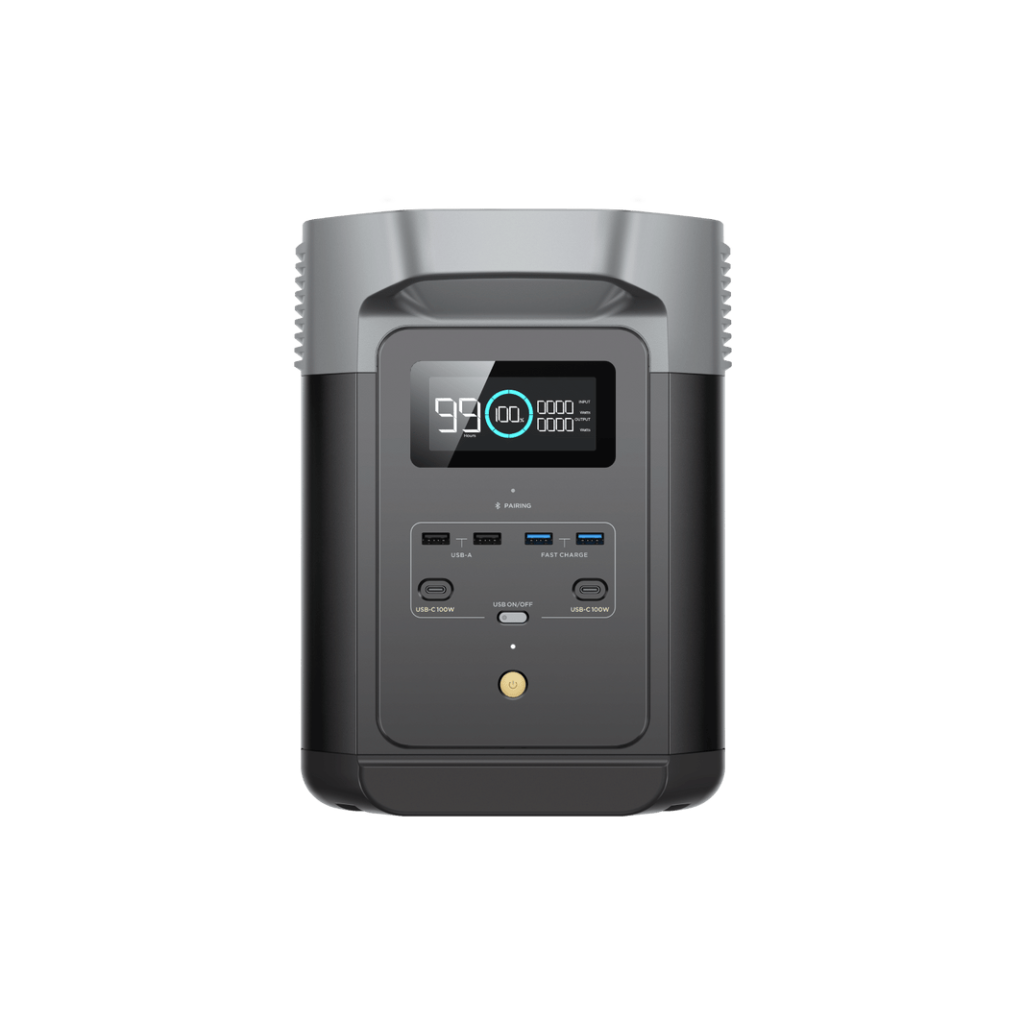
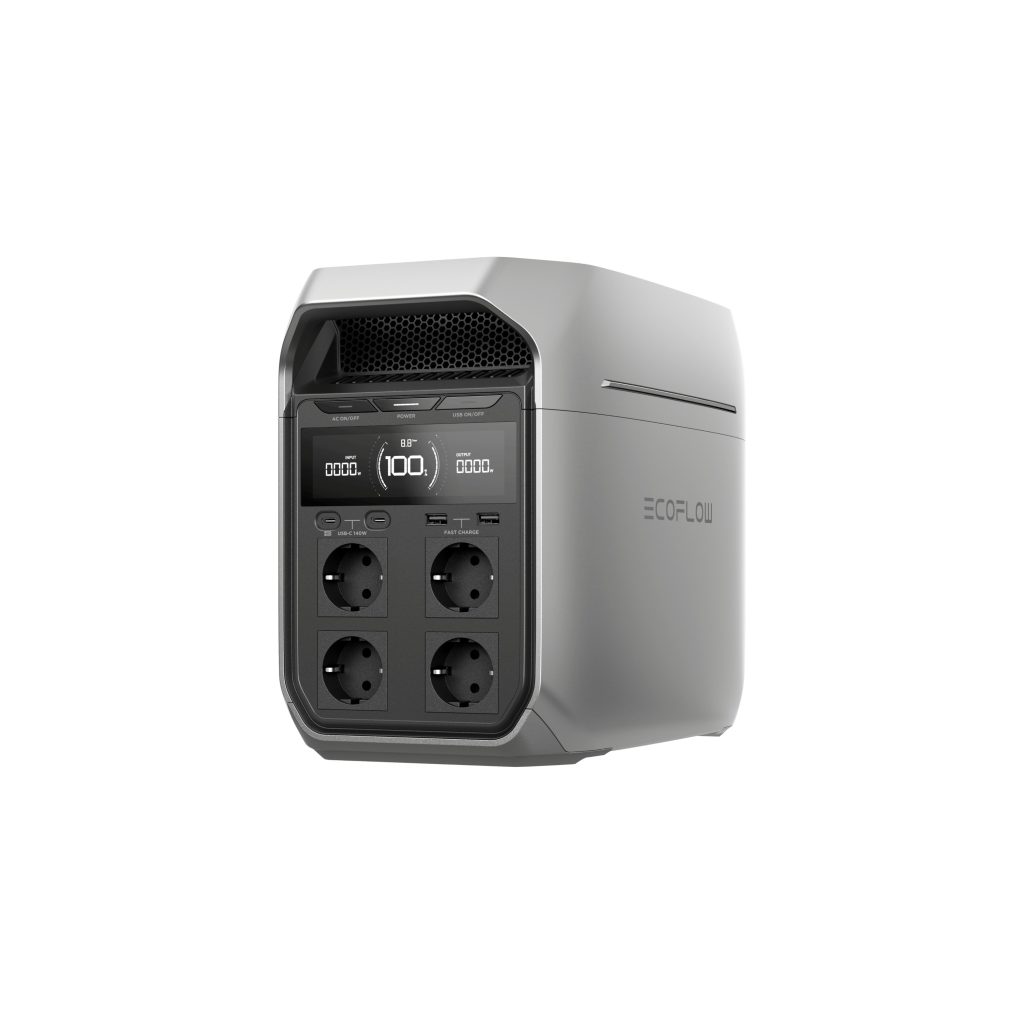
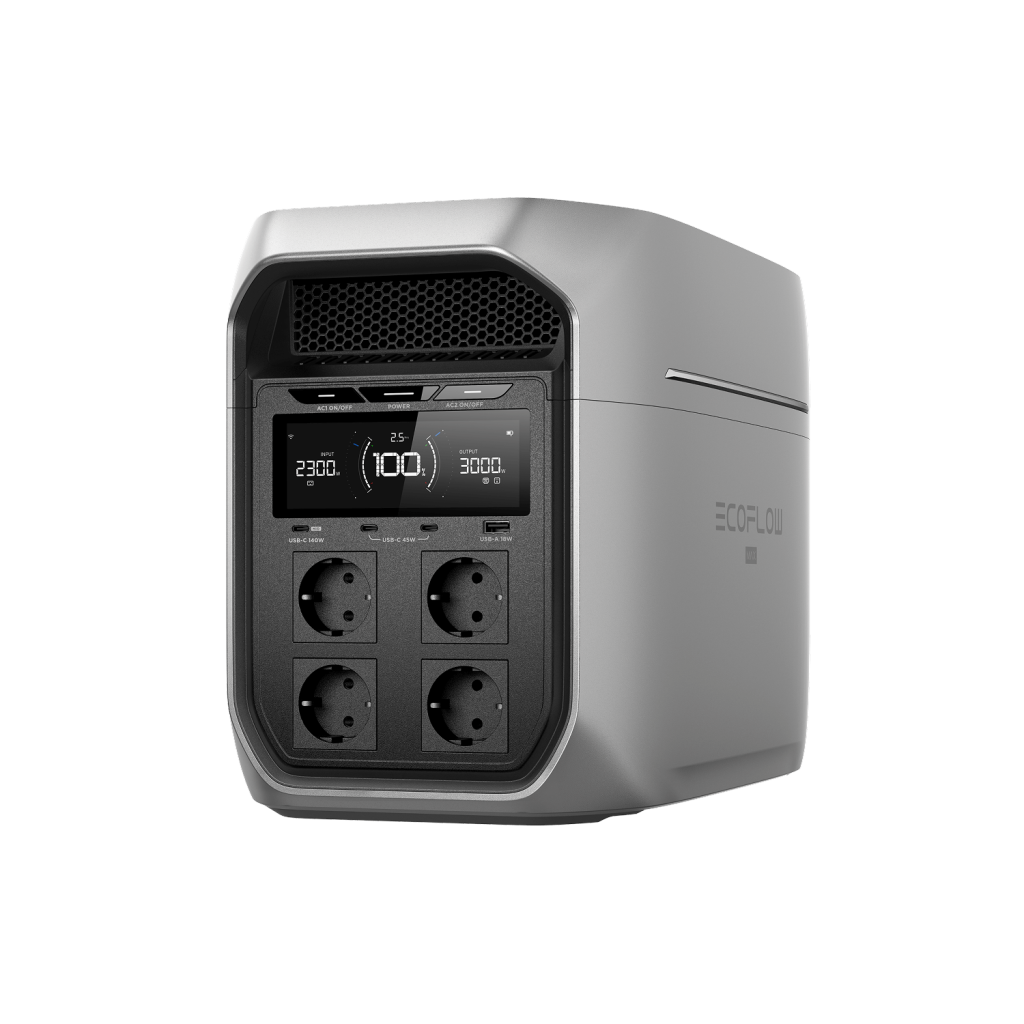
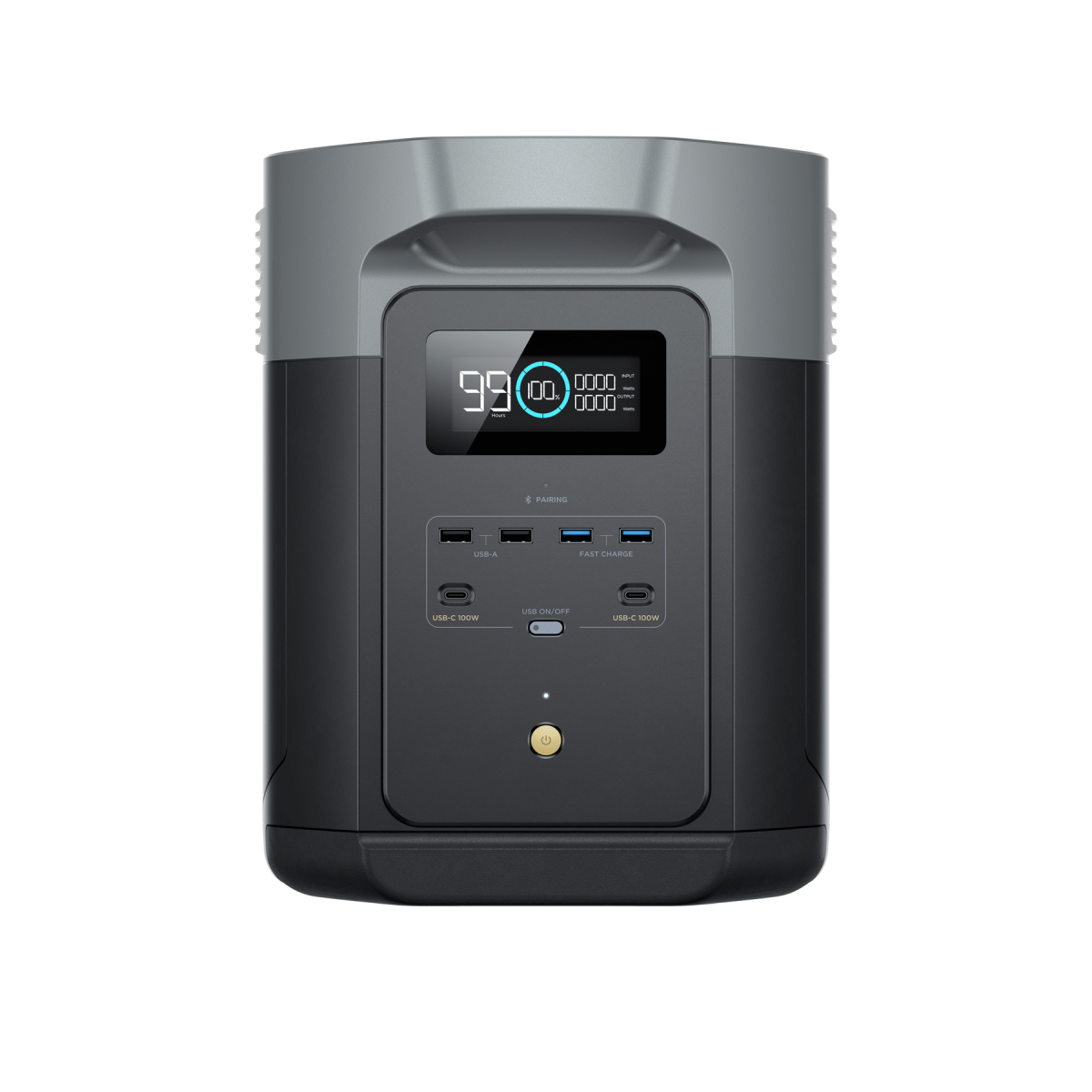
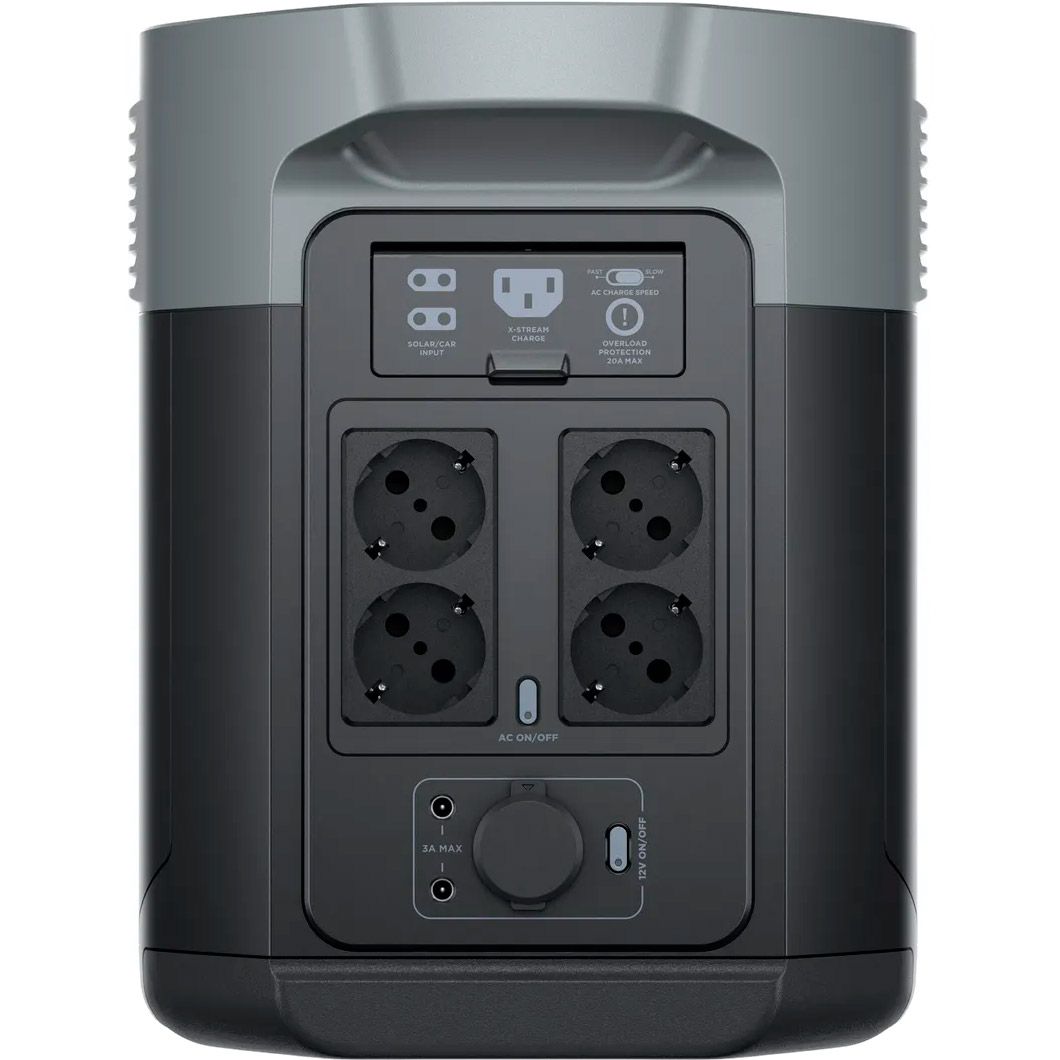
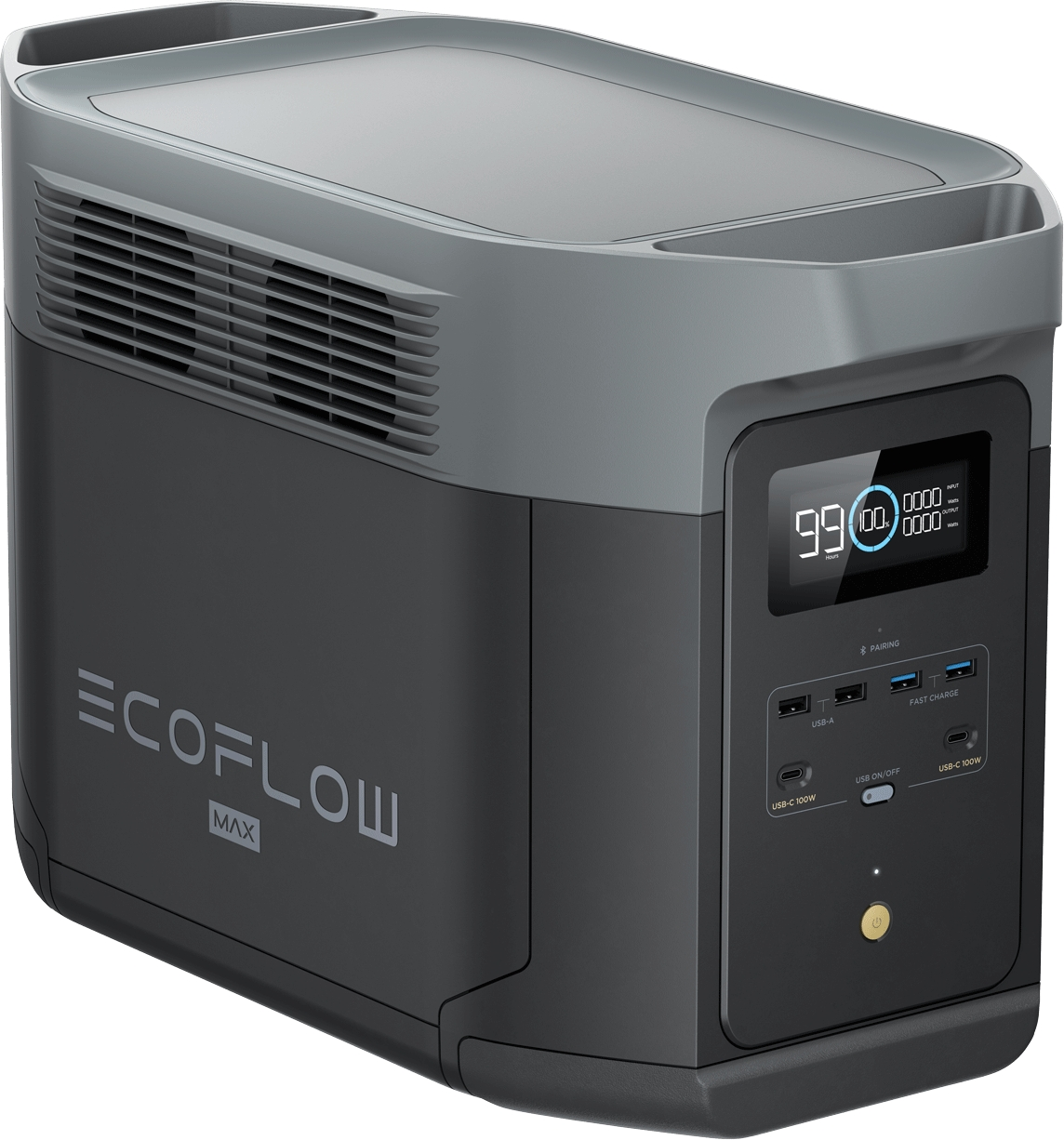
If you are deciding whether to buy an EcoFlow DELTA 2 Max for your house or apartment, everything that will help you calculate is collected below: 2048 Wh capacity, a LiFePO4 battery and 2400 W on four 230 V outlets with a pure sine wave.
During planned and emergency power outages in Ukraine, this capacity is enough to keep a fridge, gas boiler, router and lighting running day and night, and if needed also boil a kettle or heat food in a microwave. Between outages the station charges quickly from the mains and in summer from solar panels.
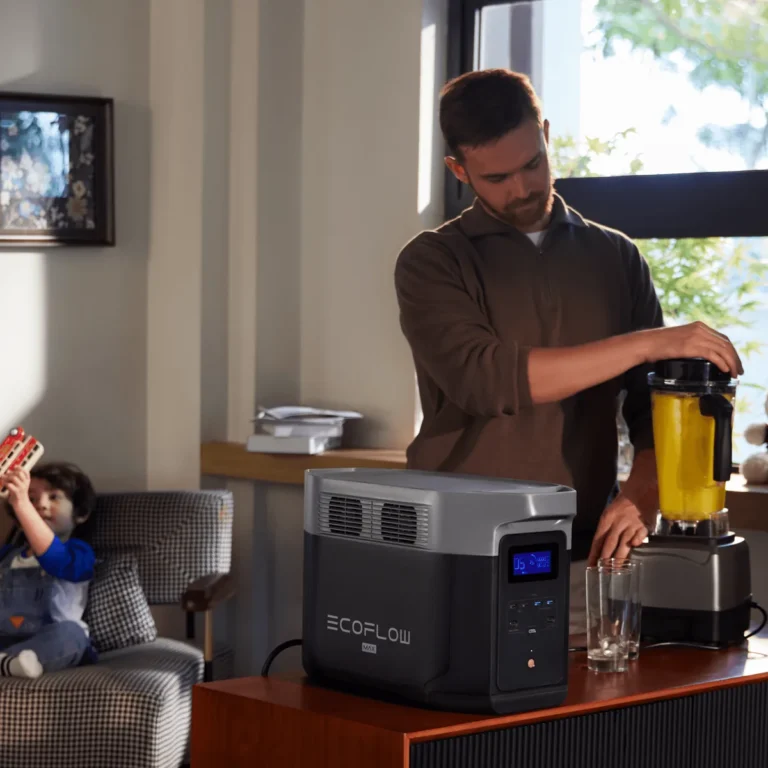
Why DELTA 2 Max
2048 Wh now and up to 6 kWh later
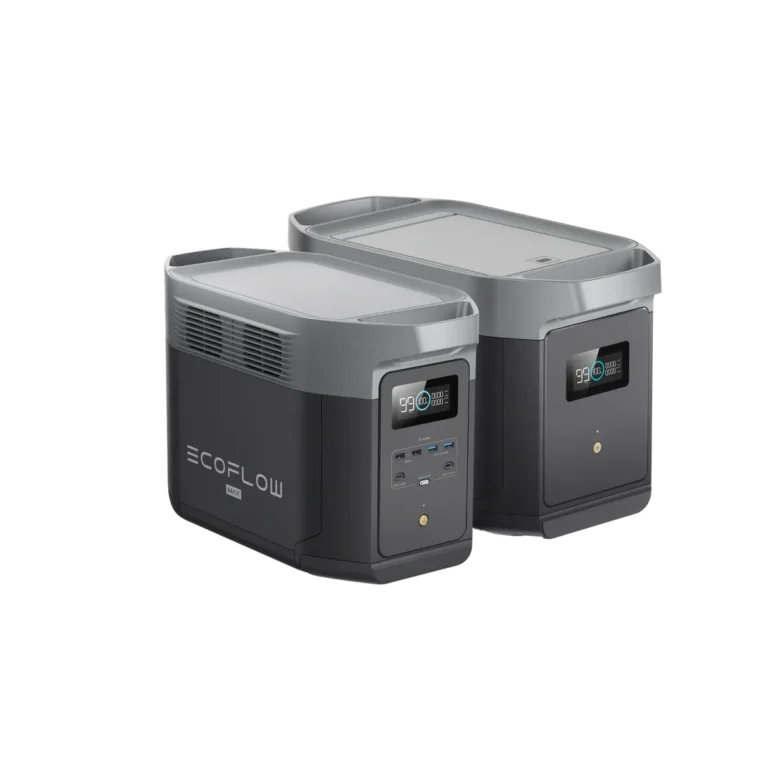
One station covers a typical evening or night outage without saving on every appliance. If you need more later, extra batteries of 2048 Wh each connect to the two ports on the case, and the total capacity grows to 6144 Wh. You do not have to buy everything at once.
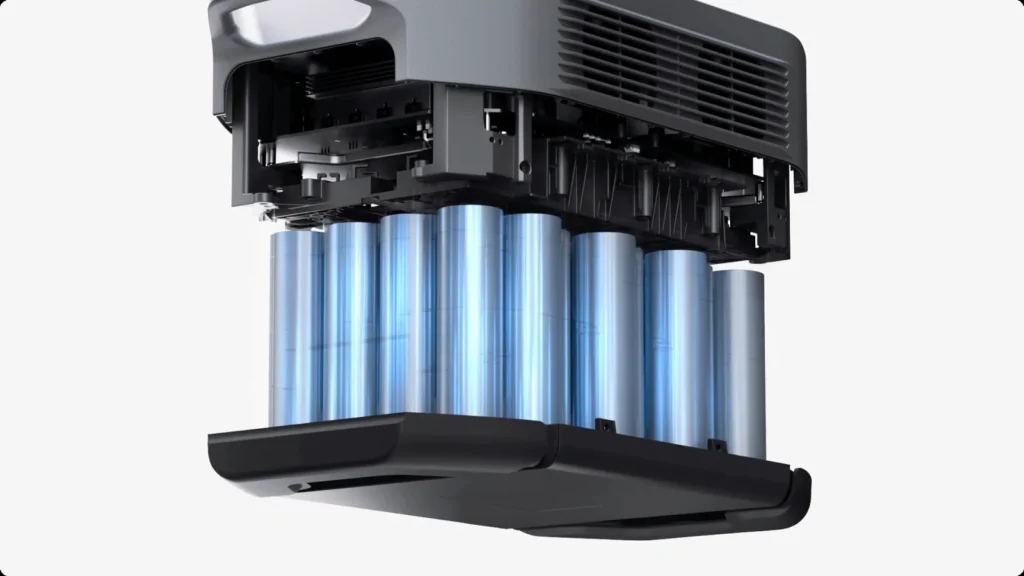
LiFePO4 battery rated for 3000 cycles
Lithium iron phosphate cells keep at least 80% of their capacity after 3000 full cycles. By EcoFlow’s estimate that is about 10 years even with daily use. LiFePO4 chemistry is more stable when heated than NMC, and the built-in BMS monitors voltage, current and temperature.
2400 W at the outlets and X-Boost up to 3100 W
The rated 2400 W is enough for a kettle, microwave, iron or angle grinder. A short peak of up to 4800 W gives a reserve for the starting currents of motors and compressors. X-Boost mode lets you start heating appliances of up to 3100 W (the value for the European version): the station lowers the voltage and the appliance works at reduced power, but does not trip the station on overload.
Fast charging between outages
From an ordinary socket the station reaches 80% in about 53 minutes, and per the manual a full charge takes about 80 minutes. If the mains and solar panels are connected at the same time, 80% can be reached in about 43 minutes. Even a short window of mains power is enough to fill the battery.
Automatic switching in 20 ms
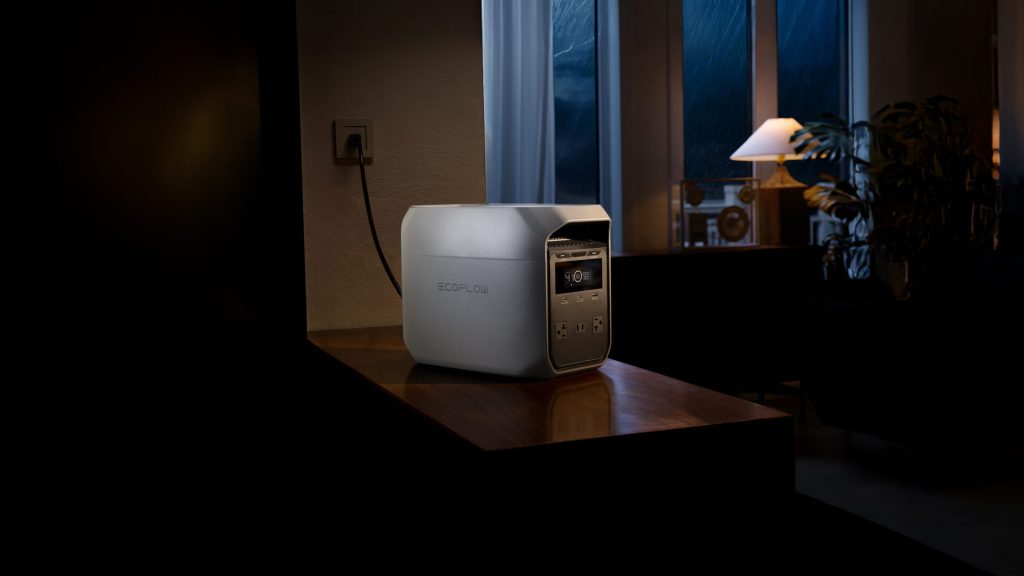
The station can be kept permanently between the socket and the devices. While the mains is on, equipment runs from it, and in an outage DELTA 2 Max switches to the battery within 20 milliseconds. For a boiler, router or TV this is usually enough, while equipment with sensitive power should be checked.
Quiet operation at home
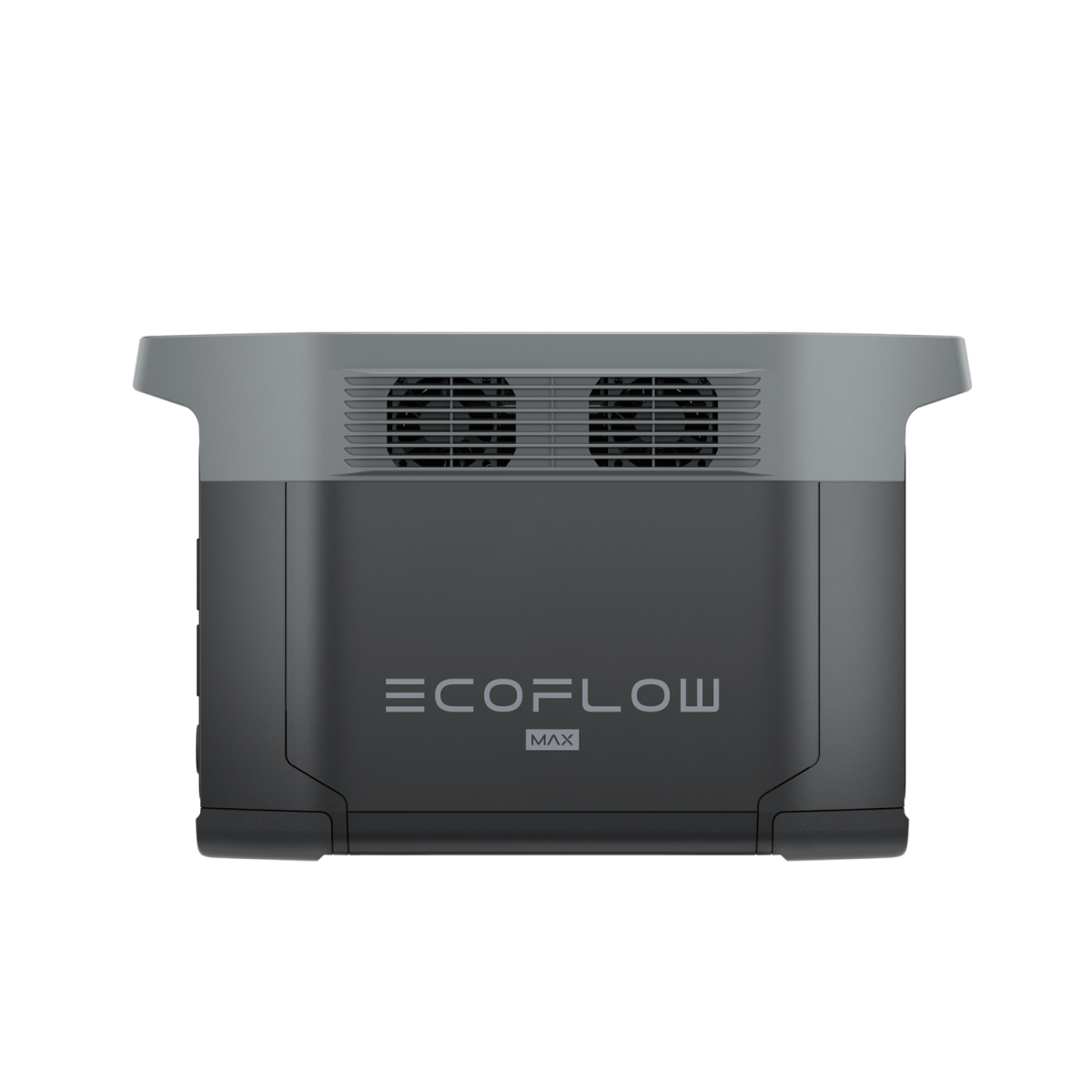
According to the manufacturer, at a load of about 500 W the noise level is roughly 30 dB. We will be honest: during fast charging and at high load the fans run noticeably louder, as owners also write in reviews. For a bedroom it is better to lower the charging speed in the app.
What you can connect and how long it lasts
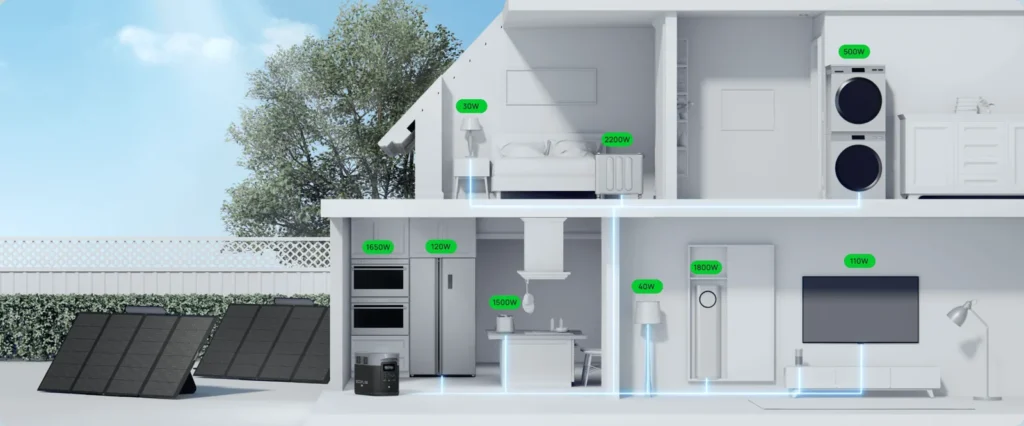
For the estimate we take about 1700 Wh of usable energy at the 230 V outlets: part of the capacity is spent on conversion in the inverter. We divide this figure by the power of the devices and get hours of operation. This is a guide; the real time depends on the specific equipment, the temperature and how often the compressors switch on.
Private house
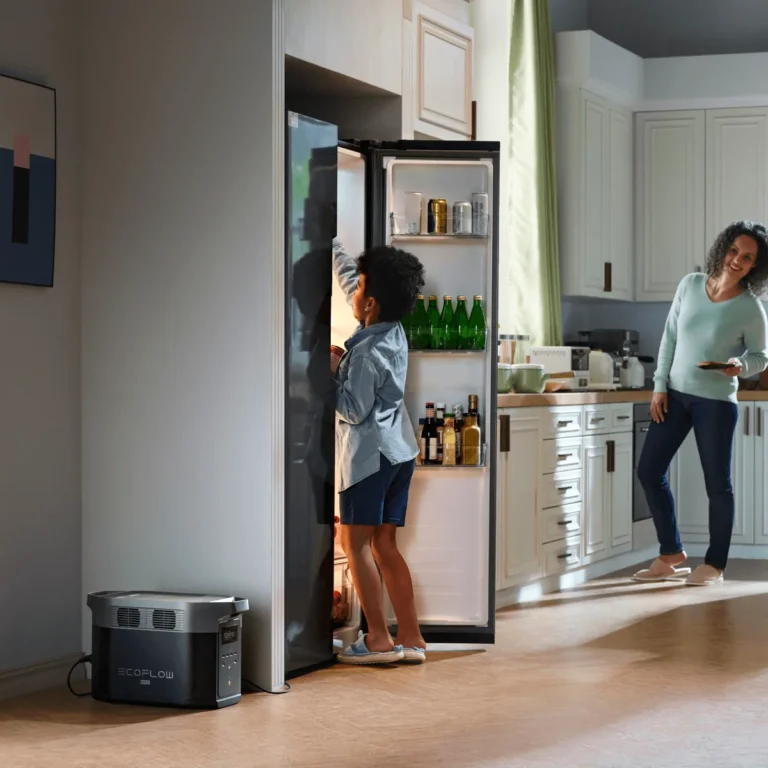
The most common scenario is a gas boiler with a circulation pump, a fridge, a router and lights. Approximate figures for each appliance separately:
- gas boiler with a pump (80–150 W): about 11–20 hours;
- fridge (1–1.5 kWh per day): about a day;
- router and optical terminal (15–25 W): over 60 hours;
- LED lighting in several rooms (30–60 W): 28–55 hours;
- laptop (50–70 W): 24–34 hours.
When everything runs together, the resource is shared between the appliances, so for long outages in a house it is worth planning an extra battery or solar panels from the start.
Apartment
A fridge, router, laptop, TV and lights together consume 200–300 W on average. Such a set lasts about 6–8 hours, and boiling a kettle or heating food a few times shortens this by roughly an hour.
Country house
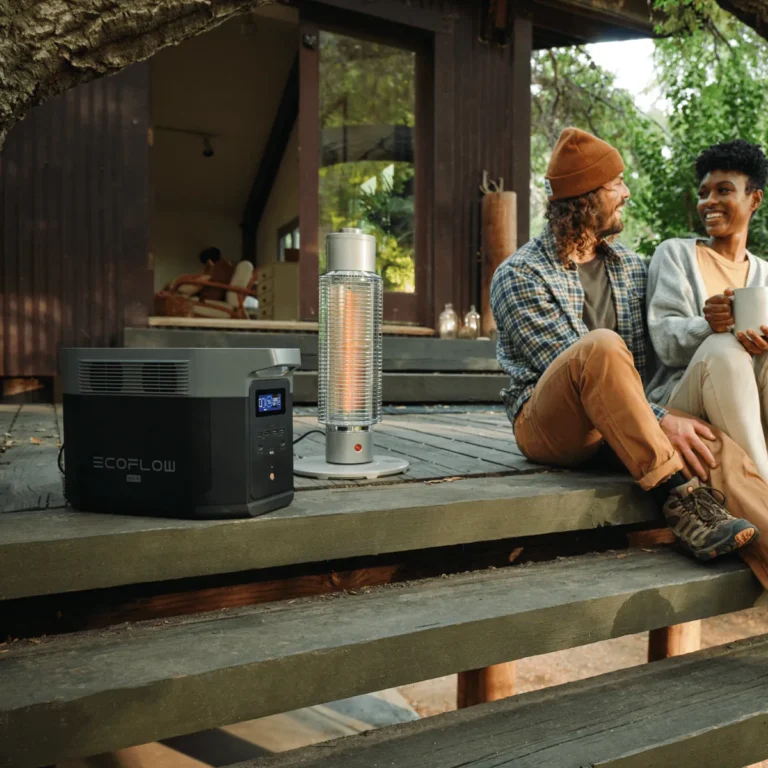
At a country house the station powers a pump, lighting, an electric grill or an infrared heater. It needs no fuel and produces no exhaust, so it can stand on a terrace or indoors. In summer two solar panels let you top up the charge daily without the mains.
Workshop
A drill, jigsaw, circular saw or angle grinder up to 2000 W run directly from DELTA 2 Max. Tools switch on in short cycles, so one charge lasts several hours of work with breaks rather than a few minutes, as you might think from the rated power.
Small office, shop, sole proprietor
A cash register, payment terminal, router, laptop and lighting together consume 150–250 W. That is roughly 7–11 hours, a working shift without stopping sales. Thanks to 20 ms switching, the register and computer do not reboot during an outage.
Camping and travel
The station can be charged on the road from a 12 or 24 V cigarette lighter, but slowly. It is good for camping next to the car, but for hiking on foot 23 kg is too much.
Powerful appliances and starting currents
A 2000–2200 W kettle, microwave, iron or hair dryer work without X-Boost. Pump, compressor and saw motors briefly draw several times their rating at start-up, and the 4800 W peak helps here. For a borehole pump, check the starting current in the datasheet or test the start before relying on the station.
What to avoid: an electric cooker and oven over 3 kW will overload the station, and a 2 kW boiler will drain it in under an hour. An inverter air conditioner will work, but at an average consumption of 600–800 W it lasts about 2–3 hours.
How it works
From the mains DELTA 2 Max charges with an ordinary cable without an external power brick. X-Stream technology gives over 2 kW of input, but the speed can be lowered with the switch on the case or in the app, from 200 W. This is useful if the socket or wiring is not rated for 10 A, or when there is no rush.
For solar charging there are two independent inputs with separate MPPT controllers, 500 W each (11–60 V, 15 A). Together that is up to 1000 W: in ideal conditions the station charges in about 2.3 hours. The mains and the sun can be used at the same time, and in the app you can give priority to the sun.
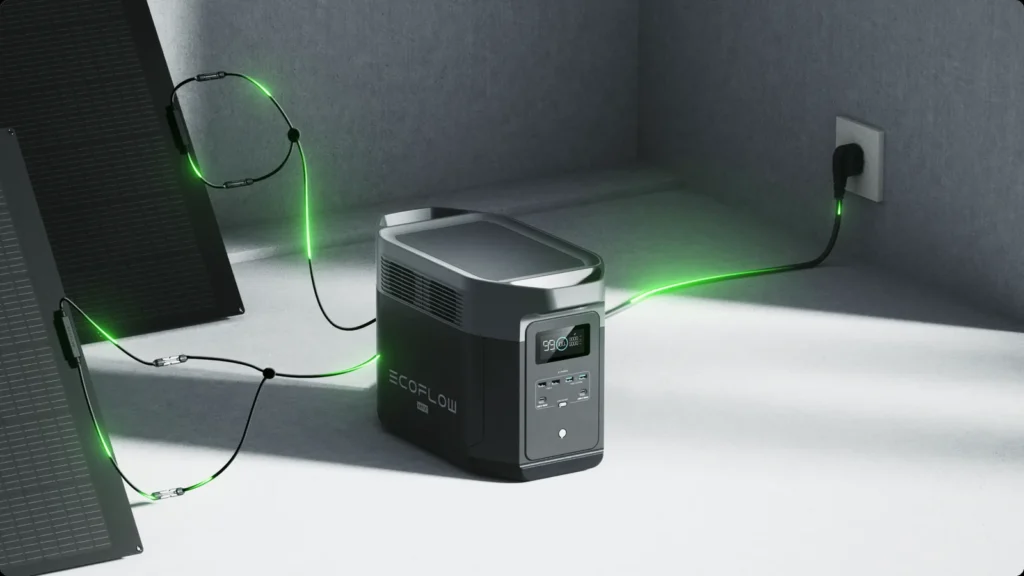
In backup power mode the station is plugged into a socket and the devices into the station. While the mains is on, equipment runs from it (the load in this mode is limited to 10 A, X-Boost is unavailable), and in an outage the station switches to the battery within 20 ms. The AC Always-on function in the app keeps the outlets on even after the mains returns.
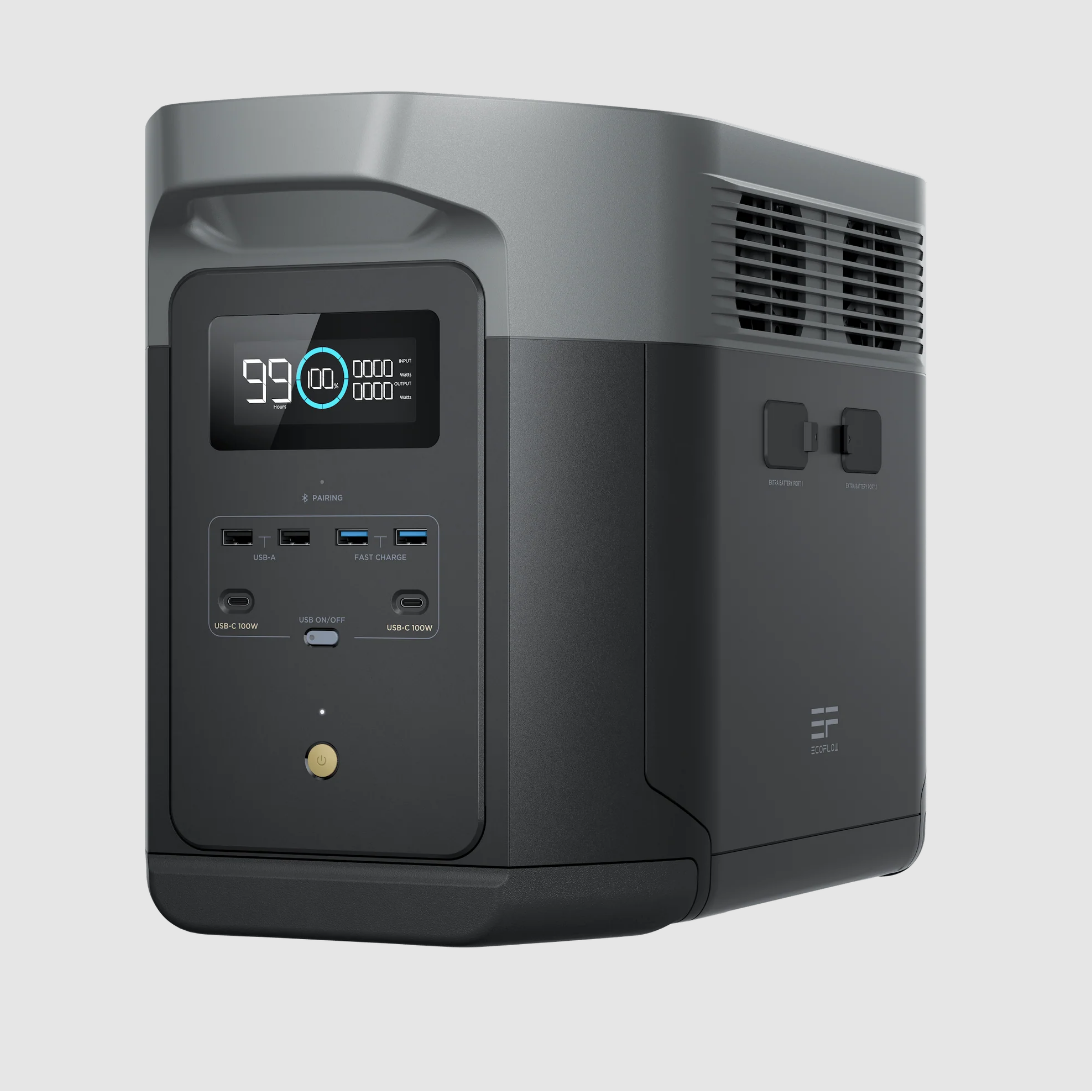
For expansion there are two ports on the rear panel. DELTA 2 Max Smart Extra Battery units of 2048 Wh or a DELTA Max Smart Extra Battery will fit. With two batteries the DELTA 2 Max system has 6144 Wh, and each battery can be added later.
The EcoFlow app works over Wi-Fi and Bluetooth: it shows the charge, input and output power, and lets you set the charging speed, an off-peak tariff schedule and low-charge notifications. Firmware updates also arrive through it.
DELTA 2 Max, DELTA 2 or DELTA 3
| DELTA 2 | DELTA 3 | DELTA 2 Max | |
|---|---|---|---|
| Capacity | 1024 Wh | 1024 Wh | 2048 Wh |
| Power | 1800 W | 1800 W | 2400 W |
| Expansion | up to ~3 kWh | up to 5 kWh | up to 6 kWh |
| EPS switching | 30 ms | up to 10 ms | up to 20 ms |
| Weight | 12 kg | 12.5 kg | 23 kg |
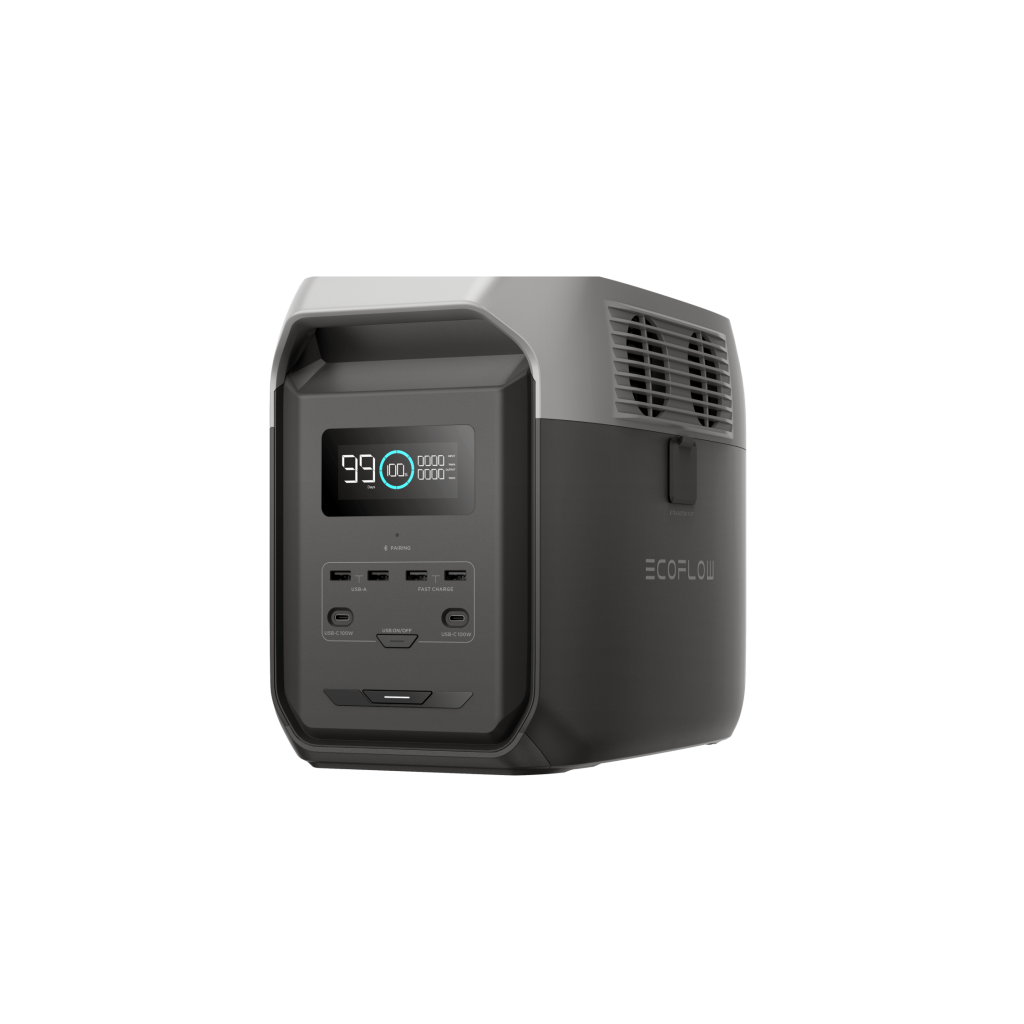
EcoFlow DELTA 2 is a proven 1 kWh station that is enough for a router, laptop, lights and a fridge for a few hours. It is half the weight of DELTA 2 Max and suits you if outages are short or the station often has to be moved.
EcoFlow DELTA 3 is a newer generation of the same class: faster switching (up to 10 ms), 4000 cycles and half the weight of DELTA 2 Max. A good choice for an apartment where it matters that a computer does not notice outages and 1 kWh of capacity is enough.
DELTA 2 Max is the one to choose when 1 kWh is not enough: a house with a boiler and a fridge running all night, kitchen appliances up to 2400 W or plans to expand to 4–6 kWh. If you need the same capacity in a newer generation without expansion, also look at DELTA 3 Max.
Who DELTA 2 Max suits and who it does not
The station is a good fit if:
- you live in a private house with a gas boiler and want to get through a night outage without a generator;
- in an apartment you need a reserve for a fridge, working from home and kitchen appliances;
- you run a small business where the register and connectivity must work without interruption;
- you plan to add batteries or solar panels gradually.
Consider another option if:
- the station has to be carried often: 23 kg and dimensions of 497 × 242 × 305 mm are easier to move with two people or to keep in one place;
- you only need a router and a laptop — a 1 kWh model is enough, lighter and cheaper;
- you want to power a whole house, including an electric cooker, boiler or electric heating — that needs a system of the DELTA Pro 3 class with different power and capacity;
- your equipment needs 0 ms switching, like servers and workstations — they need an online UPS;
- outages last several days without sun — then the station is better paired with a generator.
FAQ
Will DELTA 2 Max run a gas boiler?
Yes, a gas boiler with a circulation pump consumes 80–150 W, so it will run for roughly 11–20 hours. The station outputs a pure sine wave, which the boiler electronics need, and in backup mode the boiler switches to battery automatically.
Can the station be connected to the house electrical network?
Yes, but only through a switch or a separate line installed by an electrician. Home-made “plug-to-plug” cables are dangerous: voltage can flow back into the grid where electricians are working and damage equipment.
How is a power station different from a generator?
The station runs silently or almost silently, needs no fuel and can stand in a home. A generator wins only in long outages of several days, when there is nothing to charge the battery with. They are often combined: the station covers the night, and the generator switches on for an hour in the day to charge.
Does DELTA 2 Max work as a UPS for a computer?
Yes, in backup power mode it switches within 20 ms. This is fine for a laptop, since it has its own battery, while a desktop PC should be checked in advance, because power supplies differ. For servers that need 0 ms, the manufacturer does not recommend the station.
How long does charging from solar panels take?
At 1000 W input — about 2.3 hours, but those are ideal conditions. With a single 400 W panel EcoFlow states about 6.4 hours, and in cloudy weather or in winter it takes longer.
Can I charge the station and use it at the same time?
Yes. While the station is plugged into the mains, devices run from the mains and the battery charges. It is only important that the total load does not exceed 10 A.
Can I buy a battery later?
Yes, the battery connects to a free port on the rear panel at any time, and nothing needs to be reconfigured. DELTA 2 Max Smart Extra Battery and DELTA Max Smart Extra Battery are supported, up to two units.
Can the station be kept in an unheated room?
With limits: the station can be discharged from -10 to 45 °C and charged only from 0 to 45 °C. For long-term storage the manufacturer advises discharging and fully charging the battery once every three months, then leaving it at about 60%.
Summary
If after calculating you find that 1 kWh is not enough for you and you need a boiler, a fridge and kitchen appliances without a generator, DELTA 2 Max is a balanced choice with room to grow to 6 kWh. If you have decided to buy an EcoFlow DELTA 2 Max in Kyiv or another city in Ukraine, you can place the order right on this page. If you are unsure whether the station will handle your pump or boiler, write to us through the contacts and we will help you calculate the load.