Description
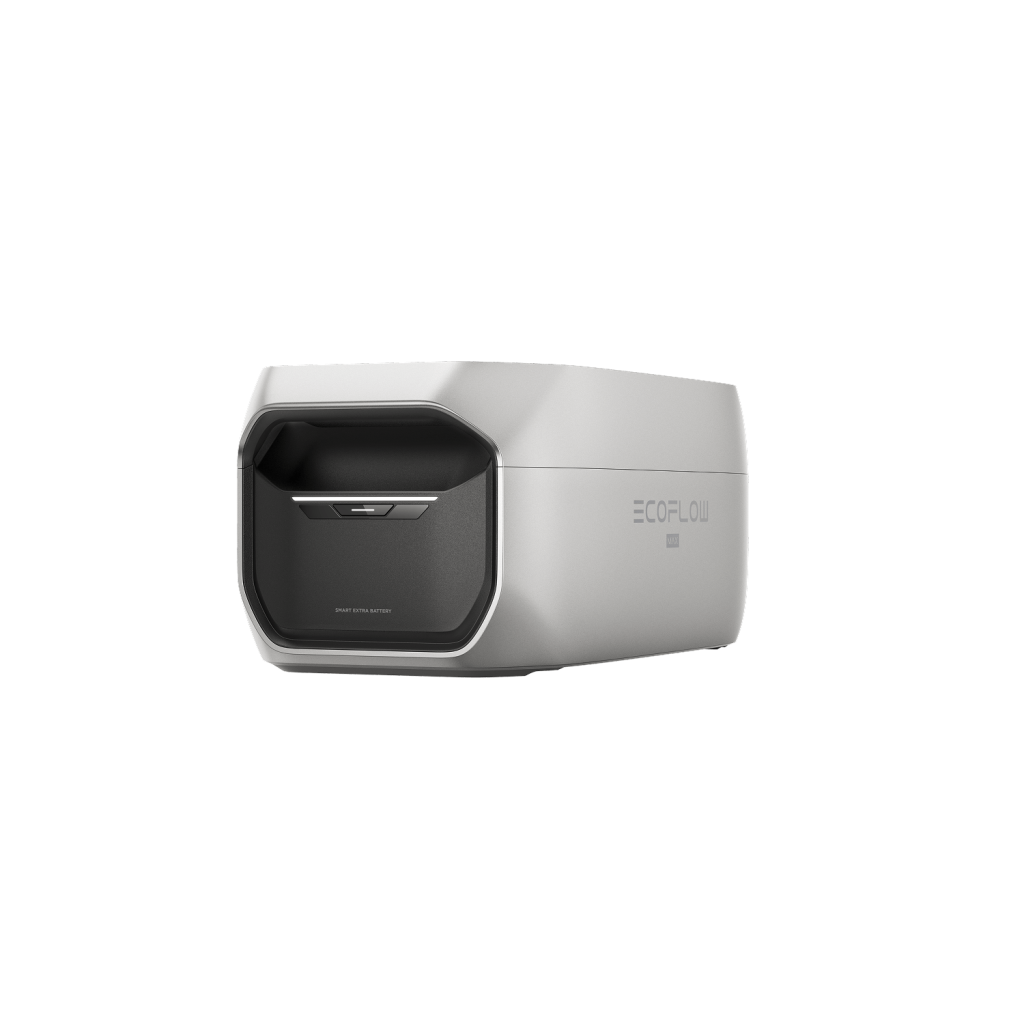
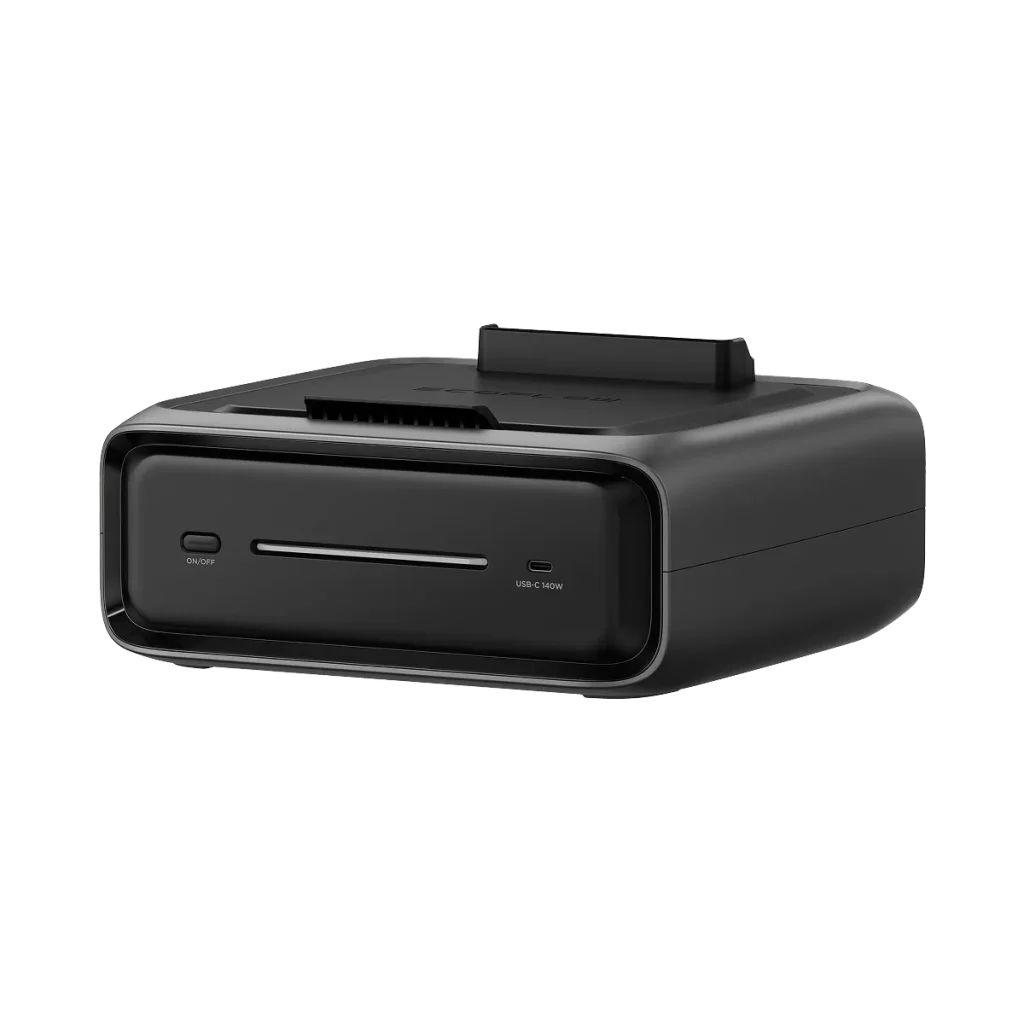
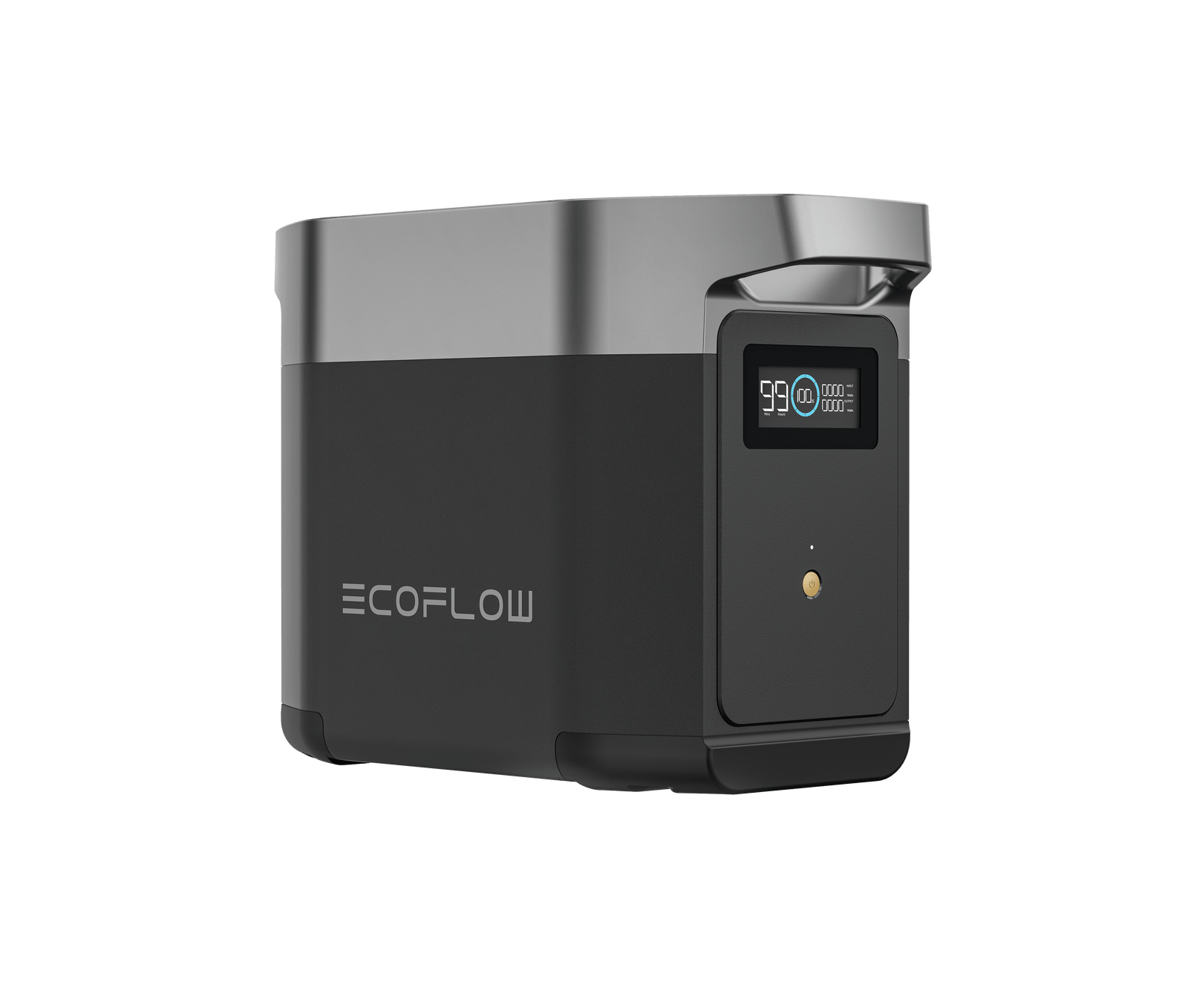
The DELTA 2 expansion battery (EcoFlow DELTA 2 Smart Extra Battery) is a second 1024 Wh LiFePO4 battery for a station you already have at home. EcoFlow’s official compatibility table names four stations for it: EcoFlow DELTA 2, DELTA 3, DELTA 3 Plus and DELTA 3 1500. Most often it is DELTA 2 owners who run out of charge before the end of an outage who decide to buy an EcoFlow DELTA 2 expansion battery: with the battery the station’s capacity doubles, to 2048 Wh.
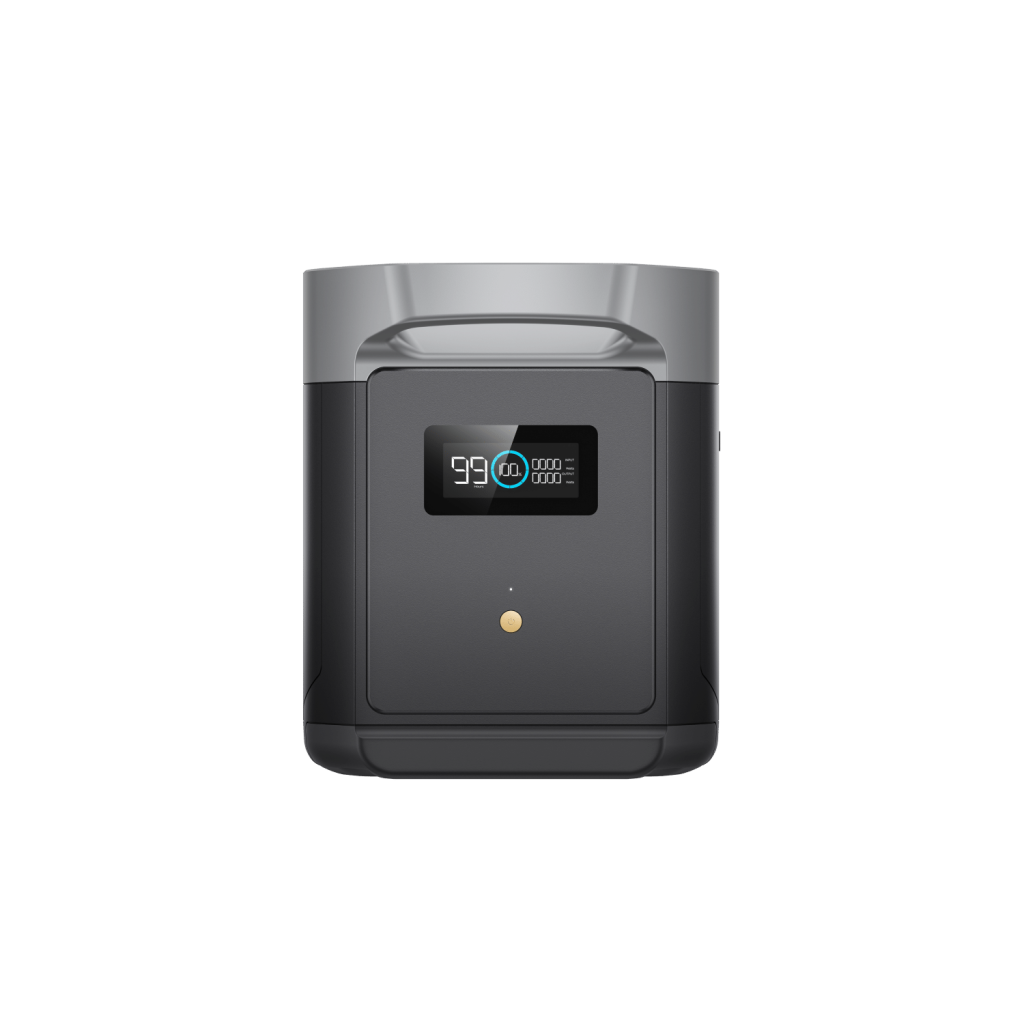
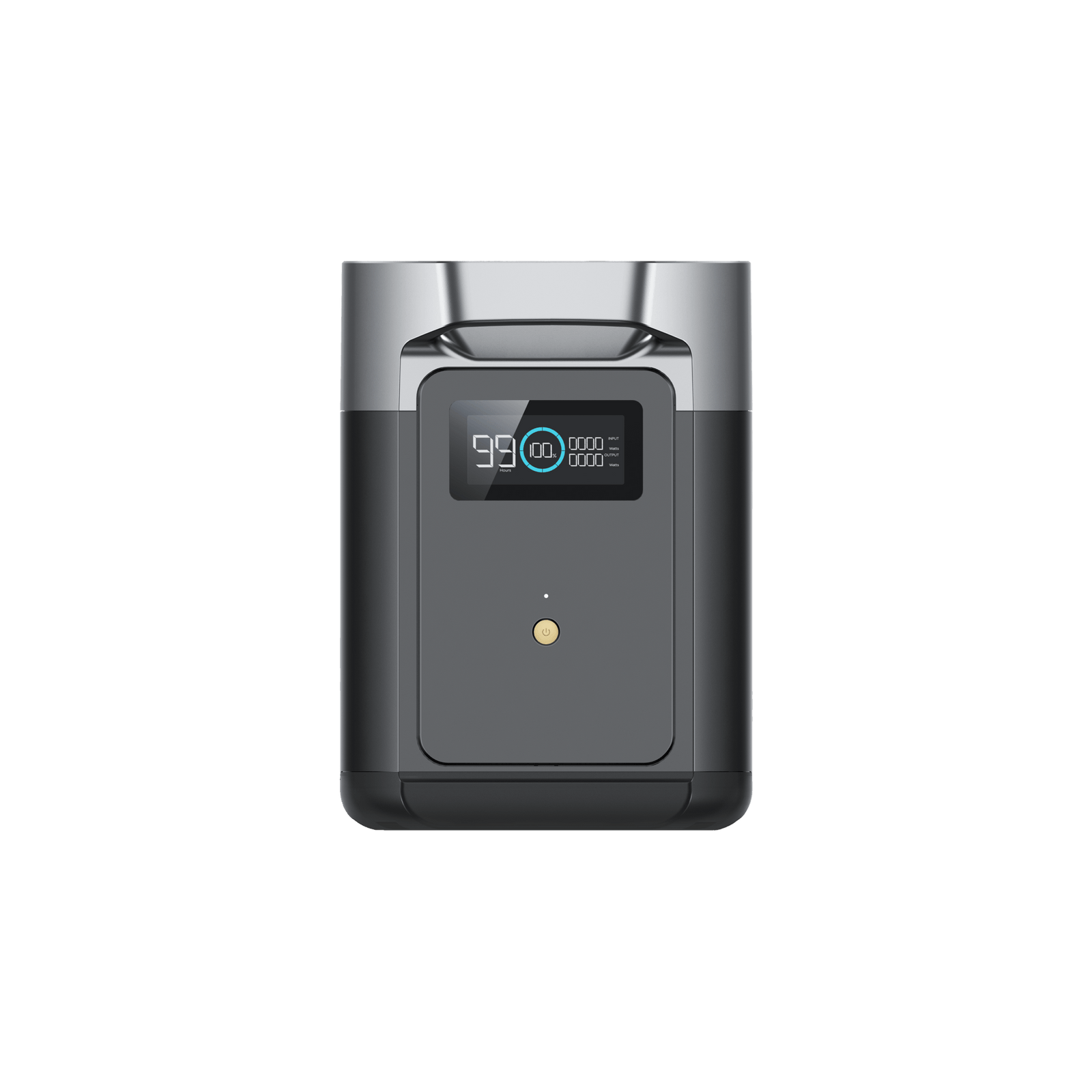
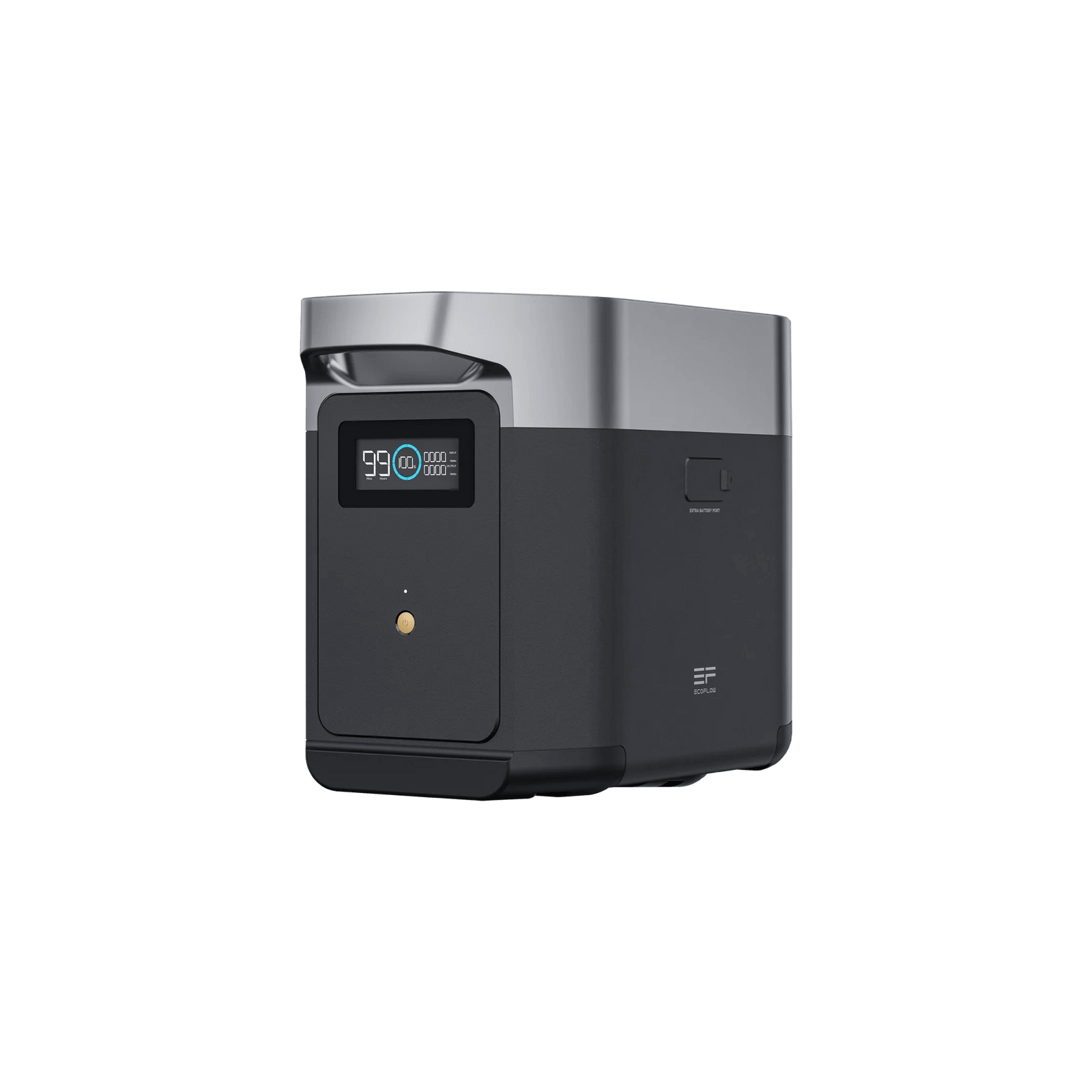
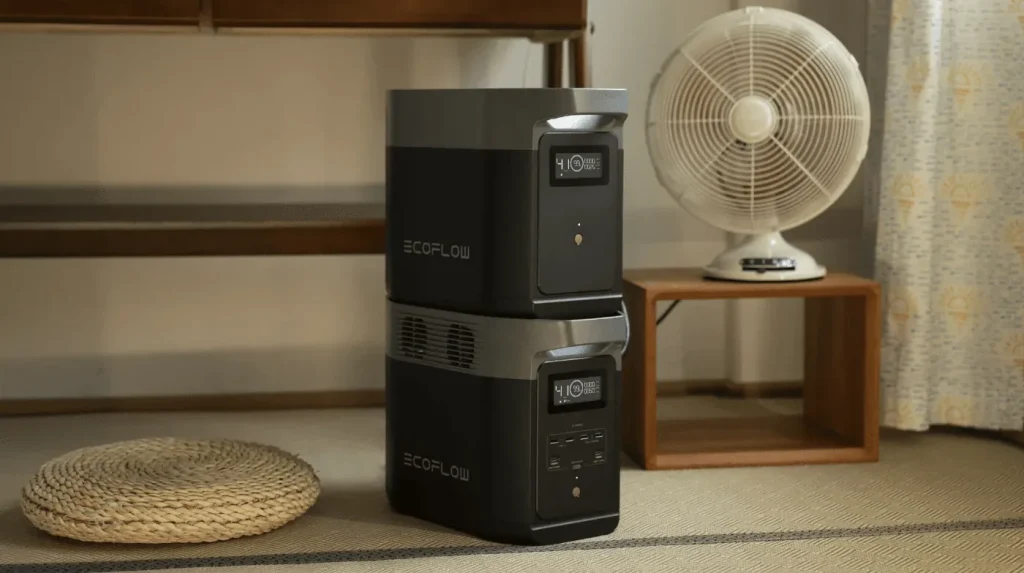
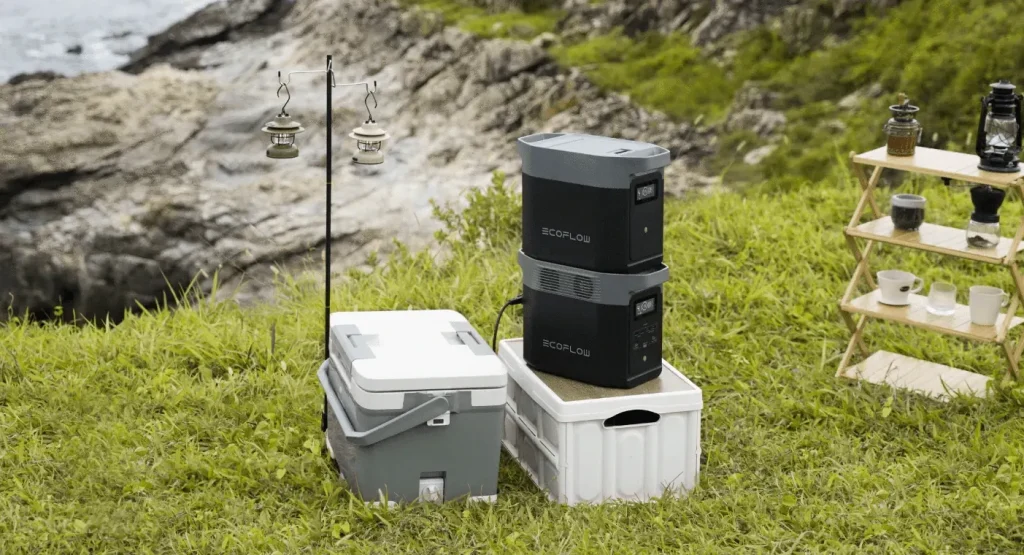
The battery has no outlets or USB; the station delivers the energy through its own outputs. It does have its own display, and its dimensions match DELTA 2 to the millimetre, so the pair looks like one set. For evening and night outages it is the simplest way to stretch the reserve without a second station.
What the battery gives a DELTA 2 owner
2048 Wh instead of 1024
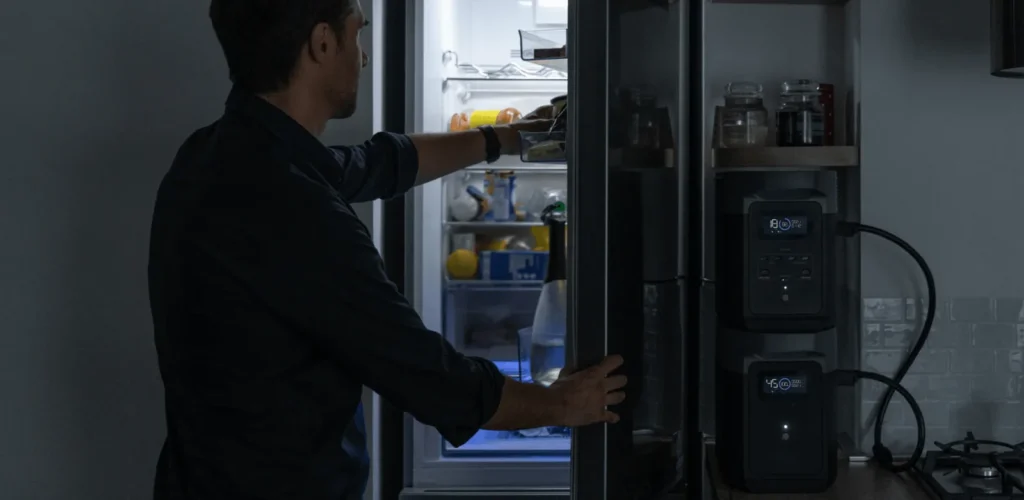
One battery adds exactly as much energy to DELTA 2 as the station itself has. At the 230 V outlets that is roughly 1740 Wh instead of 870, and a night with a boiler, fridge and router no longer has to be planned hour by hour.
Its own display and app
The front panel of the battery has a screen: charge in percent, remaining time, input and output power, a connection icon to the station and warnings about overheating or overcooling. The same data is visible in the EcoFlow app. It is also where you change the time after which the battery without load switches off by itself; by default it is 2 hours.
LFP cells rated for 3000 cycles
Inside are lithium iron phosphate cells, just like in DELTA 2 itself. According to EcoFlow’s manual, after 3000 cycles the battery keeps over 80% of its capacity. The protection monitors voltage, current, short circuits, as well as overheating and low temperature.
9.5 kg and a compartment for small items
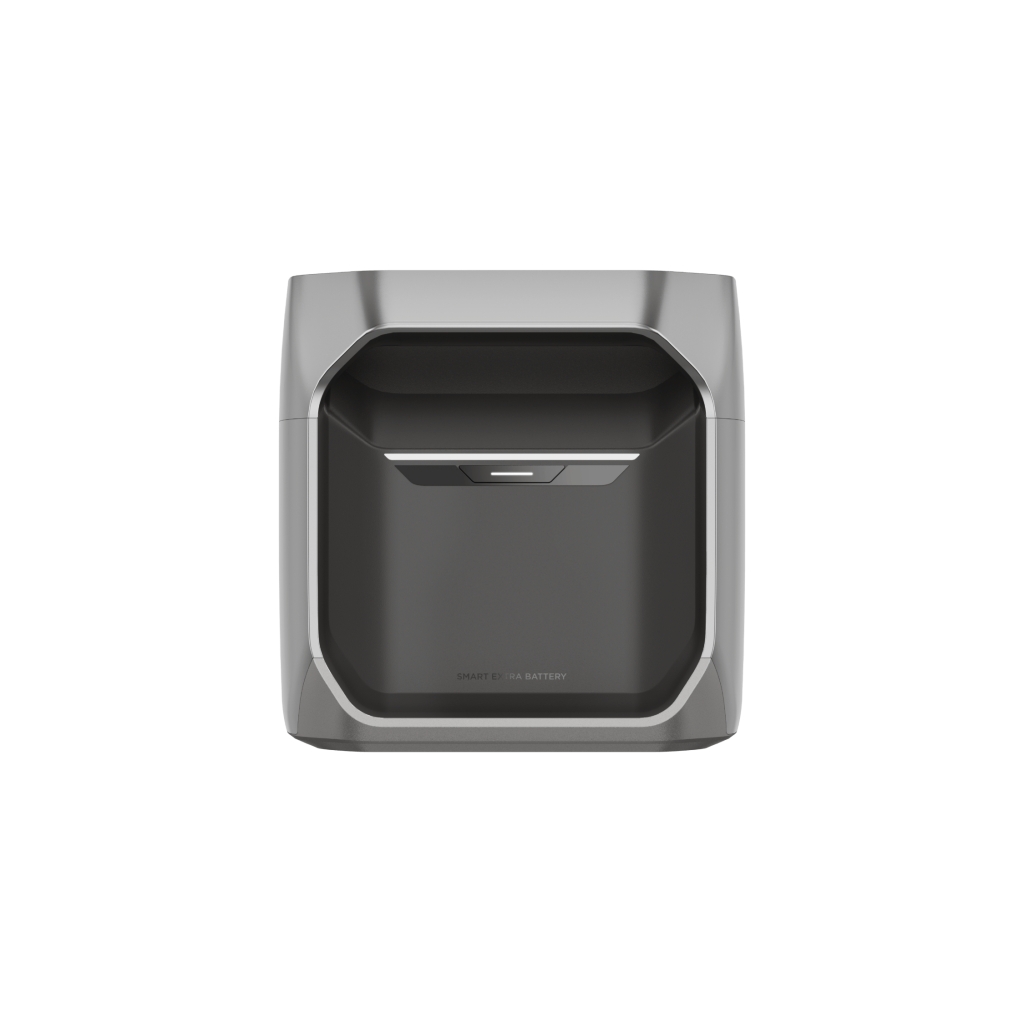
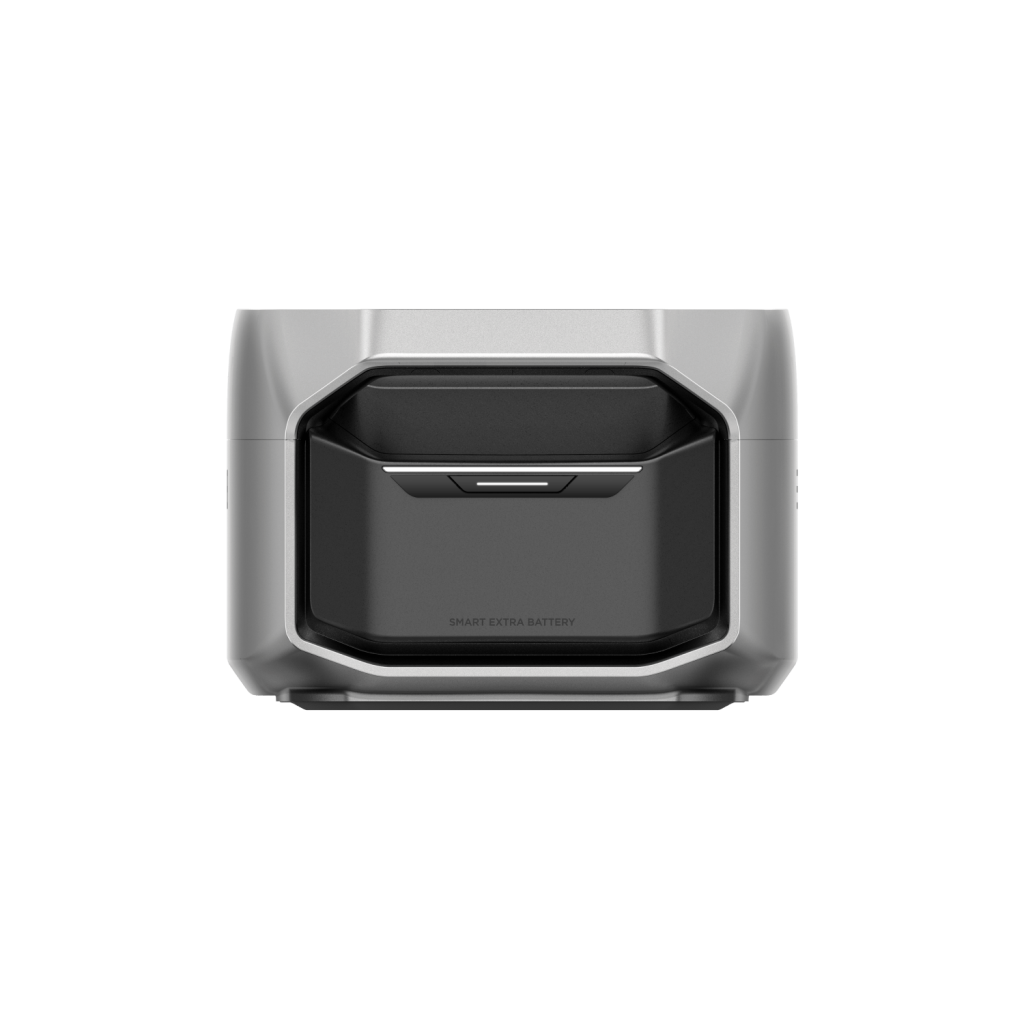
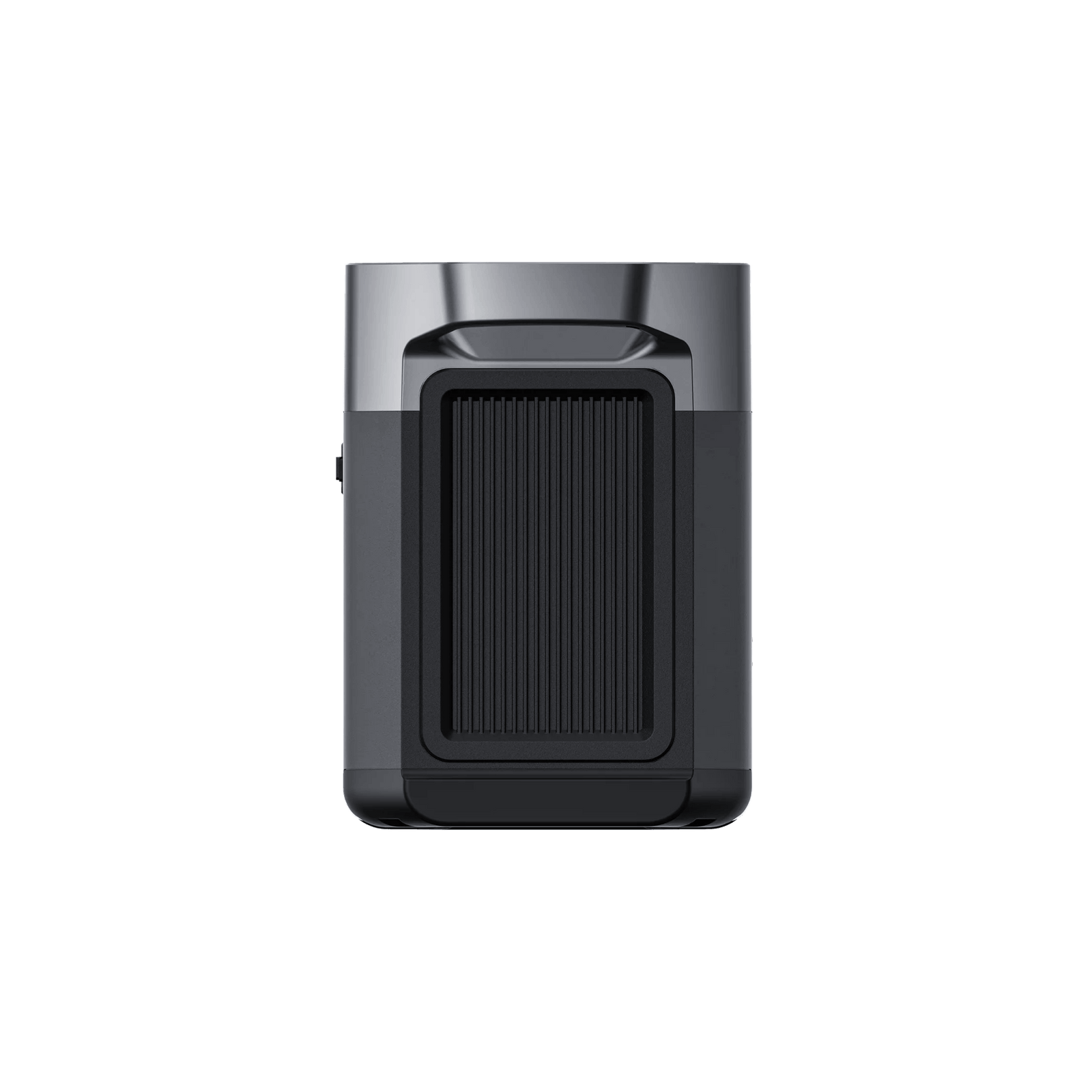
The battery weighs about 9.5 kg, so one person can carry it separately from the station without effort. The case has a compartment where you can conveniently put cables, chargers or other accessories.
Compatibility
The list is compiled from EcoFlow’s official battery compatibility table. These stations have a single extra battery port, so one such battery connects to each.
| Station | Own capacity | With battery |
|---|---|---|
| DELTA 2 | 1024 Wh | 2048 Wh |
| DELTA 3, DELTA 3 Plus | 1024 Wh | 2048 Wh |
| DELTA 3 1500 | 1536 Wh | 2560 Wh |
This battery does not fit EcoFlow DELTA 2 Max: for it EcoFlow provides the DELTA 2 Max Smart Extra Battery or the DELTA Max Extra Battery. It also does not work with DELTA 3 Classic and DELTA 3 Max, because they have no expansion port. For DELTA 3 Max Plus and the DELTA Pro series the table does not name this battery.
The battery comes with a DELTA 2 Extra Battery Cable, a manual and a warranty card. If you are buying the battery for a DELTA 3 or DELTA 3 1500, tell us your station before ordering and we will check the connection.
DELTA 2 or DELTA 3 Smart Extra Battery
Both have 1024 Wh, and both, according to EcoFlow’s table, fit both DELTA 2 and DELTA 3. They differ in case and lifespan. The DELTA 2 battery measures 400 × 211 × 281 mm, like DELTA 2 itself, weighs about 9.5 kg, shows the charge on its own display and is rated for 3000 cycles. The DELTA 3 Smart Extra Battery is noticeably lower (398 × 200 × 198 mm) at almost the same weight of 9.6 kg, has an LED indicator instead of a display, holds 4000 cycles and, per its own manual, sits on top of DELTA 3 and DELTA 3 Plus.
So it is more natural for a DELTA 2 owner to take the battery of their own series: the same case, and the charge is visible right on it. For DELTA 3 the DELTA 3 battery is more logical: it stacks with the station into a compact column and has a longer lifespan.
How much longer the equipment will run
We calculate it like this: of the battery’s 1024 Wh, about 85% reaches the station’s outlets, roughly 870 Wh, because the inverter loses some energy in conversion. We divide this figure by the device’s consumption and get the approximate gain. The figures are approximate: a cold room, an old compressor or frequently opened fridge doors will change the result.
- a gas boiler that needs 80–150 W together with its pump: another 6–10 hours of heat;
- an ordinary fridge that takes 1–1.5 kWh per day: roughly another 14–20 hours on top;
- a TV with a set-top box (about 120 W): another 7 hours of evening;
- a router with an optical terminal (up to 25 W): at least a day and a half of connectivity.
An example for a private house: a boiler, fridge and router together consume about 170 W on average. DELTA 2 alone runs such a set for about 5 hours, and with the battery about 10, that is the whole night. Paired with a DELTA 3 1500 (2560 Wh) the same set lasts about 12–13 hours.
How to connect and use it
Connection starts with switching both devices off. Connect them with the supplied cable through the extra battery ports and push the connectors in fully: the manual warns that a loose contact may heat up. After switching on, an extra battery icon should appear on the screens of both devices, and only then can the system be charged or loaded.
While charging or running, the cable must be neither disconnected nor connected; first switch both devices off. Do not touch the metal port contacts with your hands, and remove dust from them with a dry cloth.
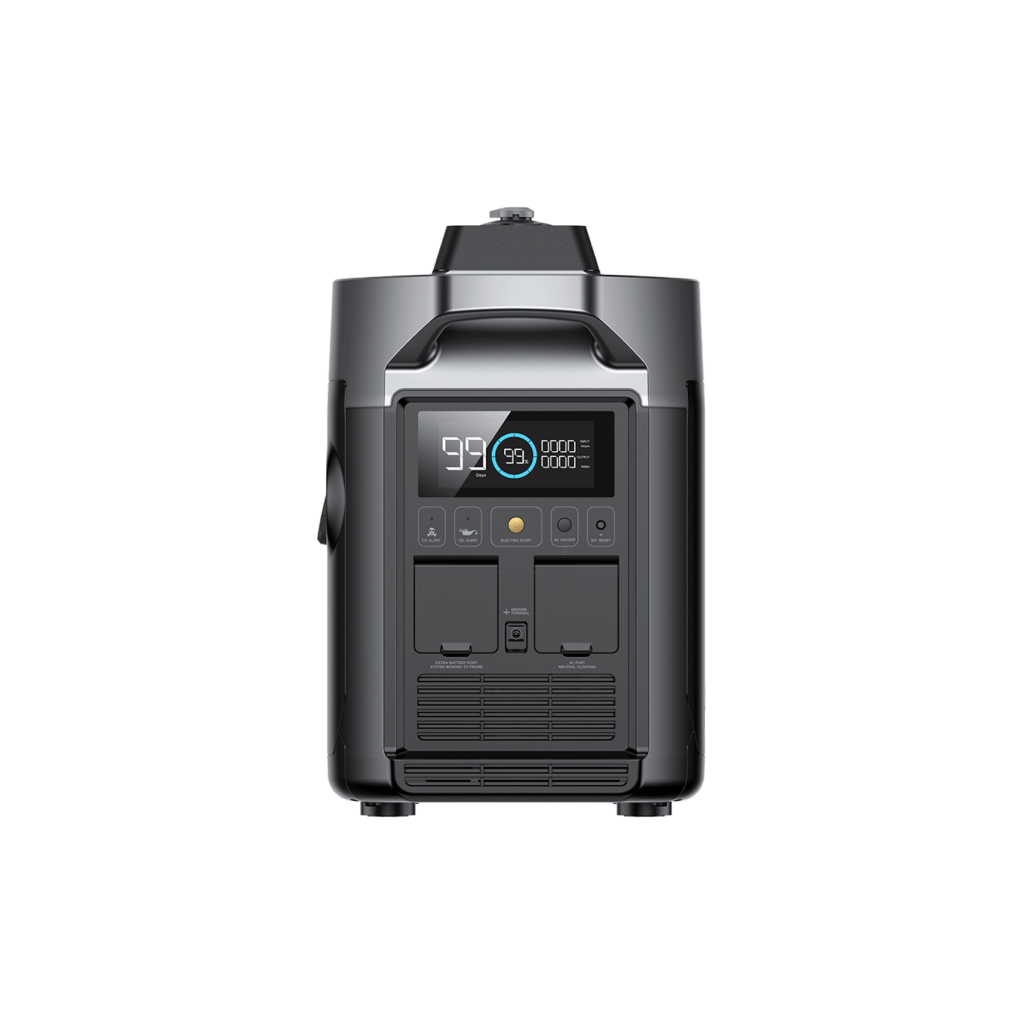
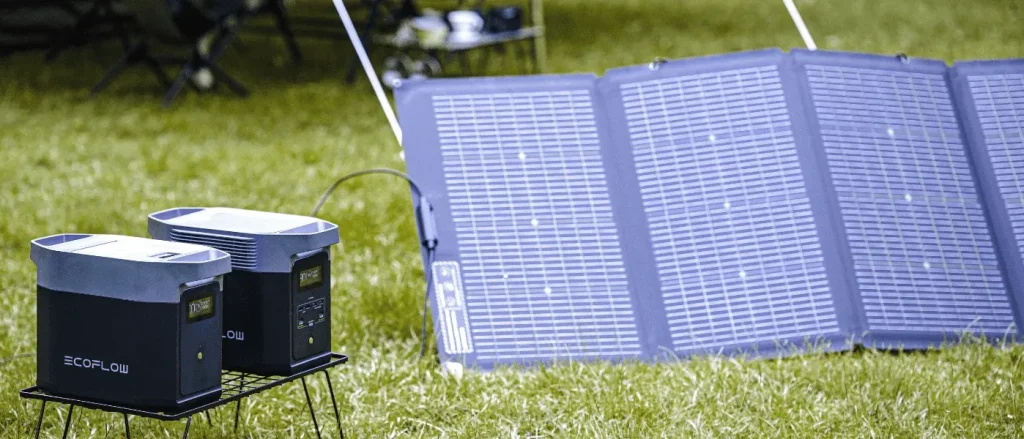
The battery charges only through DELTA 2 or from an EcoFlow Smart Generator; it has no separate sockets for the mains or panels. According to EcoFlow’s description, DELTA 2 and the battery charge and discharge in sync, so you connect the mains, solar panels or car to the station as usual. From the mains the pair, per the manufacturer, reaches 80% in about 70 minutes and 100% in about 2 hours.
If the battery will sit idle for months, keep it at 20–30 °C and every three months drain the charge to 30% and raise it to 60%. If less than 1% is left in the battery after an outage, top it up to 60% as soon as possible, because deep discharge shortens the lifespan of the cells.
A battery or a more powerful station
A battery adds only an energy reserve, not power. DELTA 2 with it still delivers the same 1800 W, so a boiler or 2 kW heater will not start working because of it.
For someone who already uses DELTA 2, the battery gives 2 kWh by the shortest route: you do not have to sell the station, and two units of 12 and 9.5 kg are easier to carry than one 23 kg case. If you are only choosing a station and need 2400 W for kitchen appliances, look at the EcoFlow DELTA 2 Max with the same 2048 Wh in one case. Remember that the DELTA 2 battery does not connect to it.
For those for whom 2 kWh is not enough for DELTA 2, EcoFlow offers the DELTA 2 Max Smart Extra Battery of 2048 Wh: according to the compatibility table it also works with DELTA 2, and together you get about 3 kWh. Such a battery weighs 19 kg.
Who it suits and who it does not
Worth buying if:
- DELTA 2 runs out before a night outage ends;
- you want the extra unit to have the same case as the station and show its own charge;
- it is more convenient to grow capacity gradually: first the station, later the battery;
- you plan to move to DELTA 3 or DELTA 3 1500 later and do not want the battery left without a pair.
Better another option if:
- your station is a DELTA 2 Max, DELTA 3 Classic or DELTA 3 Max, because this battery does not work with them;
- your equipment needs over 1800 W;
- you need a standalone source without a station: the battery itself powers nothing;
- you need over 2 kWh for DELTA 2, in which case the DELTA 2 Max battery is more appropriate.
Customer questions
Can two of these batteries be connected to DELTA 2?
No. According to the manual, DELTA 2 works with only one extra battery, and the manufacturer forbids connecting batteries to each other.
Can the battery be charged without a station?
Only from an EcoFlow Smart Generator. In all other cases it is charged by the connected station, because the battery has no input of its own for a socket or solar panels.
Will the battery fit if I later replace DELTA 2 with DELTA 3?
Yes. DELTA 3, DELTA 3 Plus and DELTA 3 1500 are in this battery’s official compatibility table, so the purchase does not tie you to DELTA 2 alone.
Does the battery work in the cold?
It can deliver energy from -10 °C and charge from 0 to 45 °C. After overcooling the battery will continue charging by itself as soon as its cells warm above 5 °C.
What should I do if a warning appears on the battery screen?
First restart the system. If the icon does not disappear, the manual advises neither charging nor discharging the battery and contacting EcoFlow service.
Can the battery be taken on a plane?
No. EcoFlow’s manual does not allow taking it on board an aircraft.
The main points in brief
The DELTA 2 expansion battery is a direct extension of the station: the same case, another 1024 Wh and twice as long run time without replacing DELTA 2. To buy an EcoFlow DELTA 2 expansion battery, add it to the cart above. If you have a DELTA 3 or DELTA 3 1500 or are not sure that 2 kWh will be enough, write to us through the contacts page and we will help you calculate for your devices.