Connect appliances to the station
Choose what has to keep running during a blackout — we will work out how long the station lasts and whether it can carry the load. Choose appliances — we will work out how long the station lasts.
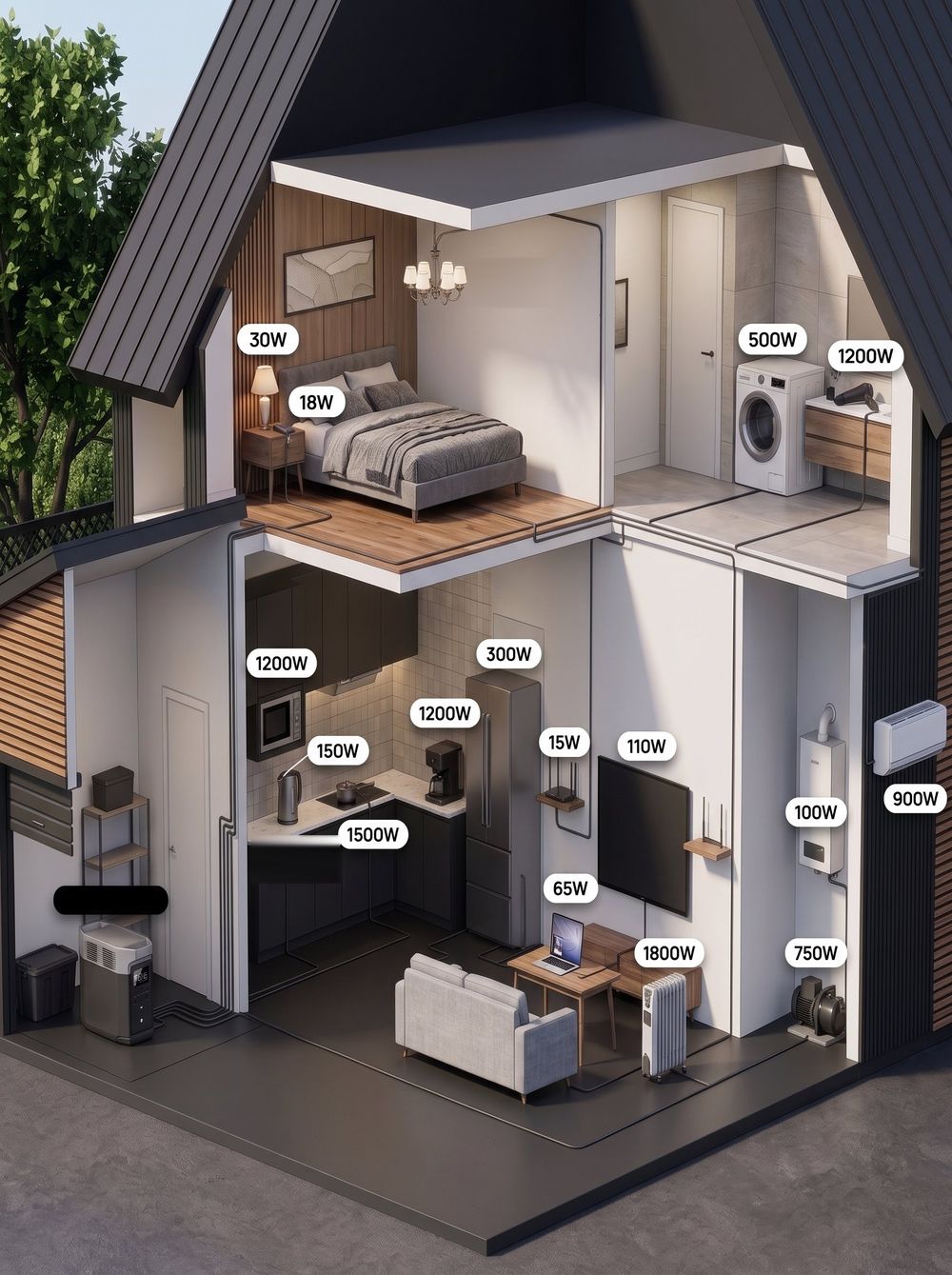
An estimate: 85% of the station capacity (inverter efficiency) divided by the total power of the appliances; charge is shown after a 4-hour blackout. Real figures depend on how the appliances are used.
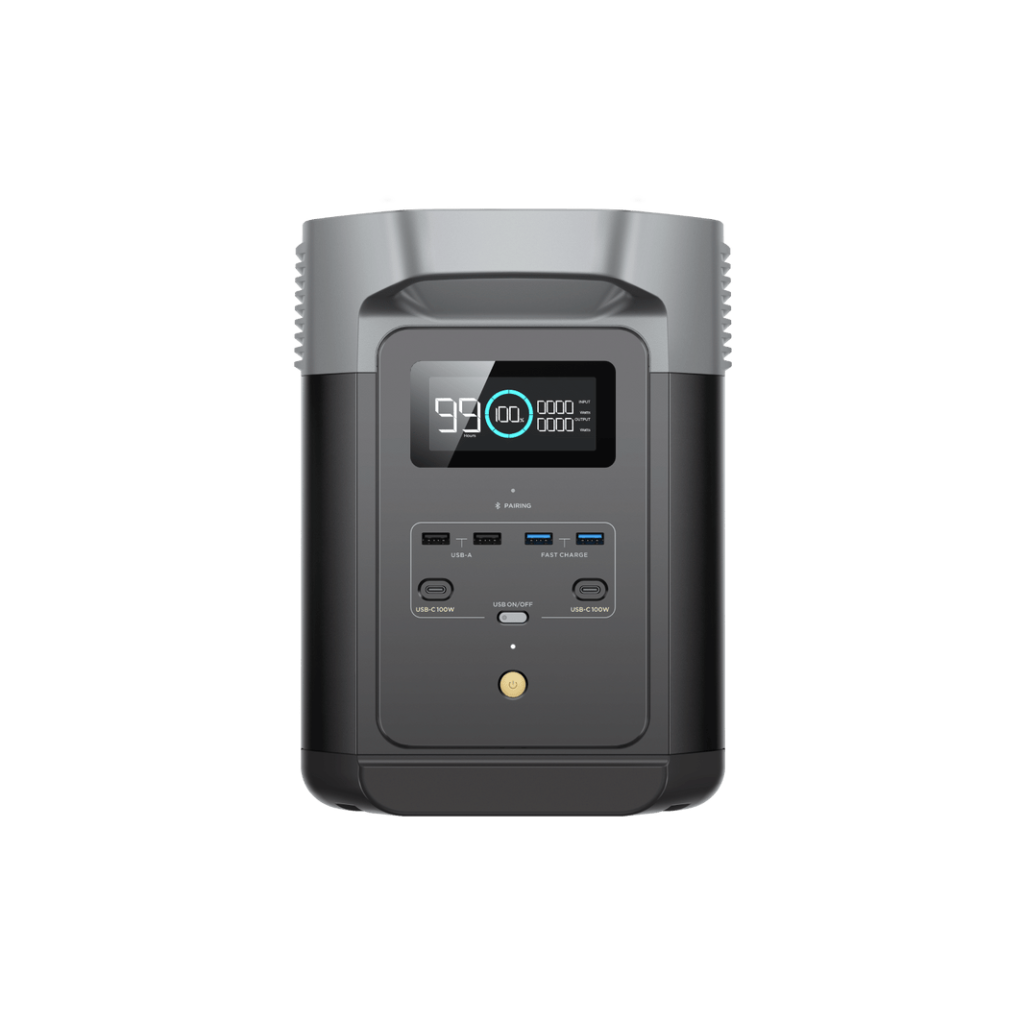
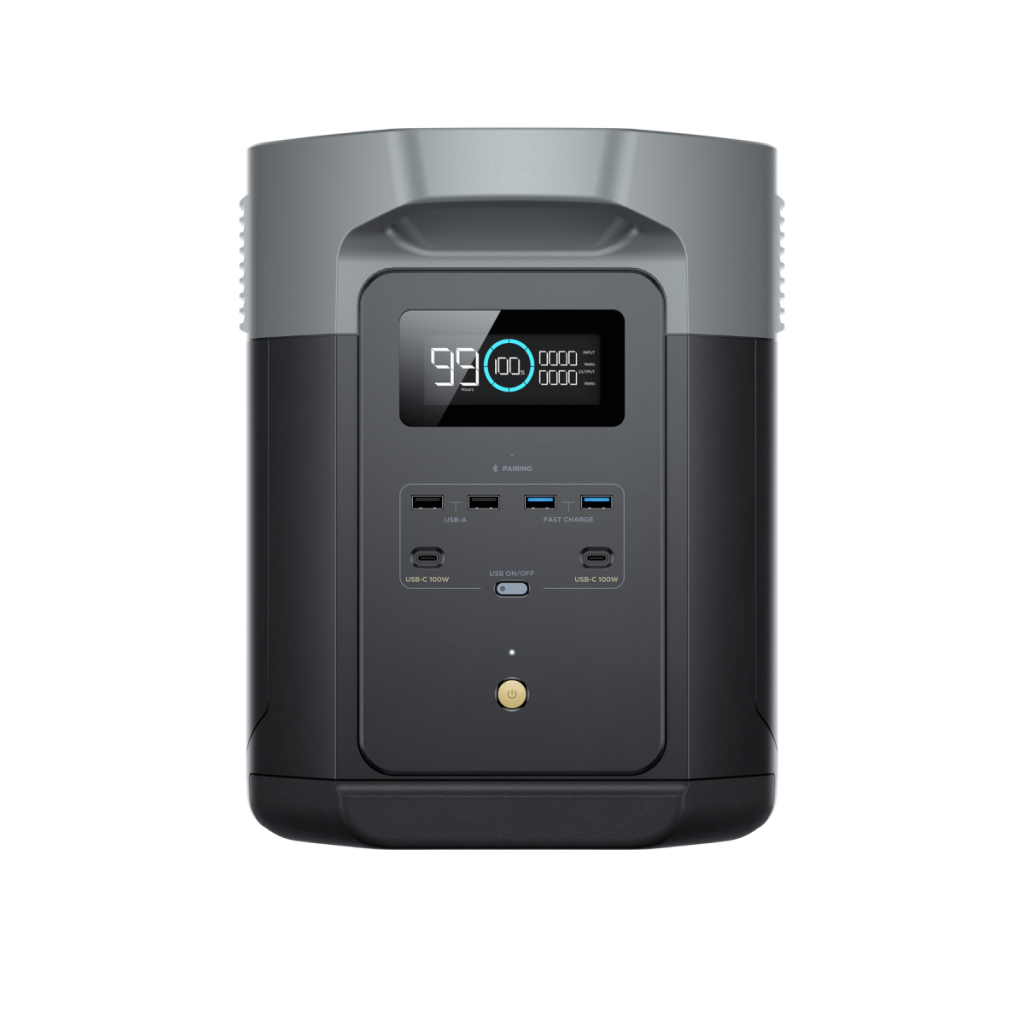
EcoFlow DELTA 3 Classic is a simplified version of the 1024 Wh DELTA 3: the same 1800 W inverter, 10 ms switching and fast charging from a socket, but fewer ports and no option to expand. If you are planning to buy an EcoFlow DELTA 3 Classic, weigh this compromise right away: it is the new generation of the 1 kWh class in its simplest form.
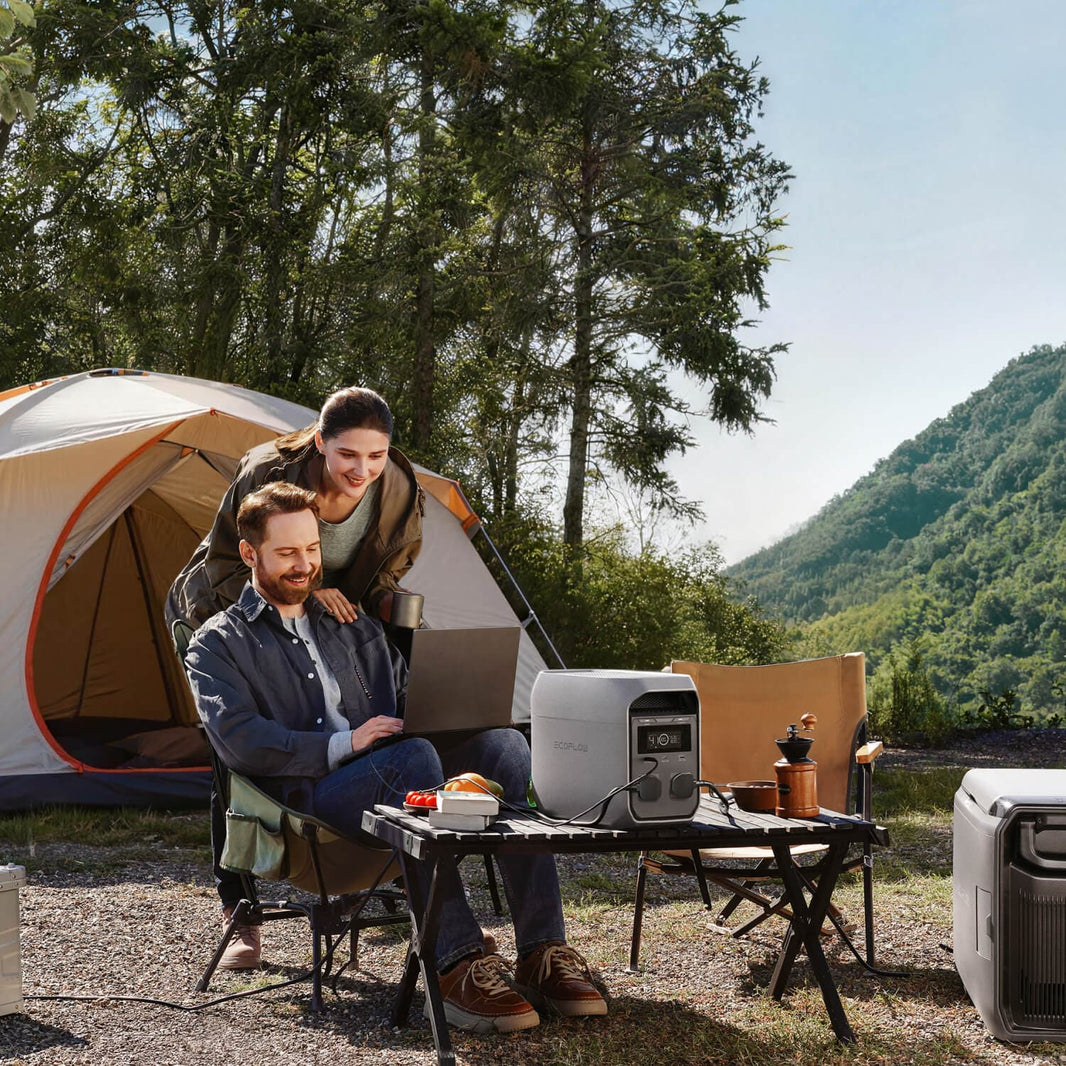
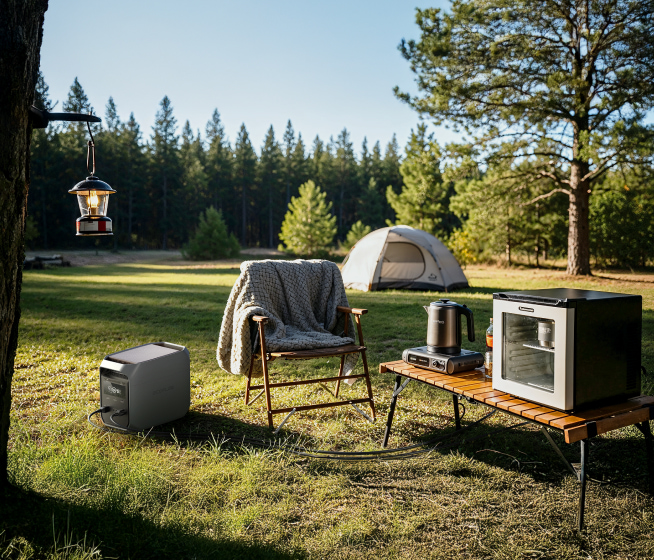
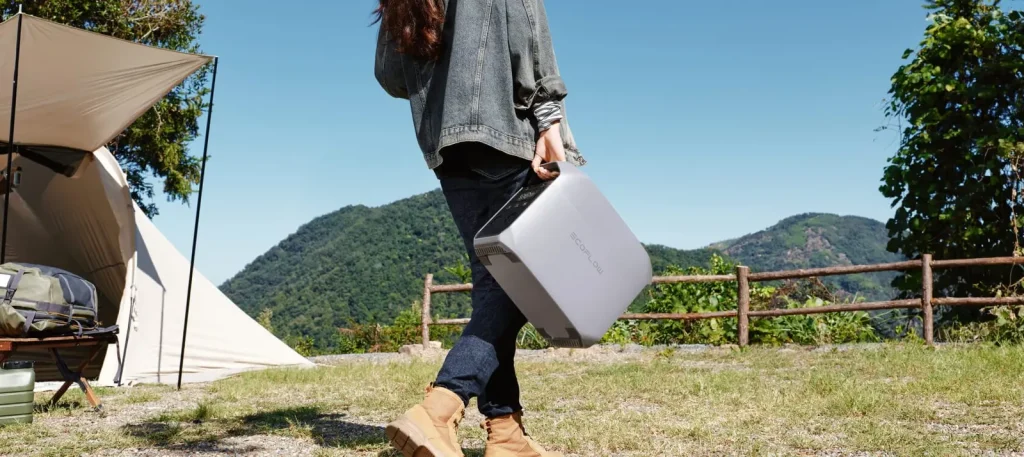
When the power is cut on schedule, the station keeps a router, laptop, lighting and fridge running, and in a short window between outages it reaches 80% in about 45 minutes. It weighs 12.1 kg, so it is just as easy to take to a country house, a campsite or a location shoot.
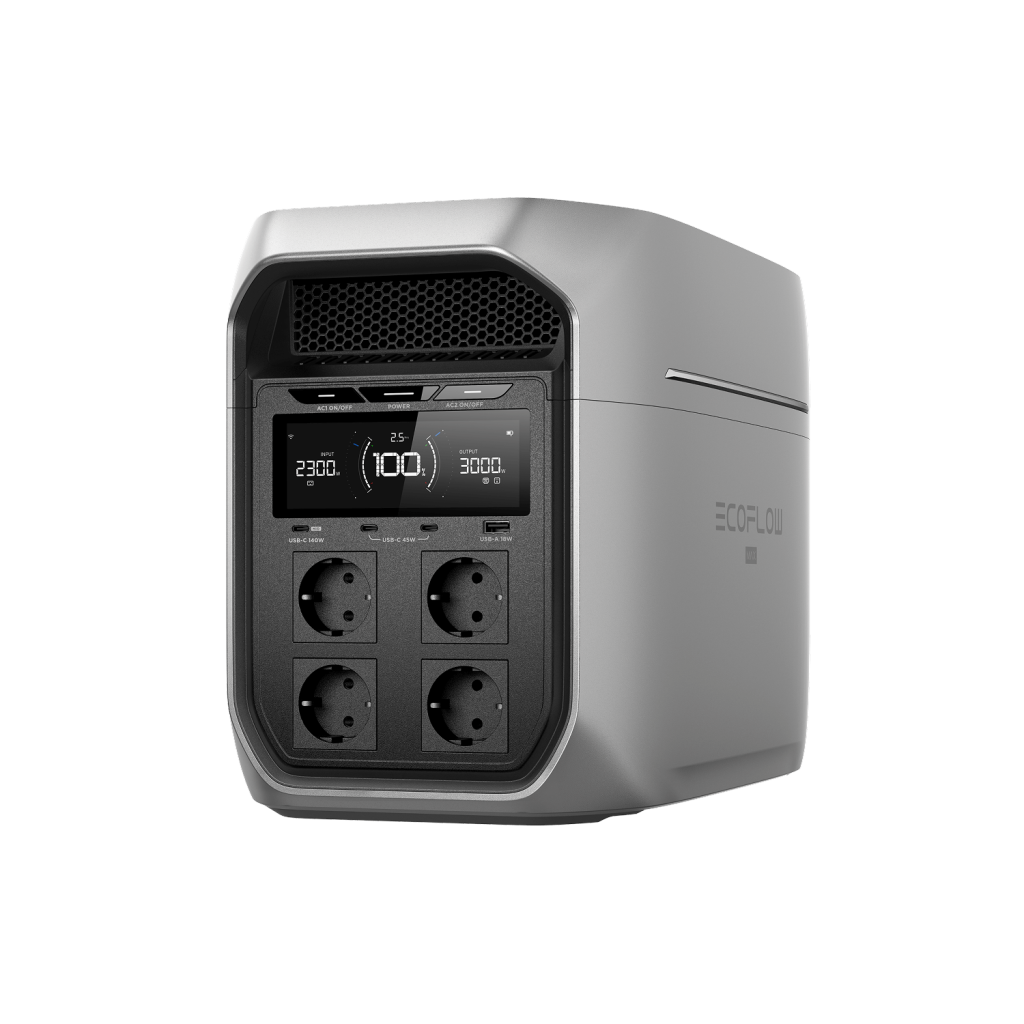
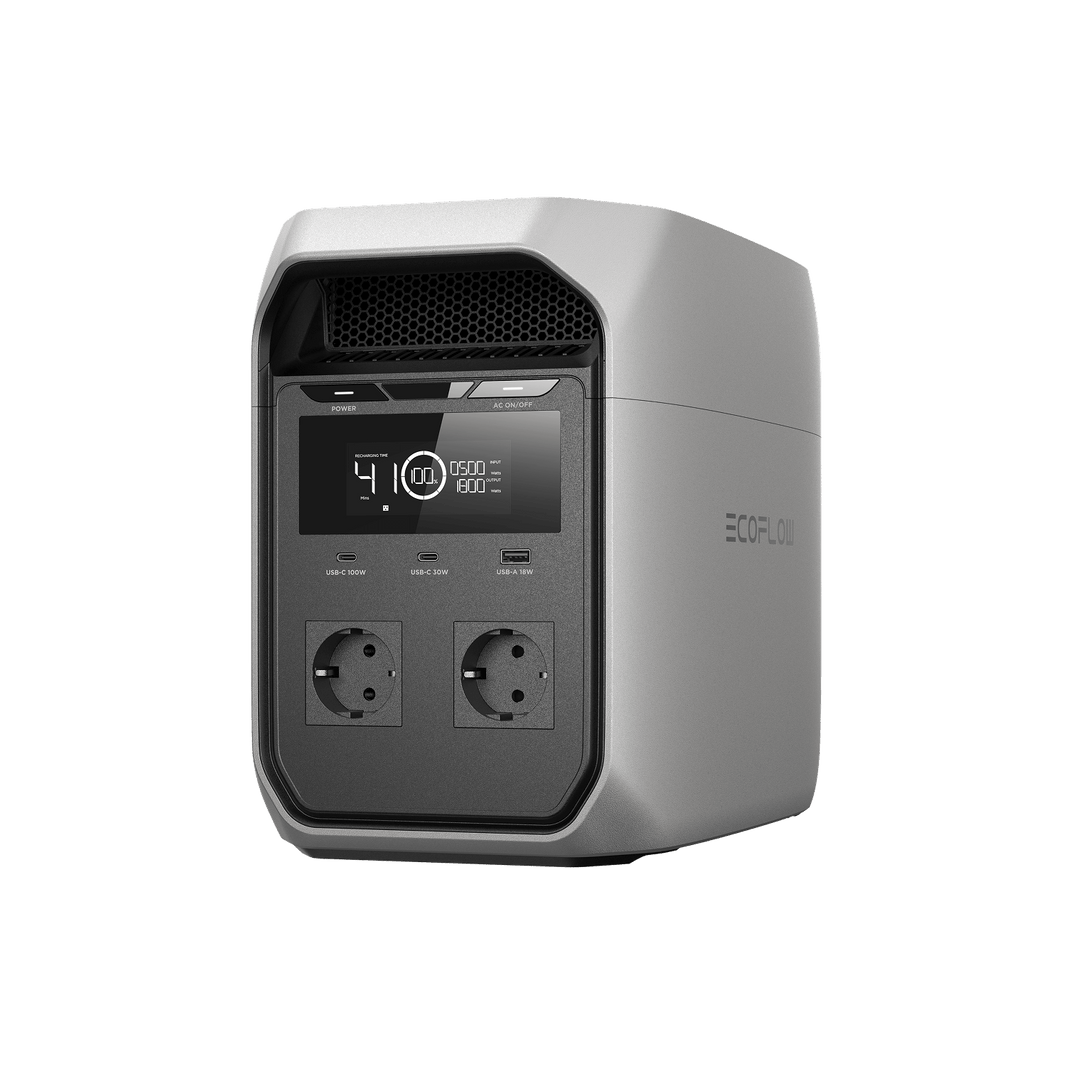
What you should know before buying: the European version has two 230 V outlets, no 12 V output and no extra battery port. For an apartment and trips this is usually enough, and below we explain separately how Classic differs from DELTA 3, DELTA 3 1500 and DELTA 2.
Why DELTA 3 Classic
1800 W inverter with a 3600 W peak
The inverter outputs 1800 W at 230 V — the same as the higher models of the DELTA 3 series. The double reserve for a few seconds is needed when a fridge compressor or a circular saw motor starts. Heating appliances up to 2400 W switch on in X-Boost mode: the station supplies them with a lower voltage, so a kettle boils more slowly, but the overload protection does not trip.
From a socket: 80% in 45 minutes, full in an hour
The charger is built into the case, so only the supplied cable is needed. The station draws up to 1400 W from the mains and in fast mode charges to 80% in about 45 minutes and to 100% in about 60. If power is available for an hour or two, this is more than enough.
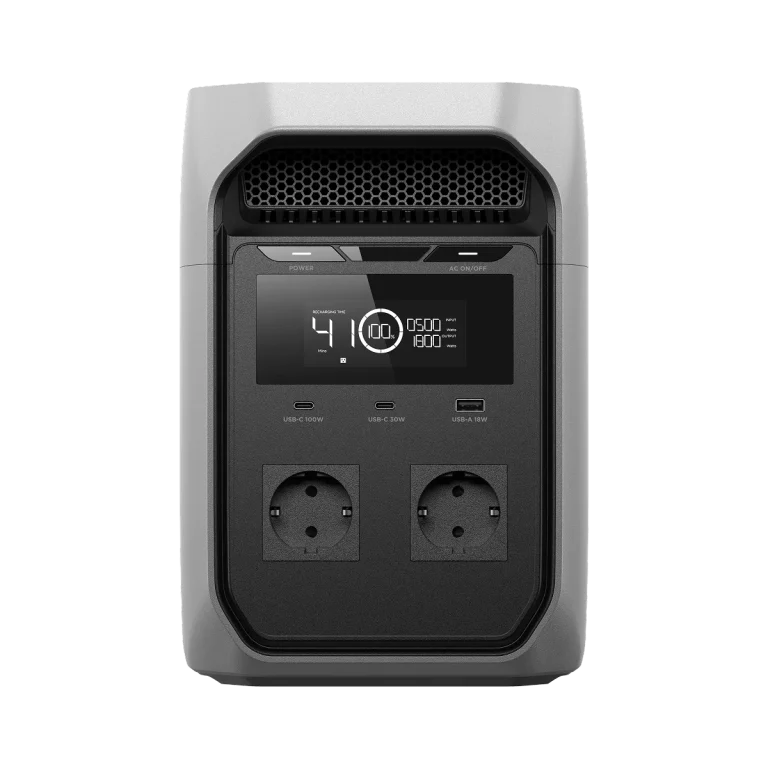
Two Schuko outlets and three USB
On the front panel there are two 230 V outlets, a 100 W USB-C for a laptop, another 30 W USB-C and a fast 18 W USB-A for a phone. There is no 12 V car socket or DC5521 connectors here, so devices powered only from 12 V have to be connected through their mains adapter.
Switching to battery in 10 ms
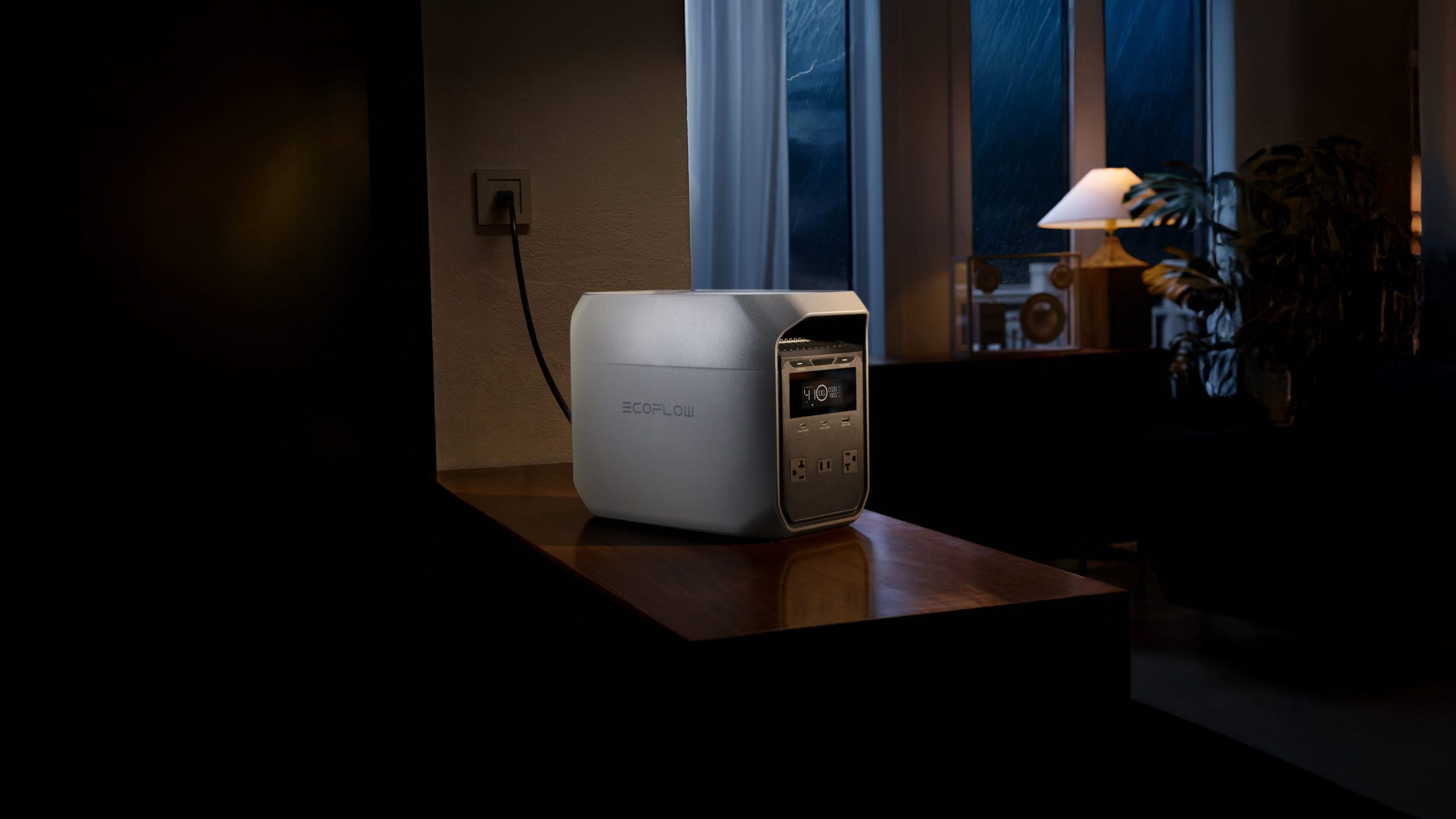
Classic can be kept permanently plugged into the mains with the equipment connected to it. When the voltage disappears, it takes over the load in about 10 milliseconds, and a router and laptop keep working without rebooting. A desktop PC with its power supply should be checked once in advance.
Full-tab cells and CTC design
The LFP battery is built from automotive-grade cells with a full current collector (full-tab). Each cell’s resistance is 1.5 mΩ versus 2 mΩ in the previous EcoFlow C33 cell, and at the same current this means 25% less heat. According to the manufacturer’s internal tests, with correct use the station will last about 10 years.
The cells are integrated into the case using the CTC scheme that EcoFlow borrowed from electric vehicles. According to the company, this design copes better with night-time condensation and shaking on a dirt road.
12.1 kg and up to 30 dB under load
The station measures 398 × 200 × 283 mm, so it takes up the space of a small suitcase and fits in a car boot next to other things. At half a metre and 600 W it is no louder than 30 dB, at 1200 W up to 40 dB, so at night in a room it is barely audible.
What equipment DELTA 3 Classic will run and for how long
All the figures below are calculated by a simple rule: of the 1024 Wh, about 85% reaches the outlets, roughly 870 Wh. We divide this reserve by the device power. It is an estimate: the real time may differ by 10–20% depending on the equipment and the room temperature.
An apartment during an outage
A router with an optical terminal consumes 15–25 W and runs from one station for more than a day and a half. A fridge, taking compressor pauses into account, draws 50–60 W on average, so by itself it will last 14–17 hours. Together with a router, laptop and two or three LED lamps it comes to about 150 W, and that is 5–6 hours.
If the house has gas heating, the boiler together with its pump usually consumes 100–120 W, and by itself it will last 7–8 hours. The station outputs a pure sine wave, so the boiler electronics treat it the same as the mains.
A home workstation
A typical remote-work set — a 60 W laptop, an external monitor and a router — draws about 120 W, and the charge lasts about 7 hours. EcoFlow also gives another figure: about 16 full charges of a 60 W laptop. It is more efficient to power a laptop through the 100 W USB-C: this way the energy does not pass through the inverter and the reserve is used more economically.
Trips, camping and shoots
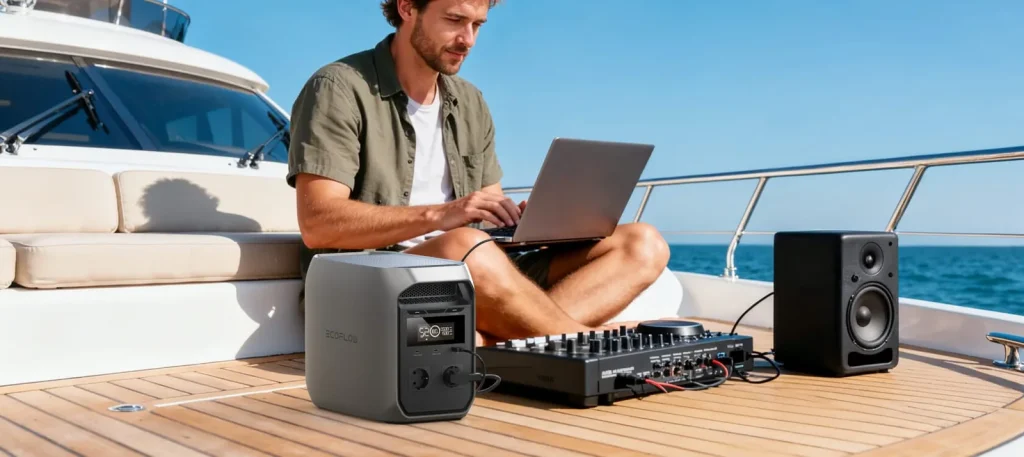
According to EcoFlow, a full station is enough for about 25 charges of a drone with a 40 Wh battery, 60 charges of a 16 W camera or 58 hours of a 10 W camping lantern. A 1150 W electric grill will run for about 40 minutes, and a 1500 W kettle for about half an hour, that is, a few boilings.
Connect a compressor car fridge through its 230 V adapter, because Classic has no separate 12 V output. If the fridge does not come with such an adapter, that is an argument in favour of DELTA 3.
Tools on location
A 1080 W drill, a 1100 W cut-off machine or a 1400 W circular saw fit within the rated 1800 W. EcoFlow estimates continuous operation of each at about 40 minutes, but tools switch on in short bursts, so this is often enough for a working day.
What not to expect from 1 kWh
Appliances that heat for hours, such as a boiler, oven or oil heater, are not suitable for this capacity: a 2 kW load drains the station in about 25 minutes. A 1000 W microwave runs comfortably, but 10 minutes of heating takes about 0.17 kWh. A 2200 W kettle will work only through X-Boost and boil longer than usual.
How it works
From the mains the station charges with the supplied cable; the input accepts 220–240 V and up to 1400 W. A generator connects through the same input, and from it Classic also draws up to 1400 W. So a petrol generator only needs to run for about an hour, not all night.
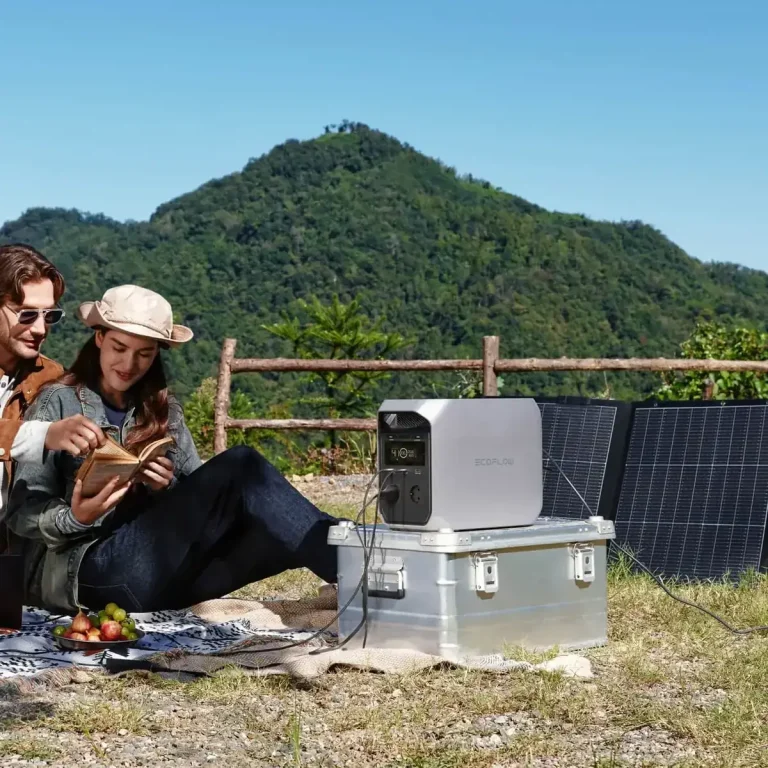
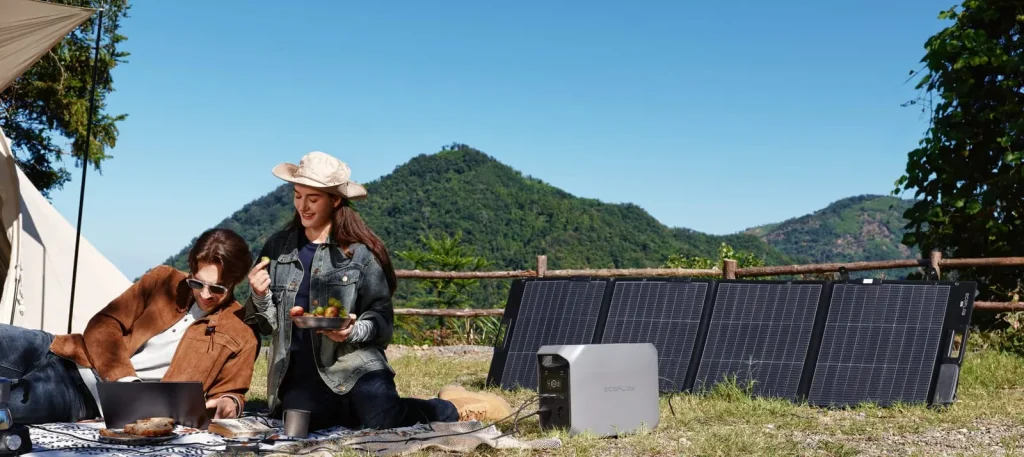
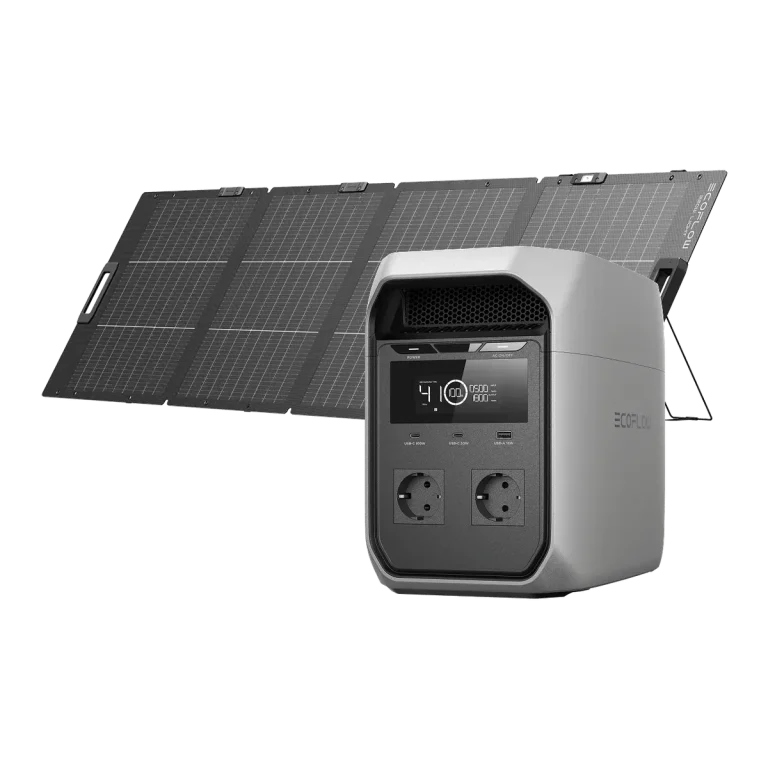
For solar panels there is a 500 W XT60 port. According to EcoFlow, at the full 500 W input the station charges in about 2.5 hours, but in autumn and winter panels deliver noticeably less than their rating.
On the road the station is charged by a separate EcoFlow 500W Alternator Charger connected to the car battery. It works through the same XT60 port as the panels and, per the manufacturer, gives 80% in about 1.8 hours of driving and a full charge in 2.5 hours.
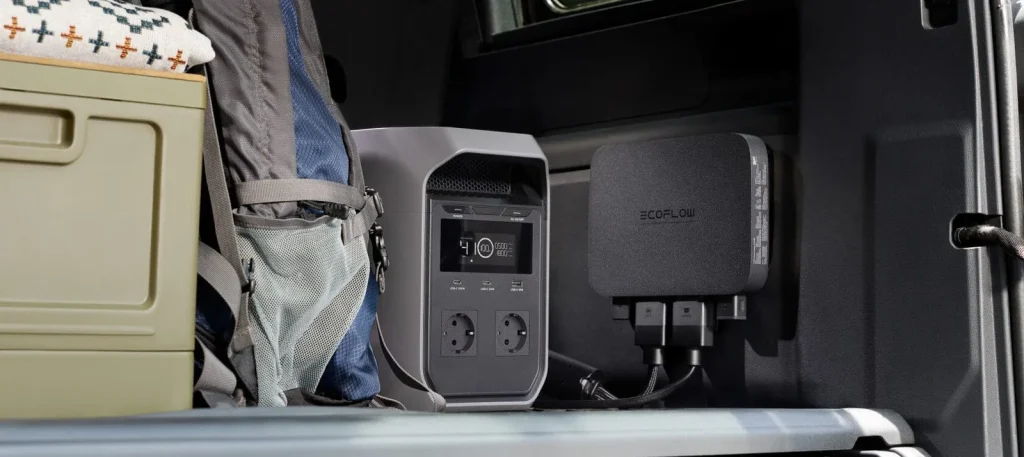
For backup power the station is plugged into the mains and the equipment into its outlets. While the mains is on, devices receive it in transit, and in an outage Classic switches them to the battery in 10 ms. This model has no extra battery port, so the capacity always stays 1024 Wh.
The station is controlled from a smartphone: the EcoFlow app connects to it over home Wi-Fi or directly over Bluetooth. It shows the charge, consumption and panel generation, and the charging schedule lets you fill the station at night when the night tariff applies. Storm Guard mode charges the battery in advance based on a bad-weather forecast; it only needs to be switched on once in the app.
DELTA 3 Classic, DELTA 3, DELTA 3 1500 or DELTA 2
| DELTA 3 Classic | DELTA 3 | DELTA 3 1500 | |
|---|---|---|---|
| Capacity | 1024 Wh | 1024 Wh | 1536 Wh |
| Outlets / all outputs | 2 / 5 | 4 / 11 | 4 / 13 |
| 12 V output | no | yes | yes |
| AC charging | 1400 W, 0–100% in 60 min | 1500 W, 0–100% in 56 min | 1500 W, 0–100% in 1.5 h |
| Expansion | no | up to 5 kWh | up to 5.5 kWh |
| UPS switching | 10 ms | up to 10 ms | up to 15 ms |
| Weight | 12.1 kg | 12.5 kg | 16.5 kg |
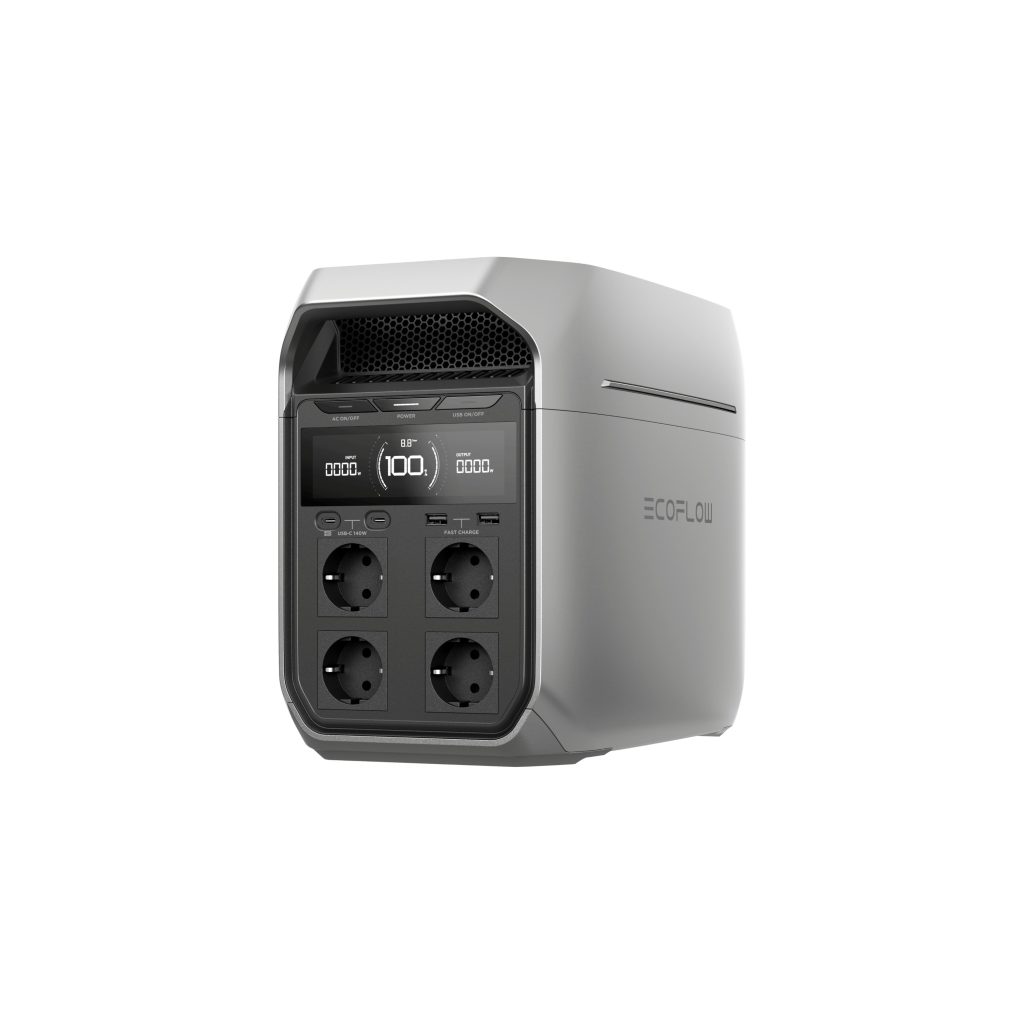
EcoFlow DELTA 3 is the full version of the same platform. The capacity, rating and peak are the same, but there are four outlets, 11 outputs including a 12 V car one, and a battery can be added to the expansion port to reach 5 kWh. The battery pack there is IP65 protected, and the manufacturer states 4000 cycles to 80% capacity. It is more logical if you plan to grow the capacity or use 12 V equipment.
EcoFlow DELTA 3 1500 is the same DELTA 3 with a larger 1536 Wh battery: 50% more energy, four outlets, 13 outputs and expansion to 5.5 kWh. It weighs 4.4 kg more and switches to battery in under 15 ms. It is worth considering for a private house where a boiler and fridge need to last longer.
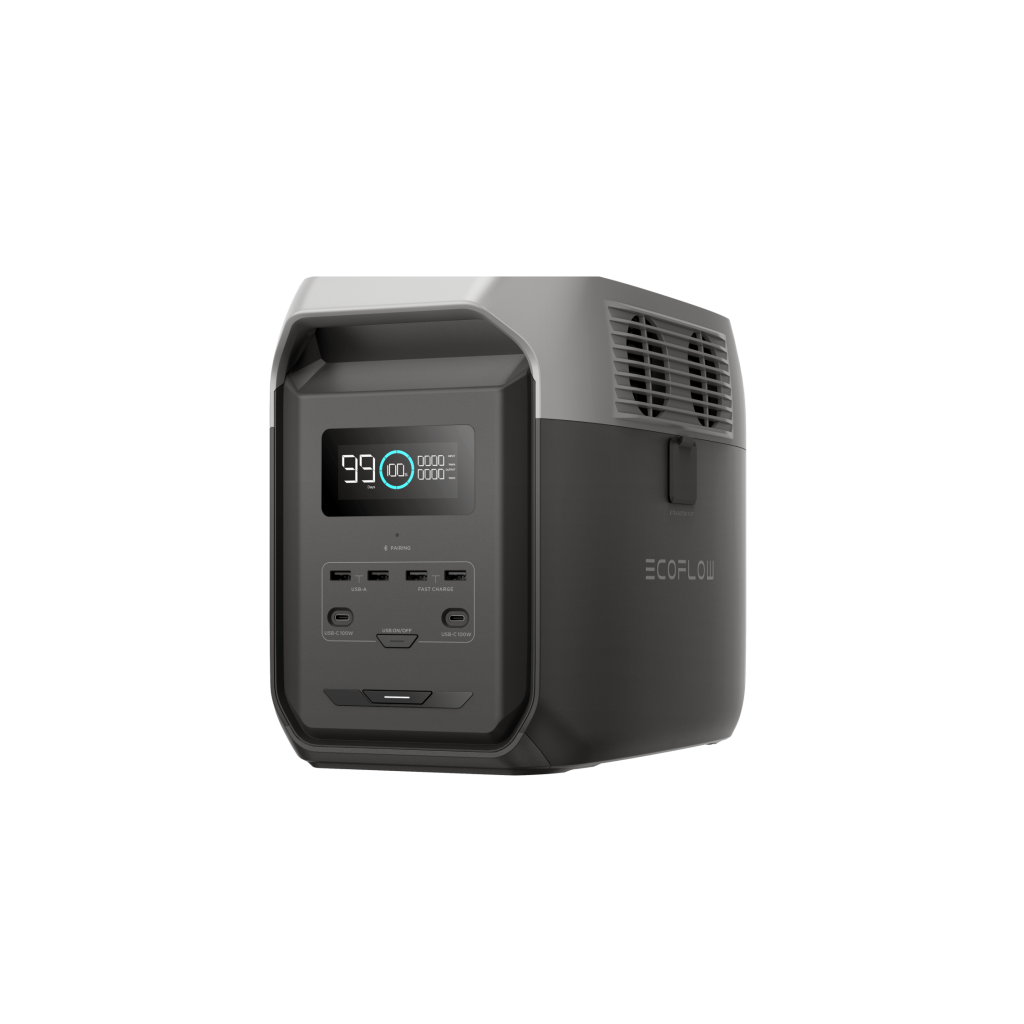
EcoFlow DELTA 2 is the previous generation with the same 1024 Wh. It has four outlets, 13 outputs, charging from a cigarette lighter and one extra battery up to 3040 Wh. It charges more slowly from the mains (1200 W, 80% in about 50 minutes), switches in 30 ms and has a 2700 W peak. Classic wins on charging speed and switching, DELTA 2 on the number of ports and the option to expand.
If two outlets and a fixed kilowatt are enough for you, Classic gives you the main benefits of the new generation without ports you would not have used anyway.
Who DELTA 3 Classic suits and who it does not
It suits you if:
- in an apartment you need to last a few hours with a router, laptop, lights and a fridge;
- you work from home and equipment must not reboot during an outage;
- you need the station for trips, camping, location shoots or work with tools, where 12 kg and a compact case matter;
- you do not need extra batteries and a 12 V output.
Better to choose another model if:
- you need to power more than two 230 V appliances at once: you will need an extension lead, and the total load is still limited to 1800 W;
- you have equipment that is powered only from 12 V, for example a car fridge without a mains adapter;
- you plan to expand capacity or run a boiler and fridge all night — then look at DELTA 3 or DELTA 3 1500;
- the station will work in the open air: the case has an IP20 protection class and is not protected from rain;
- you plan to connect a server or other equipment to the station for which even a moment without power is critical: an online UPS is needed here.
FAQ
How many outlets does DELTA 3 Classic have?
Two 230 V Schuko outlets. Together with a 100 W USB-C, a 30 W USB-C and an 18 W USB-A that makes five outputs. Some descriptions give the figure “3 outlets”, but on EcoFlow’s official German and British pages and in the photos of the European version there are two.
Can the capacity of DELTA 3 Classic be increased?
No. Classic is produced with a fixed 1024 Wh and has no connector for an Extra Battery. If expansion matters, compare it with DELTA 3 (up to 5 kWh) or DELTA 3 1500 (up to 5.5 kWh).
How do I power 12 V devices from Classic?
Only through their mains adapter, or over USB-C if the device charges that way. This version has no car socket or DC5521 outputs, and this is one of the main differences from DELTA 3.
Does the station really charge in 45 minutes?
To 80% — yes, from a socket in fast mode at 1400 W. A full charge takes about 60 minutes, because the battery takes on the last percentages more slowly.
How long will a boiler run from DELTA 3 Classic?
About 7–8 hours for a boiler with a 100–120 W pump if there are no other devices. For a whole night together with a fridge the capacity may not be enough, and then a model with a larger battery is better.
Can the station be kept in a car or on a balcony in winter?
It can be stored from -10 °C but charged only from 0 °C, so before charging in winter it is better to bring the station into the warm. The case has IP20 protection, so it must be kept under cover from snow and rain.
How long does solar charging take?
About 2.5 hours at a steady 500 W input, according to EcoFlow. A single 220 W panel, even in ideal sun, will charge the station for at least 5 hours, and on an ordinary day longer.
Summary
DELTA 3 Classic is the simplest entry into the new generation of 1 kWh DELTA: 1800 W, 80% charge in 45 minutes, 10 ms switching and quiet operation, but without an expansion port and a 12 V output. If you have decided to buy an EcoFlow DELTA 3 Classic, put the station in your cart and leave your contacts for confirmation. Not sure that two outlets and a kilowatt-hour are enough for your particular set of equipment? List your devices on the contacts page and we will calculate the run time.