Description
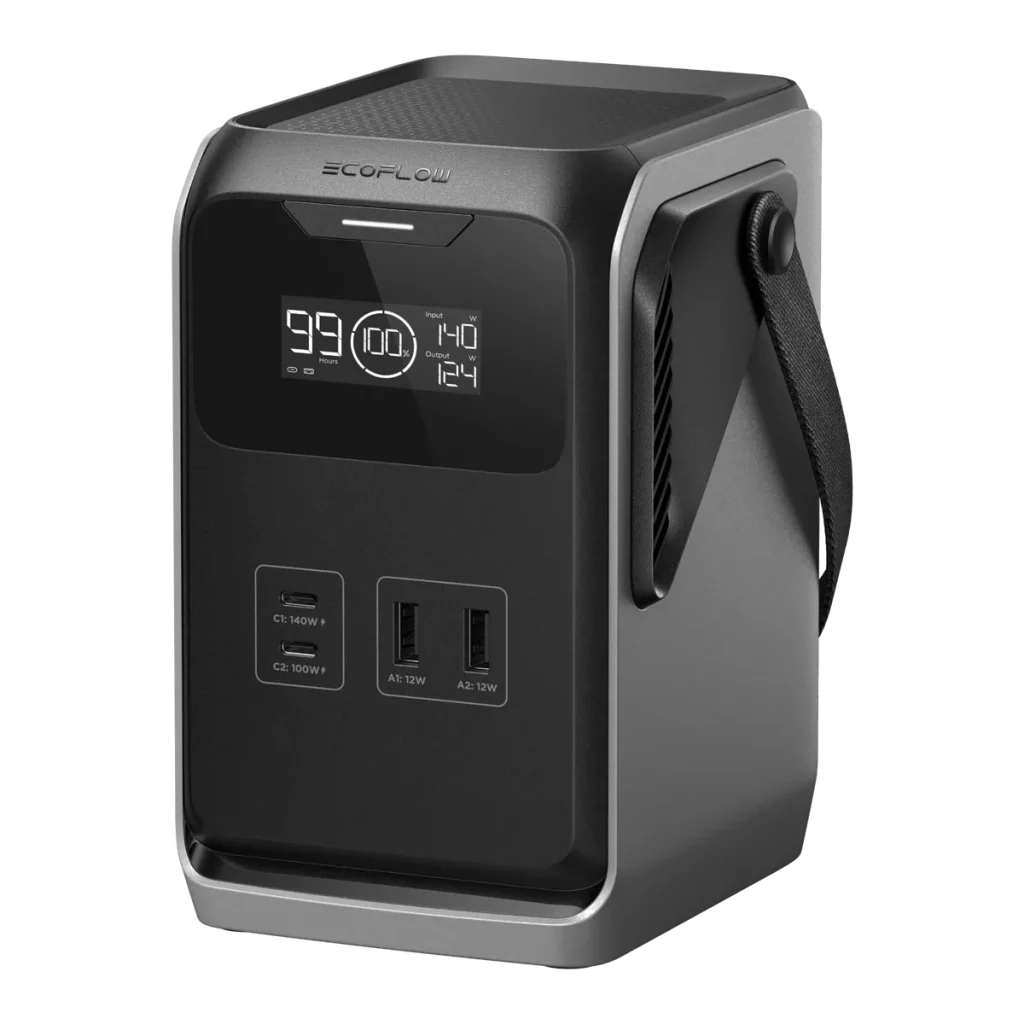
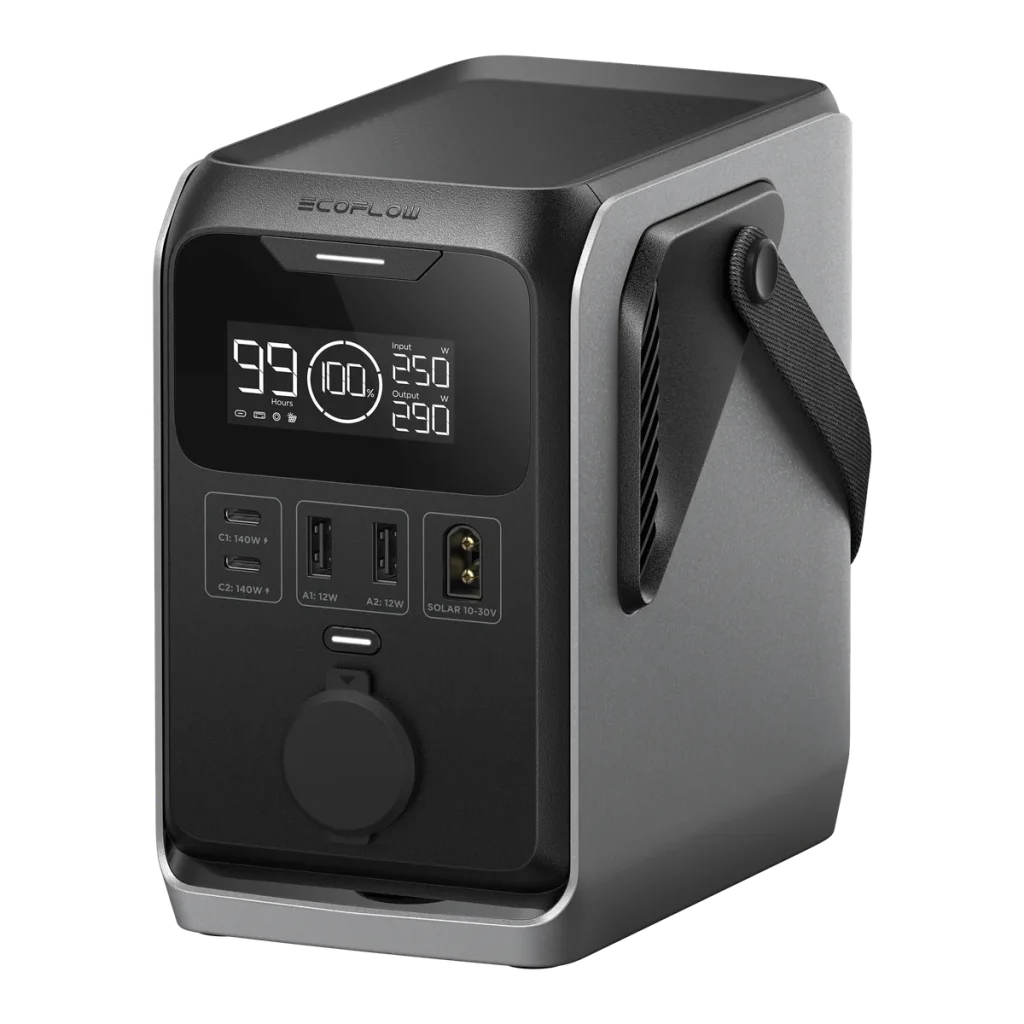
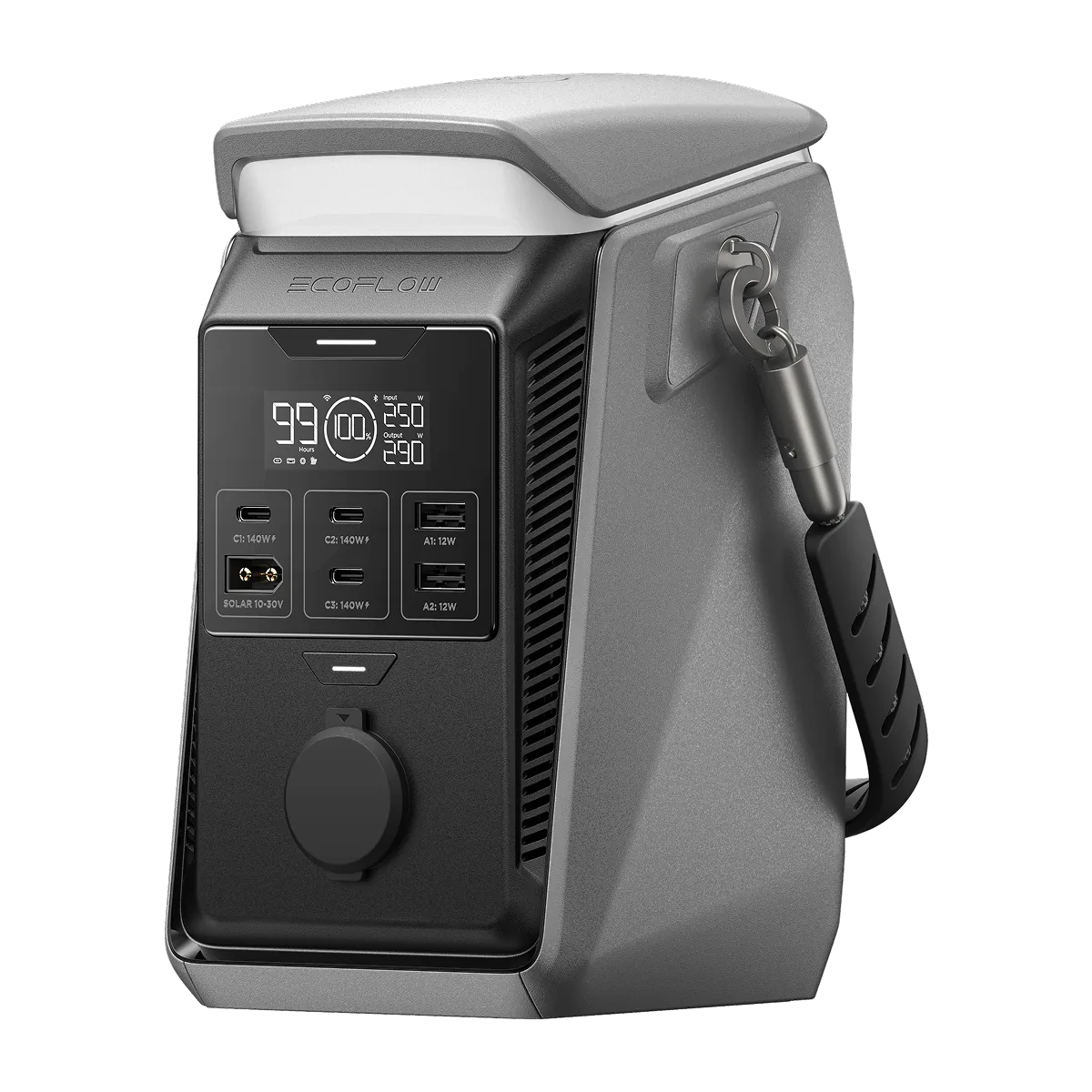
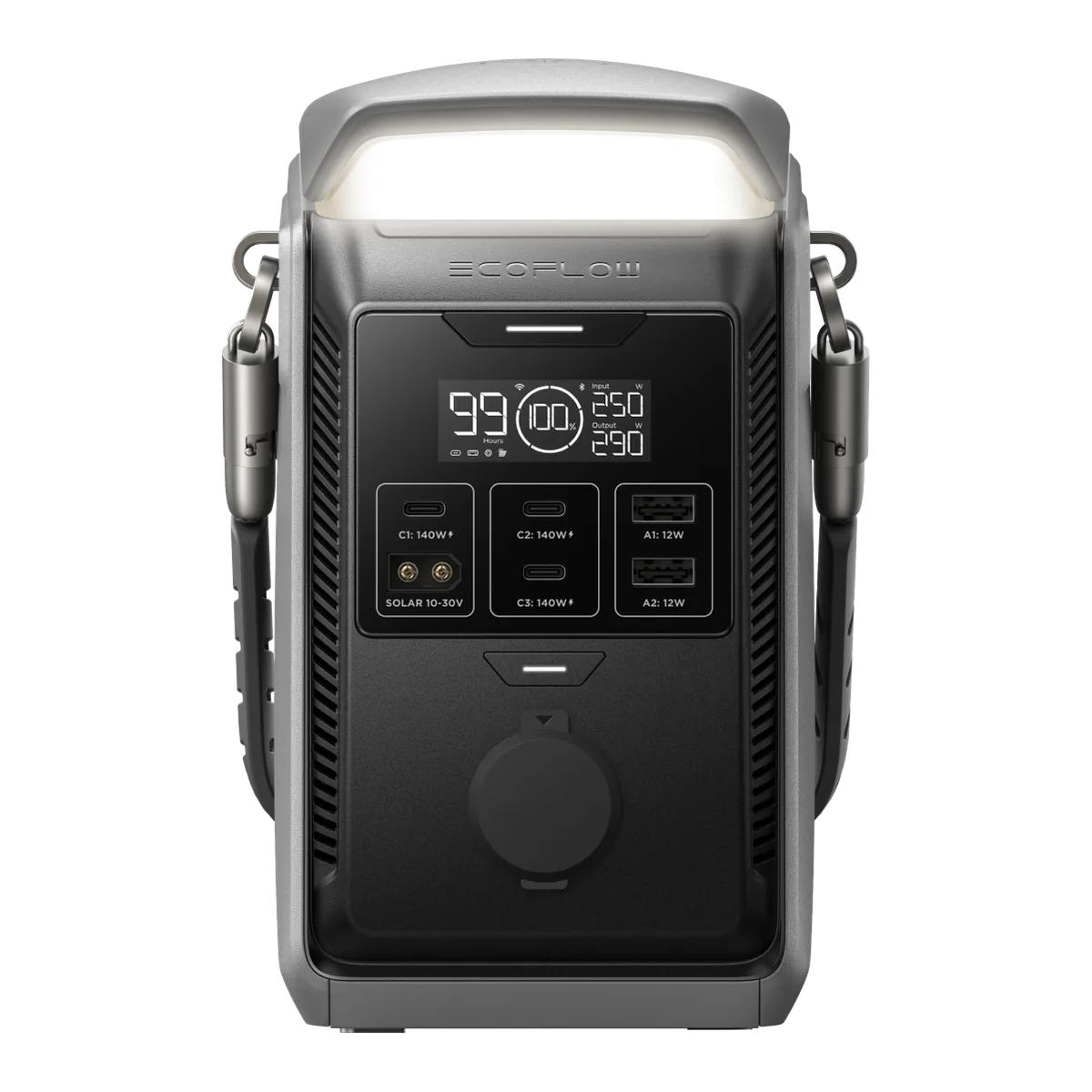
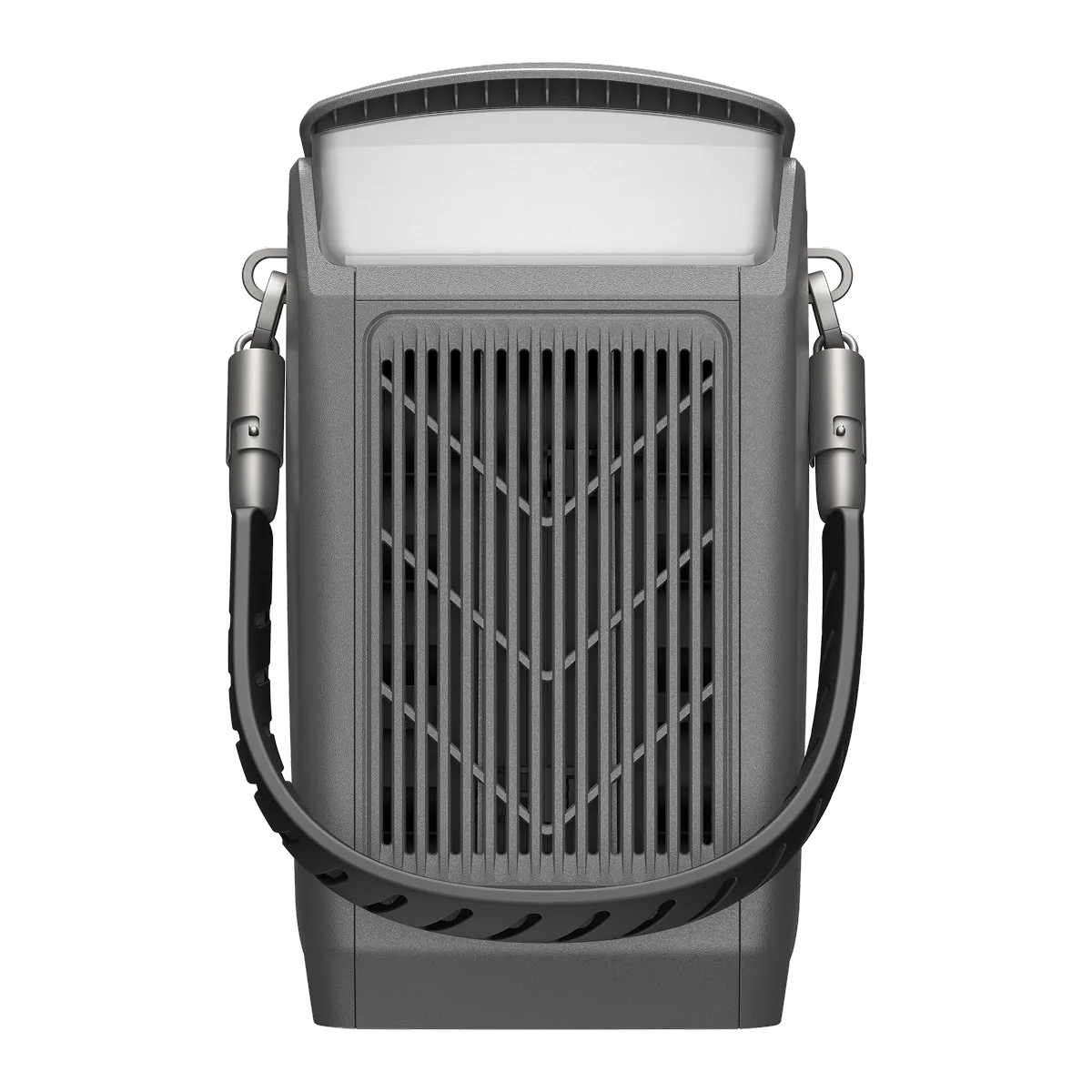
The EcoFlow TRAIL Plus 300 DC combines three things in one case: a 288 Wh battery, a camping lantern in the top part and a handle that is actually a 140 W USB-C cable. It is the best-equipped model of the TRAIL series, but, like the rest, it works only with direct current. So if you decide to buy an EcoFlow TRAIL Plus 300 DC, remember: there are no 230 V outlets, and all equipment connects through USB-C, USB-A or the 12 V socket.
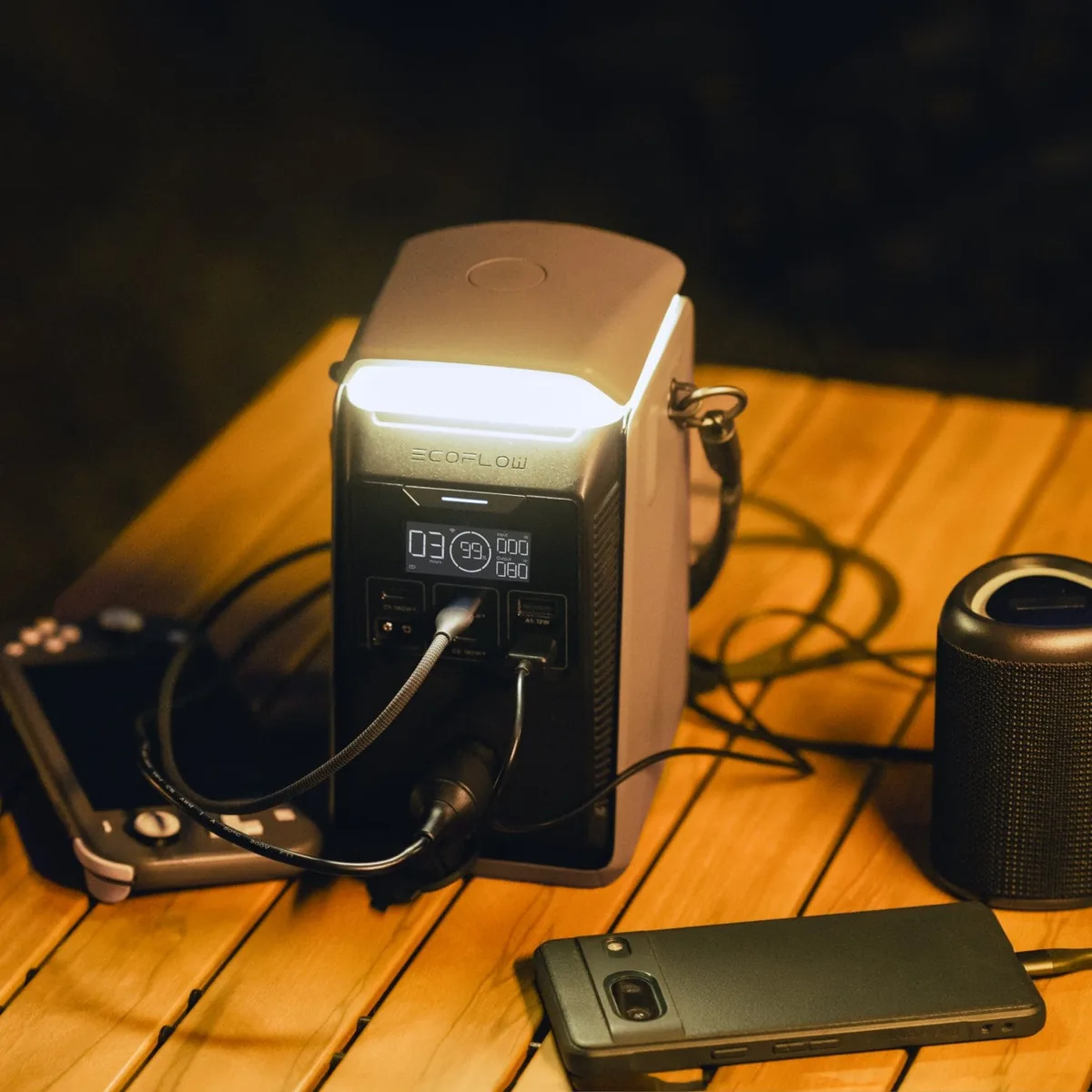
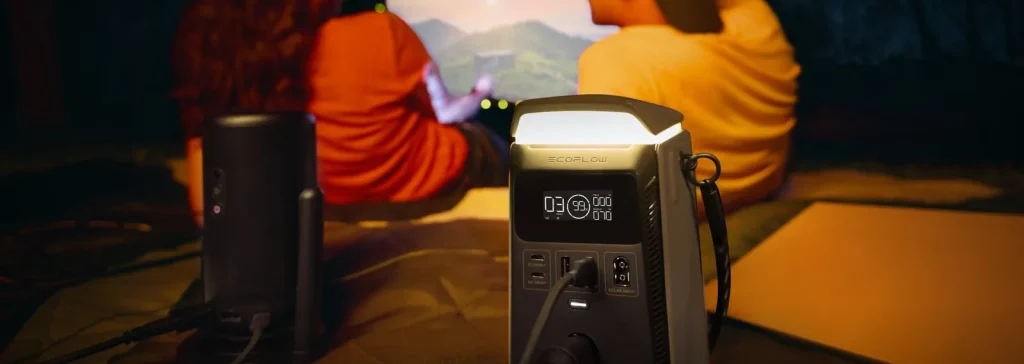
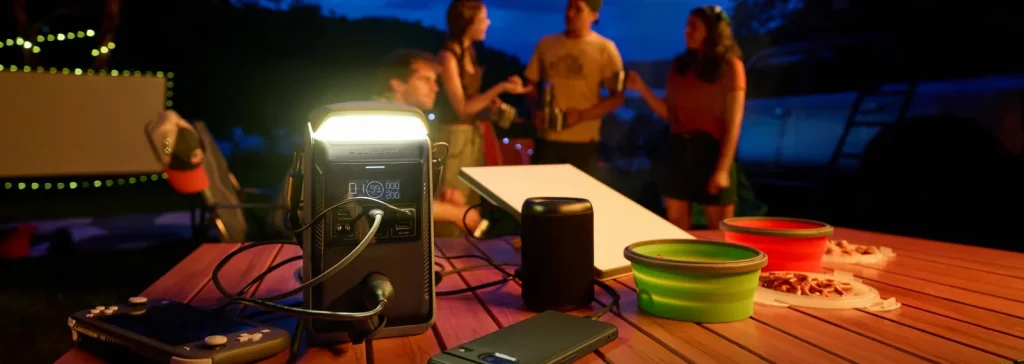
For a tent night, fishing or an evening without power in an apartment this is enough: the lantern lights a table or tent, and the six ports charge phones, a laptop and power banks at the same time and power a car fridge. The station weighs 2.26 kg, 320 g less than the TRAIL 300 DC of the same capacity.
What you get with the TRAIL Plus 300 DC
A built-in camping lantern
The top panel is a multi-function lantern, so no separate lamp is needed for the tent. EcoFlow does not spell out the modes and brightness in the specification, so we do not give specific lumens.
A 140 W handle-cable
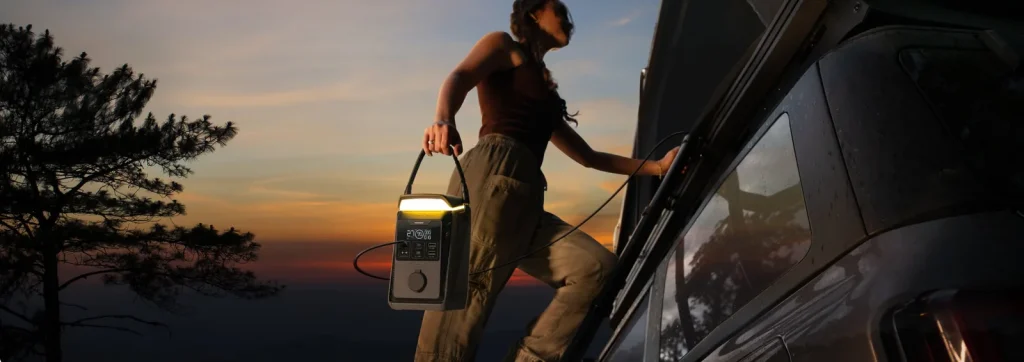
The handle can be detached and becomes a 140 W USB-C cable. With it the station is charged from a power supply or, conversely, a laptop is charged from it. A separate cable will not get lost in the rucksack, because it is always in your hand. EcoFlow offers three ways to carry the station itself: by the handle, over the shoulder or in a rucksack.
Six ports, three of them 140 W USB-C
The three USB-C ports work for input and output, up to 140 W each. In addition there are two 12 W USB-A and a 12 V cigarette-lighter socket up to 120 W. Altogether the station delivers up to 300 W and powers up to six devices at once.
An app over Wi-Fi and Bluetooth
This is the only model in the series that connects to the EcoFlow app. After the first switch-on the manufacturer advises connecting the station to the app, setting up Wi-Fi and updating the firmware.
A compact NCM battery
Instead of LiFePO4, as in the TRAIL 200 DC and TRAIL 300 DC, it has lithium nickel cobalt manganese (NCM) cells. According to EcoFlow, the TRAIL Plus 300 DC is 36% lighter and 52% smaller than the RIVER 3 in a similar capacity range. The warranty is 3 years.
How long equipment runs from 288 Wh
For your own calculations take about 245 Wh of usable energy, that is 85% of the rating, and divide by the device power. For this model EcoFlow gives these guides:
- a 12 V compressor car fridge: about 23 hours;
- an LED strip: up to 71 hours, a battery camping lantern — 44 charges;
- a portable Wi-Fi router: about 9 hours;
- a smartphone: 16 charges, a camera — 22, a drone — 12;
- a portable speaker: 15 charges, a projector — 6.
During a power outage at home the station keeps communication going: a 12 V router through an adapter consumes 10–15 W and will last 16–24 hours, a Starlink Mini from USB-C PD at 25–40 W about 6–9 hours. A laptop charging through USB-C will get about five full cycles.
An evening in an apartment without power
Here the Plus beats its sister models precisely thanks to the lantern. The station is put on the kitchen table: on top it shines, and underneath phones charge from it and a router runs. No separate USB lamps and power banks are needed for this, and the 288 Wh reserve stretches across the whole evening and night if you do not run a laptop at full power.
In a tent the same scenario: a lantern over the entrance, a speaker and phones on the ports, a car fridge on the 12 V socket. Only note that a fridge takes the main part of the energy, so the next day it is better to top the station up from a panel.
What will not work: equipment with a 230 V plug. A kettle, microwave, ordinary fridge, TV, boiler pump or hair dryer need a station with an inverter. A car inverter in the 12 V socket is not an option here because of the 120 W limit.
How it works
The station can be charged in three ways. The fastest is USB-C: a 140 W charger brings the battery to 80% in about 1 hour 55 minutes, and a 100 W charger needs about 2 hours 36 minutes for it. The cable for this is already there — it is the handle — and the power supply you need to bring yourself.
The second way is the sun through the XT60 input up to 110 W. With a 110 W panel it takes about 2.4 hours to 80% and 3.1 hours to 100%; with a 60 W panel 80% takes 3.9 hours. For this we have the EcoFlow 60W Solar Panel with an XT60i cable. The third way is a car cigarette lighter, also up to 110 W and about 3.1 hours to a full charge; the car cable is bought separately.
In the box, besides the station with the handle-cable, there are only documents: a quick start guide, safety rules and a warranty card. EcoFlow advises storing the station in a dry place at 0–30 °C, and during a long pause charging it fully once every three months and discharging it to 60%.
Plus 300 vs TRAIL 300 DC and TRAIL 200 DC
| TRAIL Plus 300 DC | TRAIL 300 DC | TRAIL 200 DC | |
|---|---|---|---|
| Capacity | 288 Wh | 288 Wh | 192 Wh |
| Battery type | NCM | LiFePO4 | LiFePO4 |
| Ports | 3 USB-C, 2 USB-A, 12 V | 2 USB-C, 2 USB-A, 12 V | 2 USB-C, 2 USB-A |
| Lantern and app | yes | no | no |
| Weight | 2.26 kg | 2.58 kg | 1.83 kg |
The EcoFlow TRAIL 300 DC has the same capacity, the same charging speed and a 12 V socket, but no lantern, no app and no third USB-C. It is chosen by those for whom a LiFePO4 battery matters: such cells usually withstand more cycles than NCM. EcoFlow does not officially publish the number of cycles for any TRAIL model.
The EcoFlow TRAIL 200 DC is the lightest in the series, but has no 12 V socket and no solar input. It is worth considering when your set has no 12 V device at all and solar panels are not planned.
If you cannot do without alternating current, compare with the EcoFlow RIVER 3: 245 Wh and a 300 W inverter. For a router that must switch to battery by itself, there is the EcoFlow RIVER 3 UPS.
Who the TRAIL Plus 300 DC suits and who it does not
It suits:
- for camping with a tent where the station doubles as a lamp;
- those who want to see the charge and consumption in a phone;
- for trips with a 12 V car fridge and a small solar panel;
- if minimum weight at 288 Wh matters.
Not suitable:
- for any devices with a 230 V plug;
- if you deliberately choose only LiFePO4;
- for devices that need over 140 W on one port.
FAQ
What does the Plus version add compared with the TRAIL 300 DC?
A lantern, a handle-cable, a third USB-C and an app. The capacity, 300 W output, 12 V socket and solar input are the same, and the battery is different: NCM instead of LiFePO4.
What happens if I lose the handle-cable?
The station will keep working, and it can be charged with any USB-C cable. To get the full 140 W, the cable must be rated for that power.
Can the station be used simply as a lantern?
Yes, the lantern is built into the case and runs from the same battery. EcoFlow does not publish how many hours it shines in different modes.
Does the app work without internet?
The station supports both Wi-Fi and Bluetooth. For first setup and a firmware update EcoFlow advises connecting it to Wi-Fi, and where there is no Wi-Fi, a phone can connect to the station over Bluetooth.
Can the station be taken on a plane?
No, 288 Wh exceeds the 160 Wh limit for carrying batteries on a plane.
Does the model support UPS mode?
No, uninterruptible power mode is not officially declared for the TRAIL series. RIVER 3 stations with outlets exist for that.
Which solar panel should I take?
A panel that delivers 10–30 V with an XT60 output or an XT60 adapter will do. The input accepts up to 110 W, so a 60–110 W panel is the optimal size.
Summary
The TRAIL Plus 300 DC is a model for those who want to take one item on a hike instead of three: a battery, a lamp and a cable. For those already ready to buy an EcoFlow TRAIL Plus 300 DC, the cart button is on this page. If you are torn between NCM and LiFePO4 or want to check your equipment for compatibility, write to us through the contacts page.