Connect appliances to the station
Choose what has to keep running during a blackout — we will work out how long the station lasts and whether it can carry the load. Choose appliances — we will work out how long the station lasts.
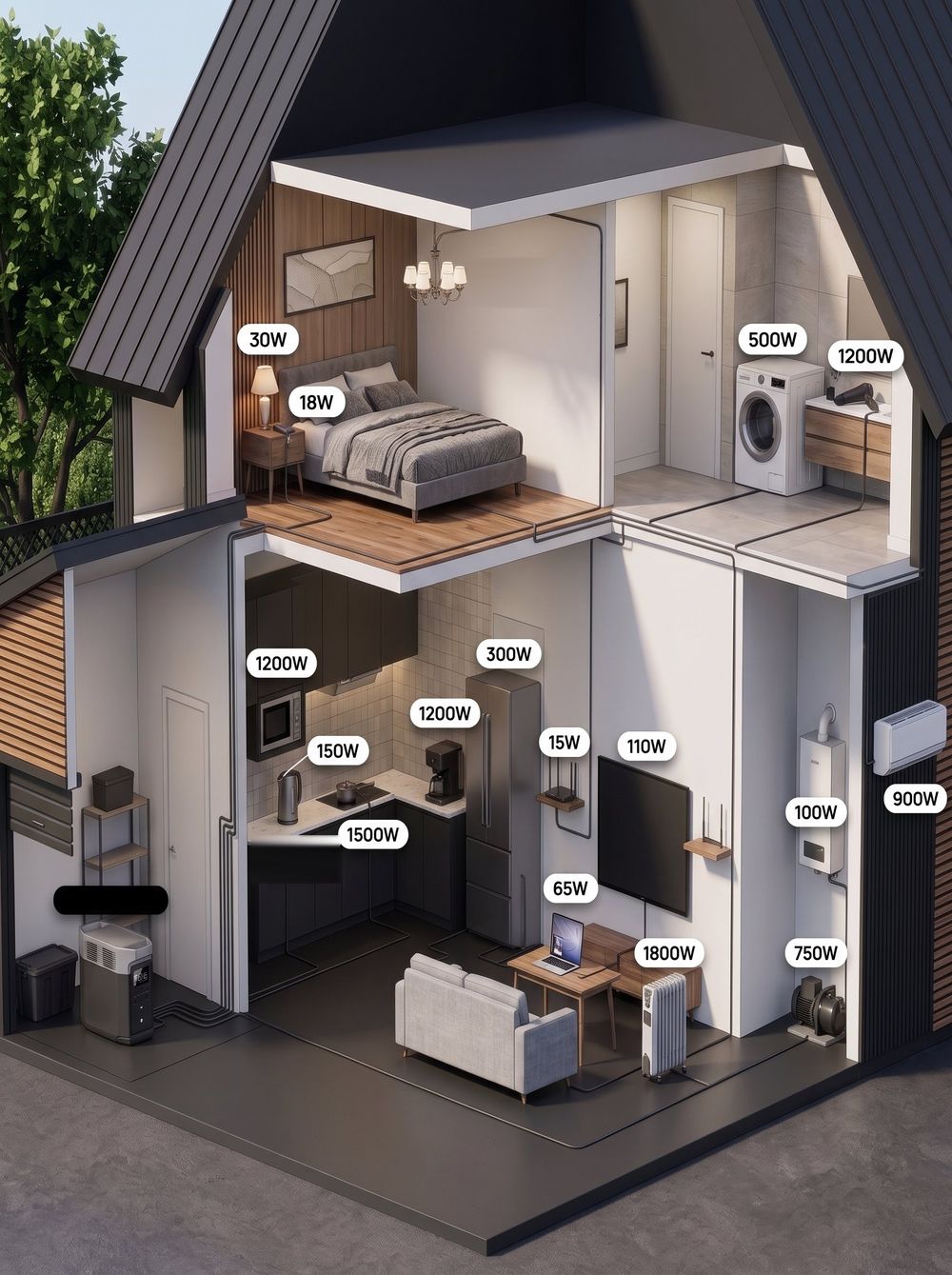
An estimate: 85% of the station capacity (inverter efficiency) divided by the total power of the appliances; charge is shown after a 4-hour blackout. Real figures depend on how the appliances are used.
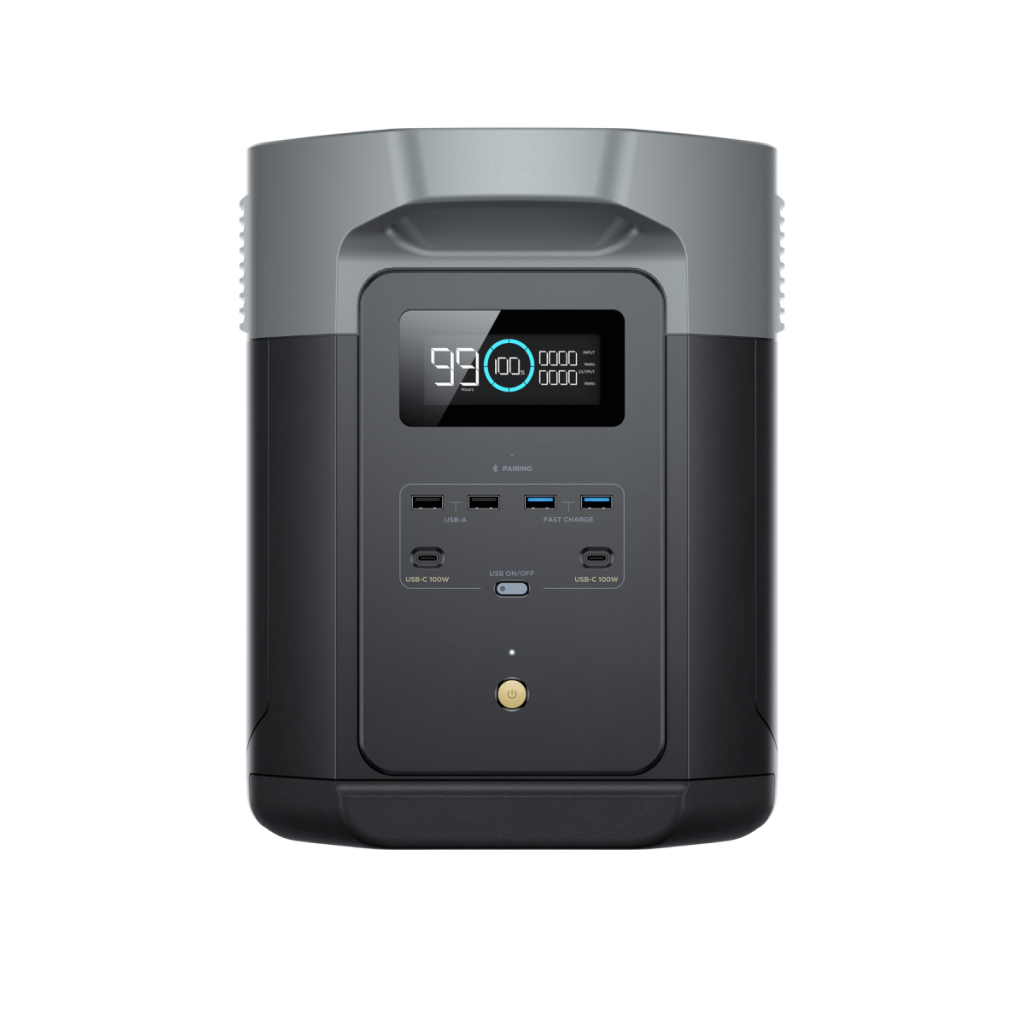
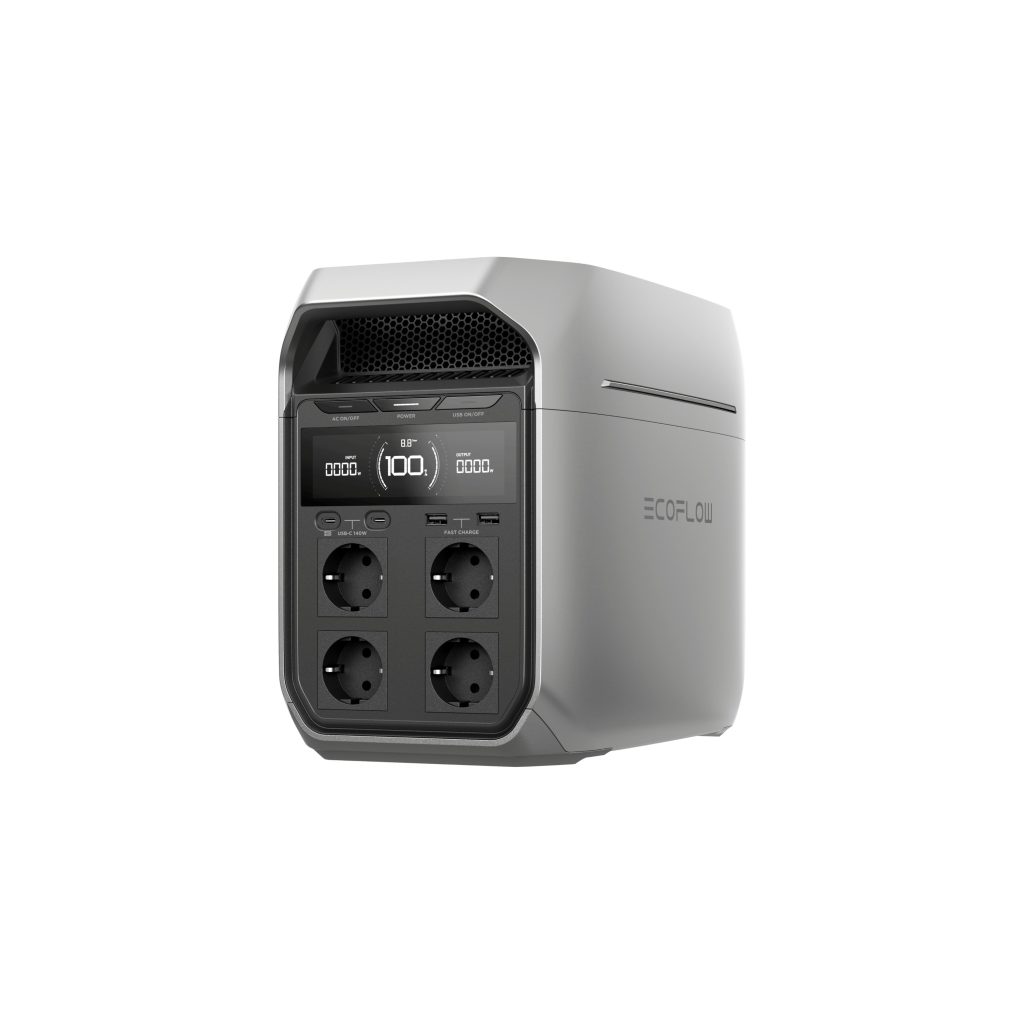
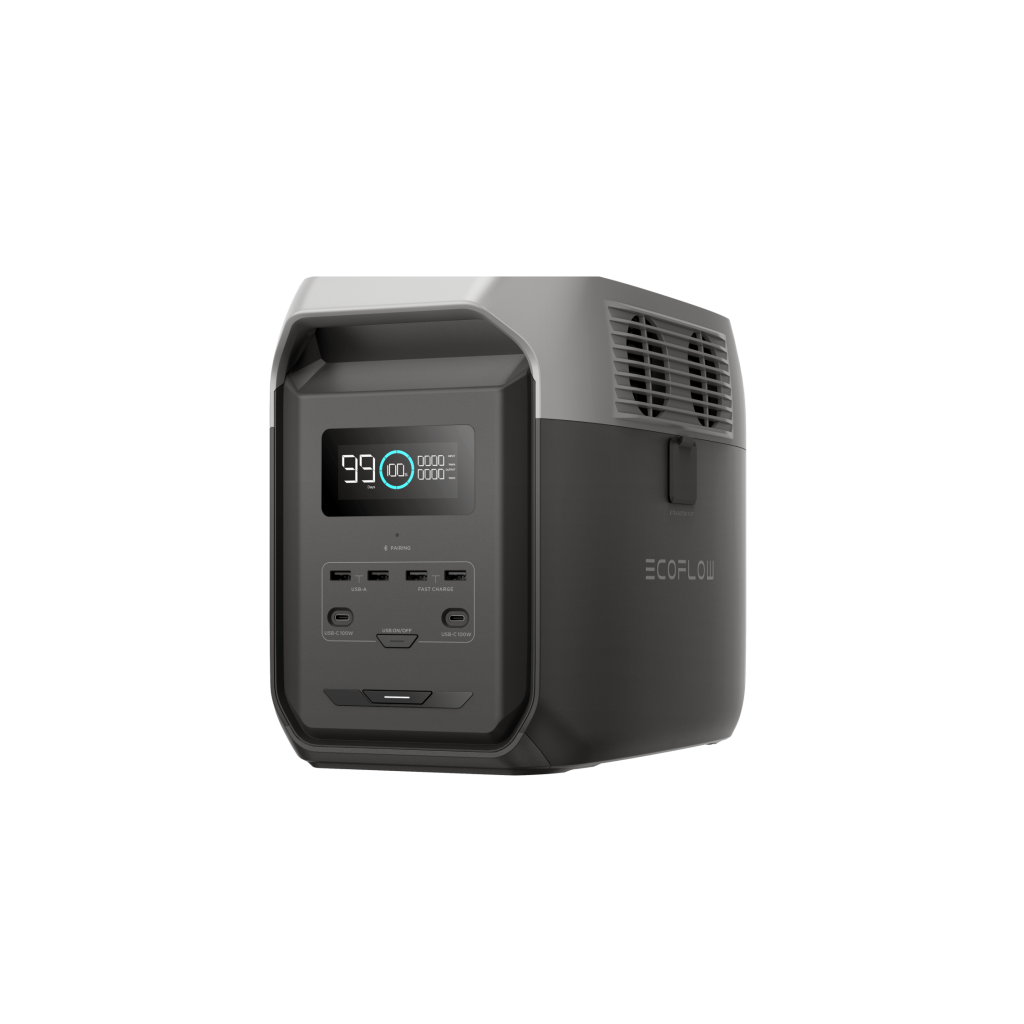
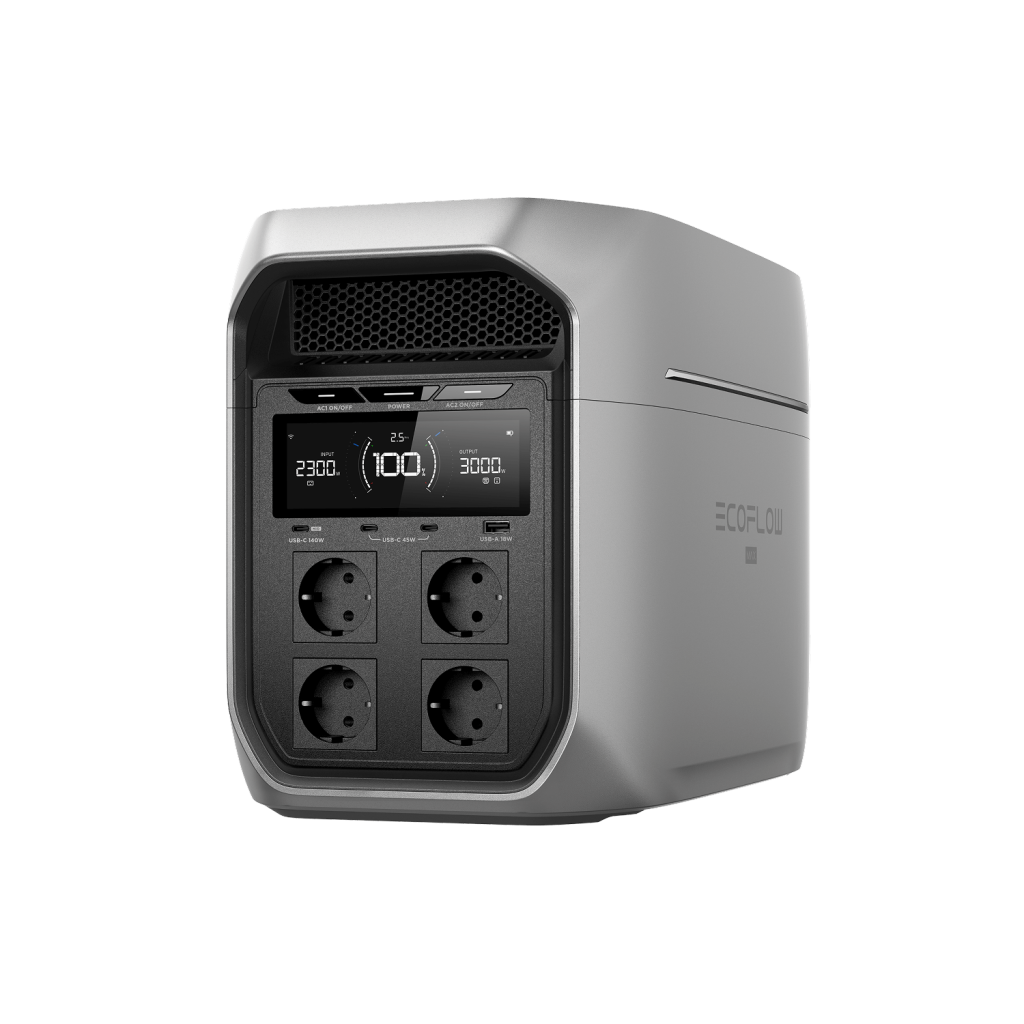
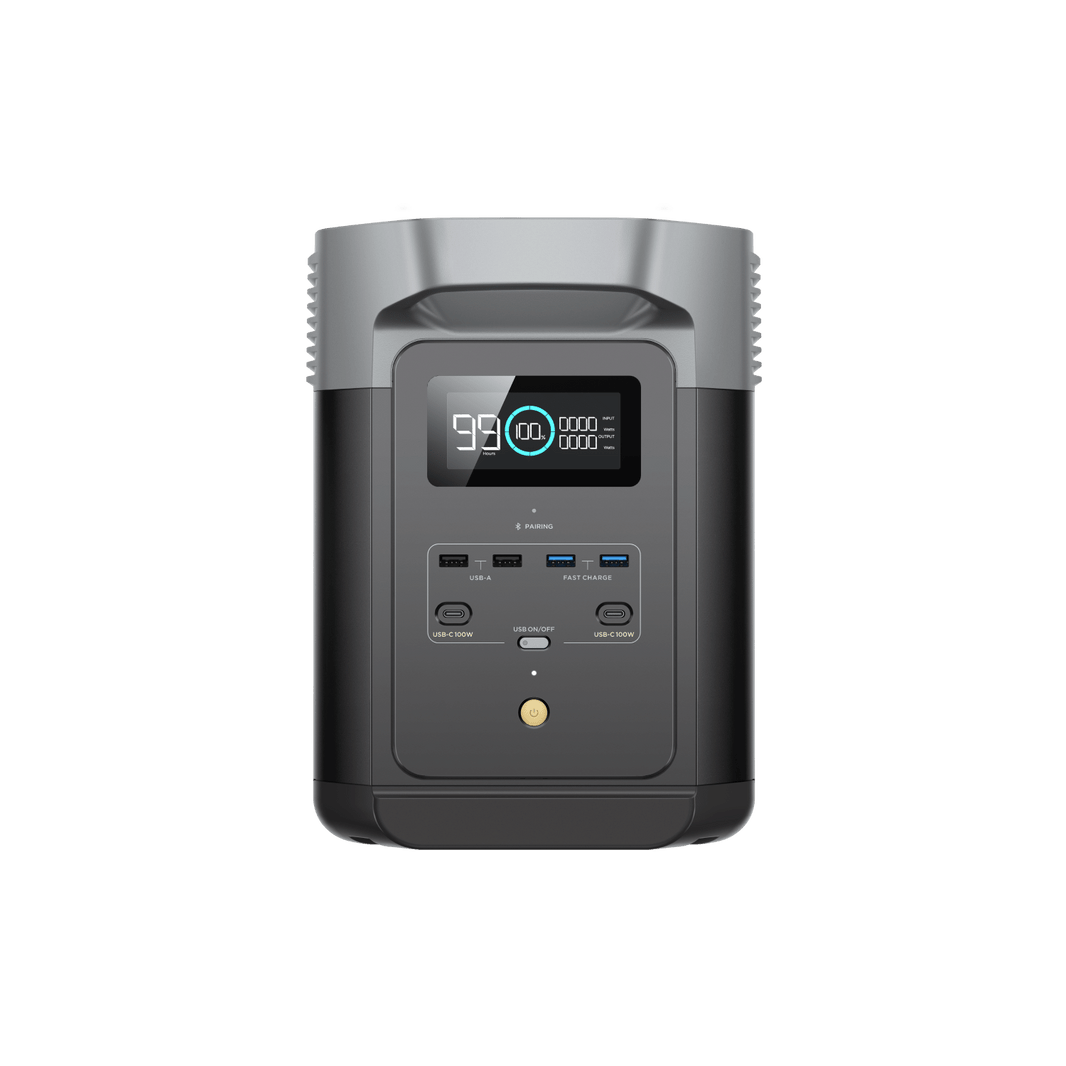
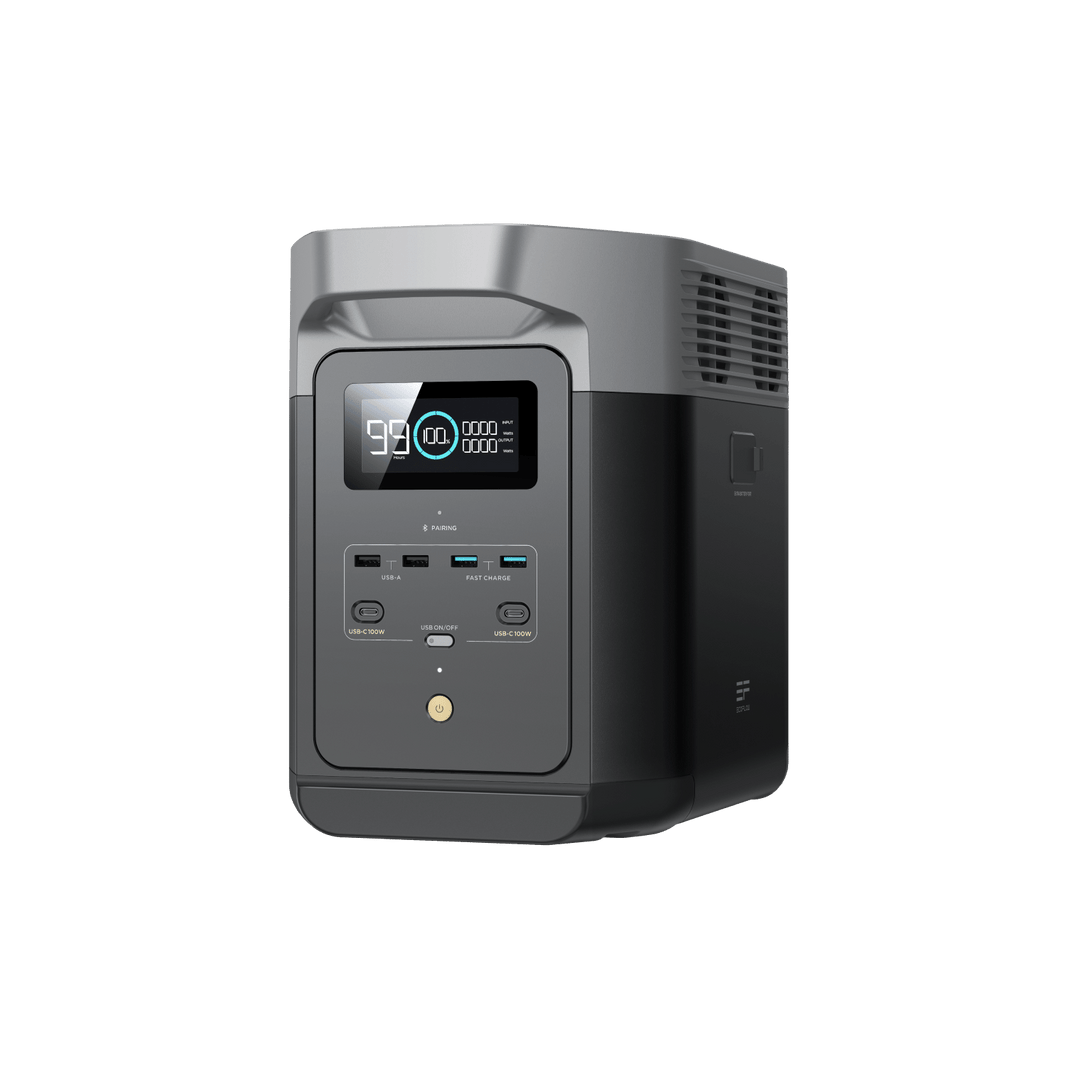
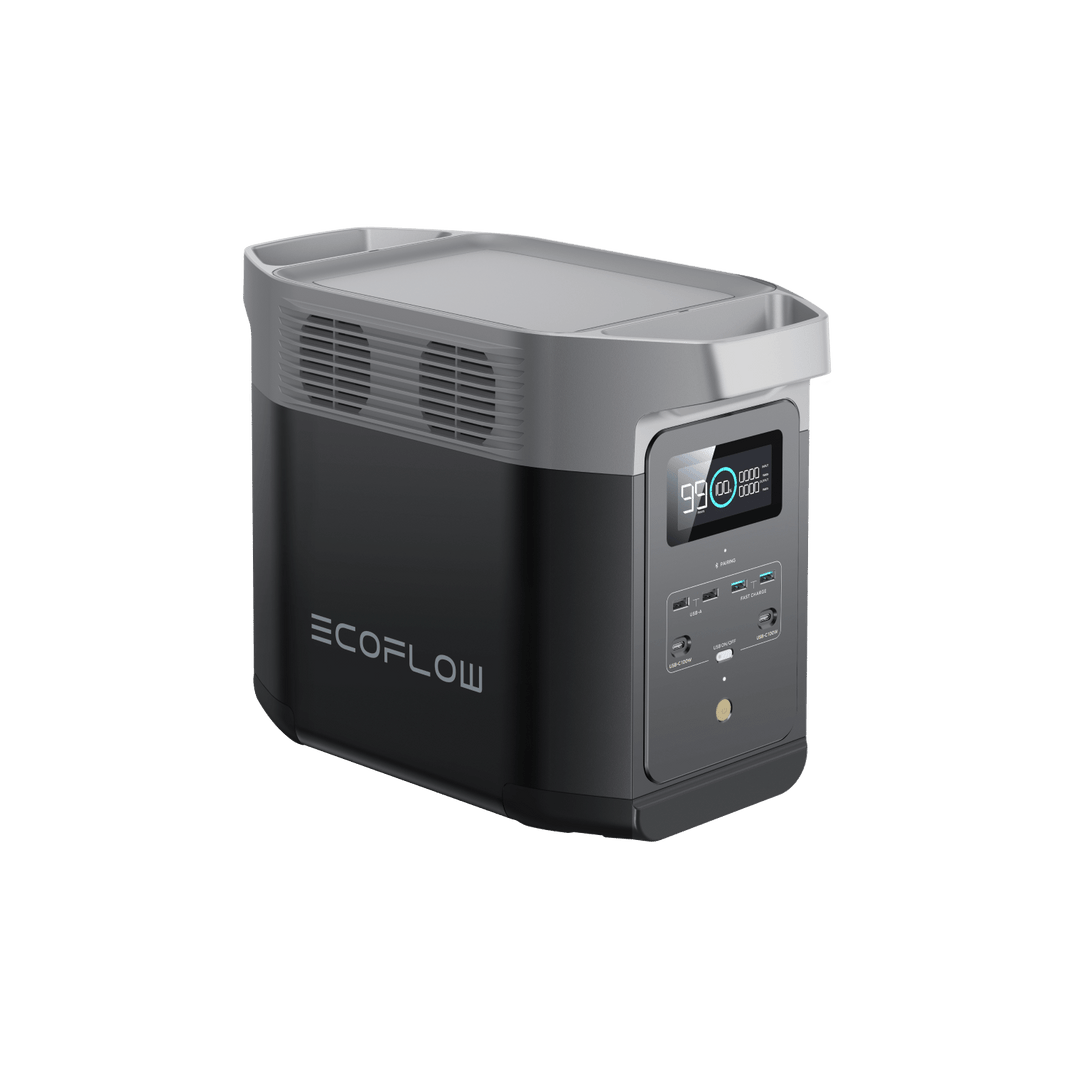
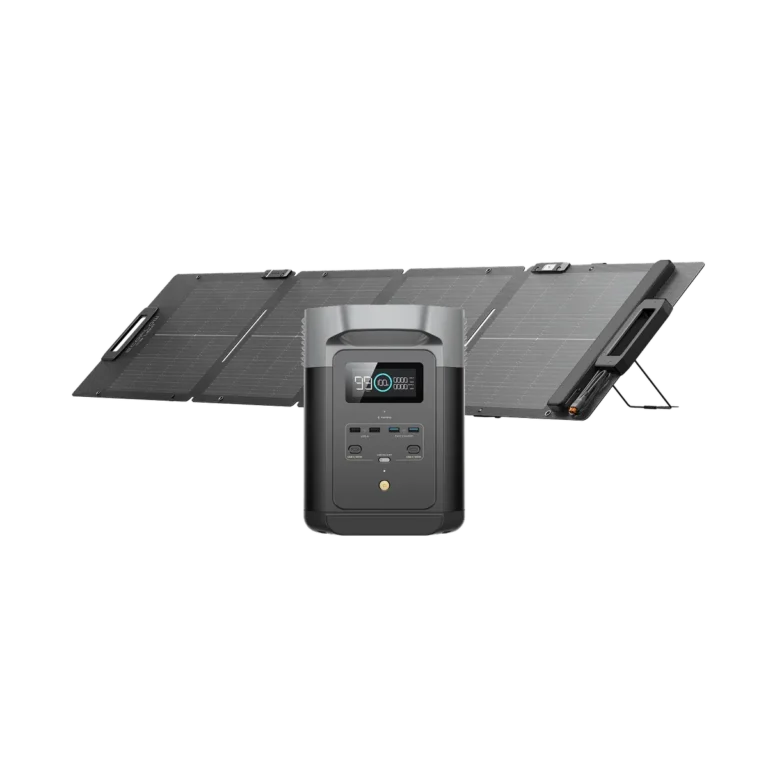
EcoFlow DELTA 2 is a 1024 Wh power station that is usually where home or country-house backup power starts. If you are wondering whether to buy an EcoFlow DELTA 2, in short: it is the golden mean between compact stations for phones and heavy systems of several kilowatt-hours. LiFePO4 battery, four 230 V outlets at 1800 W and a weight of 12 kg.
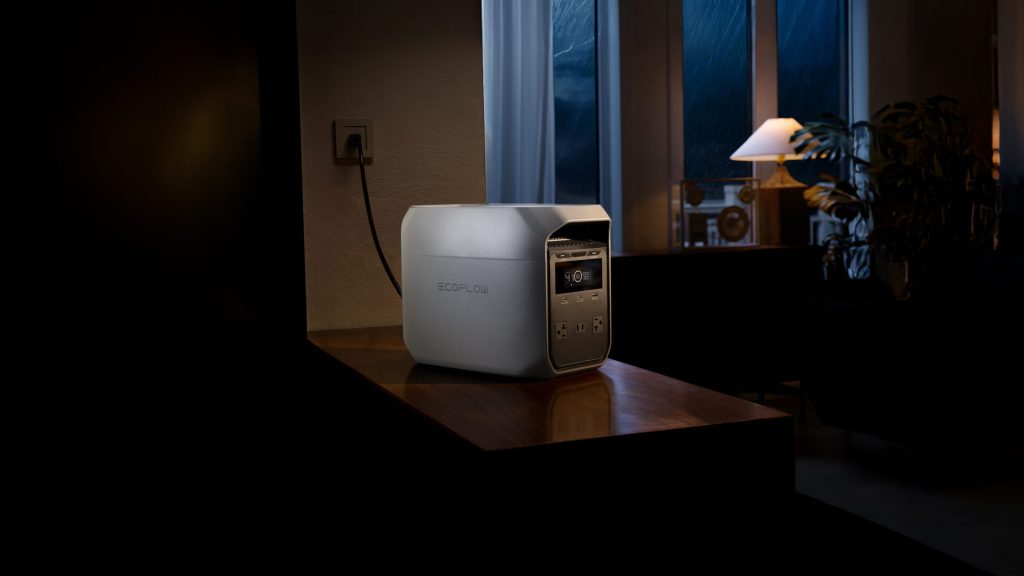
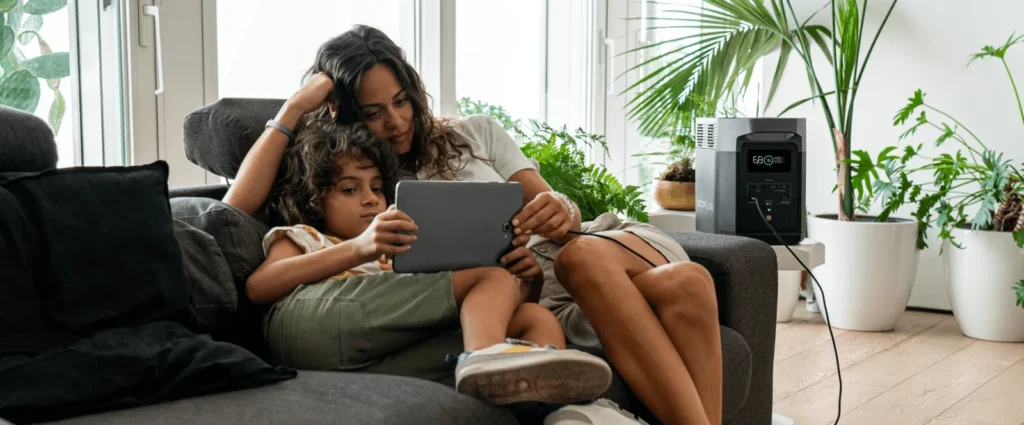
During power outages in Ukraine, DELTA 2 keeps a router, laptop, lighting and fridge running for several hours, and when the power returns it charges quickly from a socket. For the country house and trips it can be charged from solar panels or a car.
The station is easy for one person to carry, runs almost silently and needs no fuel. If your needs grow, the capacity can be increased with an extra battery.
Why DELTA 2
1024 Wh in a 12 kg case
That is enough to get through a typical few-hour outage in an apartment without saving on every light bulb. The station weighs 12 kg and measures 400 × 211 × 281 mm, so it can be moved from room to room or put in a car boot.
LiFePO4 rated for 3000 cycles
The lithium iron phosphate battery keeps at least 80% of its capacity after 3000 full cycles. Even if you charge and discharge the station every day, that is years of service. The built-in BMS monitors the voltage, current and temperature of the cells.
1800 W and X-Boost up to 2400 W
The rated 1800 W is enough for a microwave, coffee maker, iron or hair dryer. A short peak of up to 2700 W helps when starting compressors. X-Boost mode lets you connect a heating appliance of up to 2400 W: the station lowers the voltage and the appliance works at reduced power, but without shutting down from overload.
Fast charging from a socket
X-Stream technology charges DELTA 2 at up to 1200 W with an ordinary cable, without an external power brick. According to EcoFlow, the station reaches 80% in about 50 minutes, and a full charge takes about 80 minutes. Even a short window of mains power is enough to fill the battery.
Expansion to 3 kWh
One extra battery can be connected to DELTA 2. With a DELTA 2 Extra Battery the capacity grows to 2048 Wh, with a DELTA Max battery to 3040 Wh. You do not have to buy everything at once; the battery can be added later.
13 outputs for all your equipment
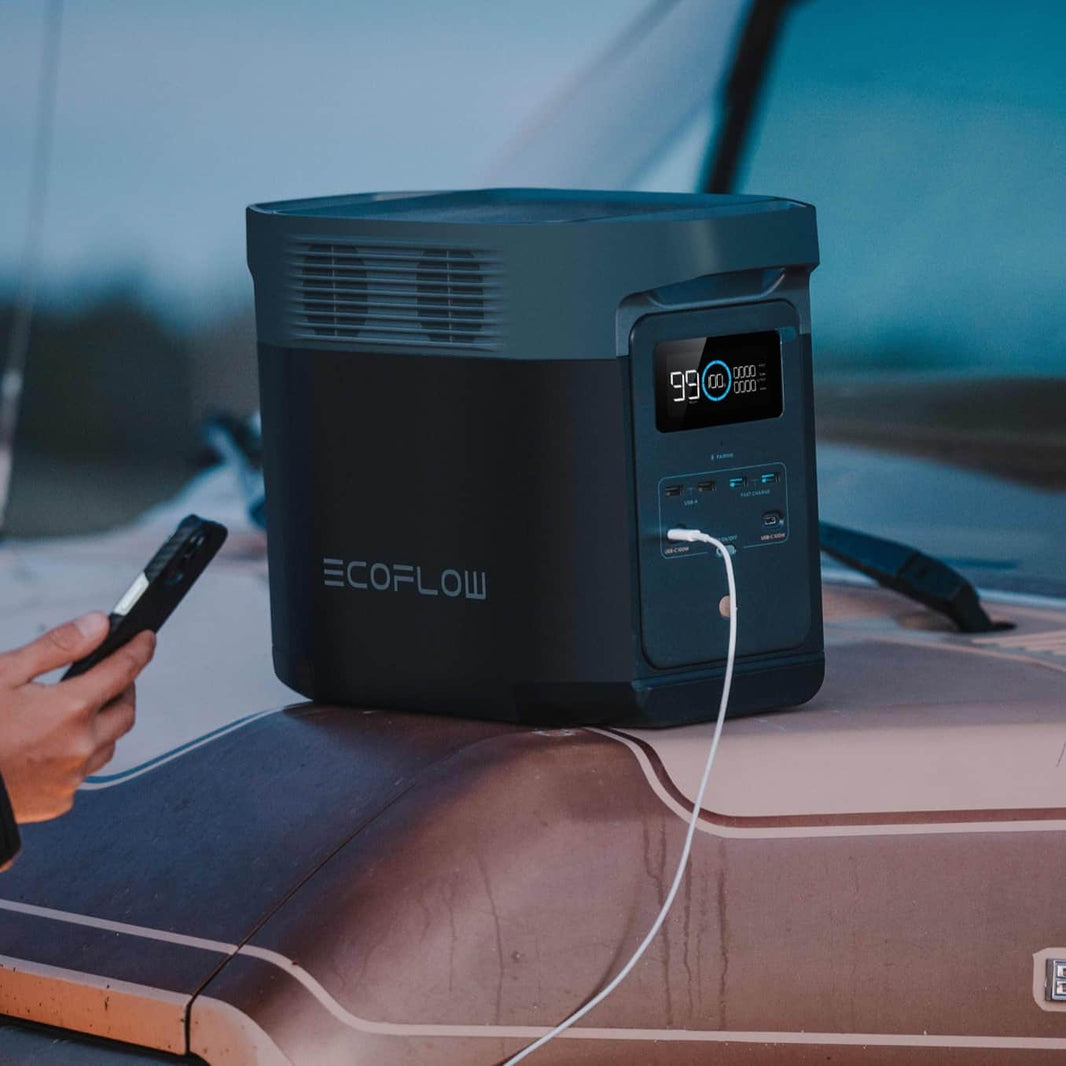
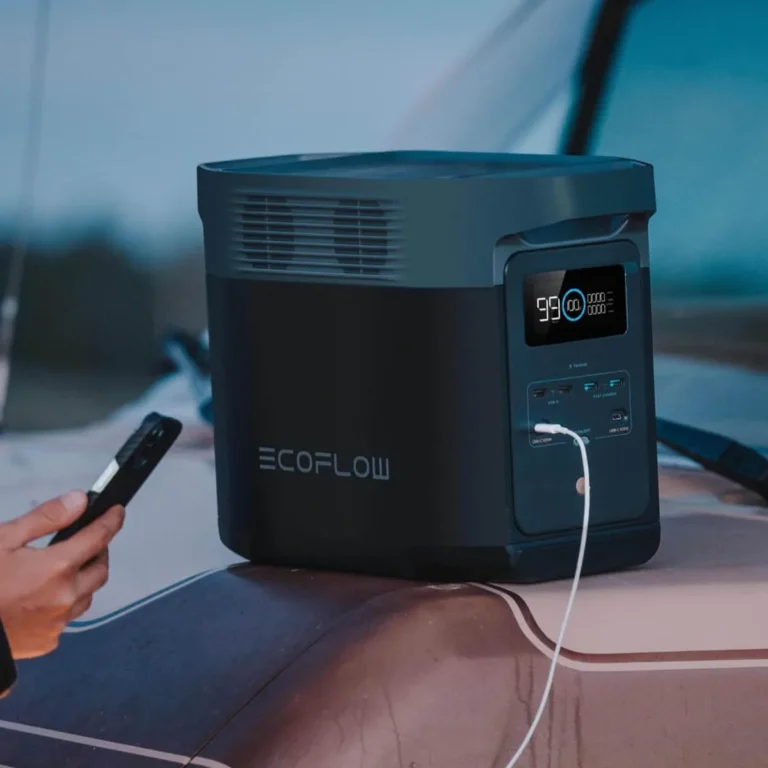
Besides four 230 V outlets, there are two 100 W USB-C ports for laptops, four USB-A, a 12 V car output and two DC5521. Up to 13 devices can be powered at once, without using up outlets for phone chargers.
What you can connect and how long it lasts
For the estimate we take about 850 Wh of usable energy at the 230 V outlets, because part of the capacity is lost in the inverter. Divide that figure by the device power and you get approximate hours. The real time depends on the specific equipment, the temperature and how often the compressor switches on.
Apartment
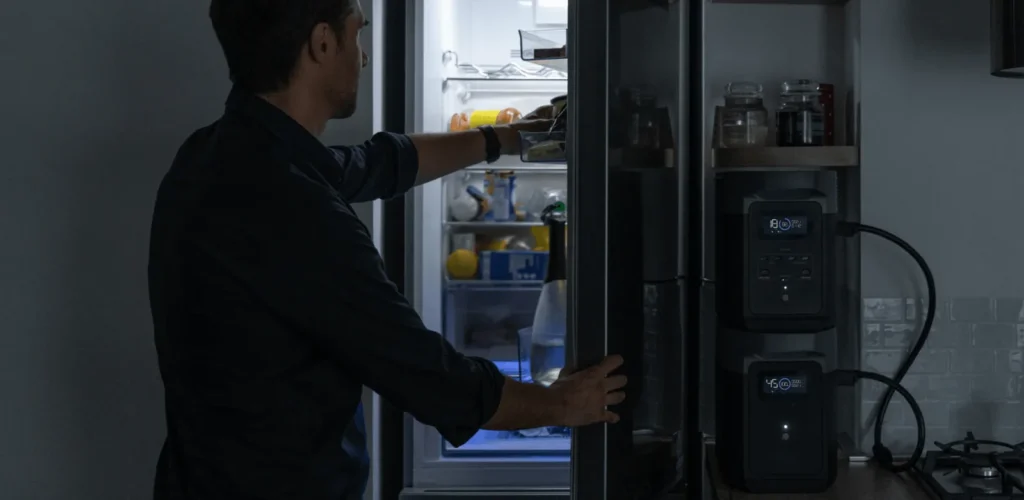
The most common set during outages is a fridge, router, laptop and lights. Together they consume 150–200 W on average, so the station lasts about 4–6 hours. Device by device:
- router with an optical terminal (15–25 W): about 35–55 hours;
- fridge (1–1.5 kWh per day): about 14–20 hours;
- laptop (50–70 W): 12–17 hours;
- LED lighting in several rooms (30–60 W): 14–28 hours;
- TV (about 100 W): 8 hours.
Private house
In a house, DELTA 2 usually runs a gas boiler with a circulation pump (80–150 W): that is roughly 6–10 hours if no other devices are connected. The station outputs a pure sine wave, which the boiler electronics need. For night outages together with a fridge the capacity may no longer be enough; here it is worth adding a battery or looking at DELTA 2 Max.
Country house
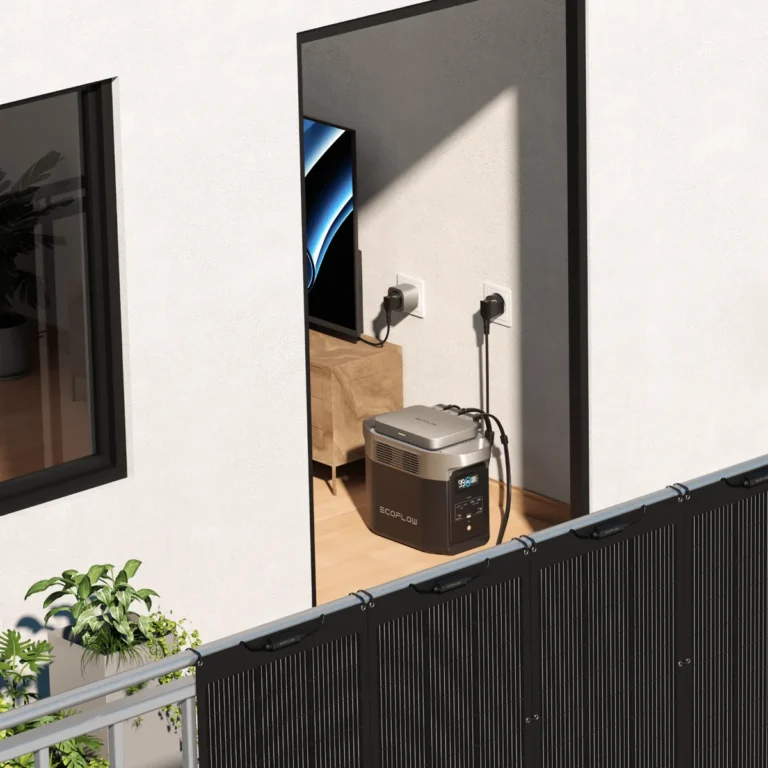
At a country house the station powers lighting, a fridge, an electric grill or a small pump. It produces no exhaust and can stay indoors. In summer a 400 W solar panel tops up the charge in a few hours, so the mains is not required.
Office and remote work
A laptop, monitor and router together consume 100–150 W, so the station lasts about 6–8 hours, practically a working day. If your connection is via Starlink, take its own consumption into account: a standard dish usually draws 50–75 W, and then the time for the whole set drops to 4–5 hours.
Camping and travel
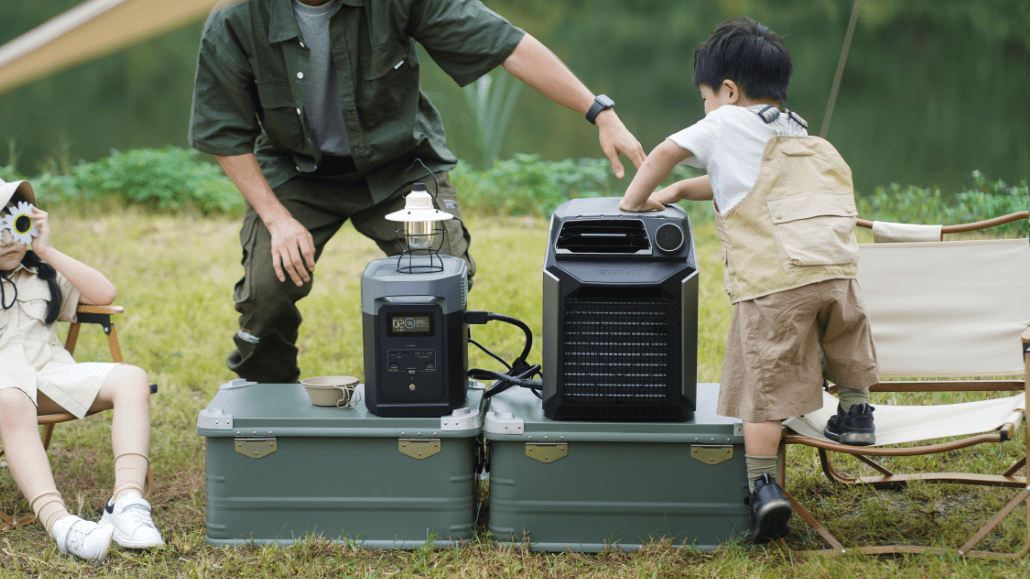
12 kg and two handles let you take DELTA 2 on a car trip. It charges from a 12 or 24 V cigarette lighter, and on the road it powers a laptop, drone, compressor car fridge or camp lighting.
Powerful appliances
A 1000–1200 W microwave, coffee maker or iron work without problems but use energy quickly: 10 minutes of microwave is about 0.2 kWh. A 2000–2200 W electric kettle exceeds 1800 W, so it will work only in X-Boost mode and boil more slowly. An electric oven, boiler, 2 kW heater and air conditioner will either overload the station or drain it in an hour to an hour and a half.
How it works
From the mains DELTA 2 charges with an ordinary 220–240 V cable at up to 1200 W. The charging speed can be reduced in the app if the wiring is weak or there is no rush. Owners in Ukraine write that with a badly low mains voltage the station may not charge, and a voltage stabiliser helps.
For solar there is an 11–60 V, 15 A input, up to 500 W. With one 400 W panel or two 220 W panels the station charges in about 3–6 hours depending on the sun. According to EcoFlow, the MPPT controller works with an efficiency of over 98%. From a car the station charges through a 12 or 24 V cigarette lighter, but slowly; this is an option for the road.
In backup power (EPS) mode the station is plugged into a socket and the devices into the station. While there is mains power the equipment runs from the mains, and in an outage DELTA 2 switches to the battery within 30 ms. This is not a zero-switching UPS, so servers and workstations should not be connected to it. X-Boost does not work in this mode.
For expansion there is an extra battery port on the case. A DELTA 2 expansion battery or a DELTA Max Extra Battery will fit, but only one.
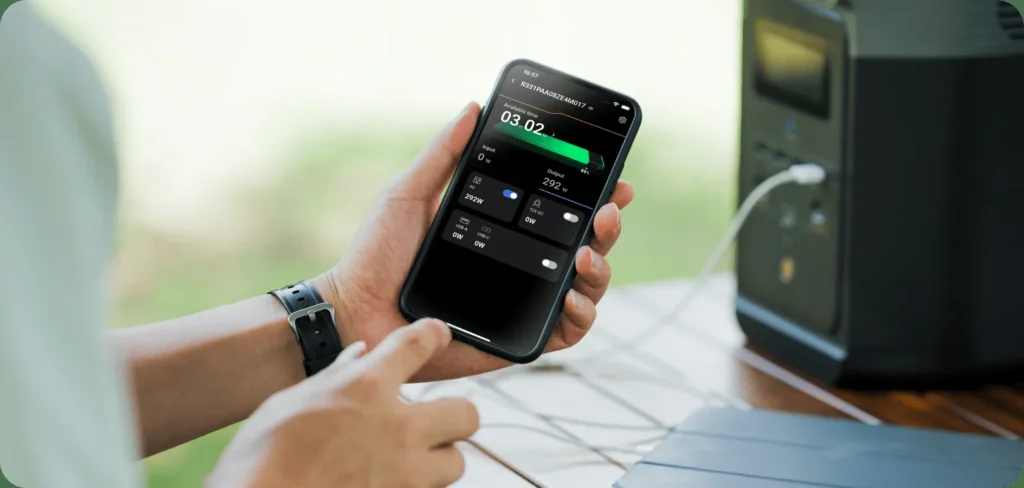
The EcoFlow app works over Wi-Fi at home and over Bluetooth without internet. It shows the charge, input and output power and remaining run time, and lets you adjust charging speed and other settings.
DELTA 2, DELTA 2 Max or DELTA 3
| DELTA 2 | DELTA 3 | DELTA 2 Max | |
|---|---|---|---|
| Capacity | 1024 Wh | 1024 Wh | 2048 Wh |
| Power | 1800 W | 1800 W | 2400 W |
| Expansion | up to ~3 kWh | up to 5 kWh | up to 6 kWh |
| EPS switching | 30 ms | up to 10 ms | up to 20 ms |
| Weight | 12 kg | 12.5 kg | 23 kg |
DELTA 2 is a proven 1 kWh model. It suits you if outages last a few hours and you want a station that is easy to carry. The choice for an apartment, country house and trips.
EcoFlow DELTA 3 is a newer generation of the same class: faster switching in backup mode (up to 10 ms), 4000 cycles and more expansion potential. Worth a look if a computer is permanently connected to the station and it must not notice outages.
EcoFlow DELTA 2 Max has twice the capacity and 2400 W output. It is chosen for a house with a boiler and a fridge running all night, or for kitchen appliances above 1800 W. The price you pay is weight: 23 kg instead of 12.
Who DELTA 2 suits and who it does not
DELTA 2 is a good fit if:
- in an apartment you need to get through a 4–6 hour outage with a fridge, router and lights;
- you work from home and need a laptop, monitor and connectivity;
- the station has to go to a country house or on a trip, so the 12 kg weight matters;
- you want to start with 1 kWh and later add a battery or a solar panel.
Consider another model if:
- your appliances need more than 1800 W continuously: a 2.2 kW kettle, boiler, oven or electric heater;
- in a house the boiler and fridge must run all night — DELTA 2 Max or DELTA 2 with a battery is better here;
- your equipment needs 0 ms switching, like servers — they need an online UPS;
- outages last a day or more with no sun — then the station is paired with a generator.
FAQ
How long will DELTA 2 run a fridge?
About 14–20 hours for an ordinary fridge if there are no other devices. A fridge consumes 1–1.5 kWh per day on average, and the compressor switches on in cycles, so the exact time depends on the model and the room temperature.
Will DELTA 2 run a gas boiler?
Yes, a boiler with a 80–150 W pump will run for about 6–10 hours. The station outputs a pure sine wave, and in backup mode the boiler switches to battery automatically. For a whole night together with other equipment it is better to add a battery.
Does DELTA 2 work as a UPS for a computer?
Yes, it switches to the battery within 30 ms. This is fine for a laptop, since it has its own battery, while a desktop PC should be checked in advance, because power supplies differ. The manufacturer does not recommend the station for servers.
Can I charge the station and use it at the same time?
Yes. While the station is plugged into a socket, devices run from the mains and the battery charges. X-Boost mode is unavailable at that time.
How is DELTA 2 different from a generator?
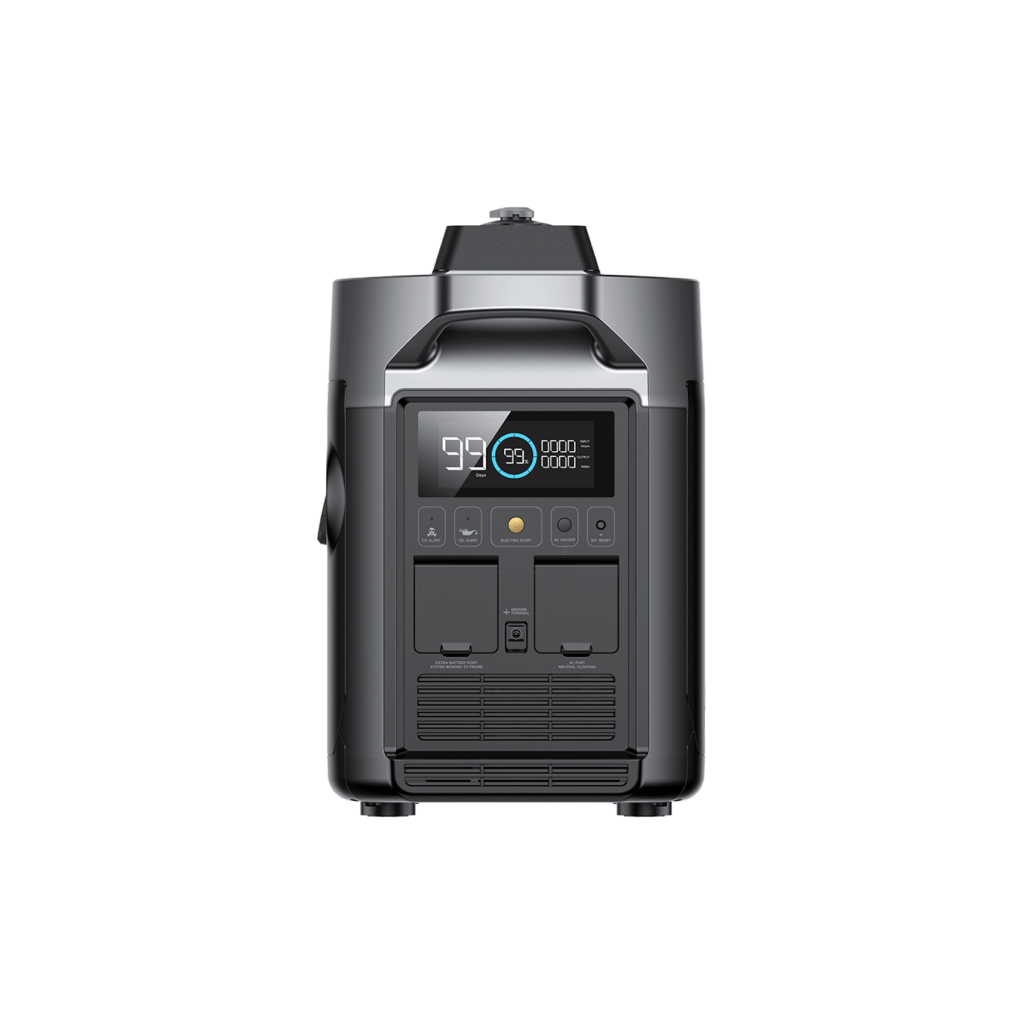
The station is quiet, needs no fuel and can stay in an apartment. A generator wins in outages of several days, when there is nothing to charge the battery with. They are often combined, and DELTA 2 also supports the branded EcoFlow Smart Generator.
How long does solar charging take?
About 3–6 hours with a 400 W panel or two 220 W panels. The maximum solar input is 500 W, and in cloudy weather and in winter charging takes longer.
Can two extra batteries be connected?
No, only one battery connects to DELTA 2: a DELTA 2 Extra Battery (2048 Wh in total) or a DELTA Max Extra Battery (3040 Wh in total). If you need more, look at DELTA 2 Max.
How should I store the station between outages?
Best at 20–30 °C with a charge of about 60%. Once every three months the manufacturer advises discharging it to 30% and charging it back to 60%. The station can be charged at temperatures from 0 to 45 °C and run from the battery from -10 °C.
Summary
DELTA 2 is a smart start if you need backup power for a home or country house without extra weight or paying for capacity you will not use. If you have decided to buy an EcoFlow DELTA 2 in Kyiv or another city in Ukraine, you can place the order on this page. If you are unsure whether the capacity will be enough for your equipment, write to us through the contacts and we will help you calculate.