Connect appliances to the station
Choose what has to keep running during a blackout — we will work out how long the station lasts and whether it can carry the load. Choose appliances — we will work out how long the station lasts.
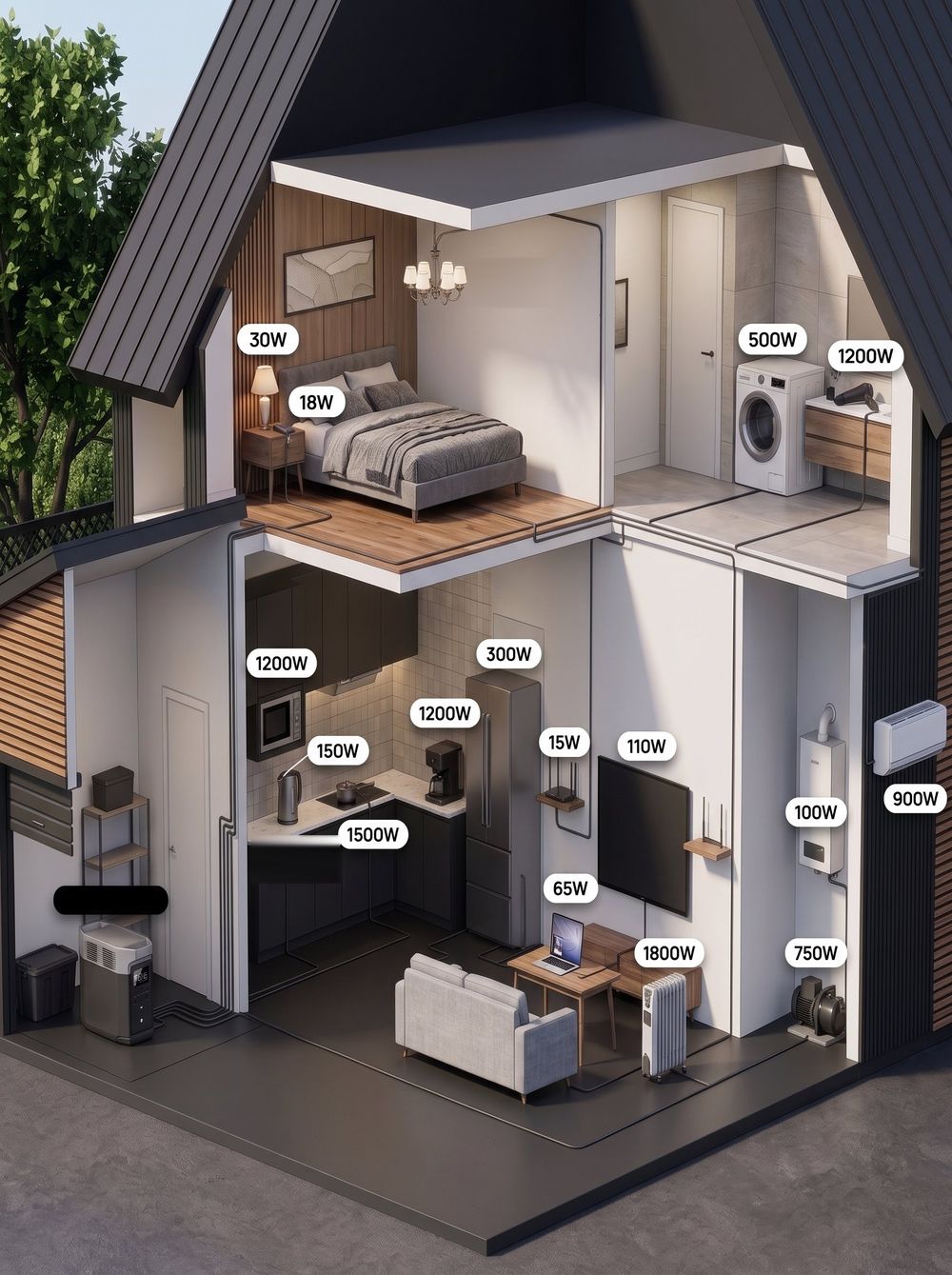
An estimate: 85% of the station capacity (inverter efficiency) divided by the total power of the appliances; charge is shown after a 4-hour blackout. Real figures depend on how the appliances are used.
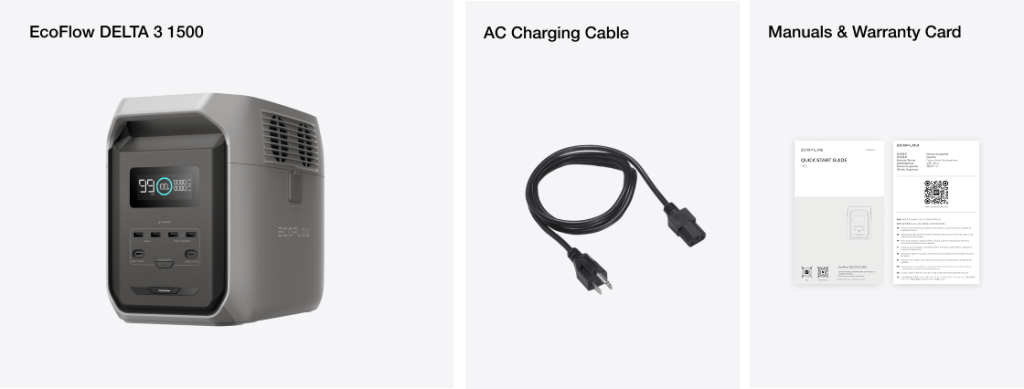
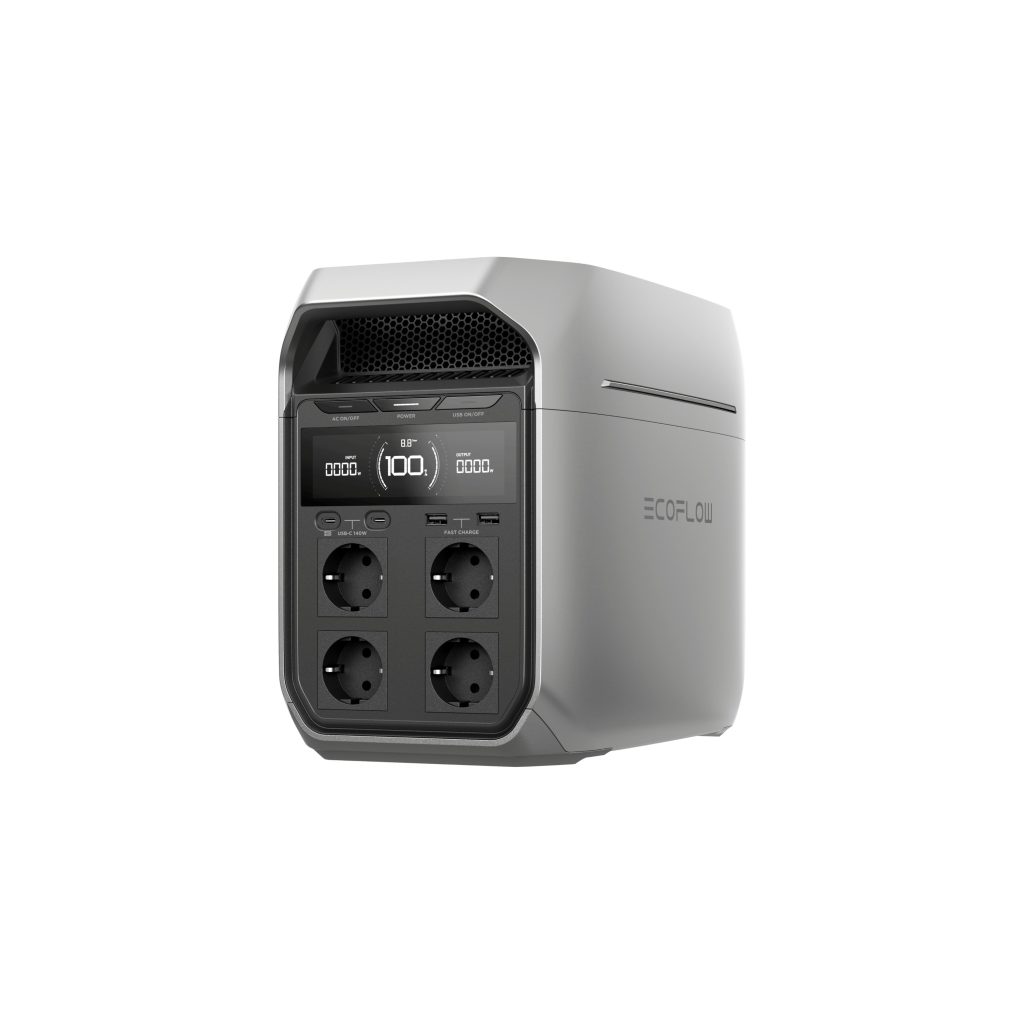
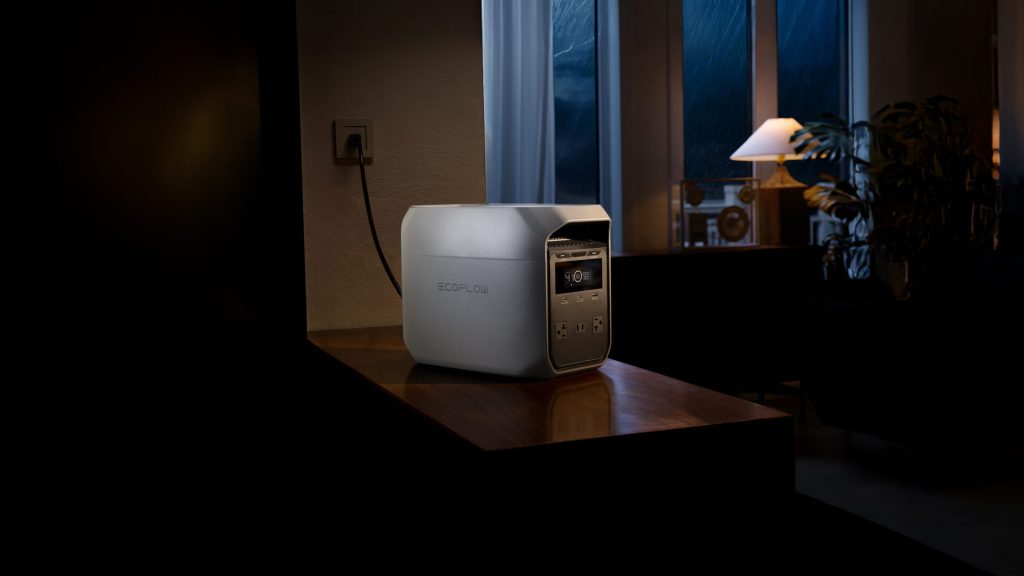
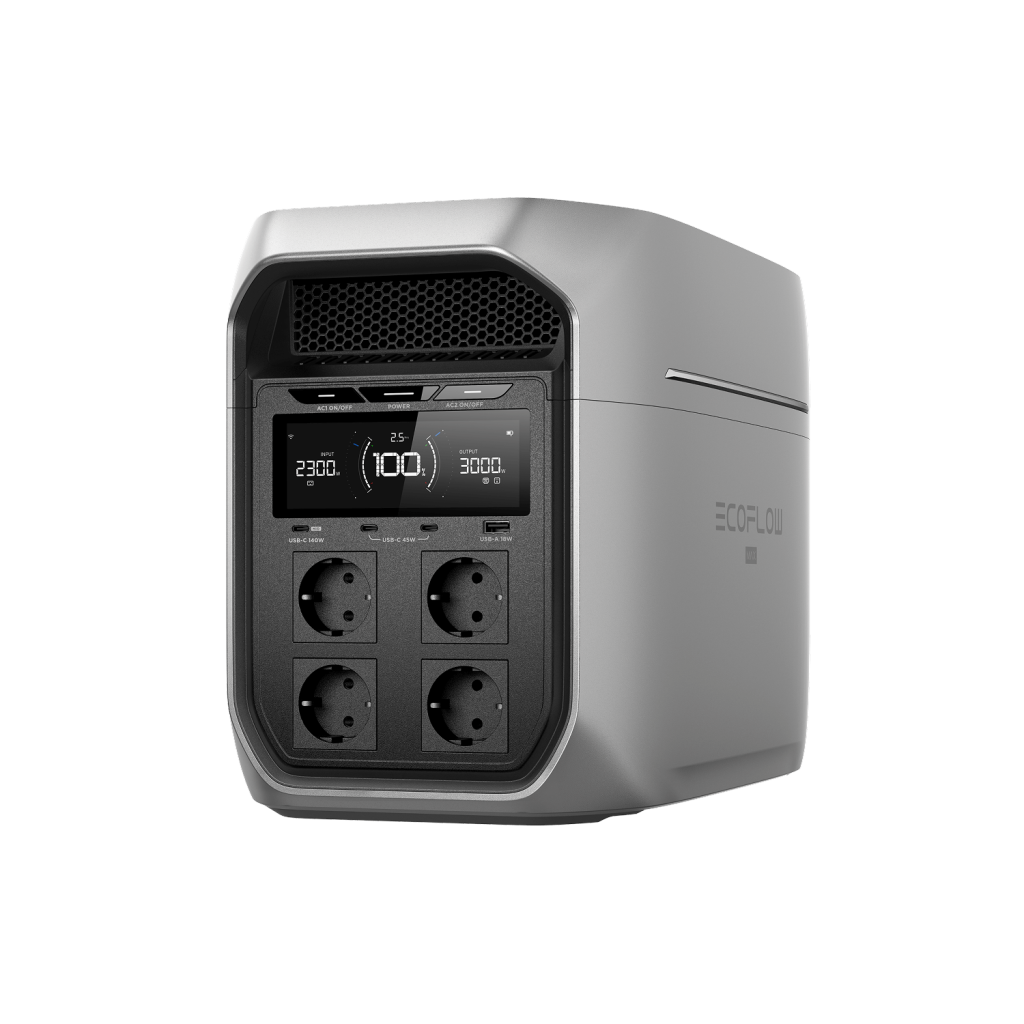
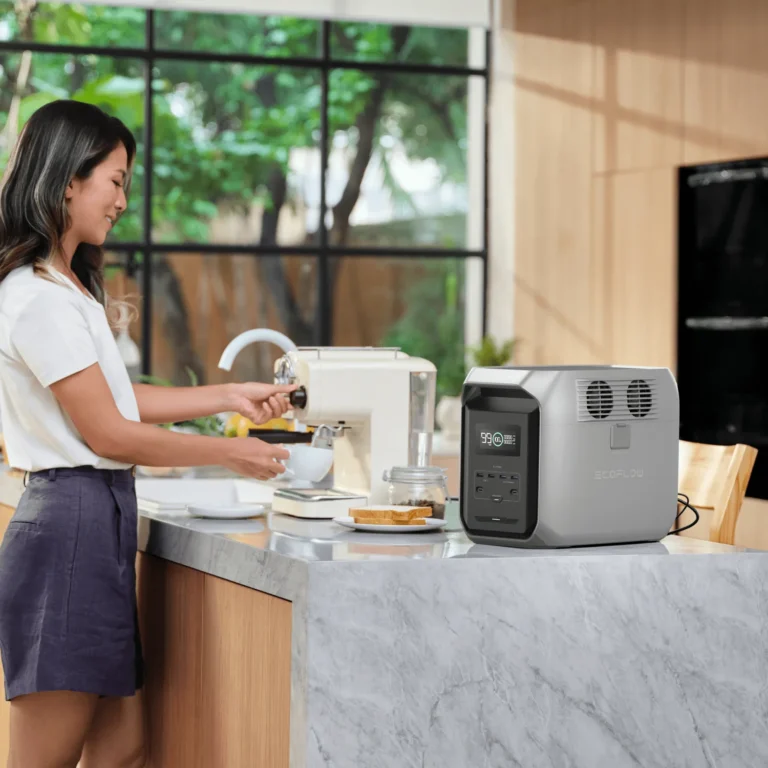
EcoFlow DELTA 3 1500 is a 1536 Wh power station only slightly larger than a regular DELTA 3: 40 × 21 × 28 cm and 16.5 kg. It is chosen for an apartment where you need to sit out an evening without power calmly, and for trips where there is no socket at all. Before you buy an EcoFlow DELTA 3 1500, understand what it is: a larger energy reserve at the same 1800 W power as the smaller models of the series.
Schedules differ between cities, but the scenario in most apartments is similar: in the evening the voltage disappears, and a router, fridge and a few lamps must keep working. One and a half kilowatt-hours is enough for such a set until morning with a reserve. From a socket the station fills in about 90 minutes, so a short window between outages is useful too.
The capacity does not have to be chosen once and for all. One extra battery connects to the station, and the total reserve can be brought up to 5.5 kWh once it becomes clear what is missing.
Why DELTA 3 1500
1536 Wh instead of 1024
DELTA 3 and DELTA 3 Classic have 1024 Wh each. Here the battery is 512 Wh larger, which is a few extra hours for a fridge or boiler in the middle of the night. The price you pay is weight: the station is about 4 kg heavier than DELTA 3.
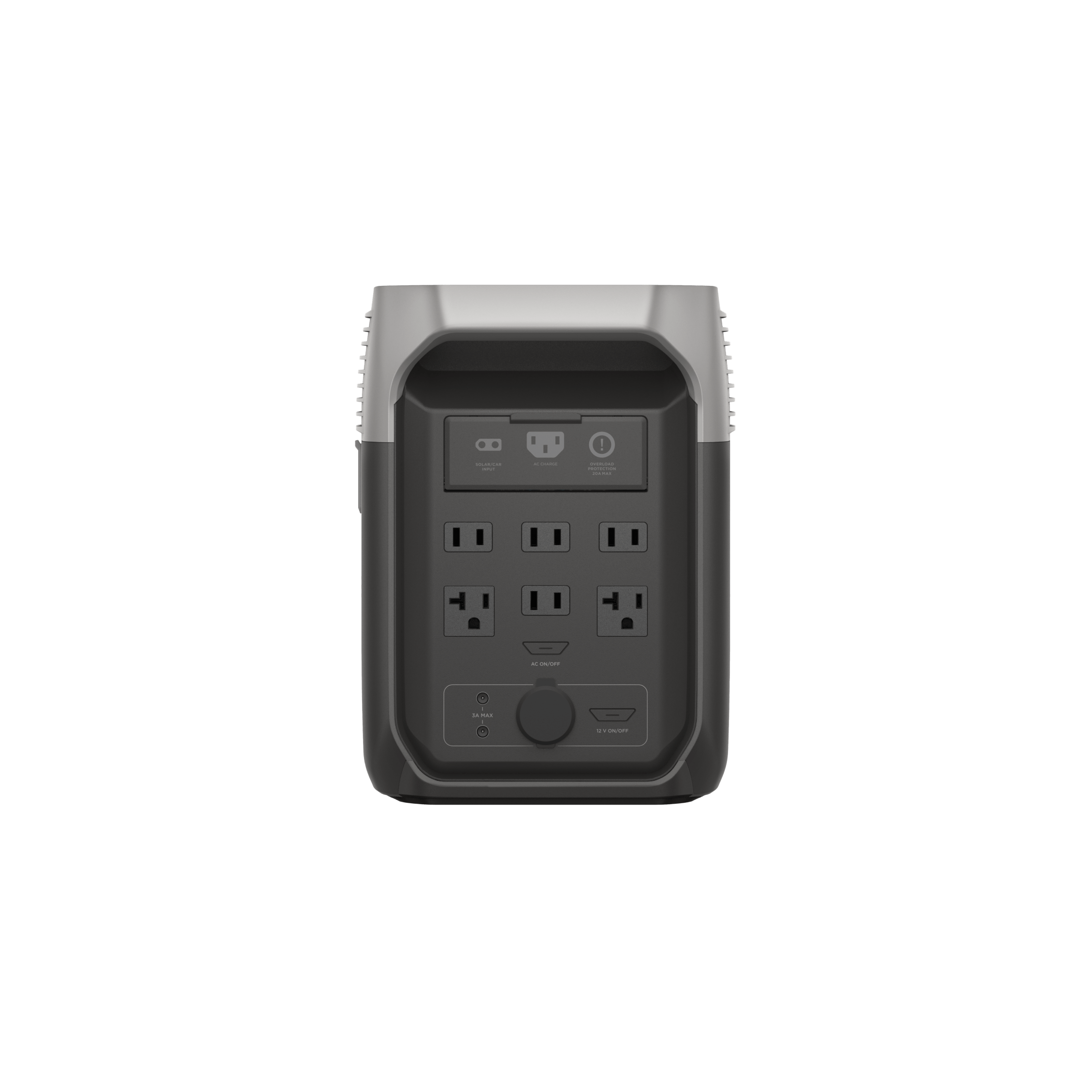
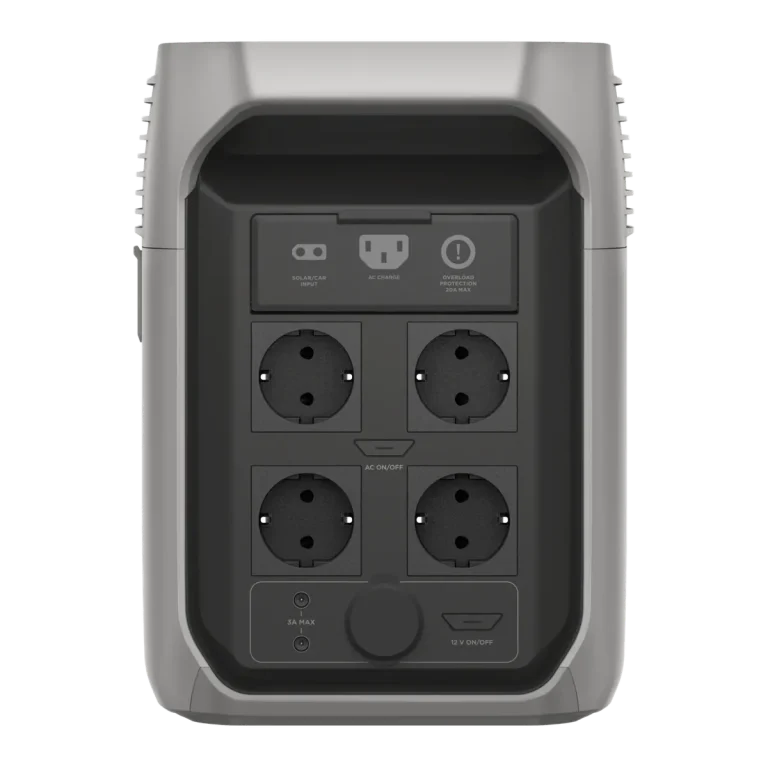
13 outputs, including 4 Schuko outlets
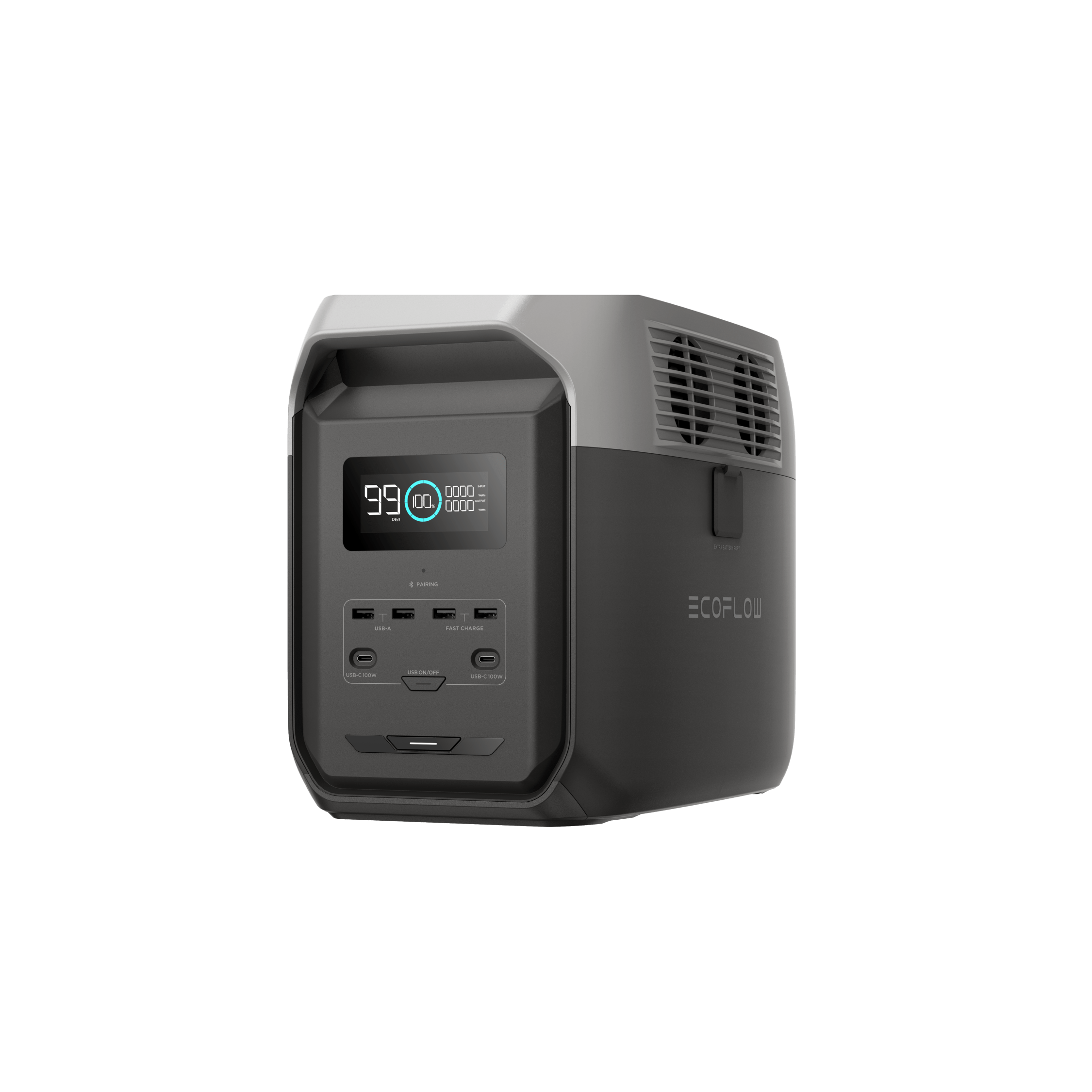
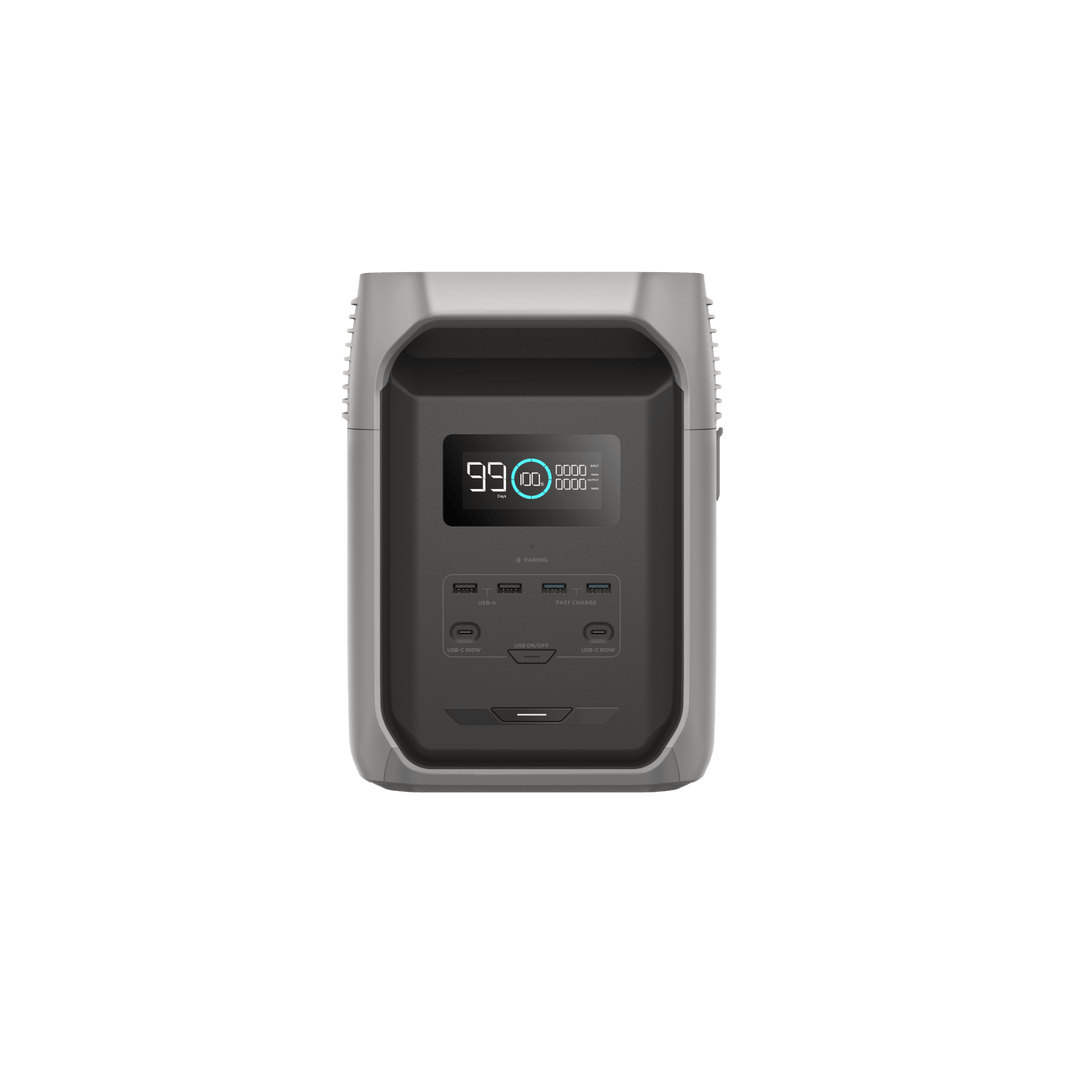
The four 230 V outlets are located on the rear panel together with the charging inputs, so power cables do not get in the way by the display. On the other side there are four USB-A (two fast, 18 W each) and two 100 W USB-C, which is enough for a laptop. There is also a 126 W 12 V car socket and two DC5521 connectors for a router or LED strip.
1800 W rated and 3600 W at start
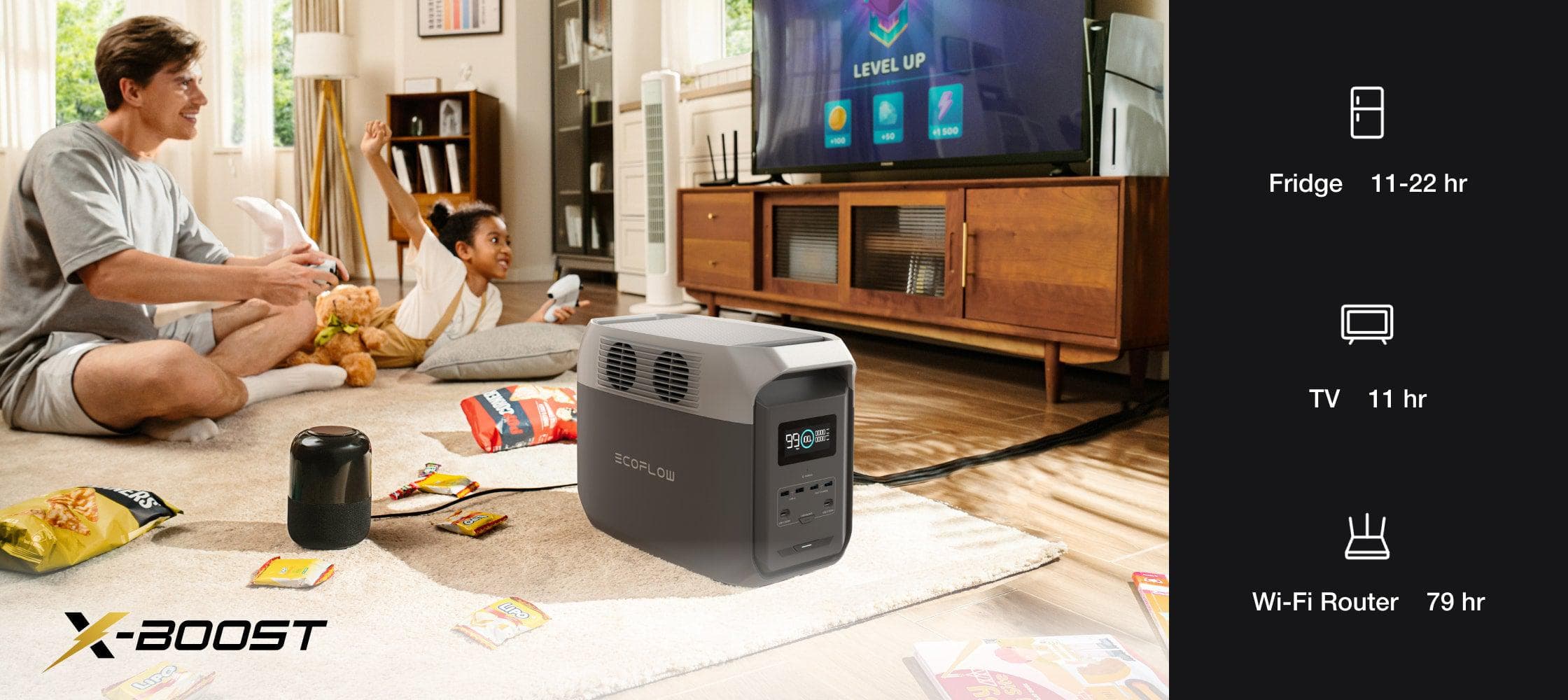
The rating is enough for a microwave, coffee maker, vacuum cleaner or blender. The reserve up to 3600 W for a few seconds is needed when a fridge compressor or pump starts: at start-up they draw many times their rating. The station runs heating equipment up to 2400 W in X-Boost mode: the voltage is lowered, the appliance heats more slowly, but the protection does not trip. According to the manual, X-Boost is unavailable while the station is charging from the mains.
Backup power with switching under 15 ms
The station is plugged into a socket and the equipment into the station. While the mains is on, devices run from it, and when the voltage disappears DELTA 3 1500 takes over the load in under 15 ms. A router, TV or fridge do not notice such a pause, while the compatibility of a sensitive computer power supply is better checked in advance.
The manual adds an important condition: the station must receive more from the mains than the connected equipment consumes. Otherwise the battery will not top up and may be incomplete at the moment of an outage.
Up to 35 dB at a 600 W load
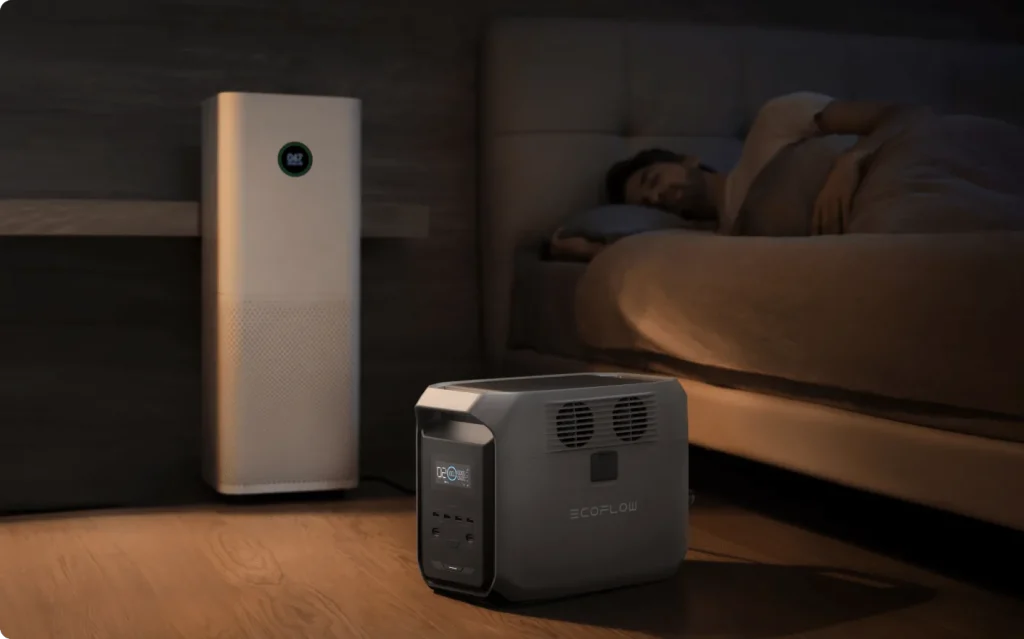
Under moderate load the fans run quietly, so the station can be left in a bedroom or nursery. At 1200 W the manufacturer states up to 45 dB — that is the level of a calm conversation.
LiFePO4 and a battery pack with IP54 protection
The iron phosphate battery is rated for 3000 cycles, after which it keeps at least 70% of its original capacity. The battery pack itself is protected from dust and splashes to IP54, but the station as a whole is still not left in the rain: the manual directly advises protecting it from moisture.
What equipment to power from DELTA 3 1500 and for how long
For the calculation take about 1300 Wh: the rest is eaten by inverter losses. Dividing this figure by the device consumption in watts gives an approximate number of hours. It is an estimate: compressors and pumps work in cycles, and in the cold the battery delivers less.
An apartment during an outage
- a router together with an optical terminal (15–20 W) — 65–85 hours, that is several days;
- a fridge with an average consumption of 50–60 W — about 22–26 hours;
- a 100 W TV and a few LED lamps — about 10 hours together;
- a laptop with a monitor and a router (about 100 W) — roughly 13 hours of work.
If a fridge is powered from the station, check the outlet shut-off timer in the app — why this matters is explained in the questions below.
Private house
A gas boiler together with a heating pump needs 80–120 W on average — that is 11–16 hours of standalone operation. Together with a fridge it comes to 7–9 hours, which is usually enough for a night outage. By EcoFlow’s calculation, a 1 hp borehole pump can run from the station for about 1.6 hours, and in practice it switches on only periodically.
Trips, country house and camping
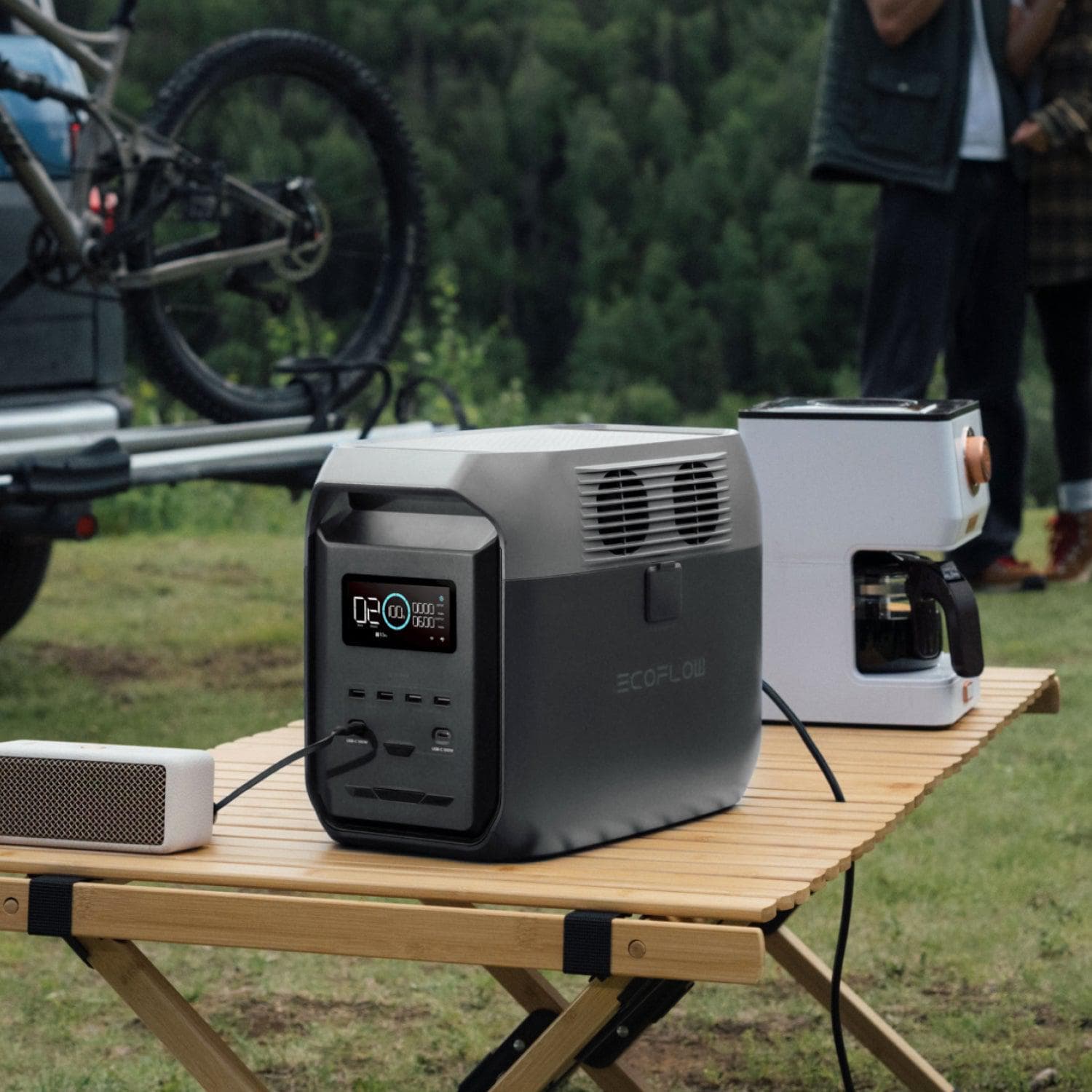
A compressor car fridge through the 12 V socket runs for about a day. An air-mattress pump, camp lighting, charging drones, cameras and phones are almost unnoticeable at one and a half kilowatts.
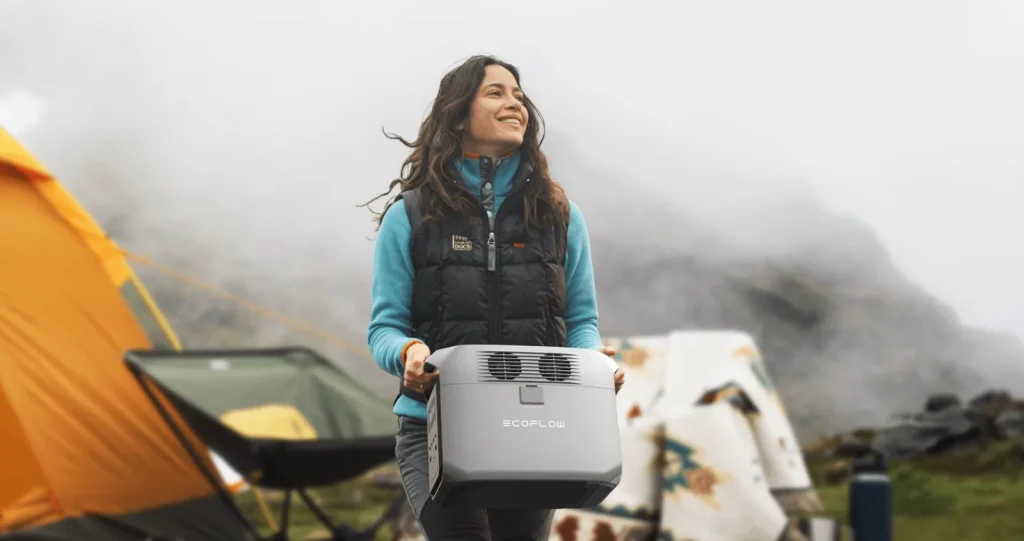
A 1500 W electric hob is better switched on briefly: half an hour of cooking takes about 750 Wh, that is more than half the charge. For long trips with a hob it is sensible to take the station together with a solar panel.
What will drain the station quickly
A heater or boiler up to 2400 W the station will run in X-Boost mode, but it will be drained in under an hour. An air conditioner and other compressor equipment must fit within the rated 1800 W. Tools with a motor above 1800 W should not be powered through X-Boost: the mode is intended for heating appliances, and equipment with undervoltage protection may simply switch off in it.
How it works
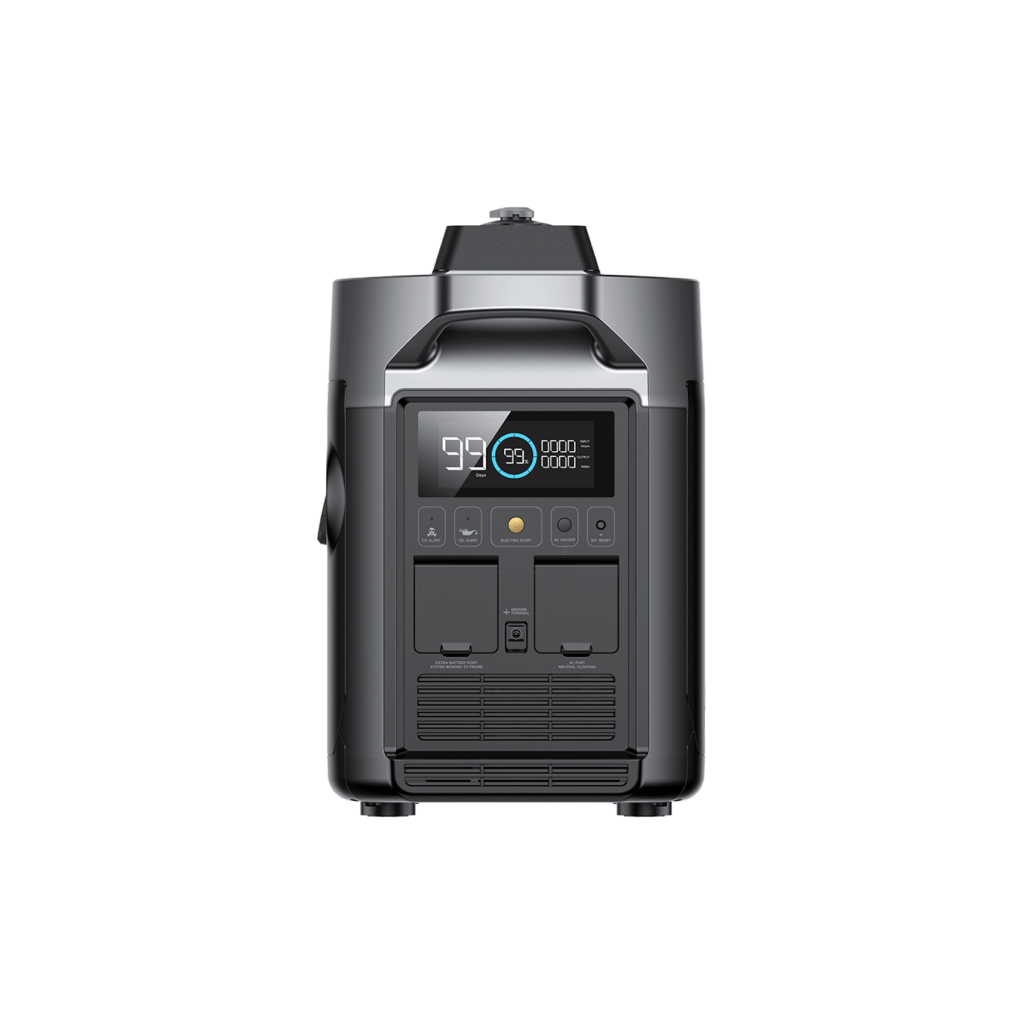
The fastest source is an ordinary socket: the 230 V input accepts up to 1500 W, and according to EcoFlow the station reaches 80% in about an hour and a full charge in an hour and a half. If the wiring in the house is weak, the charging speed is lowered in the app. From a generator the station charges the same way through the 230 V input, and EcoFlow smart generators also connect to the extra battery port.
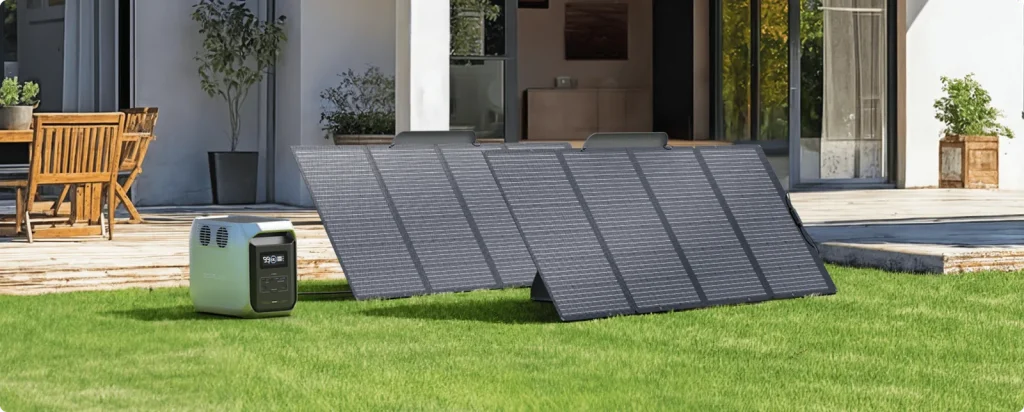
Solar panels connect to the XT60i input: 11–60 V, current up to 15 A, up to 500 W. In ideal sun a full charge takes about 3.5 hours. The mains and panels can work together, but in total the station accepts no more than 1500 W.
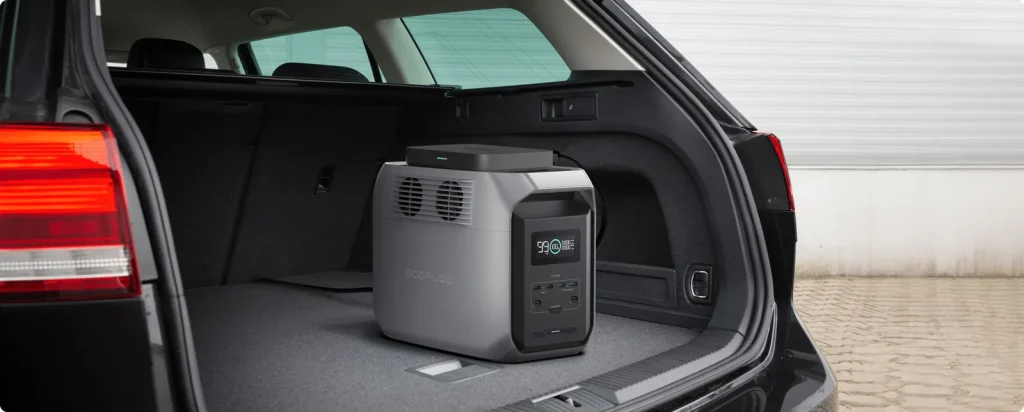
The same XT60i input accepts the supplied cigarette-lighter cable, so on the road the station can be topped up without extra devices, although slowly. For those who drive a lot there is an 800 W Alternator Charger: it is powered from the car battery and connects to the extra battery port. With it a full charge takes about 2.1 hours.
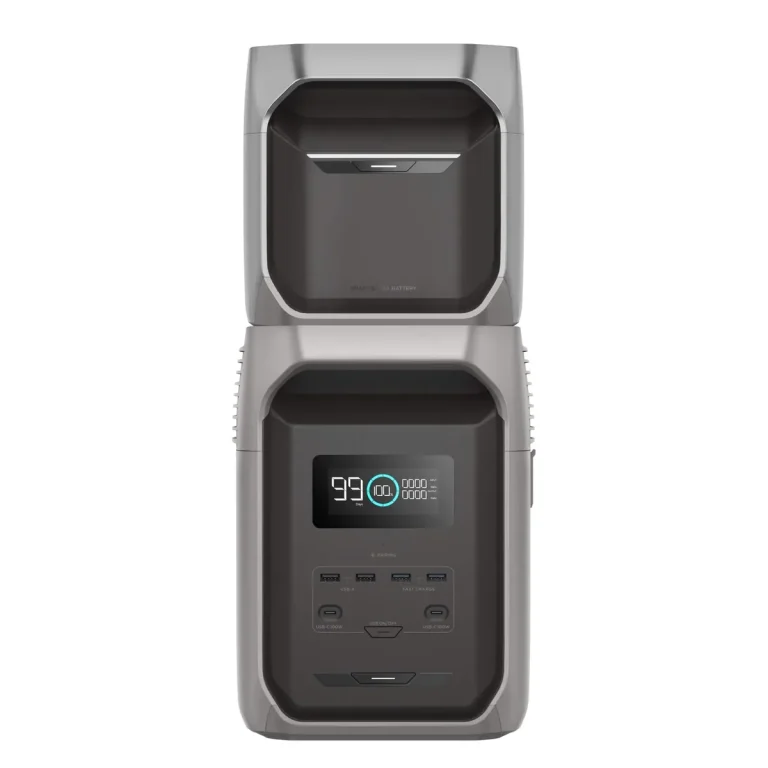
There is one extra battery port here, and four models fit it: DELTA 3, DELTA 2, DELTA 2 Max and DELTA Pro 3 Smart Extra Battery. With the largest of them the total capacity reaches 5.5 kWh. The battery goes on top or beside and connects with one cable, and the station shows it on the display.
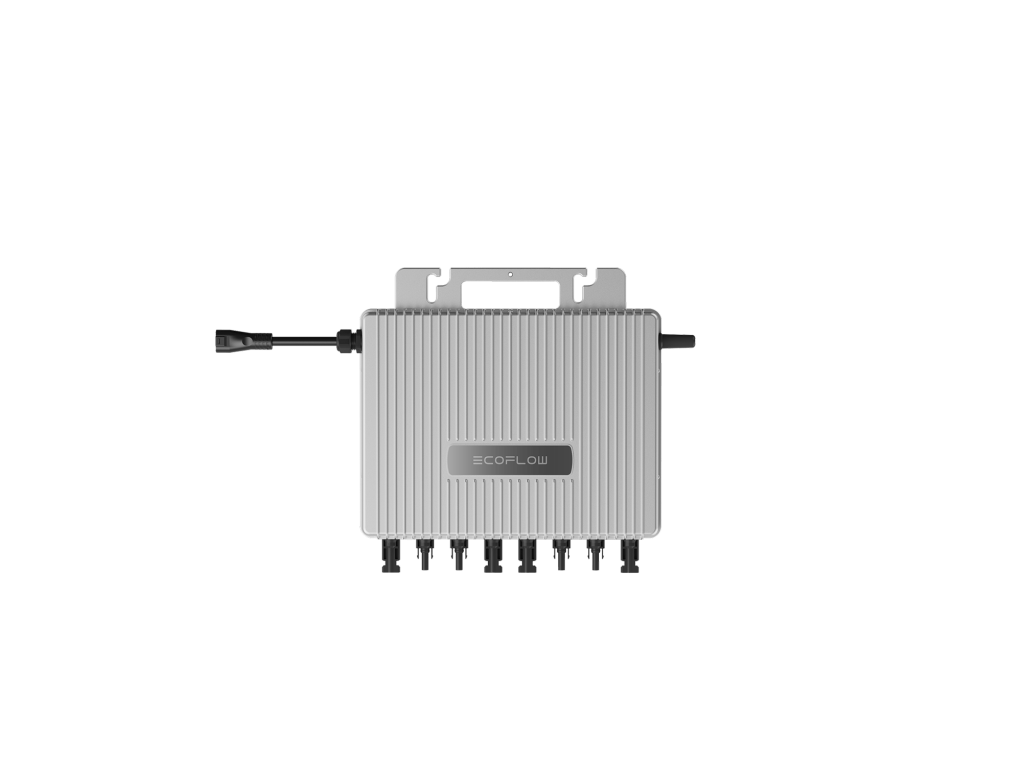
The station can be controlled from a phone: at home over Wi-Fi, and when the internet is down, directly over Bluetooth. The EcoFlow app shows the charge and input and output power, lets you set the charge and discharge limits and outlet timers, and updates the firmware. For a balcony solar system the station can be connected to an EcoFlow PowerStream microinverter with a separate cable.
DELTA 3 1500, DELTA 3 or DELTA 3 Classic
| DELTA 3 1500 | DELTA 3 | DELTA 3 Classic | |
|---|---|---|---|
| Capacity | 1536 Wh | 1024 Wh | 1024 Wh |
| Outlets / all outputs | 4 / 13 | 4 / 11 | 2 / 5 |
| 12 V output | yes | yes | no |
| From the mains | 1500 W, 1.5 h | 1500 W, 56 min | 1400 W, 60 min |
| Switching | up to 15 ms | up to 10 ms | 10 ms |
| Expansion | up to 5.5 kWh | up to 5 kWh | no |
| Weight | 16.5 kg | 12.5 kg | 12.1 kg |
EcoFlow DELTA 3 has the same 1800 W power and four outlets, but a smaller battery. In return it charges fully in 56 minutes, switches to battery faster, and its battery is rated for 4000 cycles to 80% capacity versus 3000 cycles to 70% in the DELTA 3 1500. If the windows between outages are short or a sensitive computer is connected to the station, DELTA 3 is more convenient. If lasting longer on one charge matters more, the logical choice is the 1500.
EcoFlow DELTA 3 Classic is a simplified 1024 Wh version: two outlets, five outputs in total, no 12 V socket and no extra battery port, and it draws up to 1400 W from the mains. It is a rational option when you only need outlets and USB and do not plan to expand the capacity. Choose the DELTA 3 1500 if you need a 12 V output for a car fridge or want to keep the option to expand.
When 1800 W is not enough, the next step is the EcoFlow DELTA 3 Max: 2048 Wh, 2400 W rated and charging to 80% in 47 minutes. It is 3.8 kg heavier and does not support extra batteries, so for those who plan to grow the system gradually, the DELTA 3 1500 is more flexible.
Who DELTA 3 1500 suits and who it does not
It will suit you if:
- in an apartment a fridge, router and lights must work all night without strict economy;
- the station is regularly taken in a car, to a country house or a campsite and you need the 12 V socket;
- you want to start with 1.5 kWh and buy a battery later;
- you plan to keep the station by a bed or a desk.
Better look at other models if:
- you regularly need appliances above 1800 W at full power, such as an induction hob;
- you need to charge the station from the mains faster than in an hour to an hour and a half;
- your computer’s power supply does not tolerate interruptions longer than 10 ms;
- you will have to carry the station up stairs without a lift every day: 16.5 kg is noticeable;
- your priority is the maximum battery lifespan: in DELTA 3 it is higher.
FAQ
How is DELTA 3 1500 different from the regular DELTA 3?
First of all in capacity: 1536 Wh versus 1024. The power and number of outlets are the same, but DELTA 3 charges faster from the mains, is 4 kg lighter and has a longer battery lifespan.
Can the station be charged from a cigarette lighter?
Yes, with the supplied car cable through the XT60i input. The current is limited to 8 A at 12 V, that is about 100 W, and a full charge at that power would take roughly 15–16 hours. For fast charging on the road the 800 W Alternator Charger is intended.
Why does a fridge stop receiving power after a while?
Most often the outlet shut-off timer is triggered. When the compressor stops, the station sees no load and may switch off the 230 V output. In the EcoFlow app you should select “never” for this timer and check the charge level from time to time.
Can a solar panel and a car cable be connected at the same time?
No, both sources use the same XT60i input. The Alternator Charger uses a different connector — the extra battery port — so while it is connected, an expansion battery cannot be attached.
How should I store the station if there are no outages for a long time?
In a dry place at 20–30 °C, and once every three months run a cycle: discharge to 0% and charge to 60%. This way the battery keeps its lifespan longer, and the station is ready for the next outage after a short top-up.
Can the station be charged in frost?
No, it can be charged only from 0 to 45 °C. The station can deliver energy from -10 °C, so in winter on a balcony or in a car it works, but before charging it is better to bring it into the warm.
Summary
DELTA 3 1500 sits between DELTA 3 and DELTA 3 Max: one and a half kilowatt-hours, 13 outputs including 12 V and expansion to 5.5 kWh at a weight of 16.5 kg. To buy an EcoFlow DELTA 3 1500, use the order button at the top of the page. If you are torn between it and DELTA 3, write to us through the contacts page and list the equipment you plan to power — we will tell you what capacity is enough.