Description
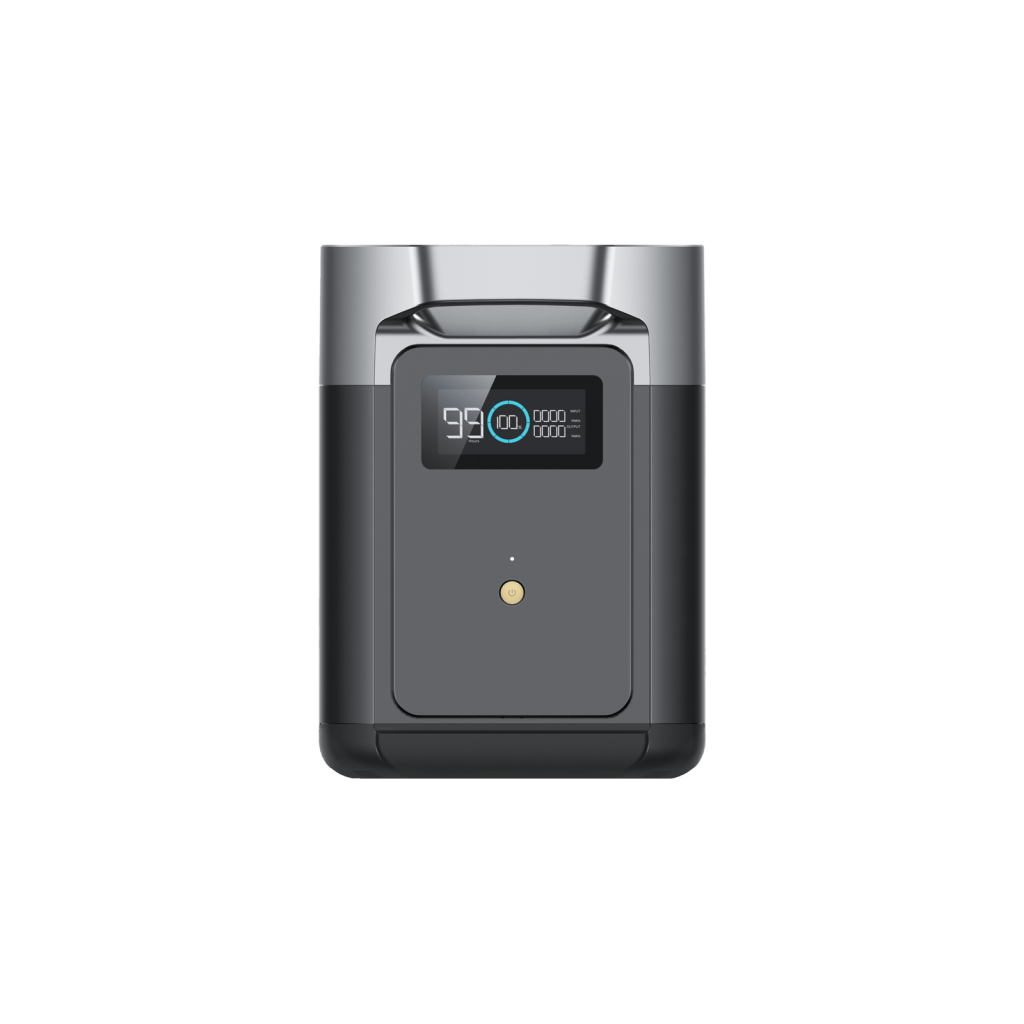
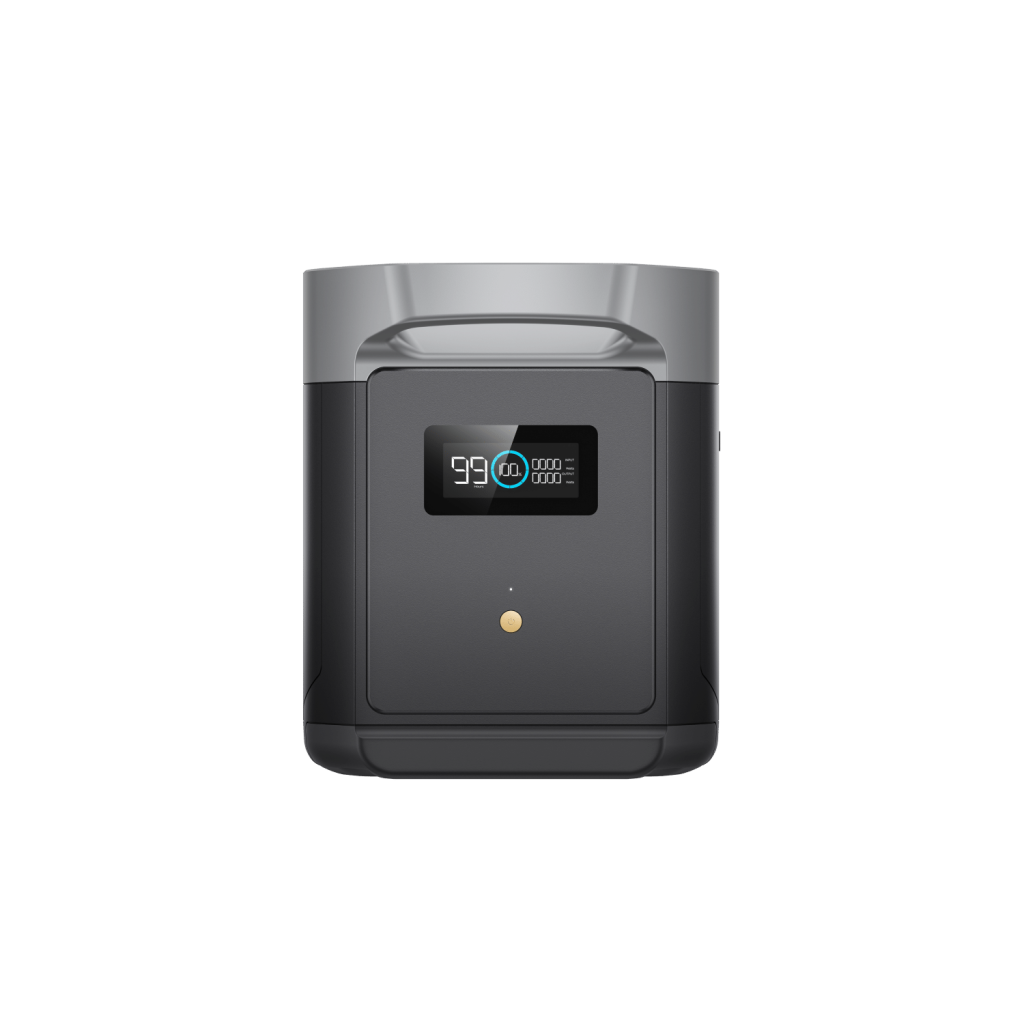
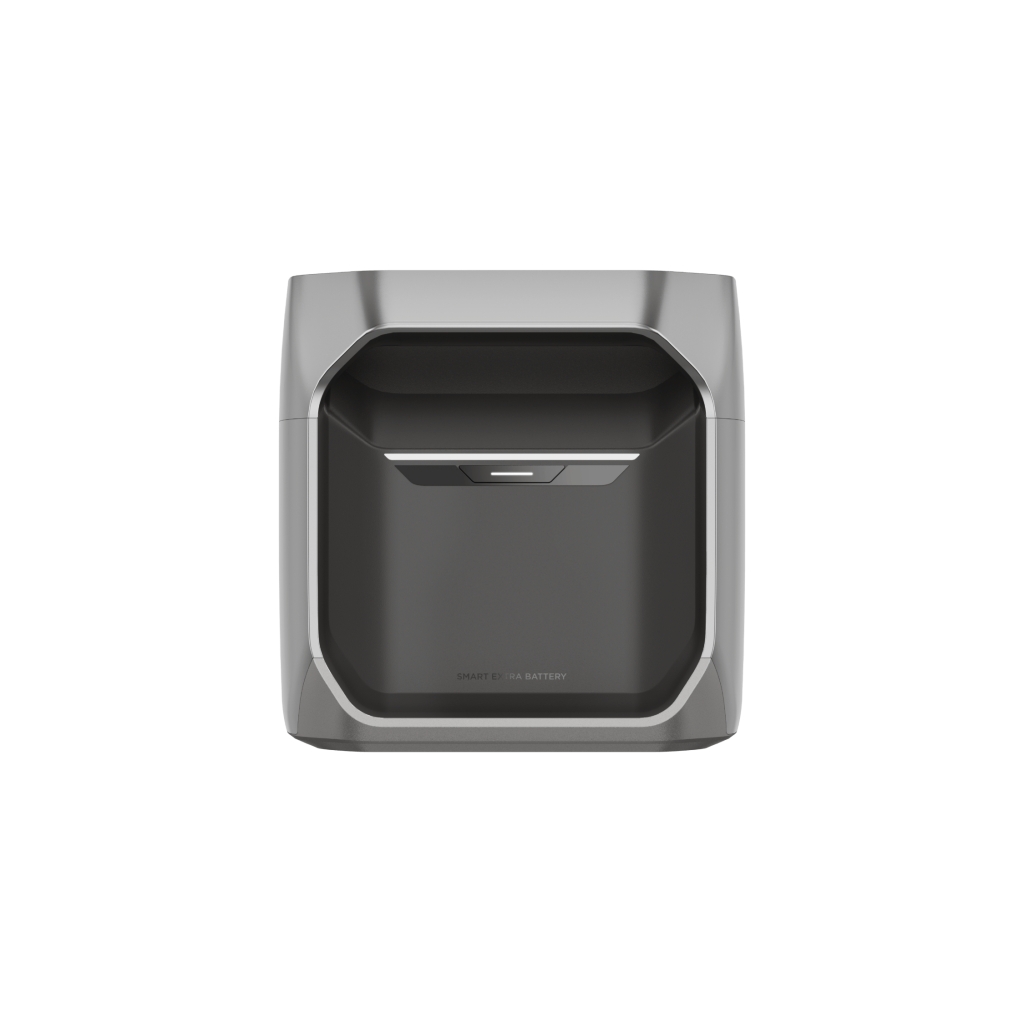
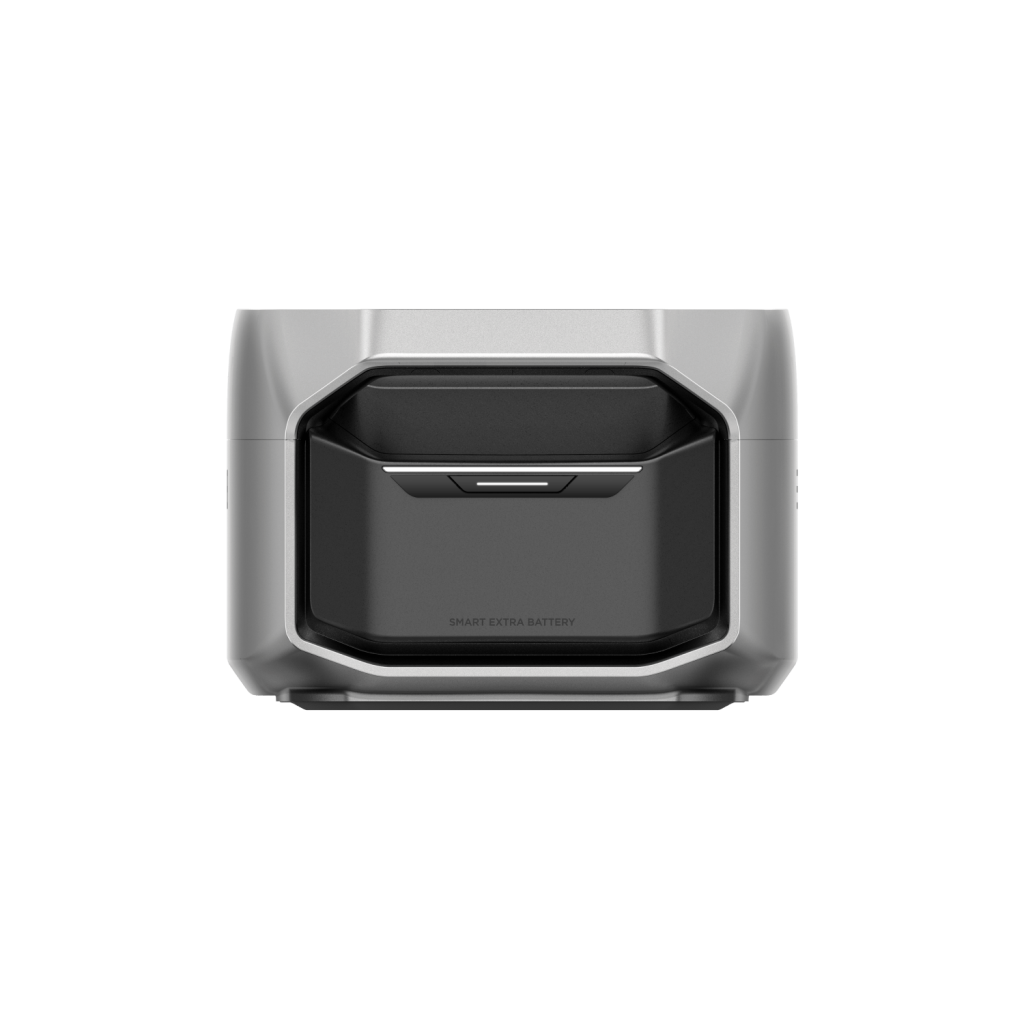
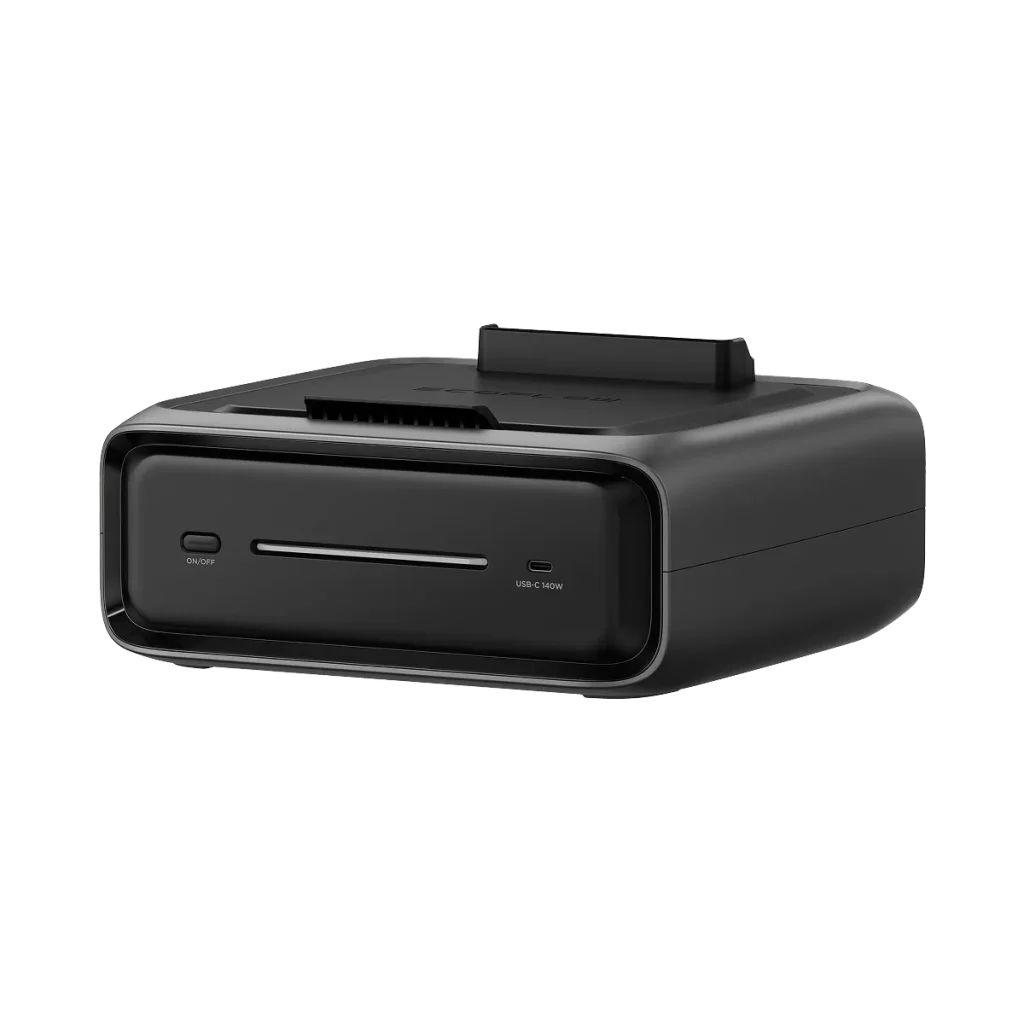
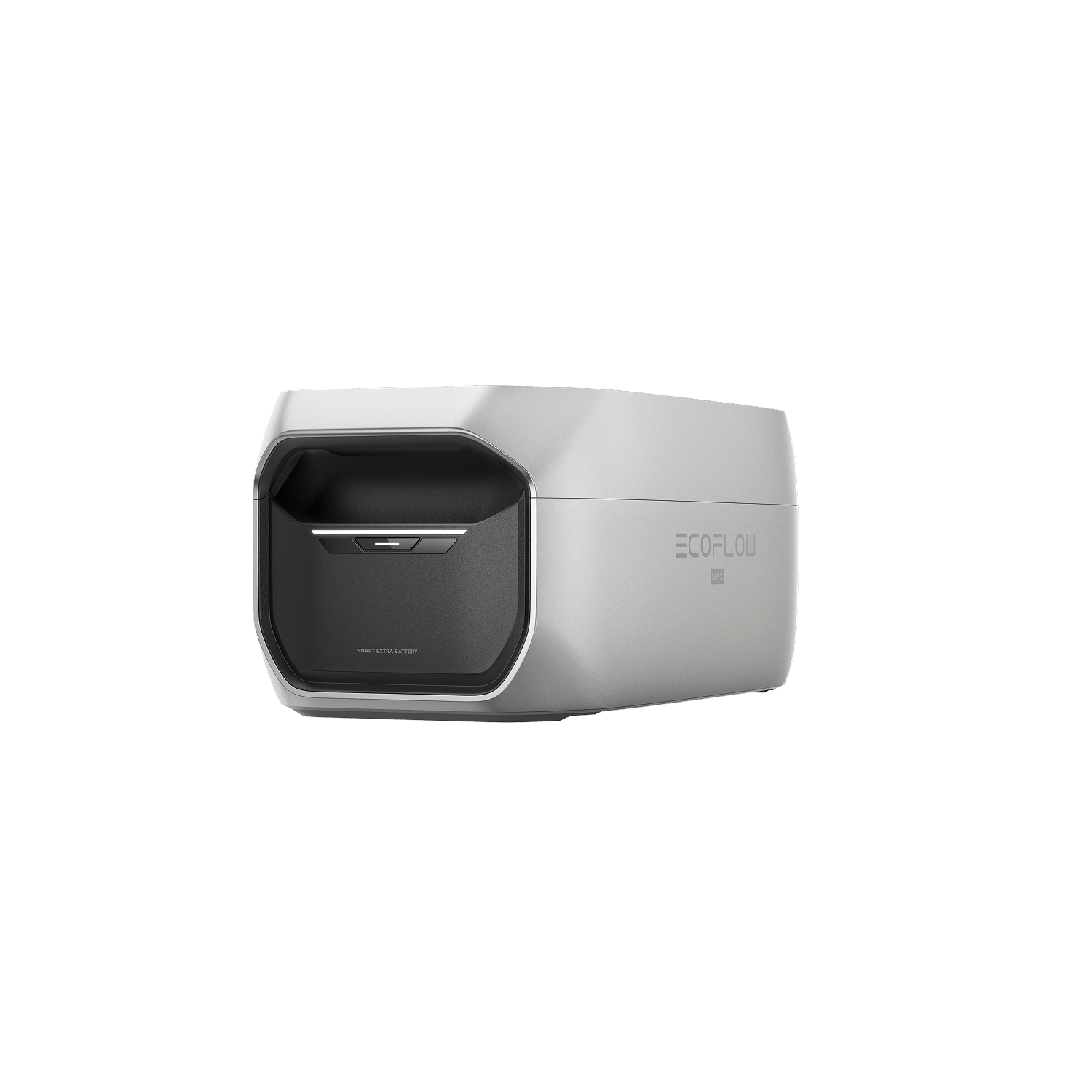
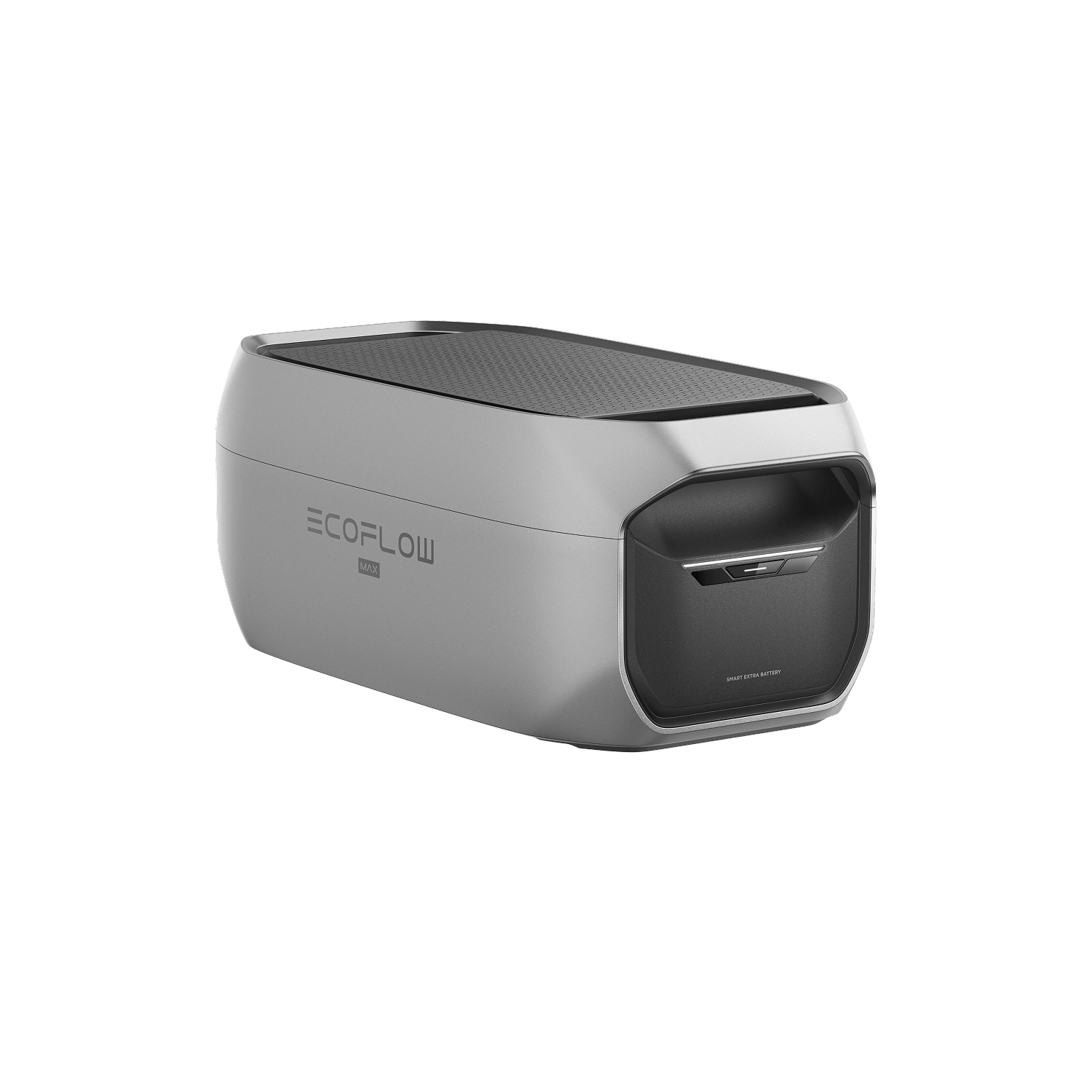
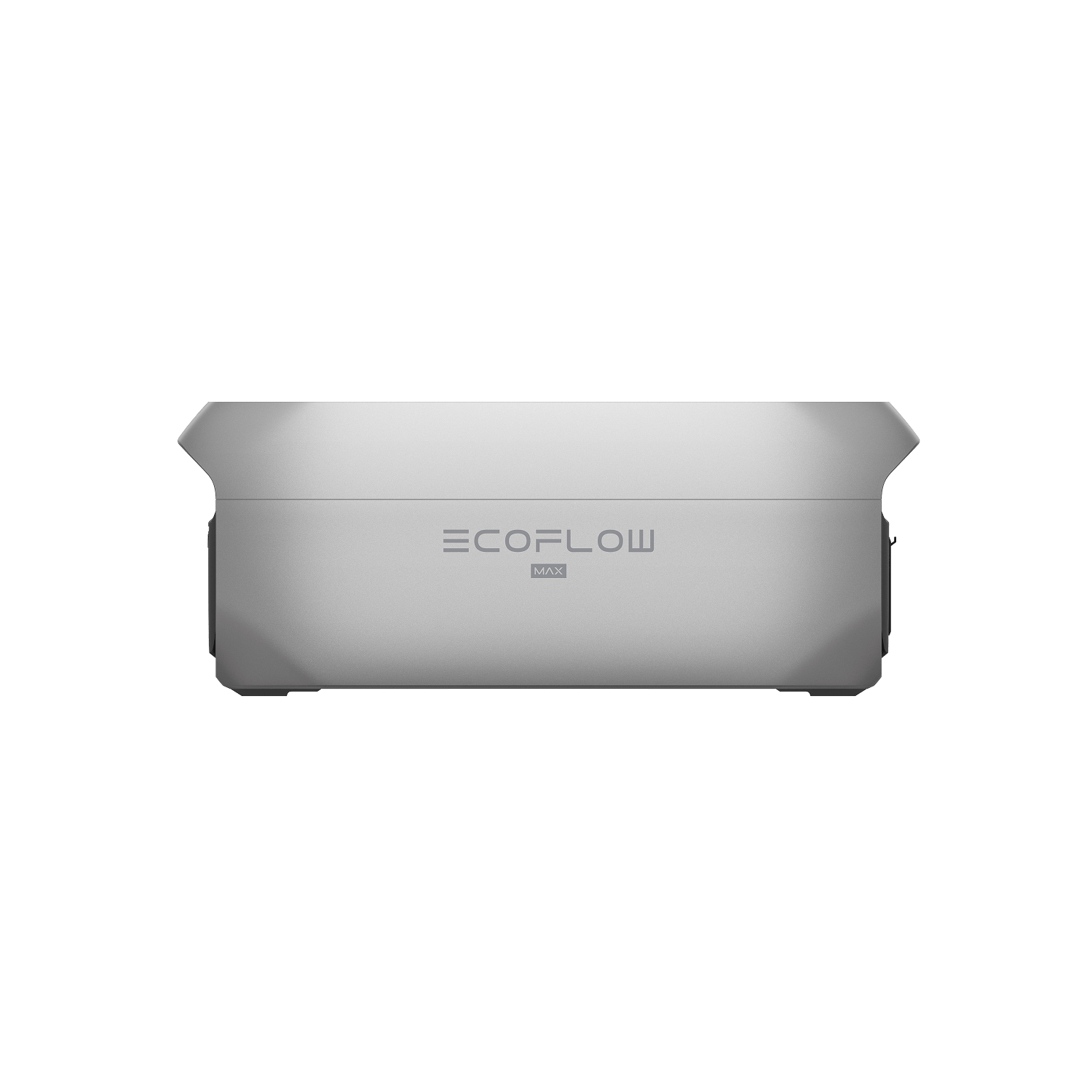
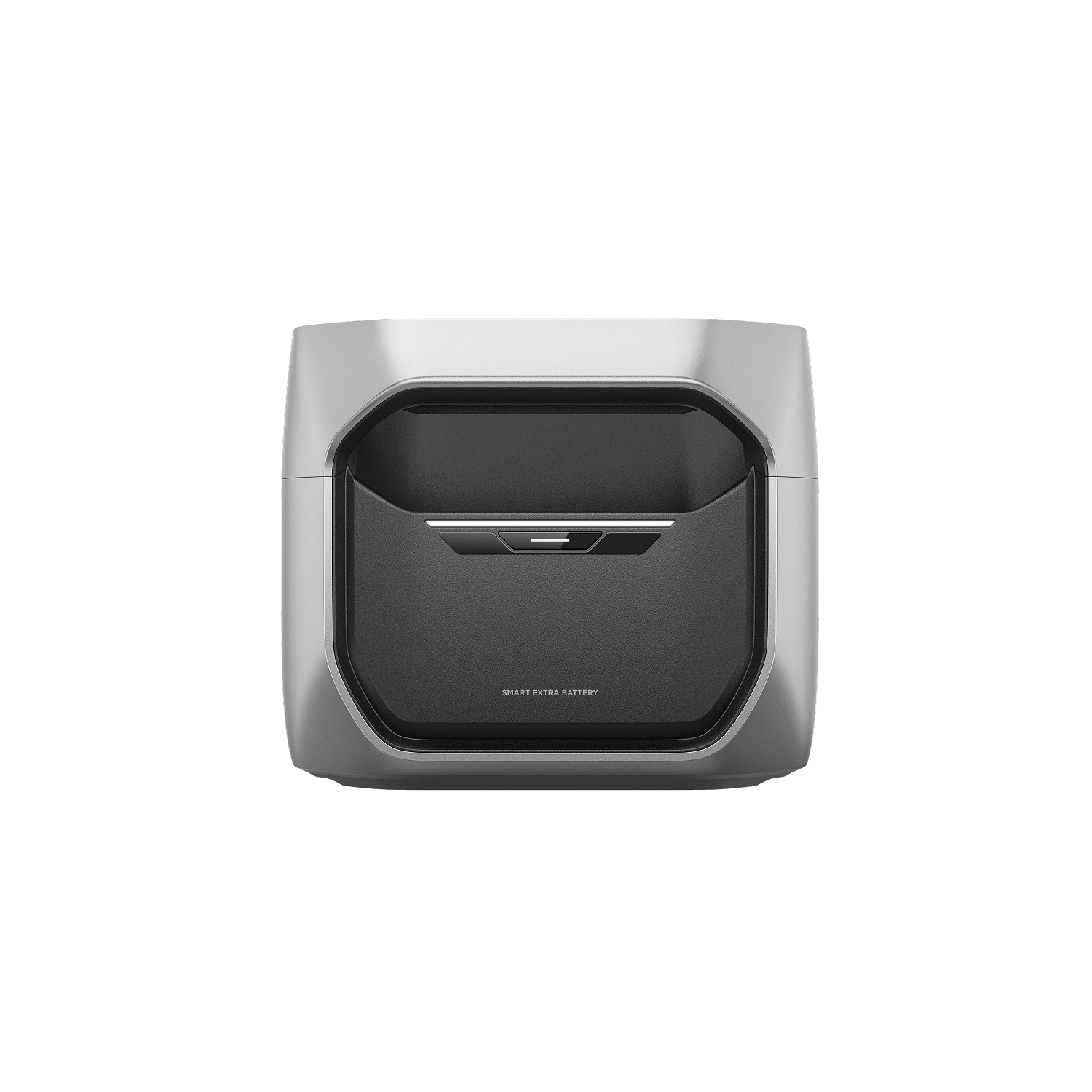
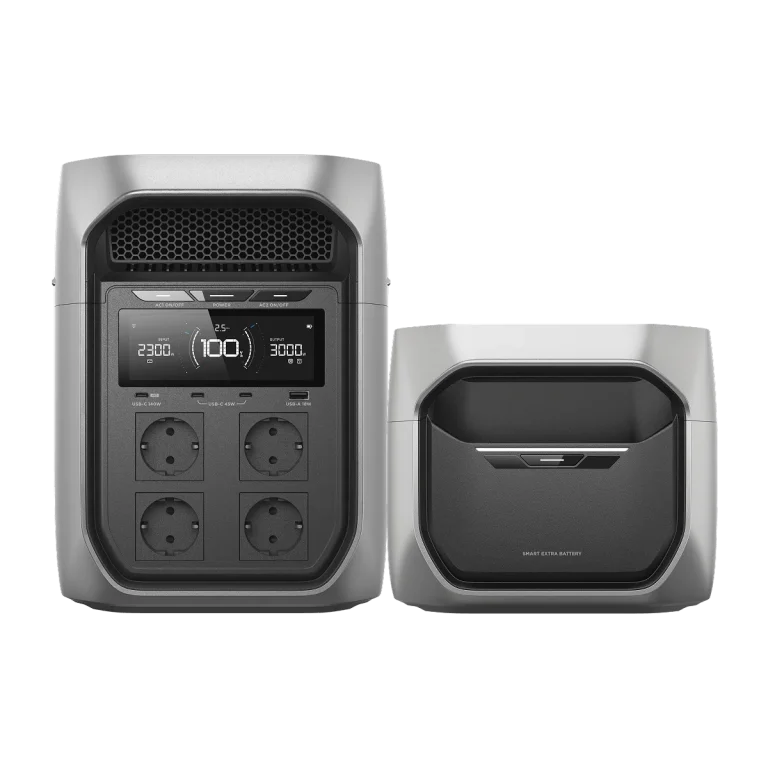
The DELTA 3 Max Plus Smart Extra Battery is the native expansion module for the EcoFlow DELTA 3 Max Plus station: another 2048 Wh on LFP cells in a silver case of the same width. On EcoFlow’s European page only the DELTA 3 Max Plus is named among compatible stations for our market. So when planning to buy an EcoFlow DELTA 3 Max Plus Smart Extra Battery, make sure you have the Plus version and not the regular DELTA 3 Max.
By itself the battery powers nothing: it has no outlets, USB or even a screen. Its task is simpler — together with the station to get 4096 Wh and get through a long outage without breaks or hunting for somewhere to recharge, without selling the station you have already bought.
Why DELTA 3 Max Plus needs a second battery unit
Twice the run time
DELTA 3 Max Plus has 2048 Wh. The battery adds as much, and the total reserve becomes 4096 Wh. In practice this is the difference between “getting through the evening” and “calmly getting through the night and the morning” with a boiler, fridge and internet.
16 kg and the same base as the station
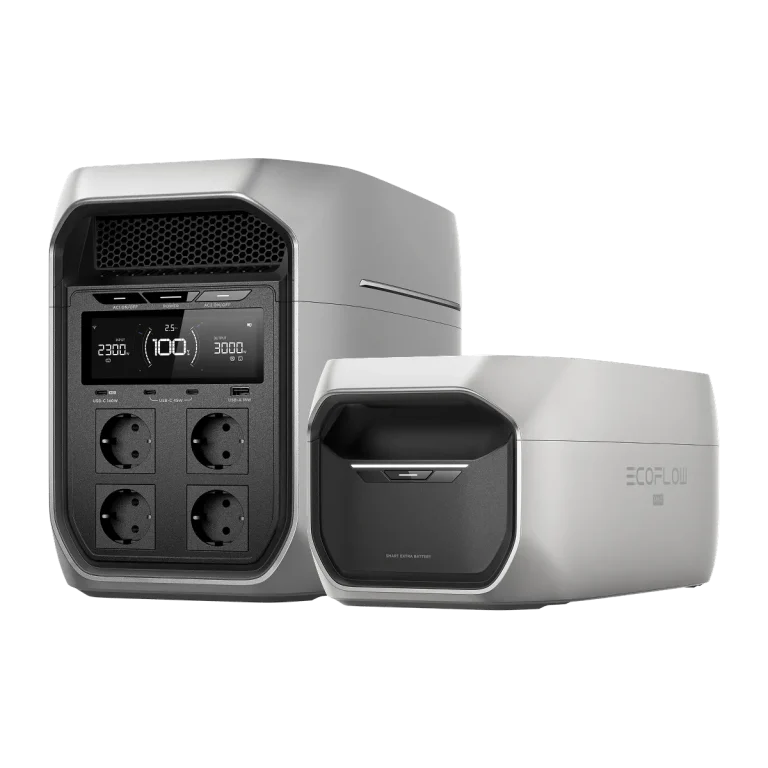
The battery weighs 16 kg, and its dimensions are 494 × 239 × 196 mm. The width and depth almost match the station (494 × 242 mm), so the pair takes the floor space of one case, and each unit can be carried separately.
The same 4+8 port and current up to 100 A
Energy is exchanged with the station through the proprietary 4+8 port at a voltage of 43.2–57.6 V. The battery can deliver up to 100 A and accept up to 48 A for charging.
A path to 6 kWh in the future
EcoFlow is announcing an Extra Battery Expansion Adapter with which two such batteries connect to one station, 6144 Wh in total. The adapter’s release date is not given, so when buying a battery now, plan the system with one extra unit.
Compatibility
The battery is designed for the DELTA 3 Max Plus with one expansion port. The total capacity, including the station’s own 2048 Wh:
| Station | Own capacity | With battery |
|---|---|---|
| DELTA 3 Max Plus, one battery | 2048 Wh | 4096 Wh |
| DELTA 3 Max Plus, two batteries through an adapter (announced) | 2048 Wh | 6144 Wh |
| DELTA 3 Max | 2048 Wh | does not connect |
This battery does not fit the EcoFlow DELTA 3 Max: this model has no extra battery port and cannot be expanded. It is easy to tell them apart: the Max Plus is silver, with a main 140 W USB-C and an expansion port on the rear panel, and the Max is black and grey. The European battery page names no other compatible stations for our market, so we do not offer it for DELTA 2 Max, DELTA 3 or DELTA Pro 3.
According to the official contents, the box includes the battery itself, an Extra Battery Cable for connecting to the station, manuals and a warranty card.
Which other batteries DELTA 3 Max Plus accepts
According to the station’s page, its port also works with batteries from other series. A comparison by capacity and weight:
| Battery | Capacity, weight | Together with the station |
|---|---|---|
| This battery (DELTA 3 Max Plus) | 2048 Wh, 16 kg | 4096 Wh |
| DELTA 2 Max Smart Extra Battery | 2048 Wh, 19 kg | 4096 Wh |
| DELTA 3 Smart Extra Battery | 1024 Wh, 9.6 kg | 3072 Wh |
| DELTA Pro 3 Smart Extra Battery | 4096 Wh, 33 kg | 6144 Wh |
The DELTA 3 Max Plus battery is the lightest per kilowatt-hour, about 7.8 kg, and repeats the station’s design. The DELTA 2 Max Smart Extra Battery makes sense if you already have one from a DELTA 2 Max. The DELTA 3 Smart Extra Battery fits when plus 1 kWh is enough and compactness matters. The DELTA Pro 3 Smart Extra Battery gives 6 kWh right away without an adapter, but it is 33 kg and 694 mm long. If you choose a battery from another series, write to us before buying so we can check the connection details.
How many more hours it lasts
Because of inverter losses, about 85% of the capacity reaches the 230 V outlets. So the battery adds about 1740 Wh of usable energy, and together with the station you get roughly 3480 Wh. The calculation is simple: divide these watt-hours by the power of the devices switched on. The figures below are approximate, because real consumption depends on the equipment, the mode and the room temperature.
- heating from a gas boiler with a pump (100–150 W): plus 11–17 hours;
- fridge (1–1.5 kWh per day): plus 28–42 hours;
- boiler, fridge, router and lights together (200–250 W): instead of 7–8 hours from one station — about 14–17 hours;
- a work computer with a monitor (about 300 W): plus almost 6 hours;
- a 2 kW heater: plus only 50–55 minutes, so for electric heating this is not a solution.
How to connect and use it
EcoFlow’s manual describes three steps. Switch the station off and connect the battery port and the expansion port on the rear panel of the DELTA 3 Max Plus with the supplied cable. Then switch on either of the two devices: the second starts by itself, and they also switch off together. The connection has succeeded if a battery icon has appeared on the station’s screen.
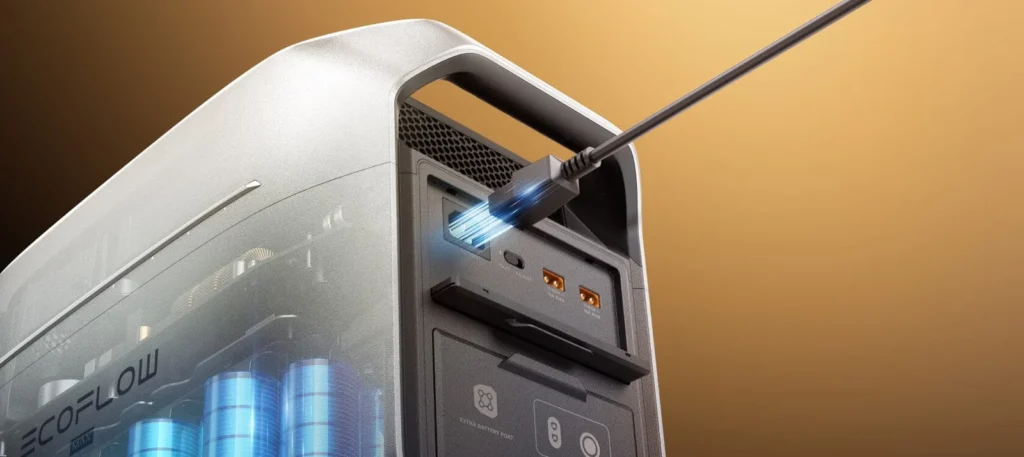
The main rule is not to plug or unplug the cable while the station is running. The manual describes the battery as a reserve: when the station’s charge runs out, power to the equipment continues from the extra unit.
The battery has no separate charging input. It charges through the station: from the mains, solar panels up to 1000 W or other sources that the DELTA 3 Max Plus accepts. There is twice as much energy in the system, so a full charge also takes longer; EcoFlow does not give separate figures for the pair.
The battery state is shown by a light strip on the case. A slow white “breathing” means normal operation, the number of segments with a steady light is the charge level, a partly flashing strip means charging, and flashing of the whole strip means an error, whose hint you should look for in the EcoFlow app for the station.
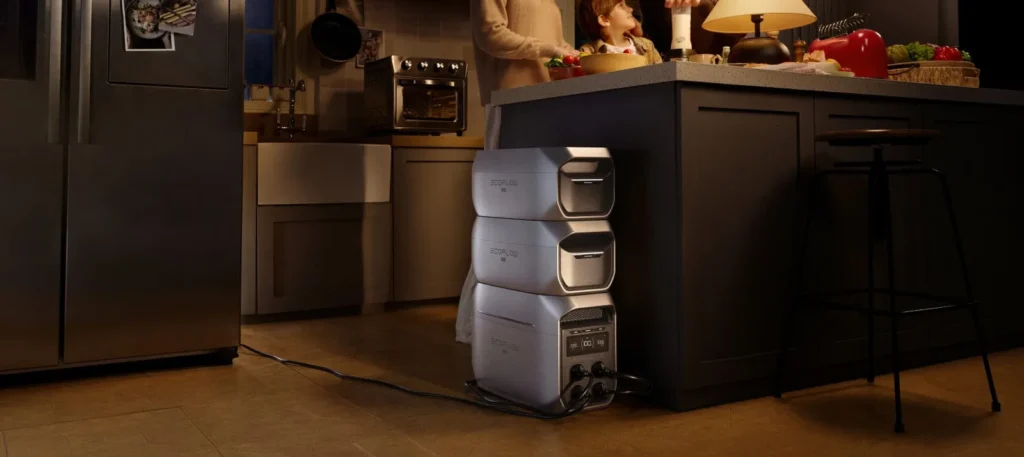
The battery’s manual directly allows stacking it only with DELTA 3 and DELTA 3 Plus and does not recommend it for other stations. So with the DELTA 3 Max Plus it is safer to place the units side by side. If you do stack them, as in EcoFlow’s photo above, turn the structure with its long side to the wall so that it does not tip over.
A battery or a more powerful station
The battery adds only energy. The power remains whatever the station delivers: 3000 W continuous and up to 3900 W with X-Boost for heating equipment. If that is enough and what you lack is duration, the battery is the most direct way to double the reserve without a second inverter and a second set of outlets.
If you do not have a DELTA 3 Max Plus yet and need both 4 kWh and power above 3000 W, compare with the EcoFlow DELTA Pro 3: 4096 Wh in one case, 4000 W output and expansion to 12 kWh. The price of this is 51.5 kg in one case that usually stays in one place. The DELTA 3 Max Plus with a battery pair weighs 38 kg but separates into two units of 22.1 and 16 kg.
Who it suits and who it does not
It suits you if:
- a DELTA 3 Max Plus is already at home and its 2 kWh runs out before the power returns;
- you prefer to grow in steps: first the station, then another 2 kWh;
- it is important that each unit can be carried on your own.
It is worth choosing another if:
- you have a DELTA 3 Max with no expansion port or a station of another series;
- what you lack is power at the outlets, not run time;
- another battery is already connected to the station’s port and the adapter for two has not been released yet;
- you plan an Alternator Charger Plus 1000: it also connects through the station’s 4+8 port, and how they combine with the battery EcoFlow does not yet describe, so ask us before buying.
FAQ
Can the battery be connected to a DELTA 3 Max without Plus?
No. DELTA 3 Max has no extra battery port, so it works only with its own 2048 Wh.
How many such batteries can be connected to one station?
One for now. Two, 6144 Wh in total, will be possible only with the Extra Battery Expansion Adapter, which EcoFlow is only announcing.
Will the output power increase?
No, it is determined by the station’s inverter: 3000 W, peak 6000 W. The battery only extends the run time.
How can I find the battery charge if it has no screen?
By the light strip on the case. When it glows steadily, the number of lit segments corresponds to the charge level.
How should I store the battery correctly if it is not needed for a long time?
In a dry ventilated place at a temperature from -10 to 45 °C. Once every three months the manual advises discharging it to 0%, charging it to 100% and leaving it at about 60%.
Can the battery be charged in frost?
No, charging is possible from 0 °C, and delivering energy from -10 °C. The optimal operating temperature per the manual is 20–30 °C, so in winter it is better to keep the system in a heated room rather than in a garage.
In brief
For a DELTA 3 Max Plus owner this battery is the simplest way to get 4 kWh without a new station and without changing familiar outlets. The order button at the top of the page is the shortest path if you are ready to buy an EcoFlow DELTA 3 Max Plus Smart Extra Battery right now. If you are not sure which model you have or which battery to take, write to us through the contacts page and we will advise.