Connect appliances to the station
Choose what has to keep running during a blackout — we will work out how long the station lasts and whether it can carry the load. Choose appliances — we will work out how long the station lasts.
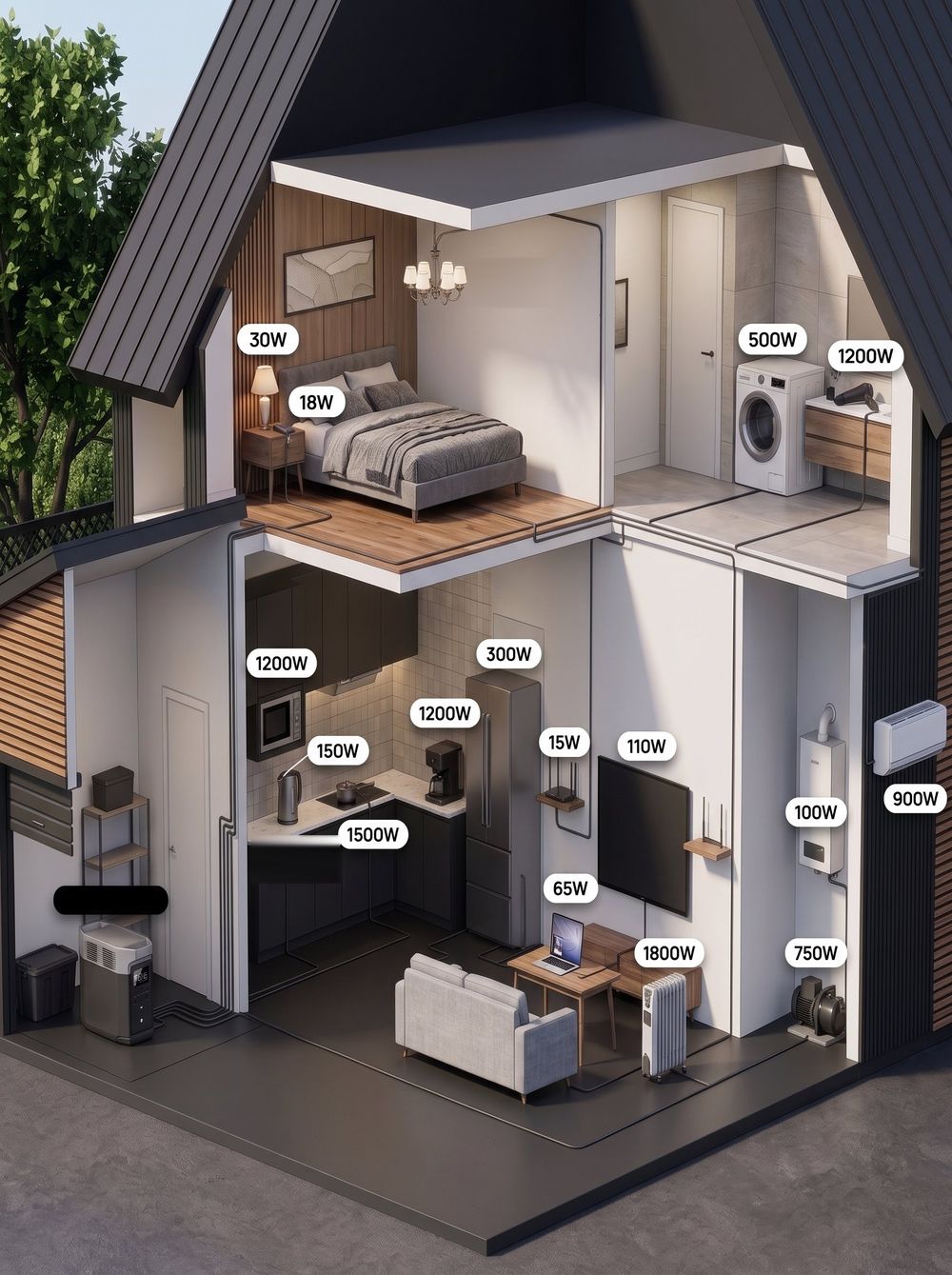
An estimate: 85% of the station capacity (inverter efficiency) divided by the total power of the appliances; charge is shown after a 4-hour blackout. Real figures depend on how the appliances are used.
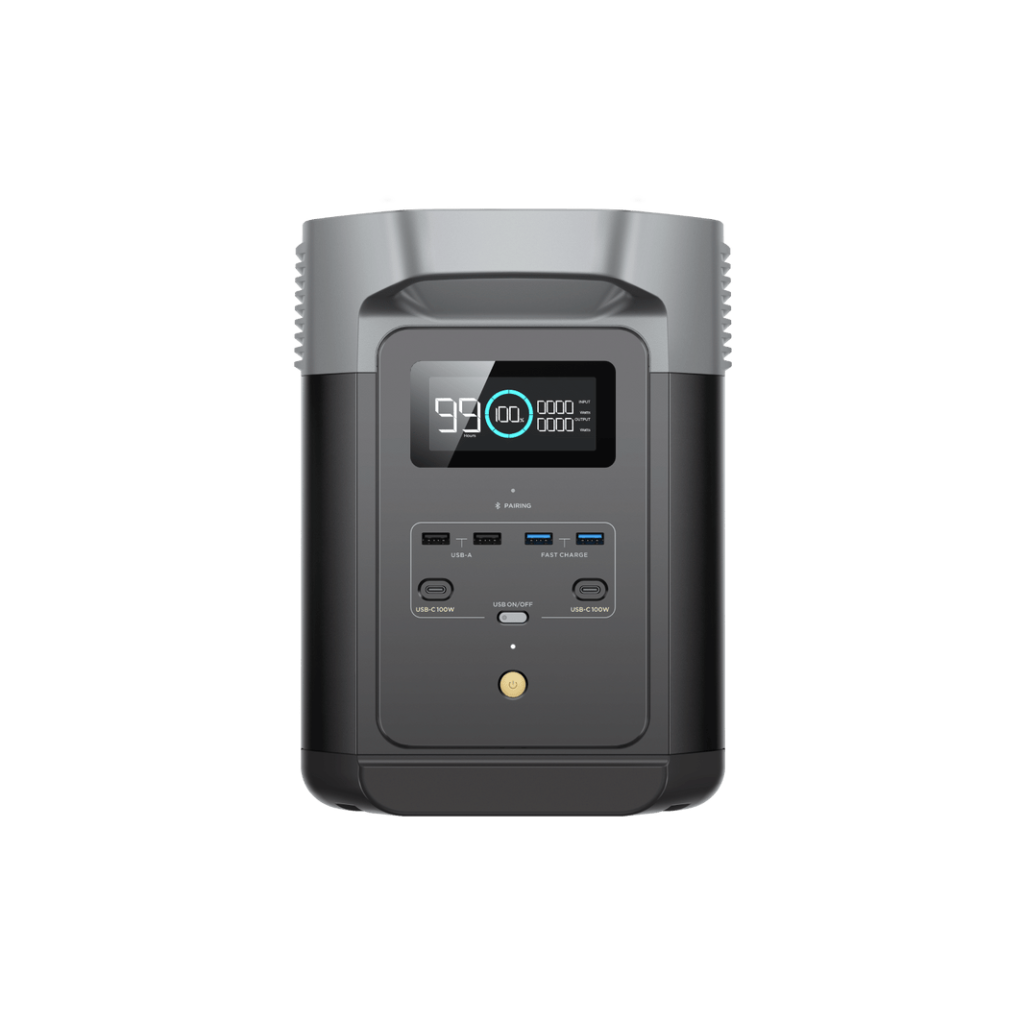
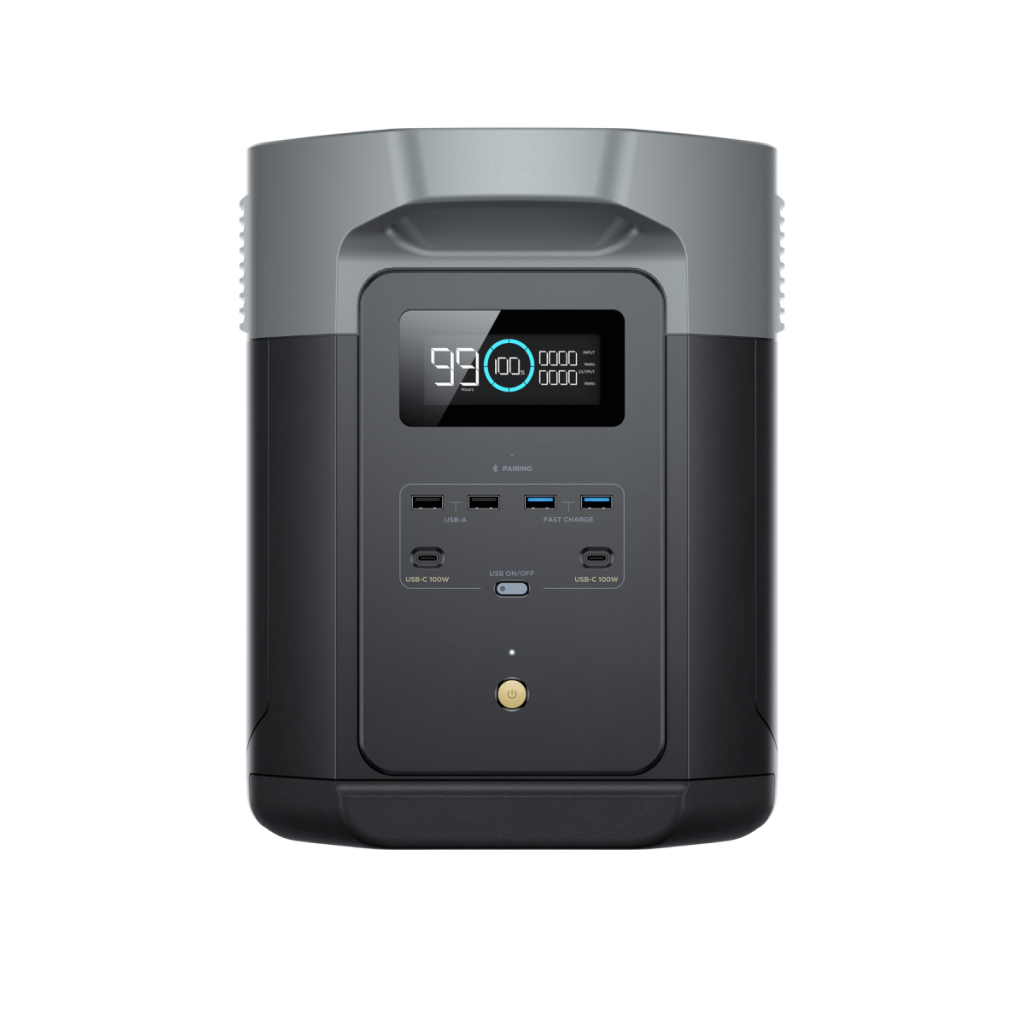
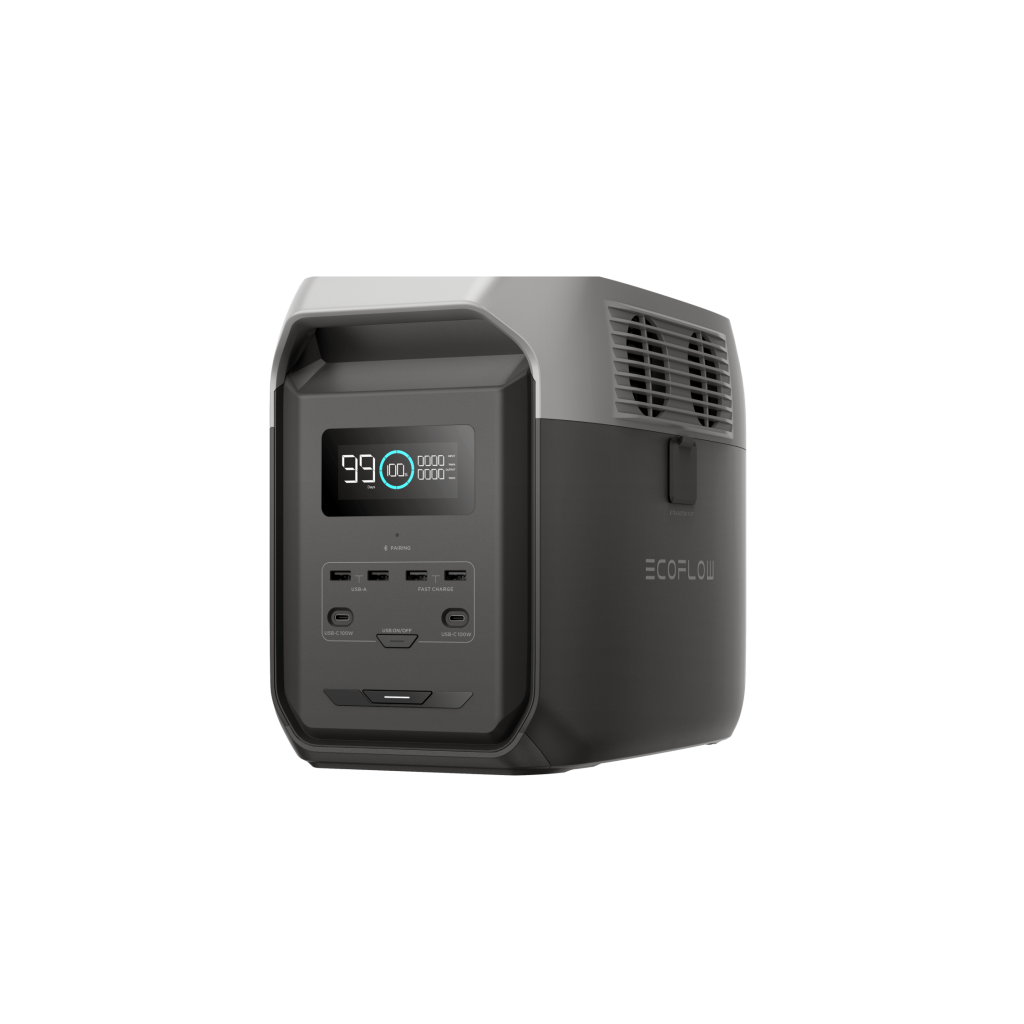
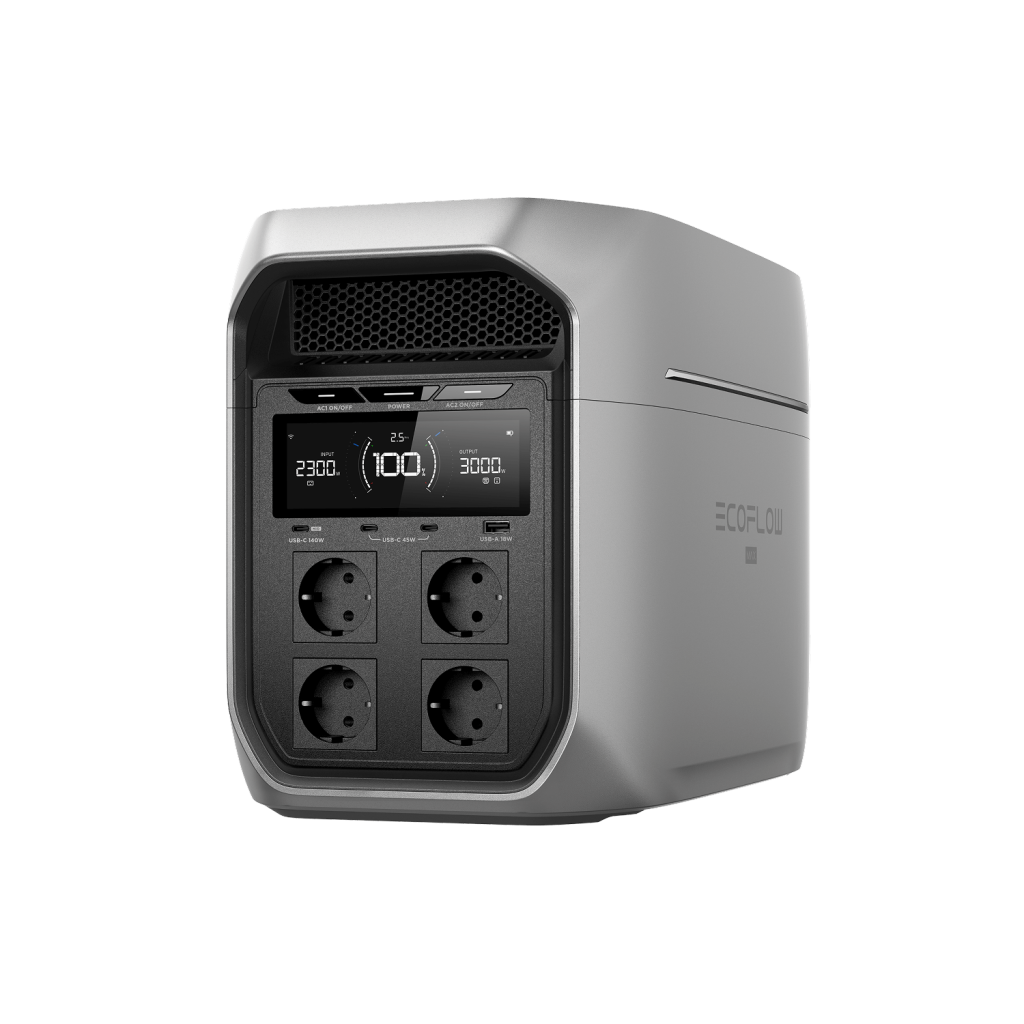
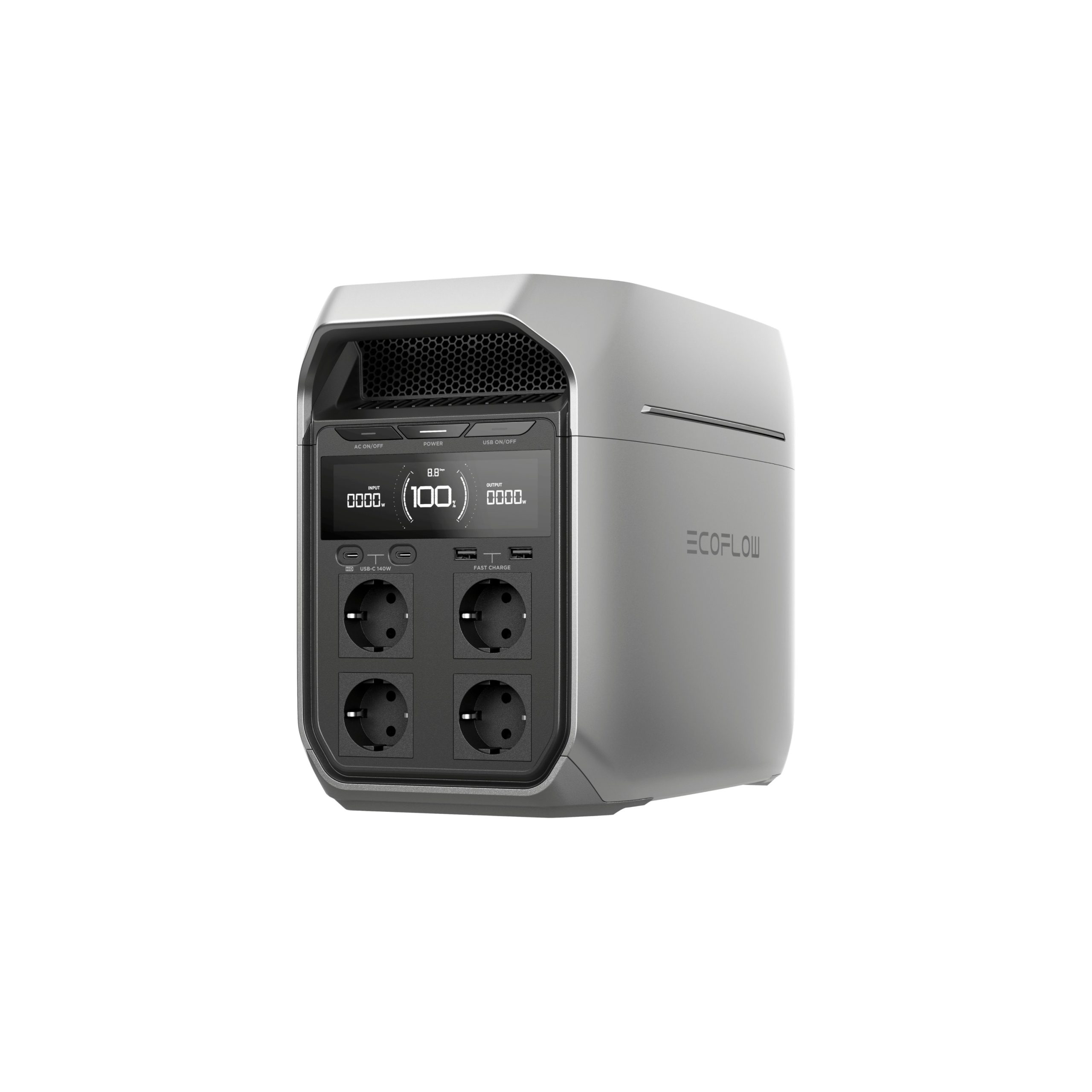
EcoFlow DELTA 3 is a new-generation 1024 Wh power station whose main advantage is charging speed. From an ordinary socket it charges from zero to 100% in about 56 minutes. If you are deciding whether to buy an EcoFlow DELTA 3 instead of the previous model, it is this figure and the 10 ms switching that are felt most in daily use.
In Ukraine mains power is often available in short windows between outages. In an hour of power DELTA 3 manages to charge fully, and then keeps a router, laptop, lighting and fridge running until the next window. For a country house and trips it can be charged from the sun or a car.
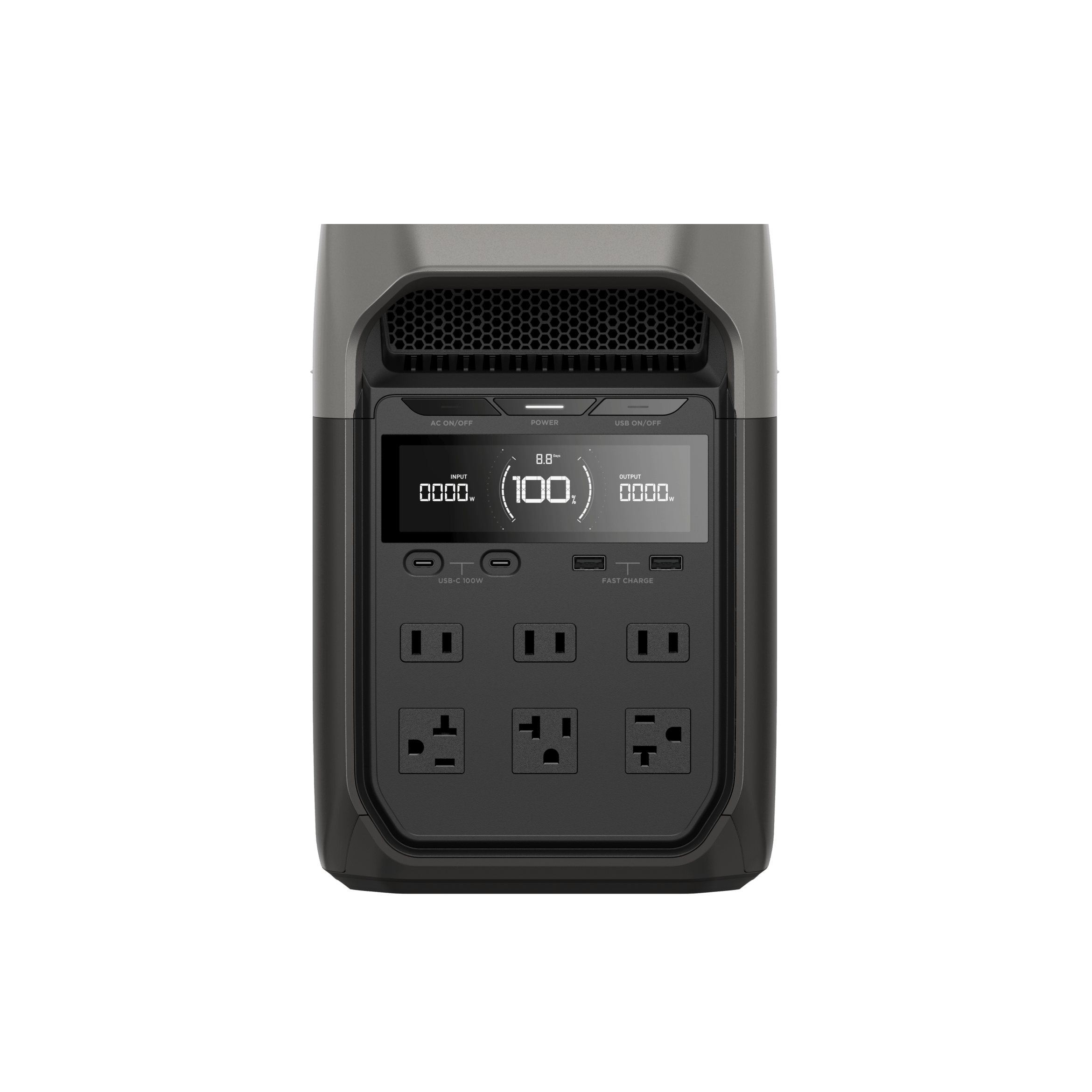
The station weighs about 12.5 kg, has four 230 V outlets at 1800 W and a LiFePO4 battery rated for 4000 cycles. If 1 kWh becomes too little, the capacity can be increased with an extra battery to 5 kWh.
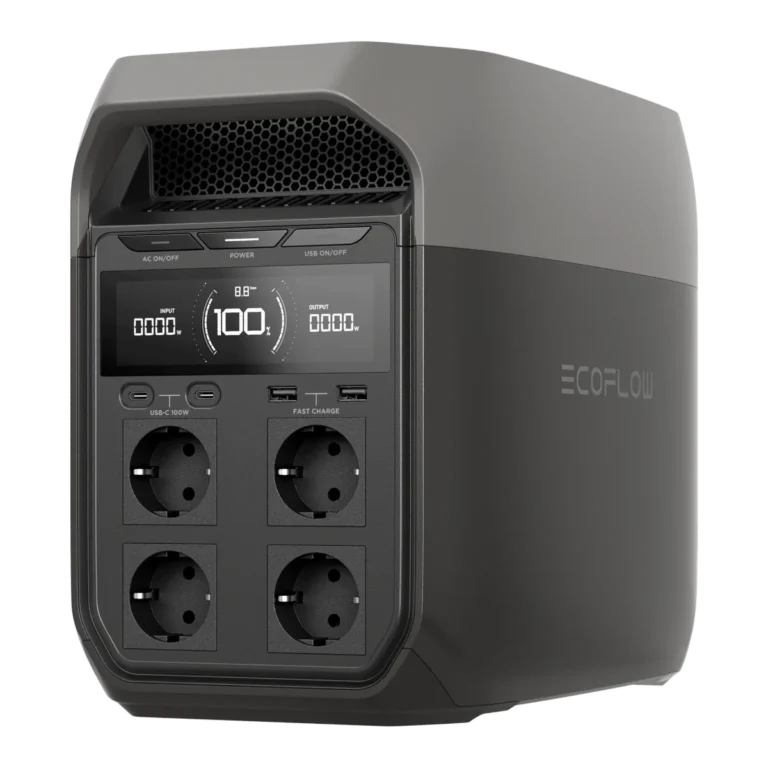
Why DELTA 3
X-Stream: full charge in 56 minutes
X-Stream is EcoFlow’s branded fast-charging technology: the station draws up to 1500 W from the socket with an ordinary cable, without an external power brick. In practice this is 0–100% in about 56 minutes. According to EcoFlow, even half an hour of charging gives several hours of backup power for basic appliances.
Switching to battery in under 10 ms
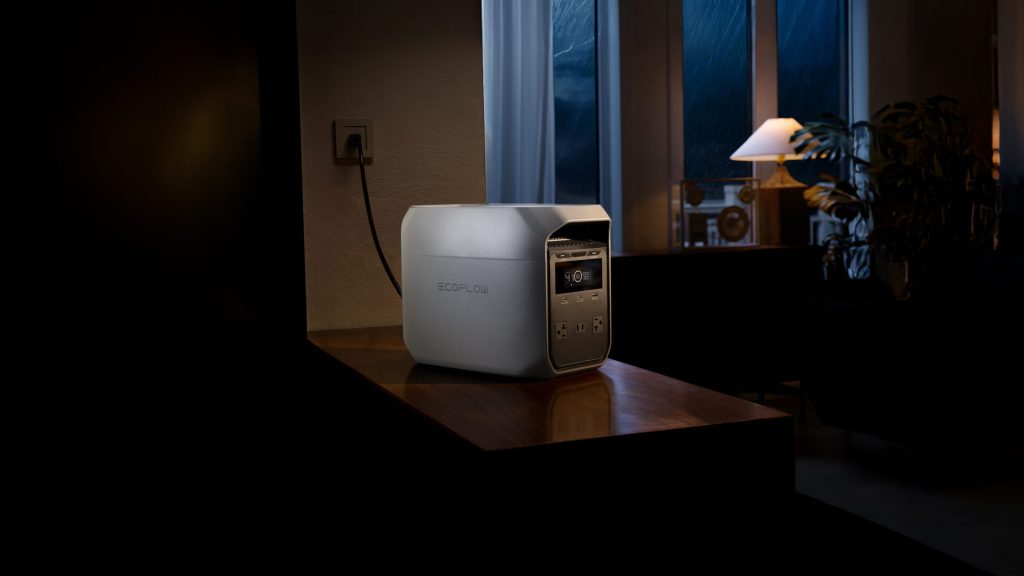
The station can be kept permanently between the socket and the equipment. While the mains is on, devices run from it, and in an outage DELTA 3 switches to the battery in less than 10 milliseconds. According to owners’ reviews, a monitor and laptop do not even flicker.
Third-generation LiFePO4 rated for 4000 cycles
Third-generation LiFePO4 cells keep at least 80% of their capacity after 4000 full cycles. By EcoFlow’s estimate, that is up to 10 years of regular use. LFP chemistry is stable when heated and handles fast charging well.
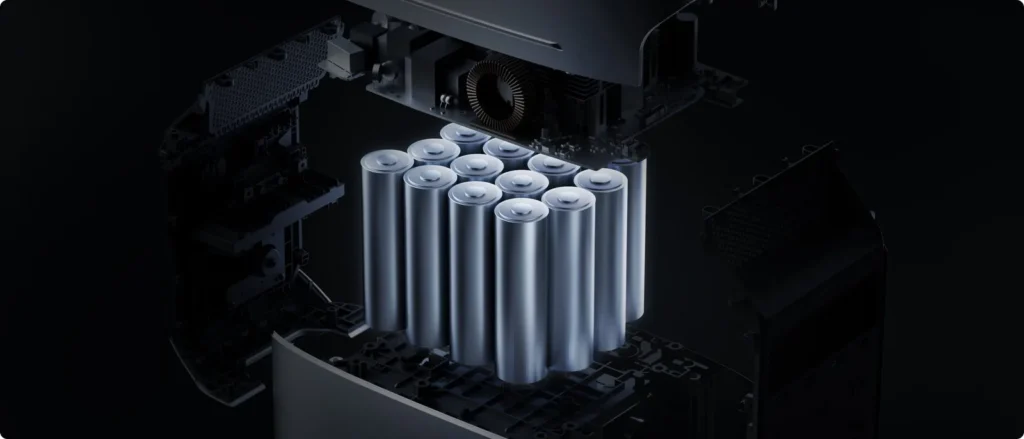
Protected battery pack and BMS
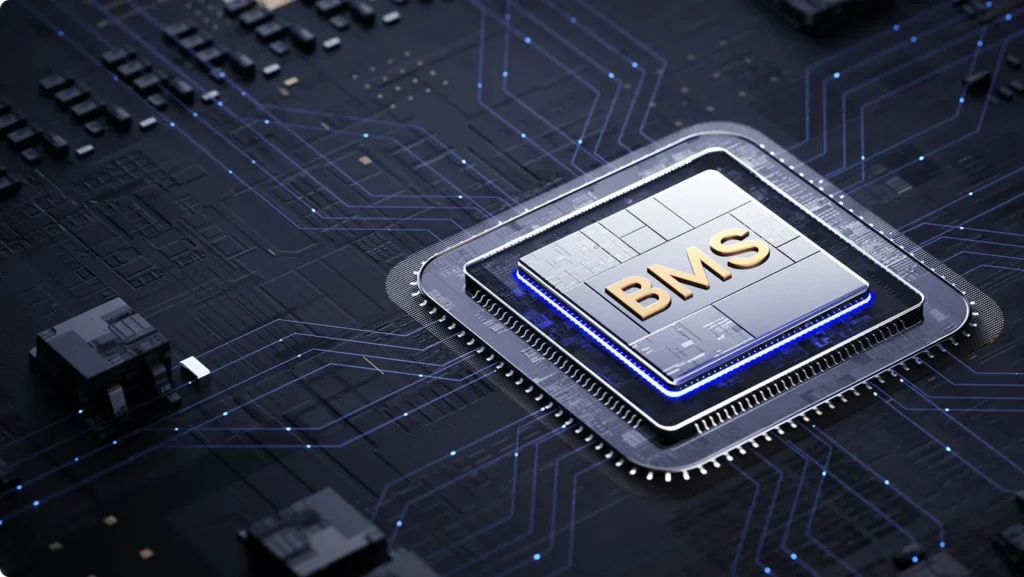
The battery pack has IP65 protection against dust and water splashes. The station itself is not waterproof, so it should not be left in the rain. The BMS has over 40 protection mechanisms against overcurrent, overvoltage and temperature extremes.
1800 W, peak 3600 W and X-Boost up to 2400 W
The rated 1800 W is enough for a microwave, coffee maker, iron or hair dryer. The 3600 W peak gives a reserve for the starting currents of compressors and motors. X-Boost mode lets you connect a heating appliance of up to 2400 W: the station lowers the voltage and the appliance works at reduced power, but without shutting down from overload.
Quiet operation
According to EcoFlow, at a load of up to 600 W the noise does not exceed 30 dB, and up to 1200 W it is 40 dB. For comparison, the manufacturer states about 50 dB for DELTA 2. The station can be left on in a bedroom.
What you can connect and how long it lasts
For the estimate we take about 850 Wh of usable energy at the 230 V outlets, because part of the capacity is spent on conversion in the inverter. We divide this figure by the device power and get approximate hours. The real time depends on the equipment, the temperature and how often the compressor switches on.
Apartment
A fridge, router, laptop and lights together consume 150–200 W on average, so DELTA 3 lasts about 4–6 hours. Device by device:
- router with an optical terminal (15–25 W): about 35–55 hours;
- fridge (1–1.5 kWh per day): about 14–20 hours;
- laptop (50–70 W): 12–17 hours;
- LED lighting in several rooms (30–60 W): 14–28 hours;
- TV (about 100 W): 8 hours.
The main difference from DELTA 2 here is not capacity but charging: if mains power is available for an hour, DELTA 3 manages to fill up completely.
Private house
A gas boiler with a circulation pump (80–150 W) will run from DELTA 3 for about 6–10 hours if there are no other devices. The station outputs a pure sine wave, which the boiler electronics need, and the boiler usually does not notice 10 ms switching. For a night with a boiler and a fridge together it is better to add a battery right away.
Country house
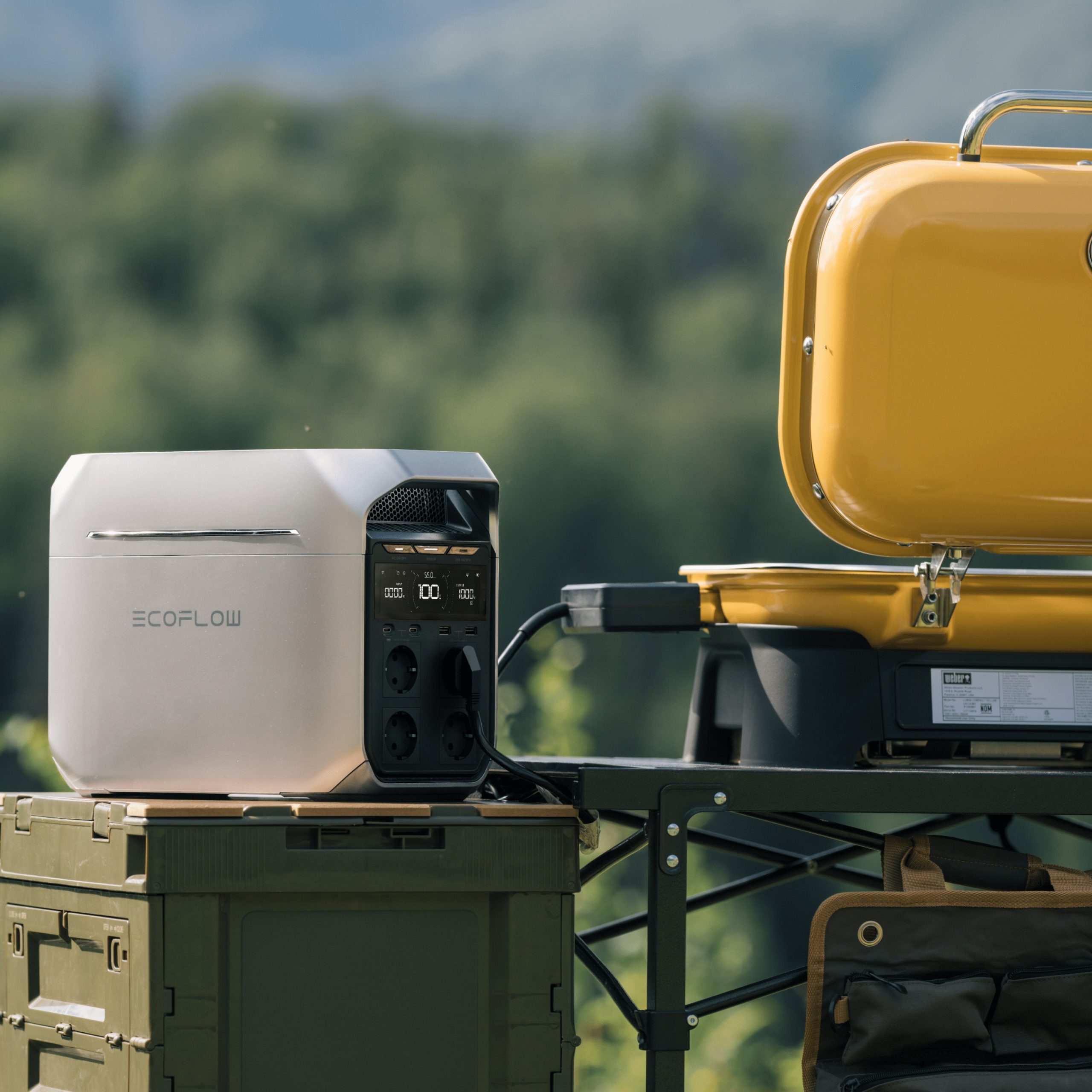
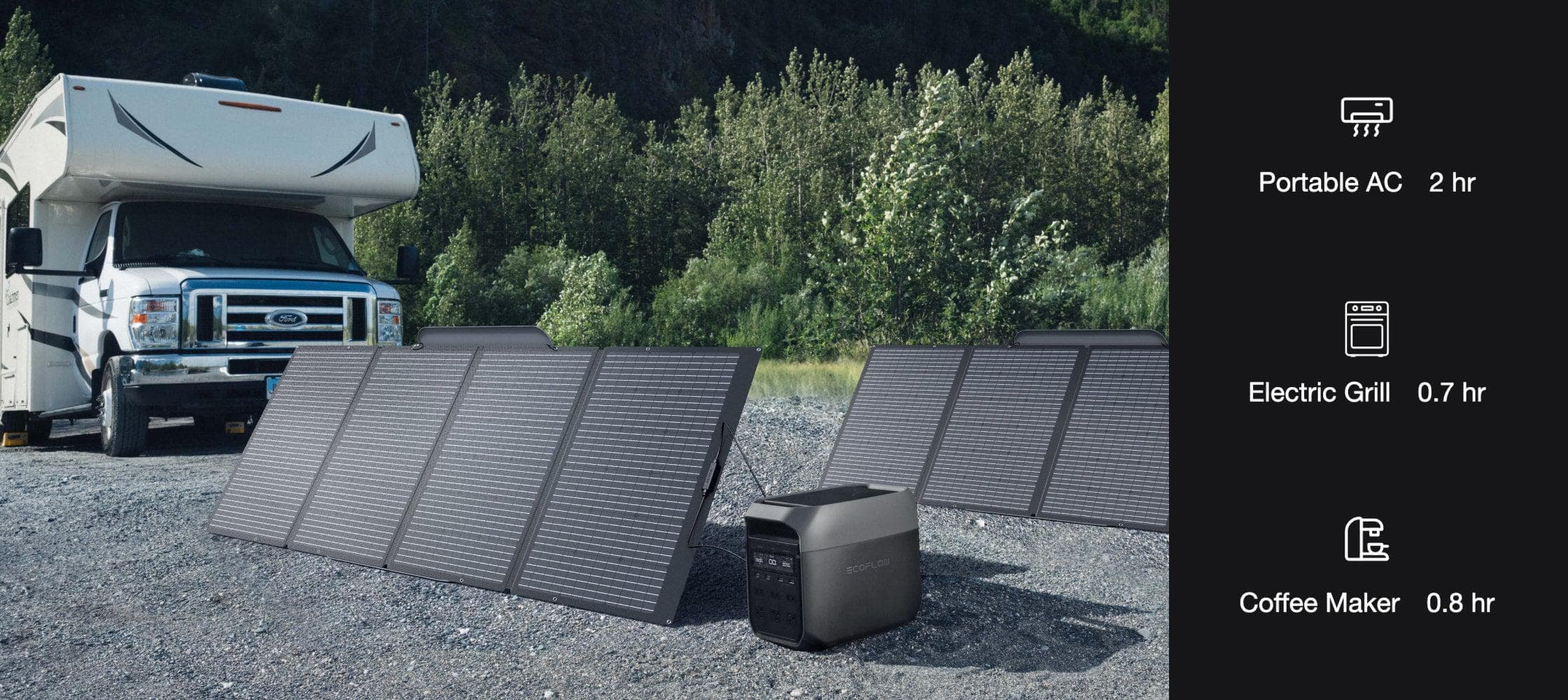
At a country house the station powers lighting, a fridge, a low-power pump or an electric grill. It produces no exhaust, so it can stay in the house. In summer a solar panel fully charges DELTA 3 in about 2 hours at 500 W input.
Office and remote work
A laptop, monitor and router together consume 100–150 W, so the station lasts about 6–8 hours, practically a working day. Thanks to switching in under 10 ms the equipment does not need to be switched off during outages, and a short window of mains power fully restores the charge.
Camping and travel
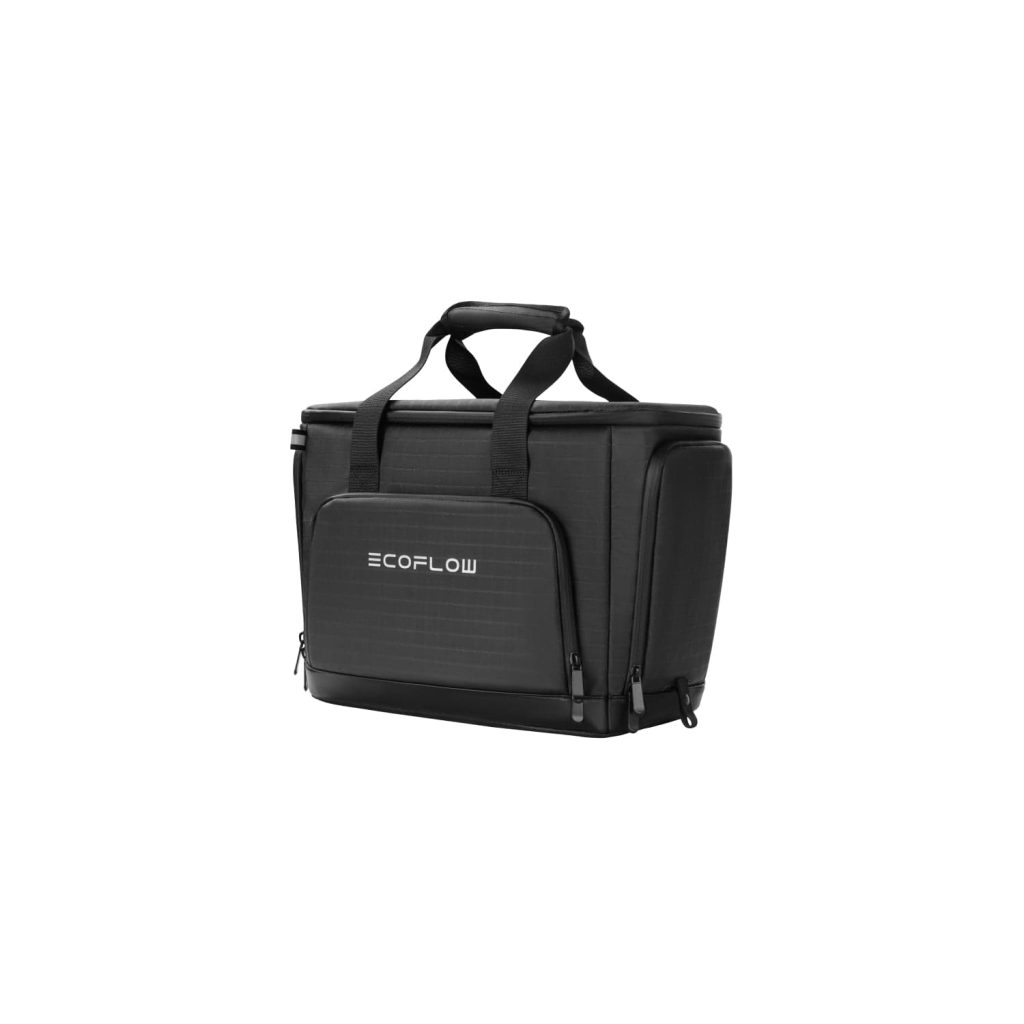
12.5 kg and a compact case let you put the station in a car boot. On the road it powers a laptop, drone, car fridge and camp lighting, and with a separate Alternator Charger it charges from the car’s alternator while driving.
Powerful appliances
A 1000–1200 W microwave, coffee maker or iron work without problems but use energy quickly: 10 minutes of microwave is about 0.2 kWh. A 2000–2200 W electric kettle exceeds 1800 W, so it will work only in X-Boost mode and boil more slowly. A boiler, oven, 2 kW electric heater or air conditioner will drain the station in an hour to an hour and a half.
How it works
From a socket DELTA 3 charges with the supplied cable at up to 1500 W. The charging speed can be lowered in the app if the wiring is weak or there is no rush. The mains and the sun can be connected at the same time, but the total input power is still limited to 1500 W.
For solar there is one 11–60 V input, up to 500 W. According to EcoFlow, at the full 500 W the station charges in about 2 hours, and in cloudy weather and in winter it takes longer.
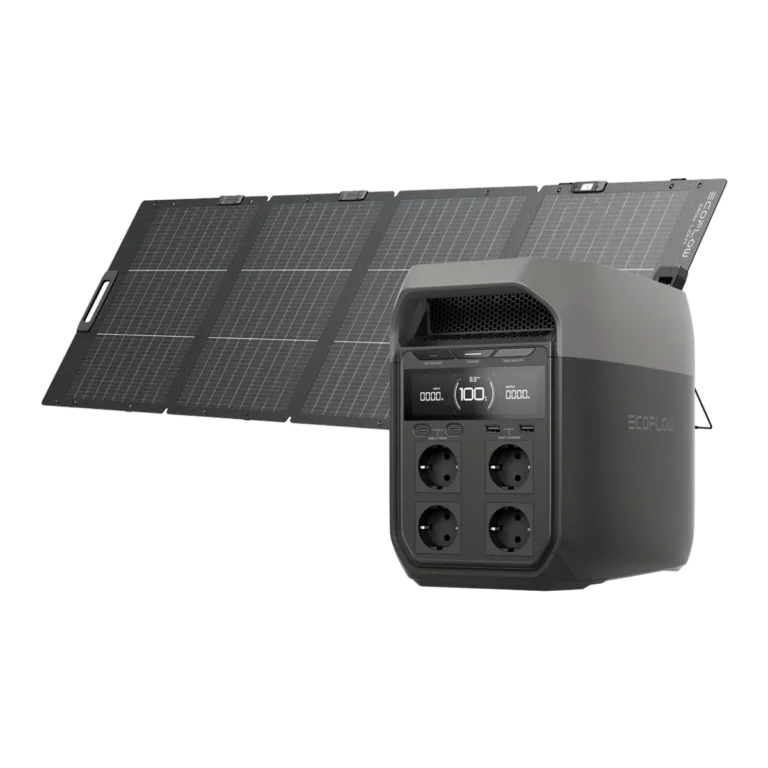
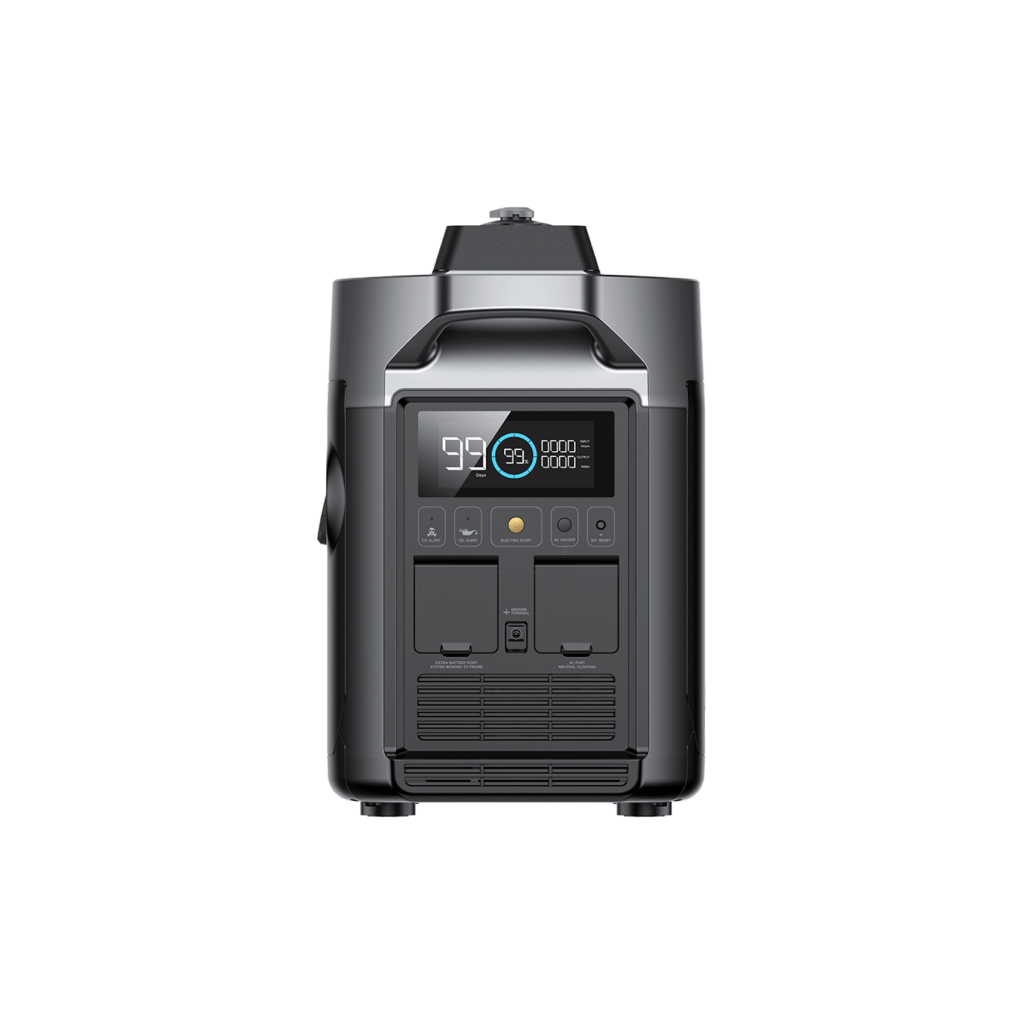
On the road the station is charged by a separate 800 W EcoFlow Alternator Charger: a full charge in about 1.3 hours. Owners note that it connects through the extra battery port, so it cannot be used at the same time as an expansion battery. DELTA 3 also supports the branded EcoFlow Smart Generator.
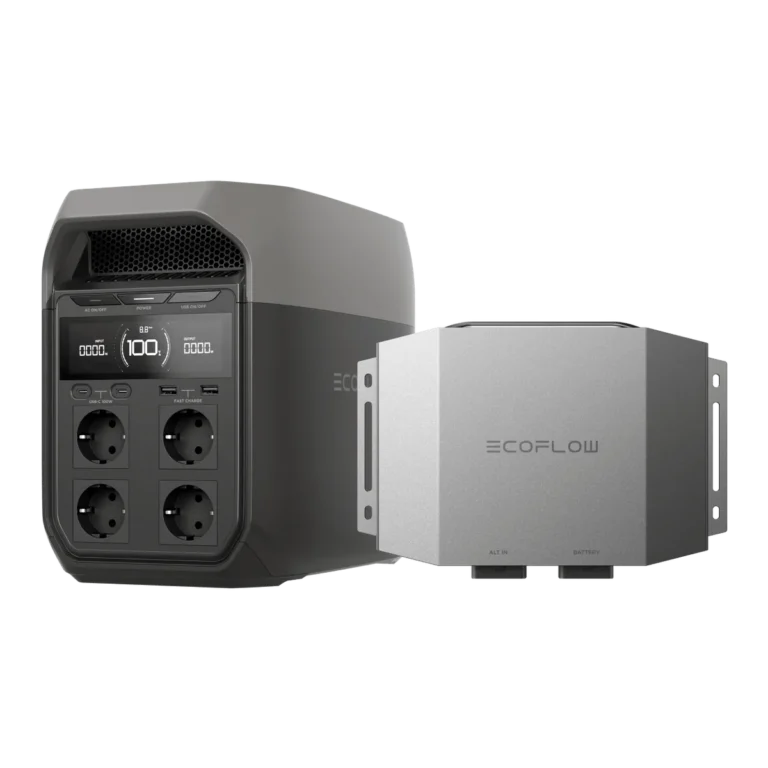
In backup power mode the station is plugged into a socket and the devices into the station. While the mains is on, equipment runs from it, and in an outage DELTA 3 switches to the battery in under 10 ms. This is not an online UPS with zero switching, so servers are better not connected to it.
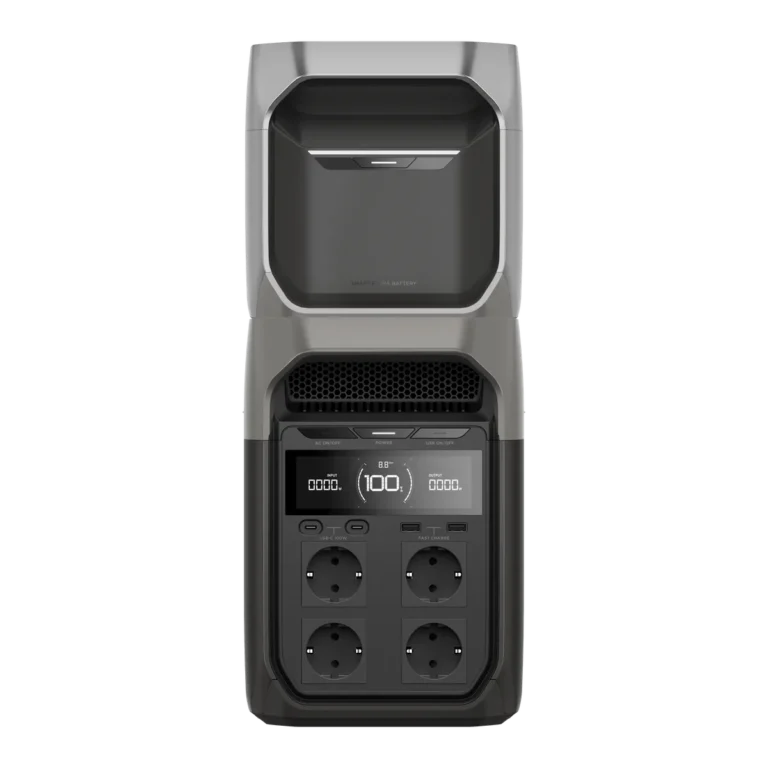
For expansion there is one extra battery port. With a 1 kWh DELTA 3 Smart Extra Battery you get 2 kWh, and with a DELTA Pro 3 battery up to 5 kWh. Batteries from DELTA 2 and DELTA 2 Max also fit.
The EcoFlow app works over Wi-Fi and Bluetooth. It shows the charge, input and output power, and lets you set the charging speed and X-Boost. There is a time-of-use (TOU) mode and a storm warning mode that prepares the station for an outage in advance. According to owners’ reviews, flexible entry of the Ukrainian two-zone tariff is not available yet.
DELTA 3, DELTA 2 or DELTA 2 Max
| DELTA 3 | DELTA 2 | DELTA 2 Max | |
|---|---|---|---|
| Capacity | 1024 Wh | 1024 Wh | 2048 Wh |
| Power (peak) | 1800 W (3600 W) | 1800 W (2700 W) | 2400 W (4800 W) |
| AC charging | 1500 W, 56 min to 100% | 1200 W, 80 min to 100% | up to 2300 W, 53 min to 80% |
| Cycles to 80% | 4000 | 3000 | 3000 |
| EPS switching | up to 10 ms | up to 30 ms | up to 20 ms |
| Expansion | up to 5 kWh | up to ~3 kWh | up to 6 kWh |
| Weight | 12.5 kg | 12 kg | 23 kg |
What is new in DELTA 3 compared with DELTA 2: faster AC charging (1500 W instead of 1200 W), three times faster switching in backup mode, a third more cycles, a higher peak for starting currents and noticeably quieter operation. The capacity and rated power are the same.
EcoFlow DELTA 2 remains a good choice if outages are predictable and you have several hours to charge, and your equipment is not sensitive to 30 ms switching. It is half a kilogram lighter and has a proven reputation.
EcoFlow DELTA 2 Max is for those for whom 1 kWh is not enough: a house with a boiler and a fridge running all night or kitchen appliances up to 2400 W. It has twice the capacity, but also twice the weight, 23 kg.
DELTA 3 is worth choosing if the main thing is to manage to charge in a short window of mains power and for a computer or monitor not to notice outages.
Who DELTA 3 suits and who it does not
DELTA 3 is a good fit if:
- mains power comes in short windows and it is important to charge within an hour;
- you work from home and equipment must survive outages without rebooting;
- in an apartment you need to run a fridge, router and lights for 4–6 hours;
- you need a station that is easy to take to a country house or on a trip, with the option to expand later.
Consider another option if:
- you need 2 kWh or more to run a boiler and fridge all night — DELTA 2 Max or DELTA 3 with a battery is better here;
- your appliances constantly need more than 1800 W, like a boiler, oven or electric heater;
- you only need a phone, router and laptop — a smaller station will do;
- your equipment needs 0 ms switching, like servers — they need an online UPS;
- outages last a day or more with no sun — then the station is paired with a generator.
FAQ
How is DELTA 3 better than DELTA 2?
First of all in speed: a full charge in 56 minutes instead of 80 and switching to battery in up to 10 ms instead of 30. In addition, DELTA 3 has 4000 cycles instead of 3000, a higher 3600 W peak and quieter operation, while capacity and power are the same.
Does DELTA 3 really charge in an hour?
Yes, from a socket at the full 1500 W power — in about 56 minutes from zero to 100%. This needs a sound socket and wiring, and at a reduced speed set in the app charging takes longer.
Does DELTA 3 work as a UPS for a computer?
Yes, it switches to the battery in under 10 ms, and for computers and monitors this is usually enough. A desktop PC should still be checked in advance, because power supplies differ, and servers need an online UPS.
How long will DELTA 3 run a fridge?
About 14–20 hours if there are no other devices. A fridge consumes 1–1.5 kWh per day on average, so the exact time depends on the model and the room temperature.
How many batteries can be connected?
One. The simplest is to take a DELTA 3 Smart Extra Battery and get 2 kWh, and the maximum of 5 kWh comes with a DELTA Pro 3 battery. Batteries from DELTA 2 and DELTA 2 Max also fit.
Can I charge the station and use it at the same time?
Yes. While the station is plugged into the mains, devices run from the socket and the battery charges. This is exactly how backup power mode works.
How is DELTA 3 different from a generator?
The station is quiet, needs no fuel and can stay in an apartment. A generator wins only in outages of several days, when there is nothing to charge the battery with. They are often combined, and DELTA 3 also supports the branded EcoFlow Smart Generator.
Can DELTA 3 be placed outdoors?
Briefly and under a canopy — yes, but the station is not waterproof. Only the battery pack inside has IP65 protection, and the station itself is not protected from rain.
Summary
DELTA 3 is a logical choice if 1 kWh is enough for you and you value speed: a full charge in an hour and switching that the equipment does not notice. If you have decided to buy an EcoFlow DELTA 3 in Kyiv or another city in Ukraine, you can place the order on this page. If you are unsure whether the station will handle your equipment, write to us through the contacts and we will help you calculate the load.