Description
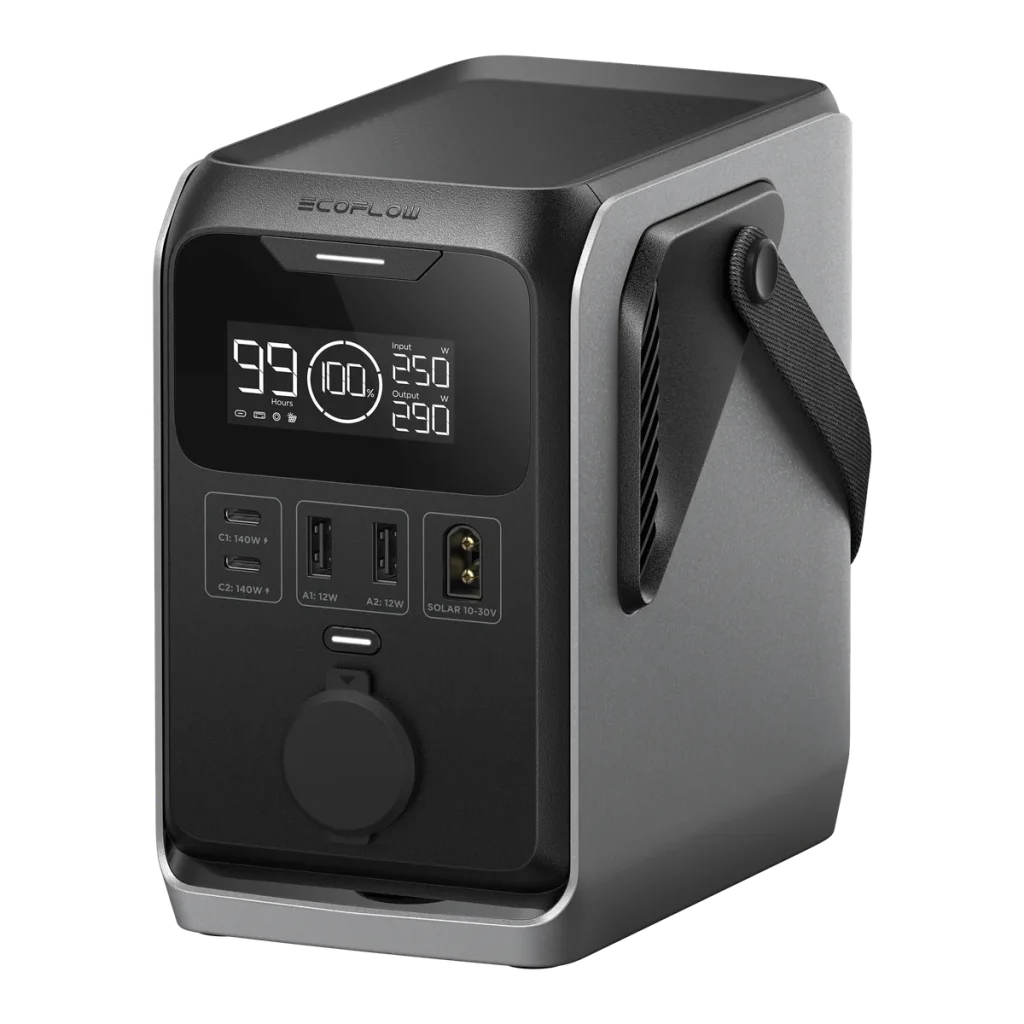
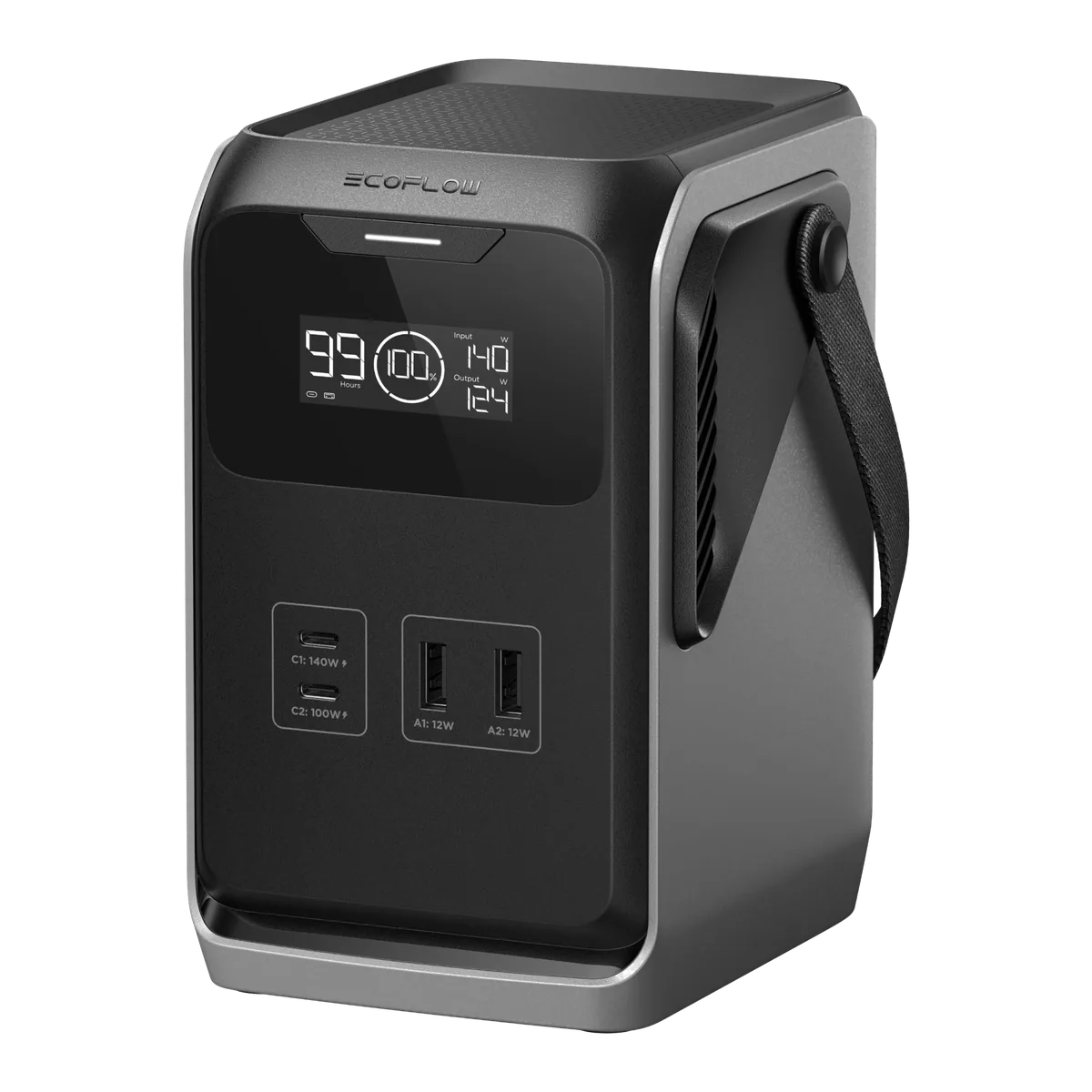
The EcoFlow TRAIL 200 DC is the youngest station of the TRAIL series, fitting 192 Wh into a 1.83 kg case with four USB ports. It is not an ordinary power station with outlets but a large DC battery for equipment that charges from USB. If you want to buy an EcoFlow TRAIL 200 DC, first check the main point: there are no 230 V outlets at all, so it powers only what accepts USB-C or USB-A.
In return, everything that runs from USB it charges without inverter losses. A smartphone, tablet, laptop with USB-C, mobile router, camera, drone or headlamp — this is exactly its equipment. During power outages the station keeps the connectivity and gadgets of the whole family running, and on a hike it adds only 1.83 kg to a rucksack.

Why TRAIL 200 DC
1.83 kg and the size of a thermos
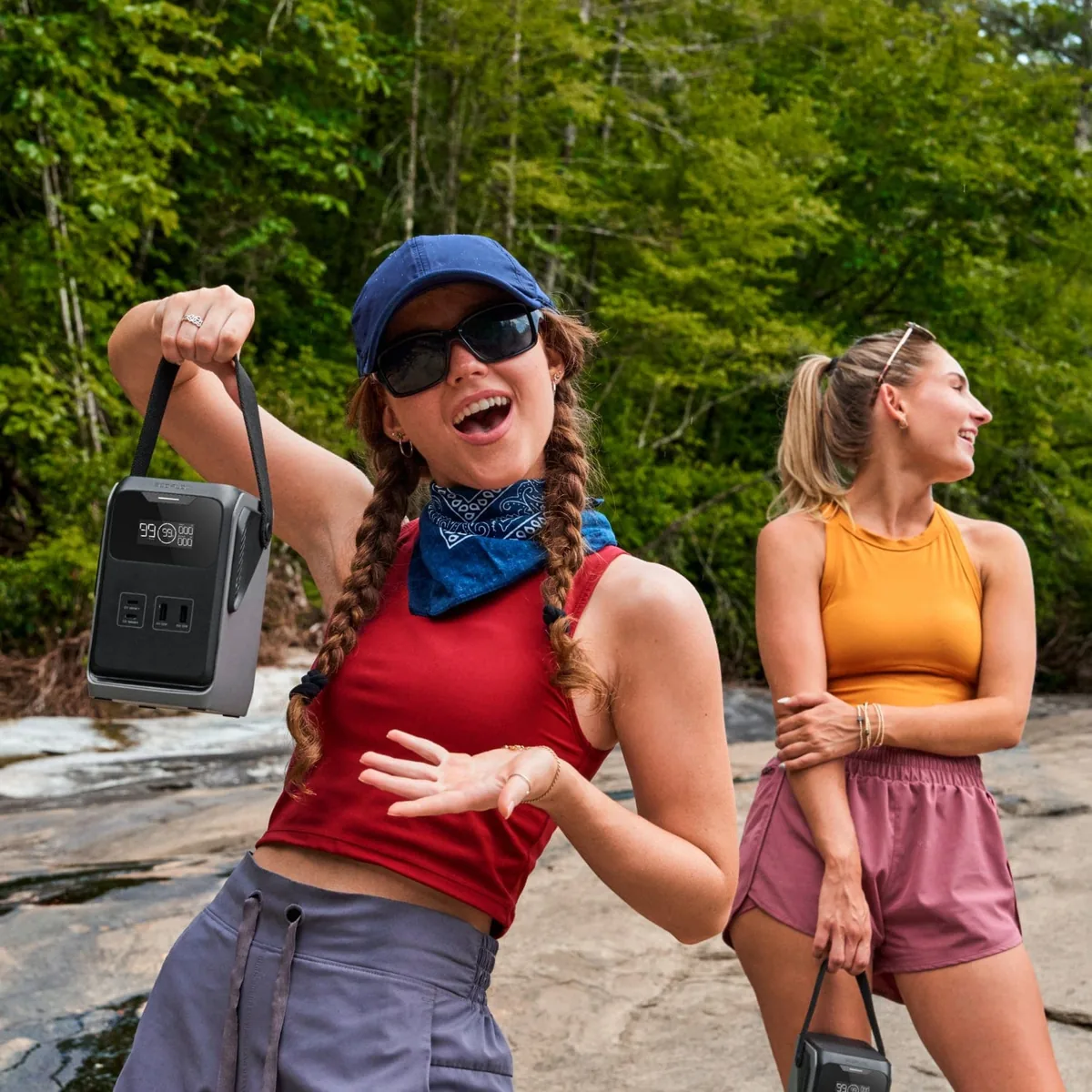
The case is 16.7 cm high, 11.5 cm wide and 12.6 cm deep. According to EcoFlow, the TRAIL 200 DC is 48% lighter and 60% smaller than the RIVER 3 when comparing stations of similar capacity. It can be carried by the woven handle, hung over a shoulder or put in a rucksack.
Four devices at once
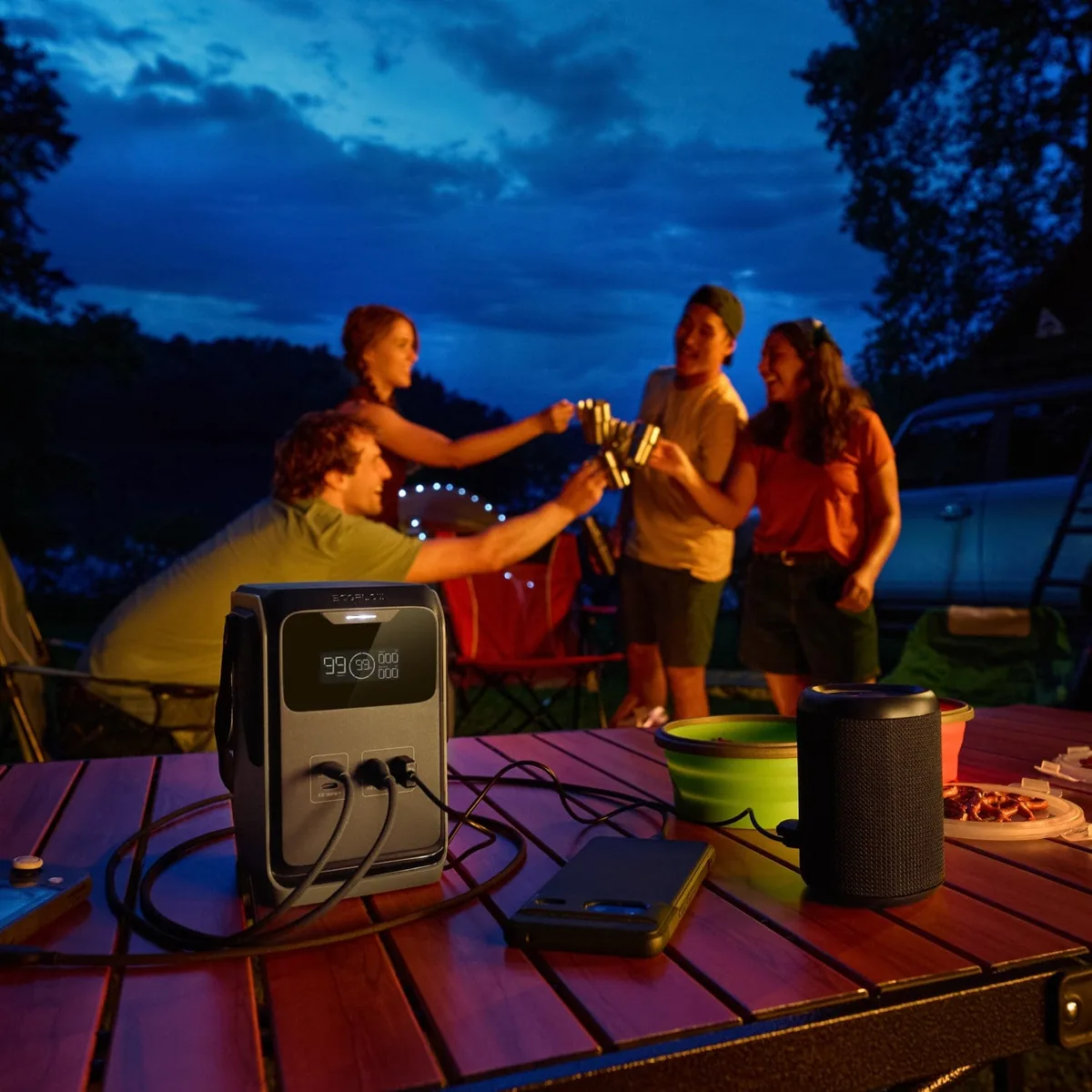
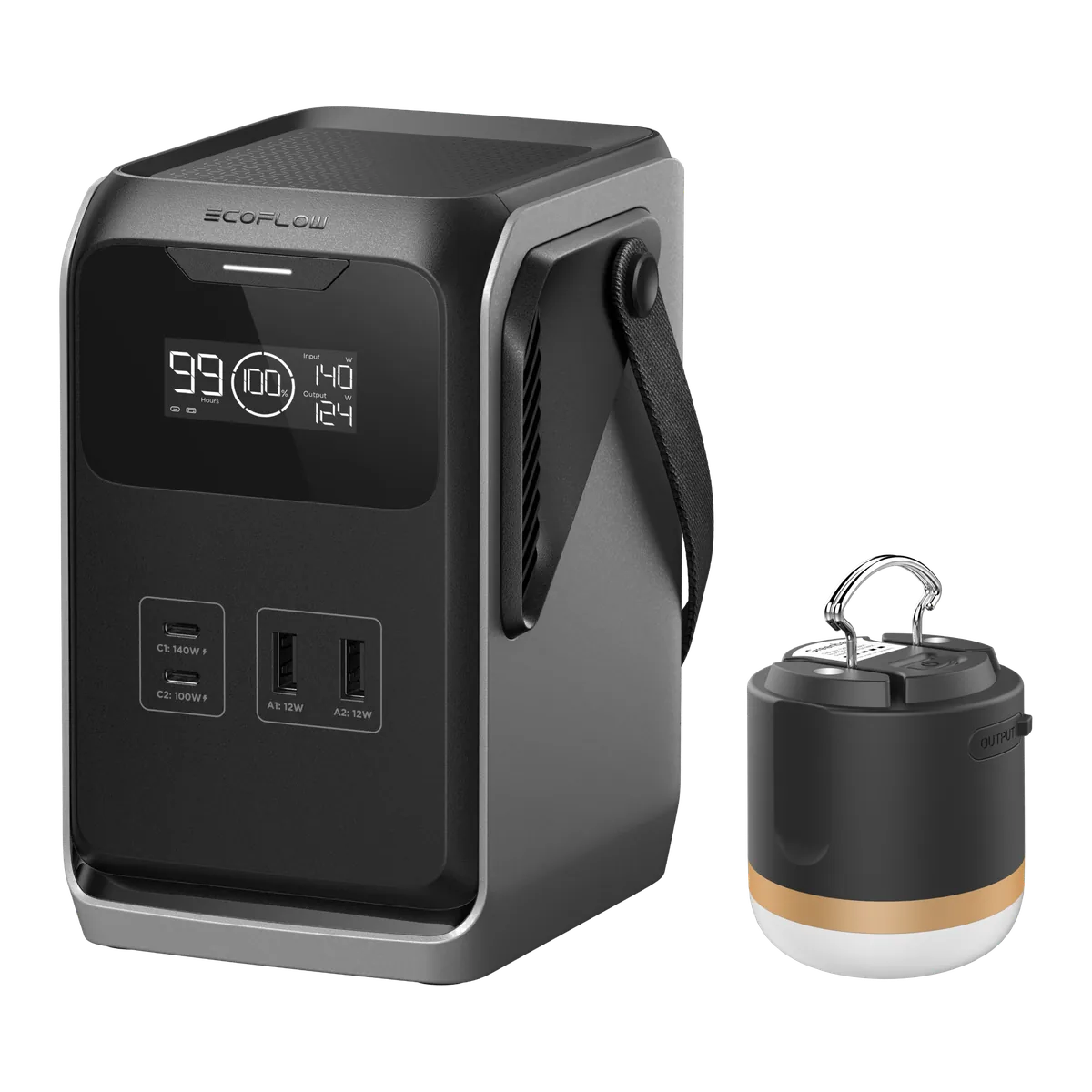
On the front panel there are two USB-C and two USB-A. Port C1 delivers up to 140 W, C2 up to 100 W, each USB-A up to 12 W. Altogether the station delivers up to 220 W, so a laptop, phone and two small things charge simultaneously.
192 Wh without an inverter
The 192 Wh capacity, or 60,000 mAh, EcoFlow compares to six ordinary power banks. Since the energy is not converted to alternating current and back, more reaches the gadget than from a station of the same volume with an outlet.
Charging from USB-C in an hour
Both USB-C ports work for input too. From two 100 W chargers the station reaches 80% in about 57 minutes. From one 140 W charger the same 80% takes about 1.3 hours, and from one 100 W charger about 2.7 hours.
LiFePO4 and drop protection
Inside are lithium iron phosphate cells with a BMS that monitors voltage, current and temperature. The case has five layers of impact protection and fire-resistant materials, protection rating IP30. The manufacturer’s warranty is 3 years.
How many charges 192 Wh gives
EcoFlow’s official table for the TRAIL 200 DC gives these guides: a smartphone — 11 full charges, a tablet — 6, a laptop — 3, a DSLR camera — 15, a drone — 8, an action camera — 25, a headlamp — 31, a speaker — 10. A portable Wi-Fi router runs for about 6 hours. The figures depend on the battery capacity of the specific device, so treat them as an estimate.
Without power at home
- charge the family’s phones for several days ahead;
- a laptop for work: 2–3 full charges, depending on the model;
- a mobile router or modem powered from USB;
- an LED strip or a USB lamp in the kitchen in the evening;
- a 12 V home router — only through a USB-C PD → 12 V trigger cable, which is bought separately (a 10–15 W router is roughly 11–16 hours).
The station’s usable energy is about 160 Wh, roughly 85% of the rating, and for your own calculations we divide it by the device power. A Starlink Mini, which is powered from 100 W USB-C PD and consumes 25–40 W on average, will last about 4–6 hours. A regular Starlink with a 230 V power supply will not start from the TRAIL 200 DC.
On a hike and on a photo shoot
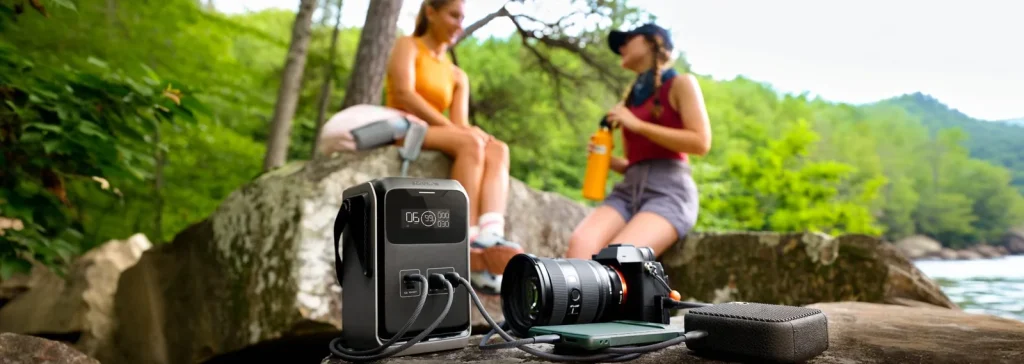
For a photographer this is a reserve for several days: camera batteries, a drone, a phone and a navigator charge at a rest stop, and there is no need to look for a socket in the nearest village. It also suits fishing, but only for USB equipment: an echo sounder or a 12 V fridge cannot be connected to it directly.
What it will not run
Any equipment with a 230 V plug: an electric kettle, microwave, hair dryer, TV, household fridge, boiler pump, desktop computer. A separate car inverter will not help either, because the model has no 12 V socket. A model with an inverter and outlets is needed here.
How it works
The TRAIL 200 DC charges only through USB-C. Any Power Delivery charger will do, for example from a laptop, but note: no charger or cable is included, the box contains only the station and documents. There is no solar input or cigarette-lighter charging, so on the road the station is charged from a USB-C in the car or from a solar panel with a USB-C output.
Both USB-C ports are bidirectional, that is, each can both accept and deliver energy, so either is suitable for charging. The display shows the charge percentage, input and output power and an approximate run time. This model has no app, Wi-Fi or Bluetooth; it is controlled by buttons.
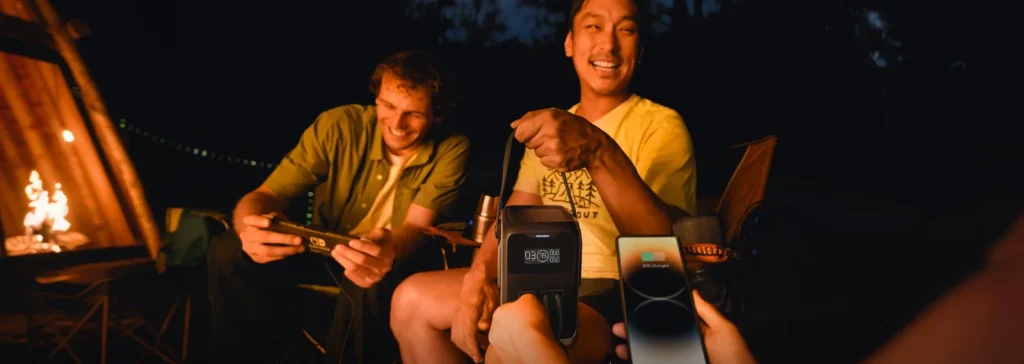
For fitness bands, earbuds and other devices that draw very little current there is a low-current mode: connect such a device to the USB-A and press the multifunction button twice. The mode lasts 3 hours, and you can leave it the same way with a double press.
It cannot be taken on a plane: airlines limit power banks to 160 Wh. For long-term storage it is better to keep it at 0–30 °C, and once every three months charge it fully and discharge it to 60%.
TRAIL 200 DC, TRAIL 300 DC or TRAIL Plus 300 DC
| TRAIL 200 DC | TRAIL 300 DC | TRAIL Plus 300 DC | |
|---|---|---|---|
| Capacity | 192 Wh | 288 Wh | 288 Wh |
| Total output | 220 W | 300 W | 300 W |
| USB-C | 140 + 100 W | 2 × 140 W | 3 × 140 W |
| 12 V socket | no | 120 W | 120 W |
| Sun / car | no | up to 110 W | up to 110 W |
| Weight | 1.83 kg | 2.58 kg | 2.26 kg |
The EcoFlow TRAIL 300 DC is the same idea, but with one and a half times the capacity, a 12 V cigarette-lighter socket and an input for a solar panel or car cable. It is worth taking if you plan a car fridge, an echo sounder or charging from the sun.
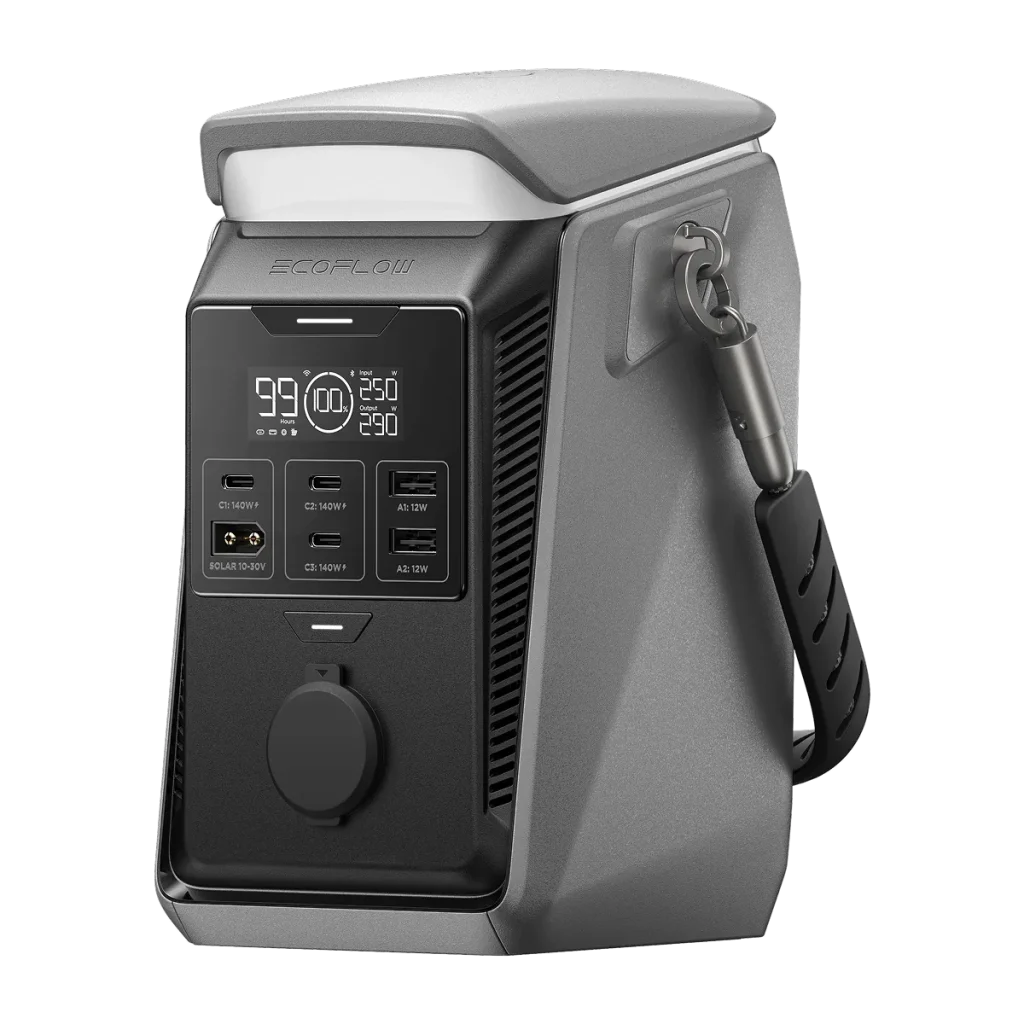
The EcoFlow TRAIL Plus 300 DC has another 140 W USB-C, a built-in camping lantern, a removable handle-cable and control through an app. It is lighter than the TRAIL 300 DC, but has a different battery type — NCM instead of LiFePO4.
If you need 230 V outlets, look at the EcoFlow RIVER 3: 245 Wh and 300 W of alternating current for small household equipment. For a router or computer that must switch to battery automatically during an outage, there is the EcoFlow RIVER 3 UPS.
Who the TRAIL 200 DC suits and who it does not
It will suit you if:
- you need a reserve for phones, a laptop and gadgets, not for household equipment;
- every hundred grams matter: hikes, bike trips, photography on location;
- you want to keep your family’s devices charged during outages without noise and fans.
Better another option if:
- there is at least one appliance with a 230 V plug that must be powered;
- you need a 12 V socket for a car fridge or an echo sounder;
- you want to charge the station from the sun through an ordinary panel or from a cigarette lighter.
FAQ
Does the TRAIL 200 DC have a 230 V outlet?
No. The station delivers only direct current through two USB-C and two USB-A. It does not power devices with a 230 V plug.
Can it be charged from a solar panel?
Only from a panel with a USB-C output. There is no separate XT60 solar input here, as on the TRAIL 300 DC.
Is the USB-C enough for a laptop?
Yes, if the laptop charges through USB-C Power Delivery. Port C1 gives up to 140 W, which is enough even for powerful models, and EcoFlow’s table promises about three full charges.
What charger is needed?
Any with USB-C Power Delivery, but the speed depends on its power. With one 140 W charger the station reaches 80% in about 1.3 hours, with two 100 W chargers in about 57 minutes.
Can a car fridge be connected?
No, the TRAIL 200 DC has no 12 V cigarette-lighter socket. For a 12 V fridge EcoFlow offers the TRAIL 300 DC or TRAIL Plus 300 DC with a 120 W socket.
Can the TRAIL 200 DC be taken on a plane?
No, 192 Wh is more than the 160 Wh limit for batteries in the cabin.
What about frost?
The station has low-temperature protection and in severe cold will limit its operation. EcoFlow advises storing it at 0–30 °C, so for the night in a cold tent it is better to keep it in a sleeping bag or in the car.
Summary
The TRAIL 200 DC is the lightest way to have energy for USB equipment at home or in a rucksack: 192 Wh, four ports and 80% charge from USB-C in under an hour. When the decision to buy an EcoFlow TRAIL 200 DC has already been made, add the station to your cart and place the order there. Not sure whether it will handle your equipment, or whether to take the 288 Wh model right away? Write to us through the contacts page and we will advise.