Connect appliances to the station
Choose what has to keep running during a blackout — we will work out how long the station lasts and whether it can carry the load. Choose appliances — we will work out how long the station lasts.
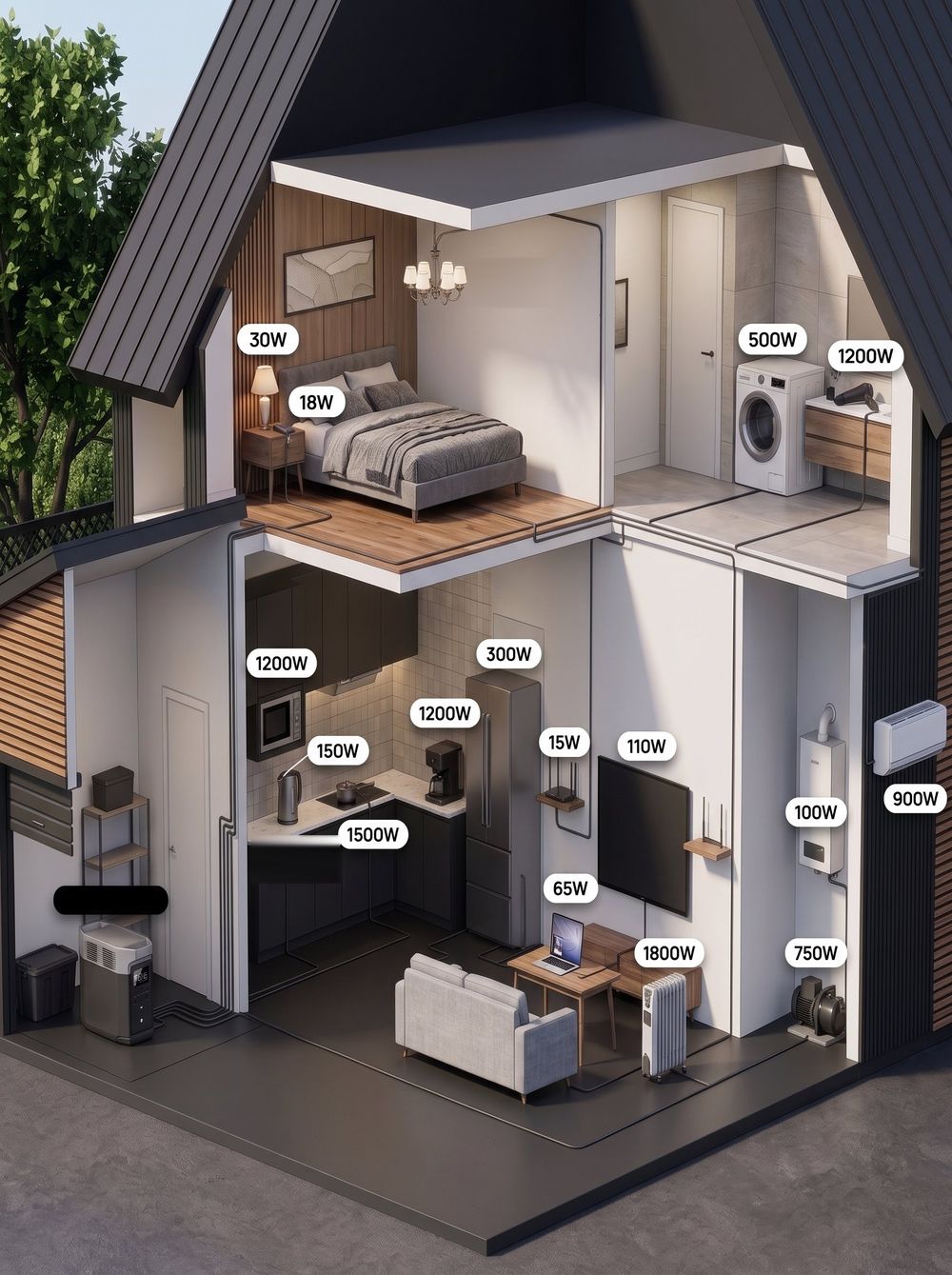
An estimate: 85% of the station capacity (inverter efficiency) divided by the total power of the appliances; charge is shown after a 4-hour blackout. Real figures depend on how the appliances are used.
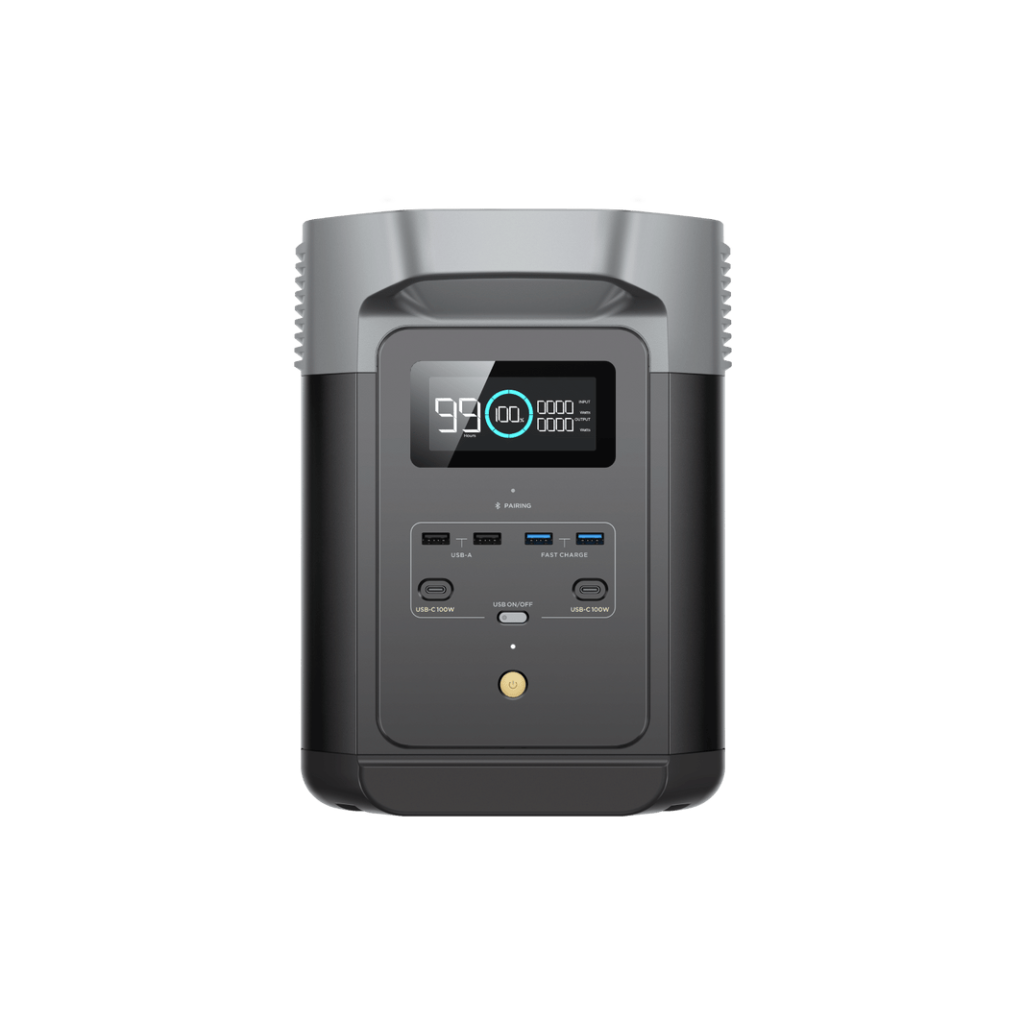
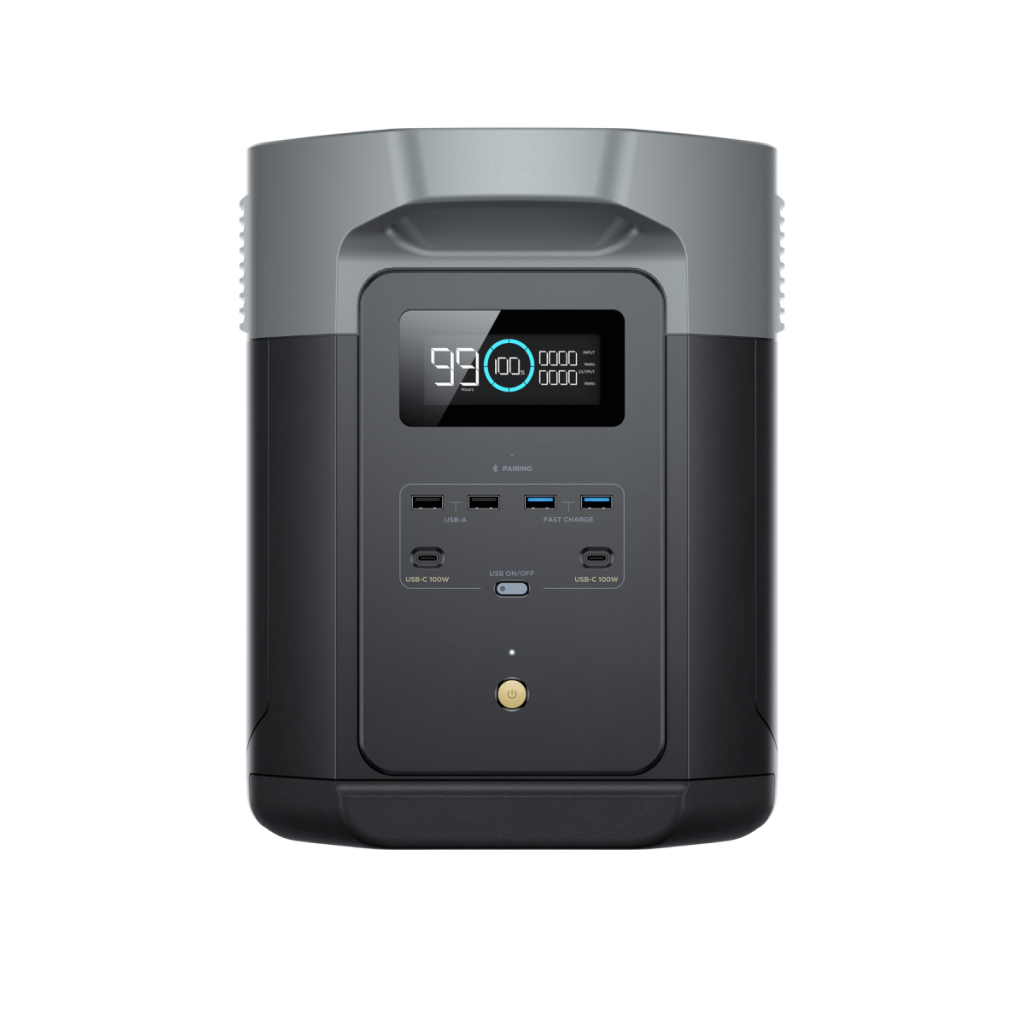
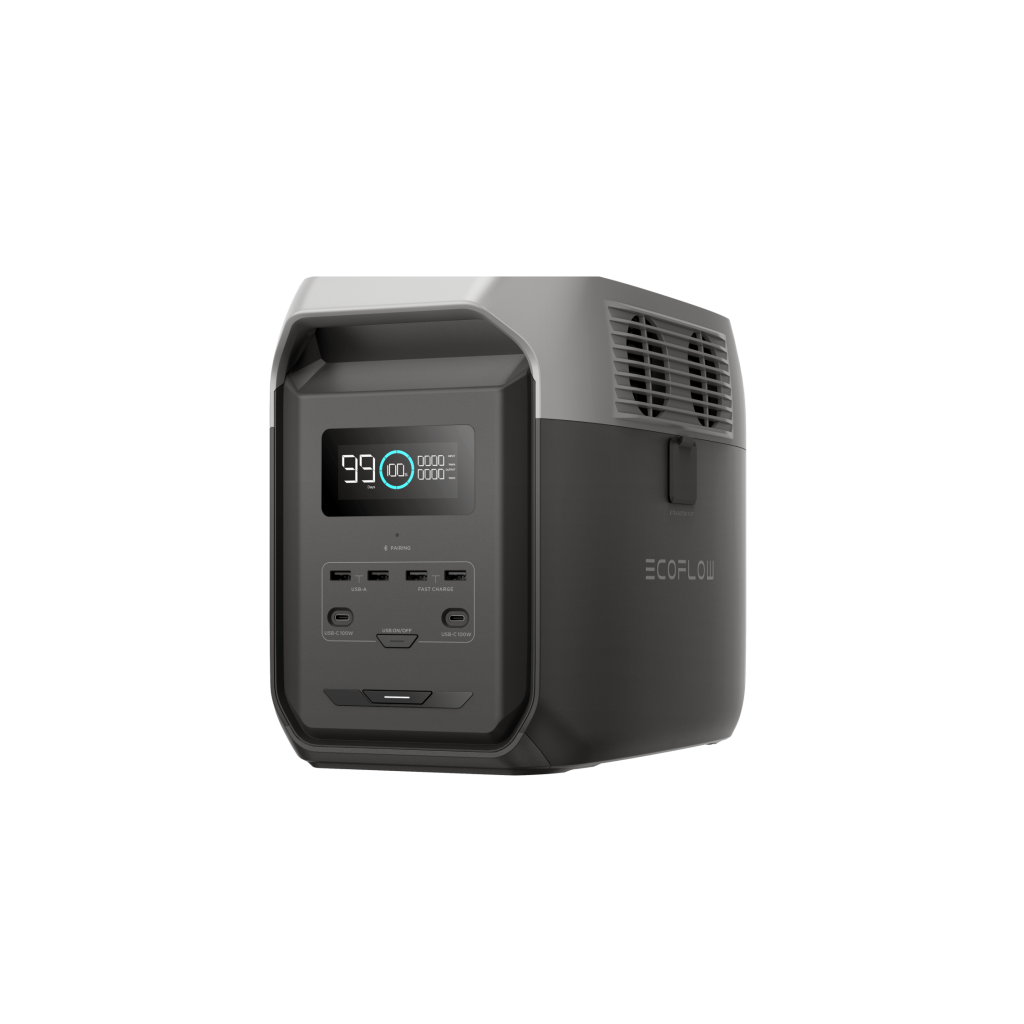
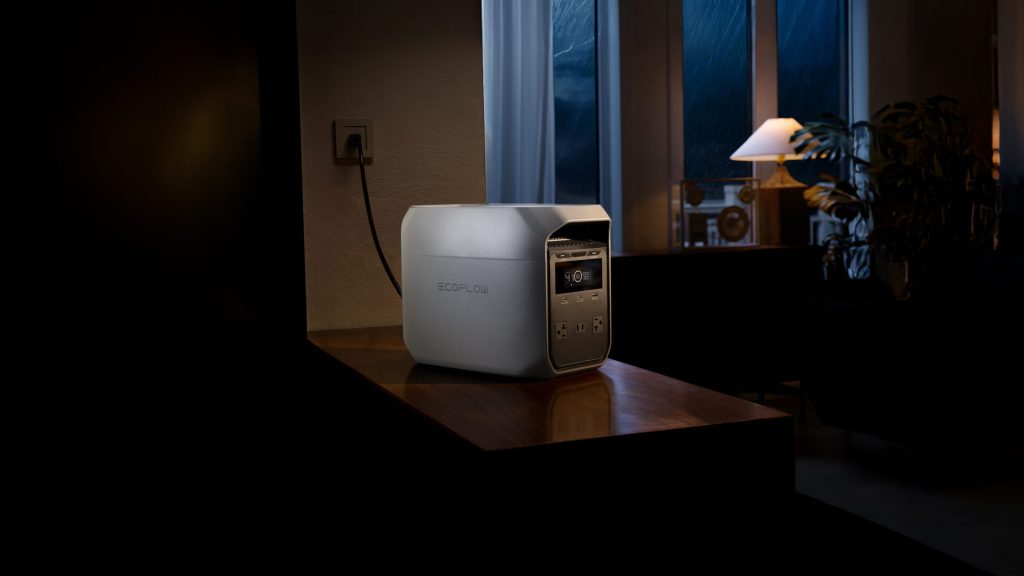
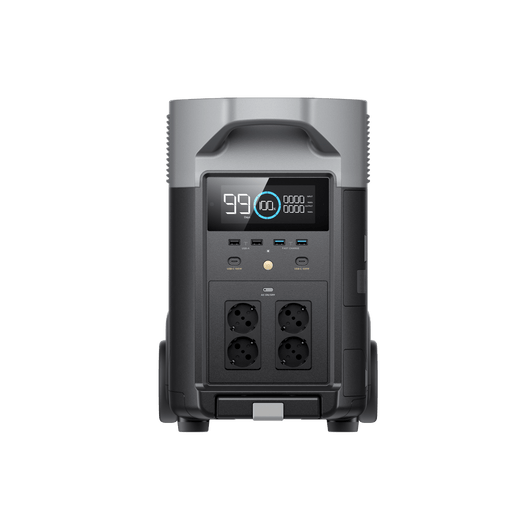
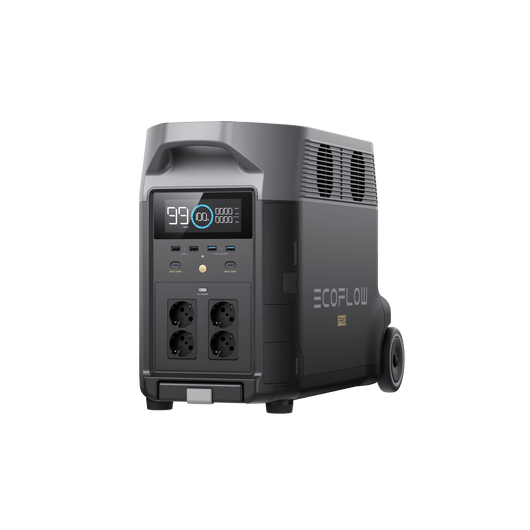
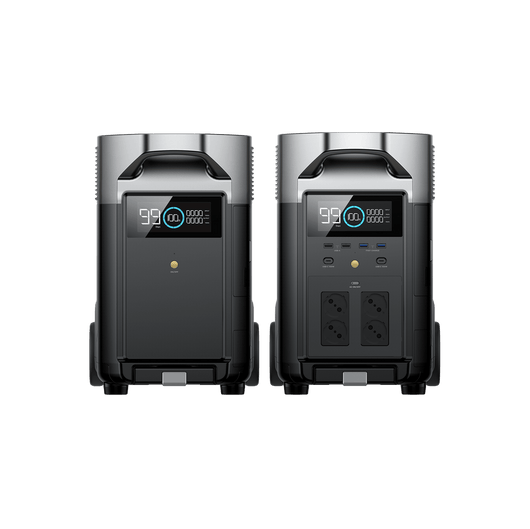
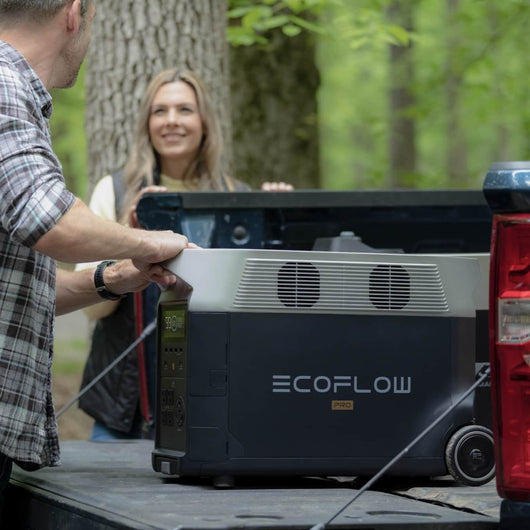
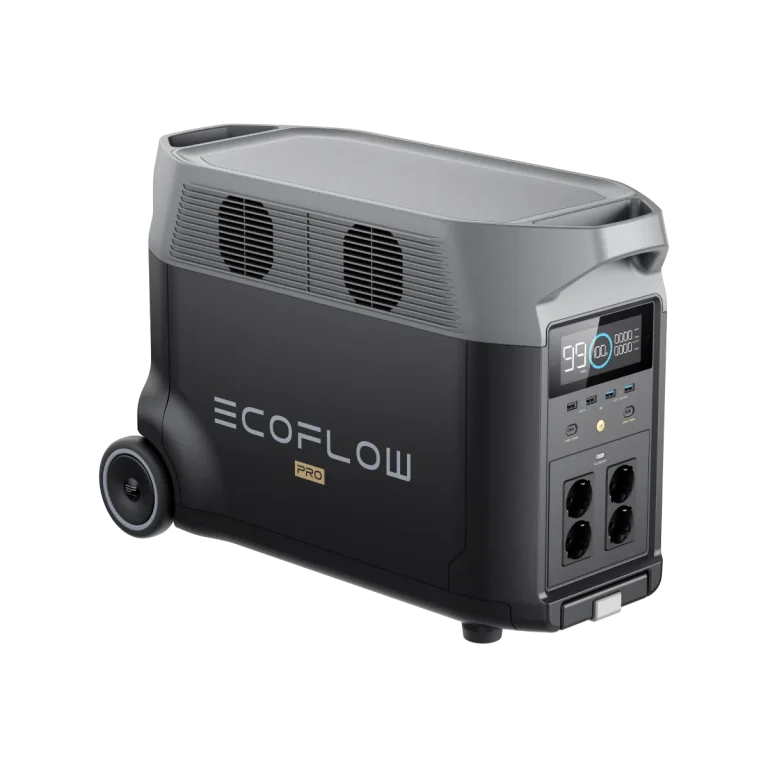
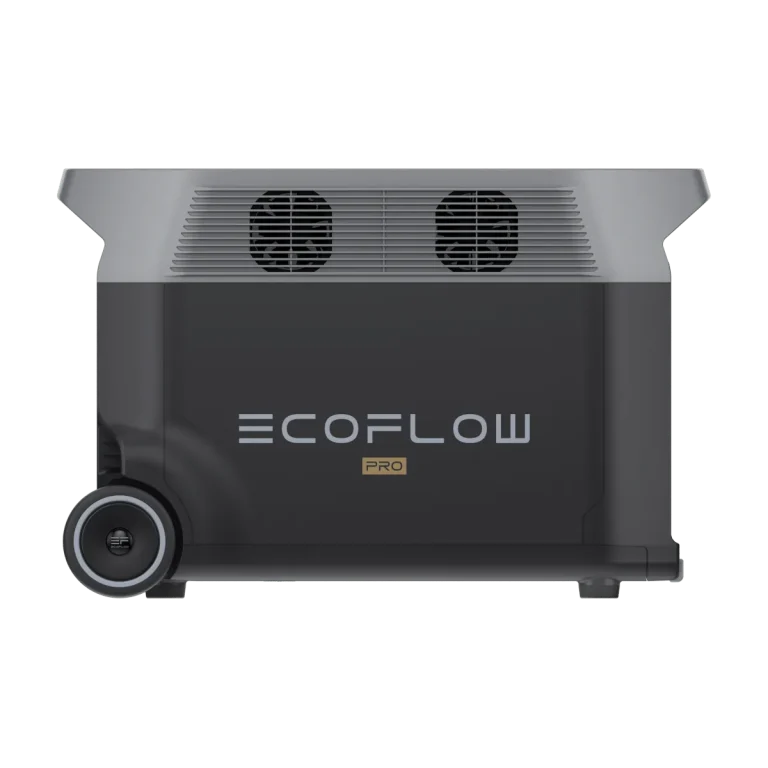
EcoFlow DELTA Pro is a 3600 Wh, 3600 W station with which EcoFlow’s class of home batteries began: it keeps not only lights and a router running but also a boiler, pump, washing machine or air conditioner. If you want to buy an EcoFlow DELTA Pro for a private house, you should know two things right away: the capacity grows to 10.8 kWh with two extra batteries, and the station charges from a socket in about 1.9 hours.
Outage schedules in Ukraine have not gone away, and in a house they feel different from an apartment: the borehole pump stops, the boiler goes out, the fridge and chest freezer warm up. DELTA Pro is designed for exactly this set of loads, all at the same time.
This is a previous-generation model. Below we honestly compare it with the newer DELTA Pro 3 and the more compact DELTA 3 Max Plus so that your choice is a considered one.
Why DELTA Pro
3.6 kWh in the base unit, 10.8 kWh with batteries
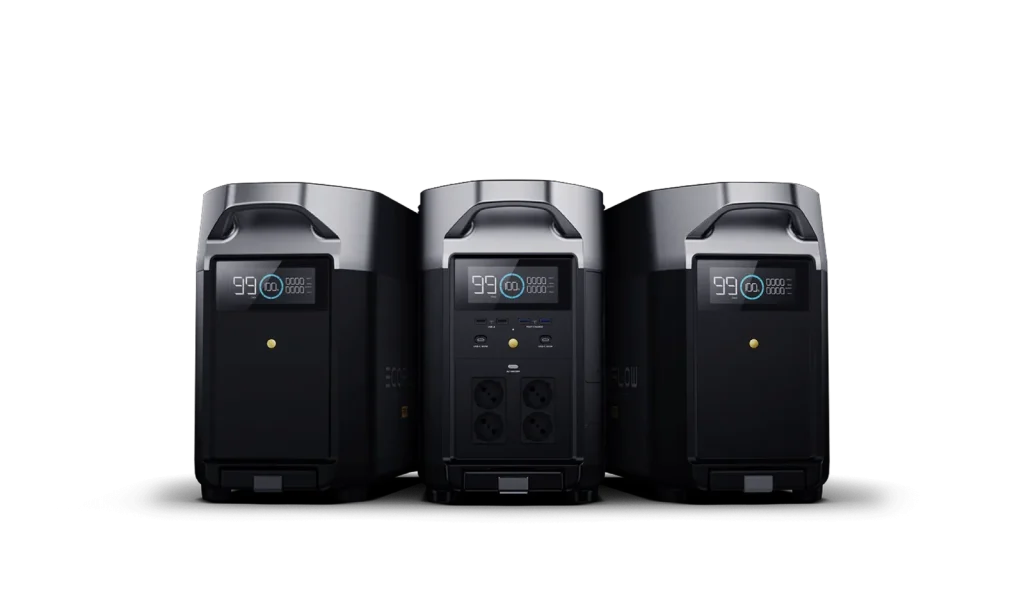
The rear panel has two ports for DELTA Pro Smart Extra Batteries, 3600 Wh each. With both batteries one station stores 10.8 kWh, which is enough for a boiler, fridge and lighting to get through several days without mains power.
3600 W continuous and 7200 W peak
Four 230 V outlets deliver 3600 W of pure sine wave together, and briefly up to 7200 W. Equipment with motors needs this reserve at start-up: a compressor, a pump, a washing machine during the spin cycle.
X-Boost up to 4500 W for heaters
The station starts an appliance of up to 4500 W in X-Boost mode, lowering the voltage so the rated 3600 W is not exceeded. According to EcoFlow’s manual, the mode is intended primarily for heating appliances, for example a powerful heater. Equipment with voltage-sensitive protection must not be powered this way.
Full charge from a socket in 1.9 hours
X-Stream technology accepts up to 2900 W from the mains, and an empty station fills in about 1.9 hours. This needs the supplied cable and a socket rated for a current above 15 A.
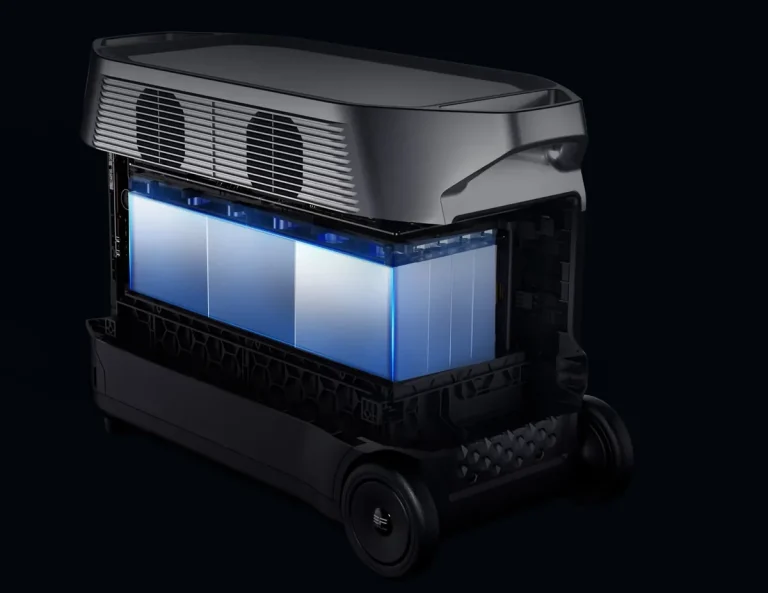
LFP rated for 3500 cycles
The battery is built from lithium iron phosphate cells. The manufacturer states 3500 cycles to 80% capacity and 6500 cycles to 50%, so even with daily discharge the lifetime reserve lasts almost ten years.
Control from your phone
The EcoFlow app, connected over Wi-Fi or Bluetooth, shows the charge level and the current input and output. It is also where you set the charging speed and remotely switch the outputs on or off. A DELTA Pro Remote Control is sold separately.
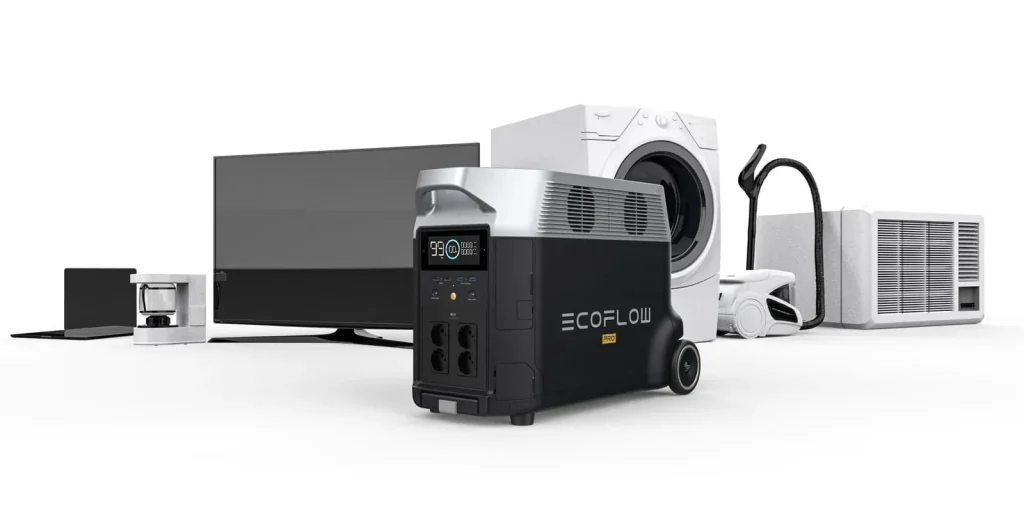
From a boiler to a water heater: what DELTA Pro powers
Of the 3600 Wh, about 3000 Wh is actually available at the 230 V outlets: part of the energy is taken by the inverter. To estimate run time, divide this figure by the total consumption of the appliances switched on. All calculations below are estimates, because real consumption depends on the equipment, settings and temperature.
A house during a night outage
The basic night set of a private house is a gas boiler with a circulation pump, a fridge, Wi-Fi and lights in several rooms. On average this is 200–250 W, and one station keeps it running for 12–15 hours. With two extra batteries the usable energy is already about 9 kWh, and the same set runs for over a day and a half.
Borehole pump and water supply
A 0.75–1.1 kW submersible pump draws several times its rating at start-up, and the 7200 W peak helps here. Starting characteristics differ between pumps, so the first start from the station should be tested before the outage season, not during it.
Kitchen and laundry
An electric kettle, microwave, a 2–2.5 kW oven or an induction hob with one or two rings work without X-Boost if the total does not exceed 3600 W. A 40 °C wash cycle takes about 0.5–1 kWh, that is up to a third of the charge.
Climate
An inverter air conditioner of 1 kW will run from the station for about three hours. A 2 kW oil heater for about an hour and a half, and in X-Boost mode you can also start a more powerful heater of up to 4500 W, although it will heat less strongly.
Workshop and work away from home
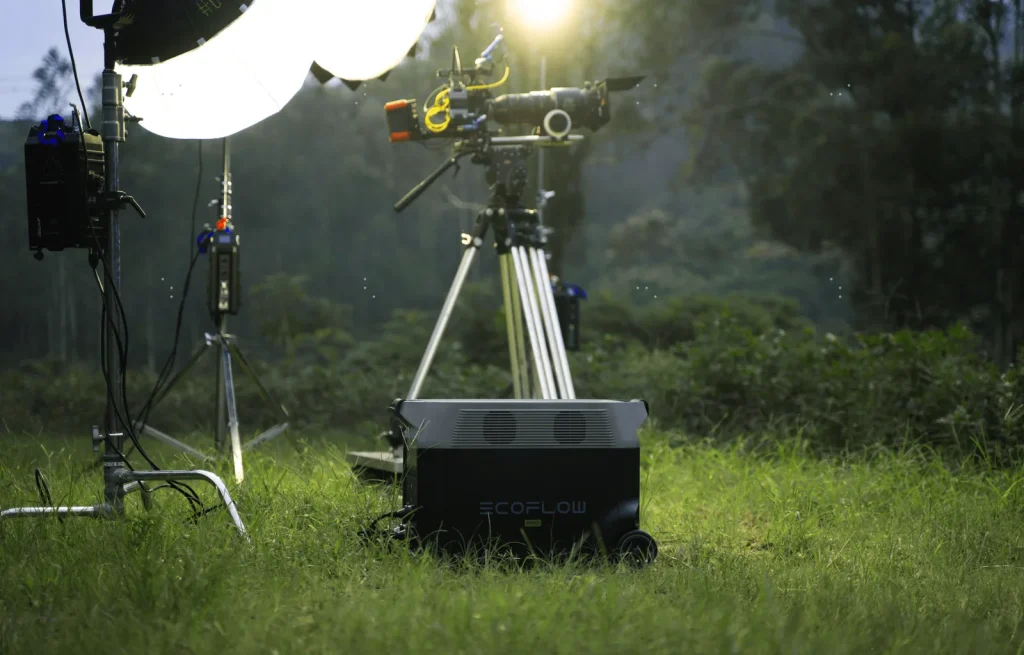
A circular saw, hammer drill, compressor or professional photography lighting — DELTA Pro runs them without a generator, noise or exhaust. Tools switch on in short bursts, so one charge usually lasts a working day.
What is better not to switch on
An electric boiler, heat pump or storage water heater that runs for hours will quickly drain even 10.8 kWh. A hob with all rings together with an oven goes beyond 3600 W. Such loads need a station with more power or a generator alongside.
How it works
No power brick is needed for charging from the mains: the supplied cable plugs straight into the X-Stream port on the rear panel. After the first switch-on the charging speed is set to 400 W, and it is raised in the app within 200–2875 W or with the switch on the case. If the input current exceeds 20 A, the fuse on the rear panel trips, and it is enough to press it to continue charging.
Solar panels connect through an 11–150 V, 15 A XT60 input, up to 1600 W in total. Panels can be connected in series; the main thing is not to exceed 150 V. According to EcoFlow, in full sun the station charges in about 3.5 hours. The MC4–XT60 cable is bought separately.
From a 12 or 24 V car cigarette lighter the station draws 8 A: this is topping up on the road, not a way to fill 3.6 kWh. An 800 W Alternator Charger charges faster, connected to DELTA Pro through the separate DELTA Pro to Smart Generator Adapter. For trips there is a 30 A Anderson connector, a 126 W car output and two DC5521.

EPS mode is easy to enable: the mains is connected to the station’s input and the equipment to its outlets. In normal mode current goes to the devices directly from the mains, and when the voltage disappears the station picks up the load from the battery on its own, which takes up to 30 ms. For a boiler, fridge and most computers this is enough, but the manufacturer does not advise connecting servers and workstations that need 0 ms switching.
DELTA Pro in a home backup power system
The basis of the system is the station itself and up to two DELTA Pro Smart Extra Batteries. The batteries are connected by cable to the rear ports with the station switched off, and DELTA Pro then sees them as one large capacity.
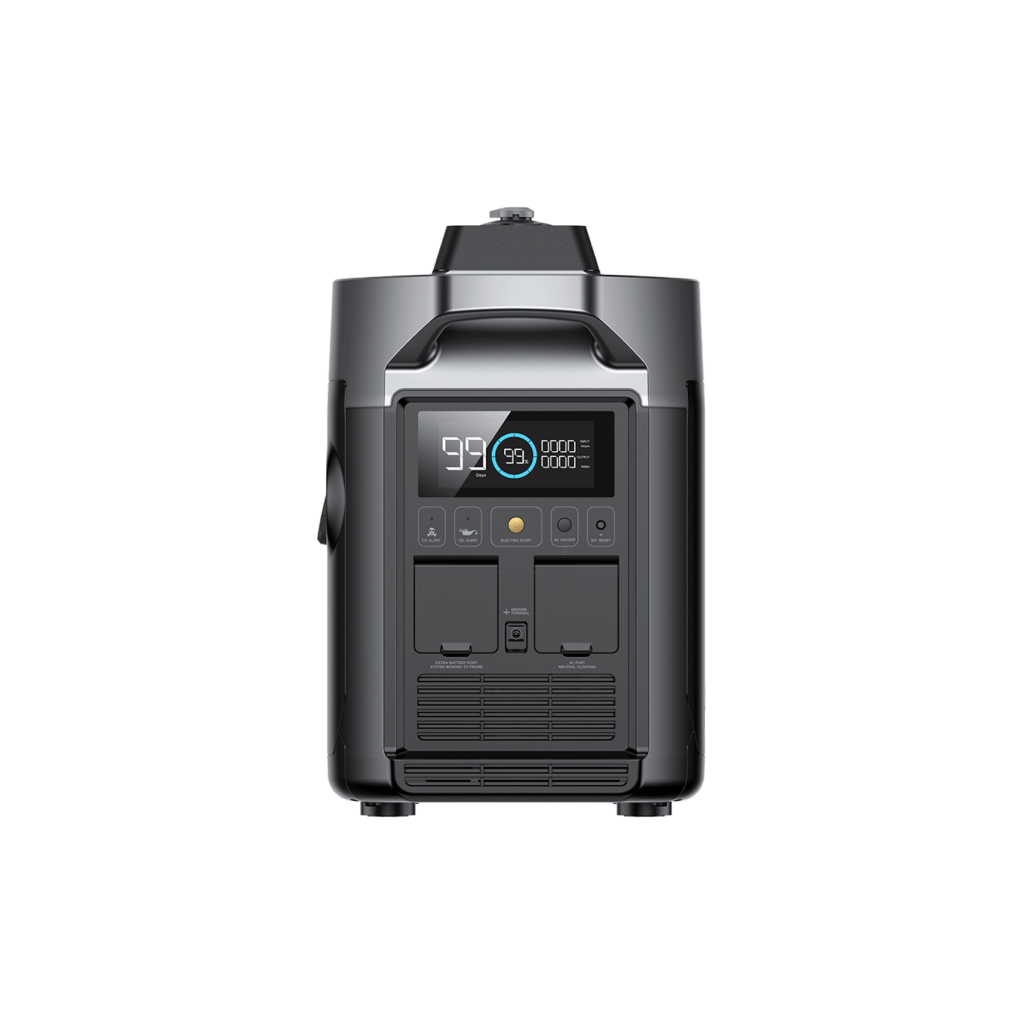
If outages last longer than calculated, an EcoFlow Smart Generator is added to the system. It connects through the same adapter as the Alternator Charger and can start automatically. The station’s display has a separate generator indicator and a carbon monoxide warning. With an extra battery connected, DELTA Pro takes energy from the mains, the sun and the generator at the same time, up to 6500 W in total.
Connecting the station to home wiring is a job for an electrician: it needs a scheme and equipment that comply with Ukrainian standards. On the European model page EcoFlow also advises checking local requirements and consulting a specialist before purchase.
DELTA Pro vs DELTA Pro 3 and DELTA 3 Max Plus
| DELTA Pro | DELTA Pro 3 | DELTA 3 Max Plus | |
|---|---|---|---|
| Capacity | 3600 Wh | 4096 Wh | 2048 Wh |
| Output / peak | 3600 / 7200 W | 4000 / 8000 W | 3000 / 6000 W |
| X-Boost | 4500 W | 6000 W | 3900 W |
| 230 V outlets | 4 | 5 | 4 |
| Solar | 1600 W | 2600 W | 1000 W |
| Expansion | up to 10.8 kWh | up to 12 kWh | up to 10 kWh |
| Switching | 30 ms | 10 ms | 10 ms |
| Weight | 45 kg | 51.5 kg | 22.1 kg |
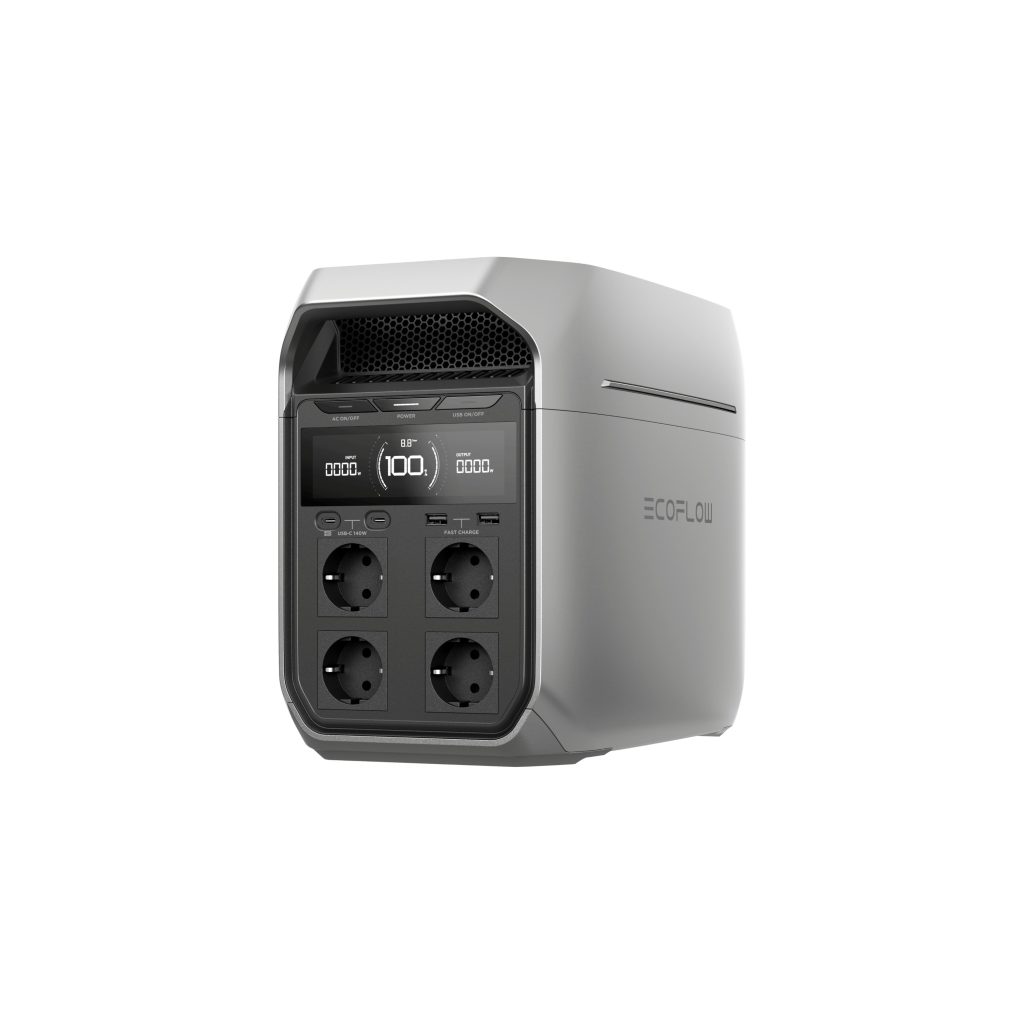
EcoFlow DELTA Pro 3 is the next generation of the same idea. It is more powerful, has a fifth outlet, two 2600 W solar inputs and switches three times faster. At a 2000 W load the manufacturer states 30 dB, so it is noticeably quieter. It weighs more, 51.5 kg.
An important detail for those who already have a system: DELTA Pro extra batteries officially connect to DELTA Pro 3, so when moving to the new station they will not become redundant. The main units of DELTA Pro and DELTA Pro 3 cannot, however, be combined with each other.
EcoFlow DELTA 3 Max Plus is half the weight and has almost half the capacity, but delivers 3000 W and switches in 10 ms. For the maximum of 10 kWh it needs an expansion adapter. It is appropriate when the station has to be moved or the main load does not exceed 3 kW.
DELTA Pro’s strengths in this trio are 3.6 kWh already in the base unit, 6.5 kg less weight than Pro 3 and batteries that stay useful when you move to a newer station.
Who DELTA Pro suits and who it does not
The station measures 63.5 × 28.4 × 42 cm and weighs 45 kg. On a flat floor it rolls easily on wheels with a telescopic handle, but stairs and a car boot are a job for two people.
It suits you if:
- in a private house you need to run a boiler, pump, fridge and lights at the same time;
- you need a reserve of over 3 kWh with the option to reach 10.8 kWh;
- you have 1–1.6 kW of solar panels or plan to install them;
- you have 2–3.5 kW appliances around the property: a washing machine, water heater, tools.
Consider another option if:
- your equipment cannot tolerate switching longer than 10 ms — then look at DELTA Pro 3 or DELTA 3 Max Plus;
- you will have to lift the station up stairs or load it into a car by yourself often;
- you need a solar system of more than 1600 W per station;
- in an apartment a router, laptop and fridge are enough — a 1–2 kWh model is sufficient for that.
FAQ
How many extra batteries can be connected to DELTA Pro?
Up to two DELTA Pro Smart Extra Batteries, 10.8 kWh in total. Before connecting or disconnecting a battery both devices must be switched off, and after switching on, an extra battery icon should appear on the displays.
Why does a new station charge slowly from a socket?
By default the charging speed is limited to 400 W. It is raised in the EcoFlow app to 2875 W or with the switch on the rear panel, but only if the socket and wiring withstand a current above 15 A.
Which generator can DELTA Pro be charged from?
An EcoFlow Smart Generator or another generator that outputs 220–240 V will do. The Smart Generator connects through the adapter and can start automatically, while an ordinary generator plugs into the AC input just like a socket. It is worth setting the charging speed in the app below the generator’s rated power so that it does not run at its limit.
Can a computer be powered from DELTA Pro in UPS mode?
For most home computers yes, switching takes up to 30 ms. For servers, workstations and equipment that needs 0 ms switching, the manual advises an online UPS.
Why do the station’s outlets switch off by themselves?
The 230 V outlets switch off if there is no load on them for 12 hours, so as not to waste charge, and this time is changed in the app. For a fridge with medicines or other critical equipment, the manual advises enabling “Always on” mode for the outlets.
How does DELTA Pro handle cold?
Fine, but with limits. It can run from the battery in the range from -10 to 45 °C, but charging starts only at a temperature from 0 °C. For long-term storage the battery is discharged to 30% and charged to 60% once every three months.
How long will the DELTA Pro battery last?
According to the manufacturer, 3500 full cycles to 80% capacity. If the station is discharged every day, that is about nine and a half years, and with outages a few times a week, much longer.
Summary
DELTA Pro is a station for a house with serious loads: 3600 W at the outlets, 3.6 kWh in the base unit, expansion to 10.8 kWh and charging from the mains in under two hours. If you are ready to buy an EcoFlow DELTA Pro, the order button is at the top of this page. Send us the list of devices you want to power through the contacts page and we will tell you whether one station is enough or whether you should add a battery right away.