Connect appliances to the station
Choose what has to keep running during a blackout — we will work out how long the station lasts and whether it can carry the load. Choose appliances — we will work out how long the station lasts.
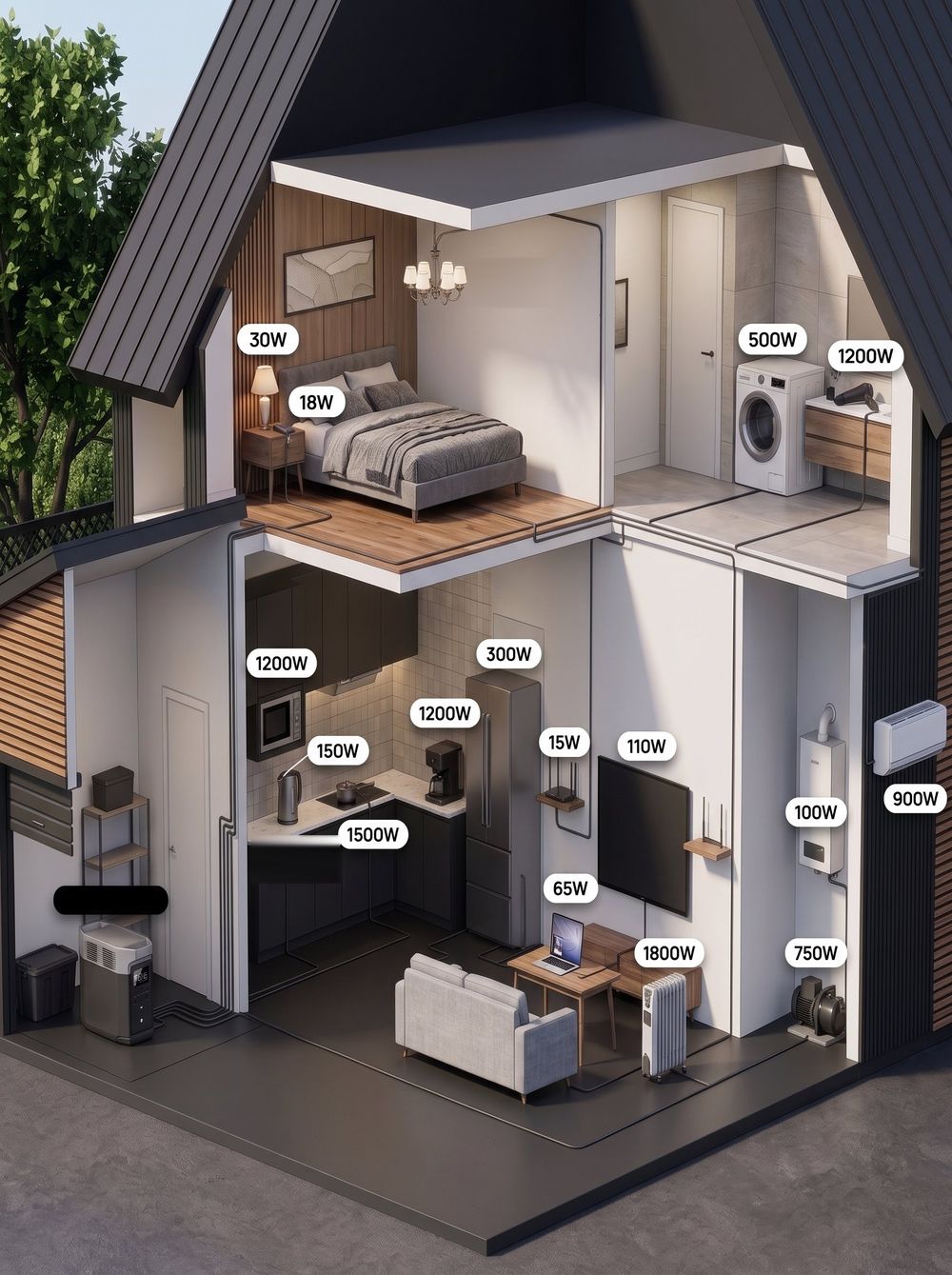
An estimate: 85% of the station capacity (inverter efficiency) divided by the total power of the appliances; charge is shown after a 4-hour blackout. Real figures depend on how the appliances are used.
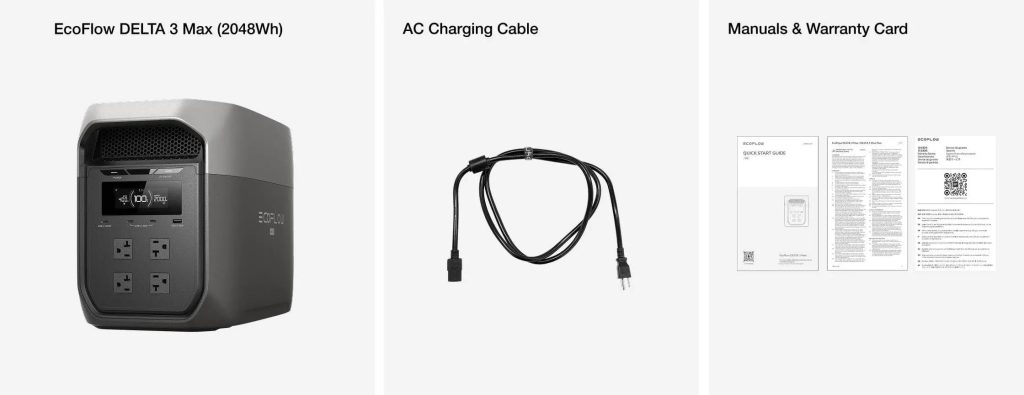
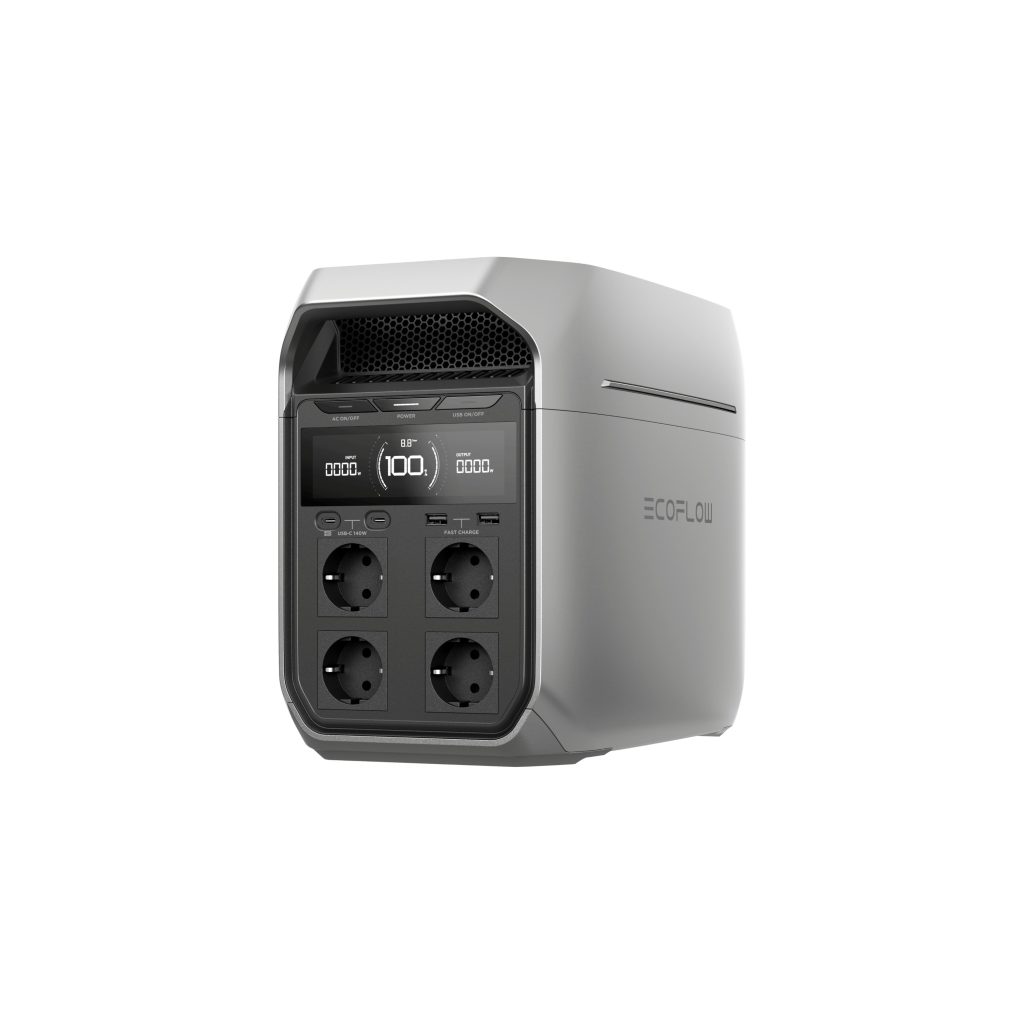
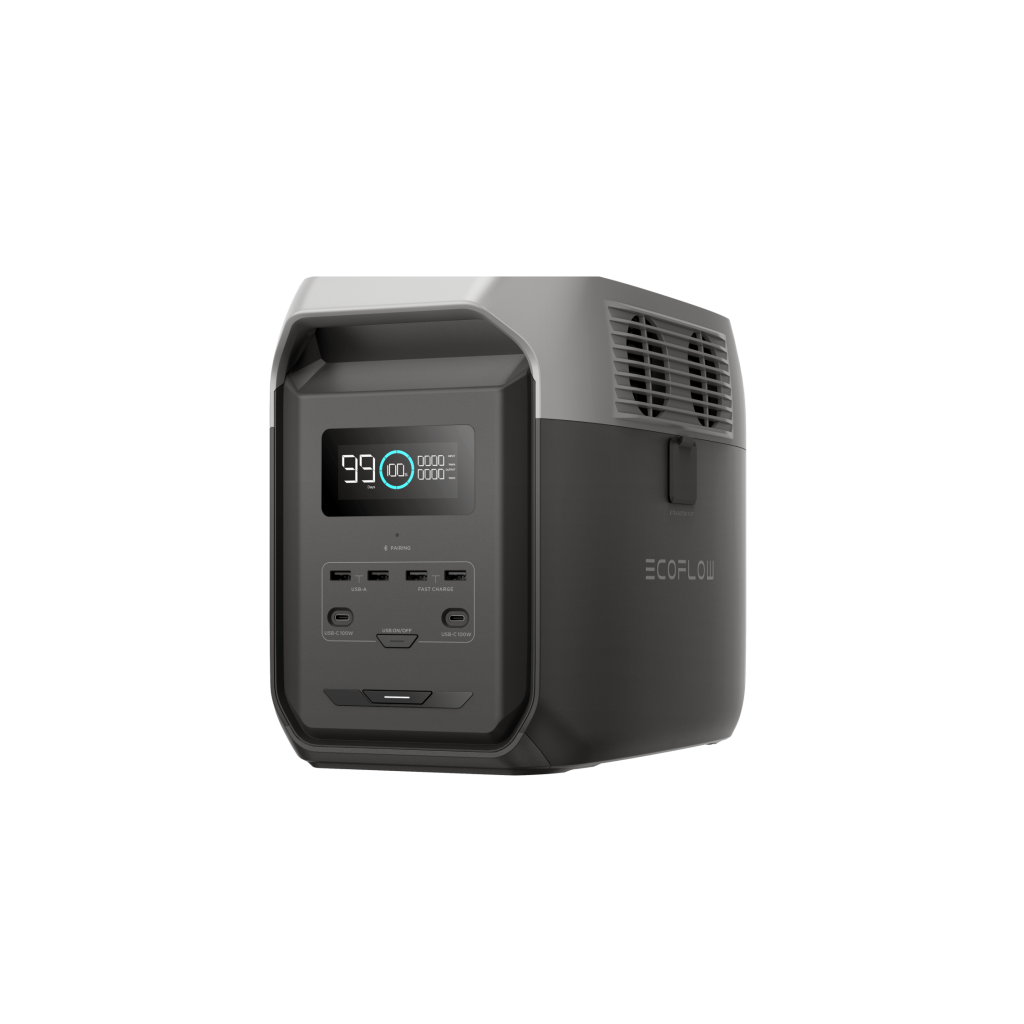
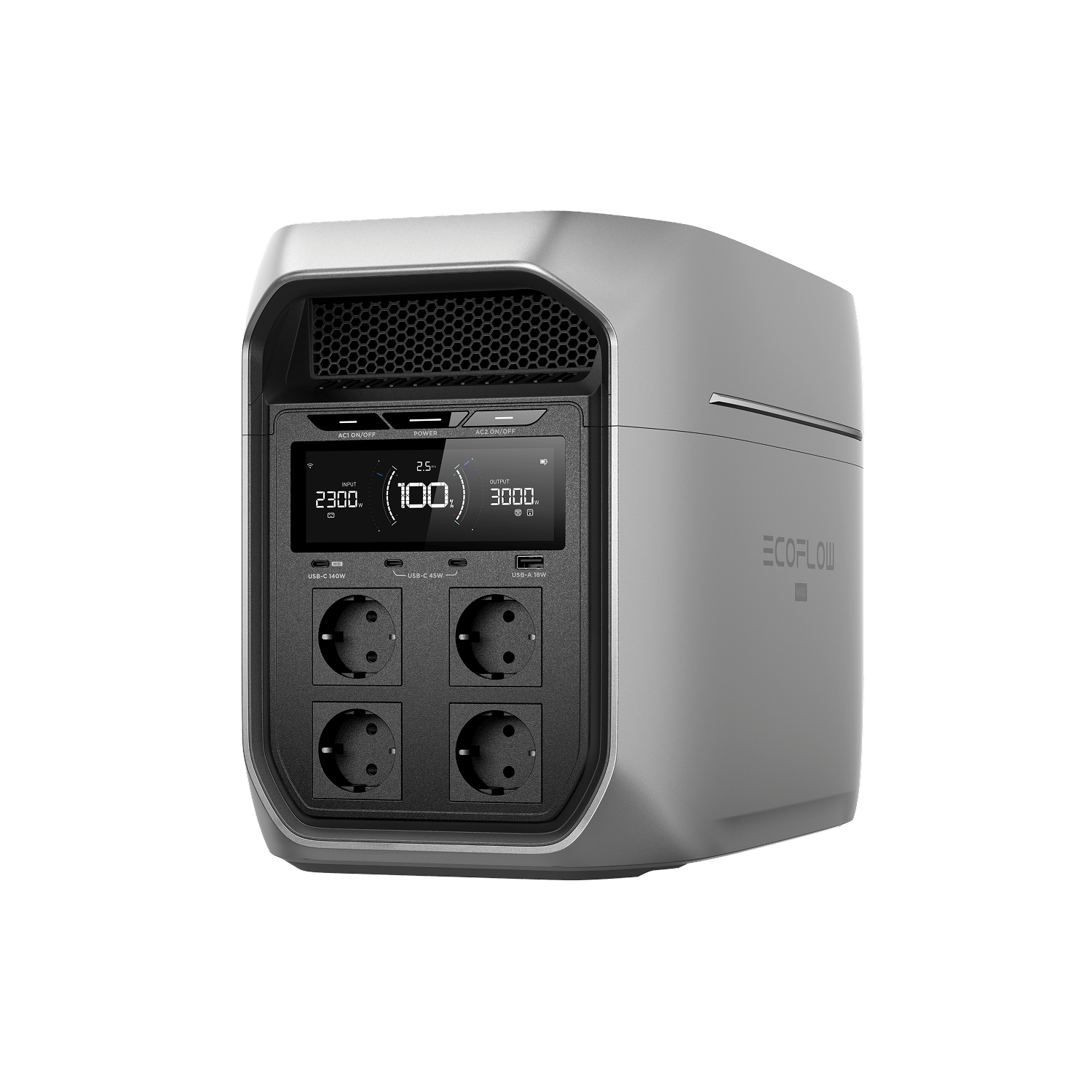
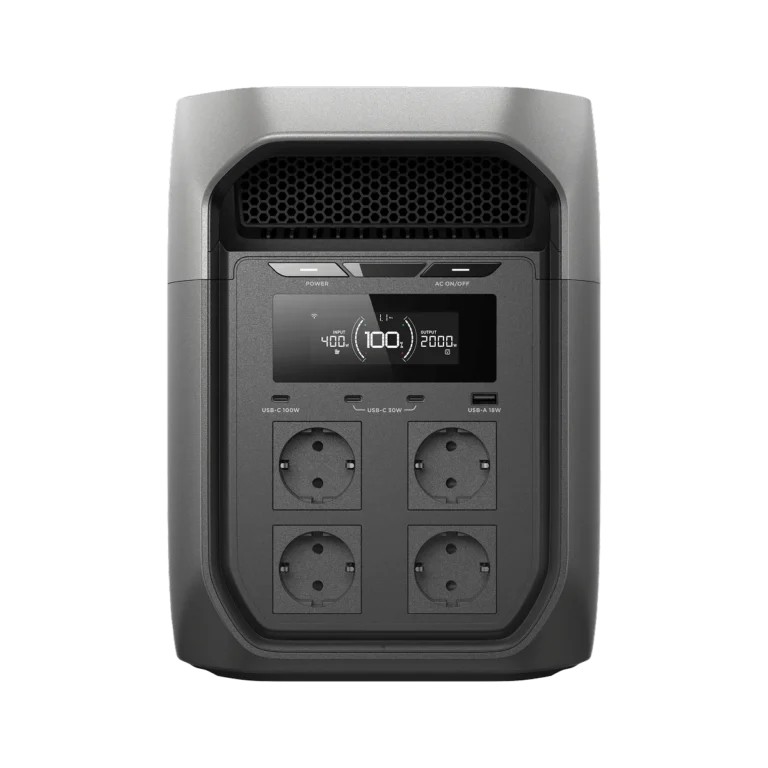
EcoFlow DELTA 3 Max is a 2048 Wh, 2400 W power station for those who already find one kilowatt-hour cramped: a boiler and fridge for the night, an electric kettle, microwave, tools in the garage. If you are planning to buy an EcoFlow DELTA 3 Max for a home or country house, you should know the main thing: it is a newer generation of the 2 kWh class that charges from a socket to 80% in about 47 minutes.
In Ukraine mains power is still cut on schedule, and between outages an hour or two often remains. DELTA 3 Max manages to fill up in that time, and then keeps the basic equipment of an apartment or house running until the next window.
The capacity here is fixed: extra batteries cannot be connected to this model. In return the station is lighter and quieter than its predecessor, DELTA 2 Max, and for those who need expansion there is the higher version, DELTA 3 Max Plus.
Why DELTA 3 Max
80% charge in 47 minutes
From an ordinary socket the station draws up to 2300 W using X-Stream technology and reaches 80% in about 47 minutes, and a full charge in about 68. The socket must withstand 10 A, otherwise the speed should be lowered in the app.
2400 W continuous, 4800 W at start
The rated 2400 W is enough for a fridge, boiler and kettle to work at the same time. The short 4800 W is needed at start: a fridge compressor or a saw motor draws several times its rating at the moment of starting. For heaters and similar appliances up to 3200 W there is X-Boost — the station supplies them with a reduced voltage, so they heat more weakly but without an emergency shutdown.
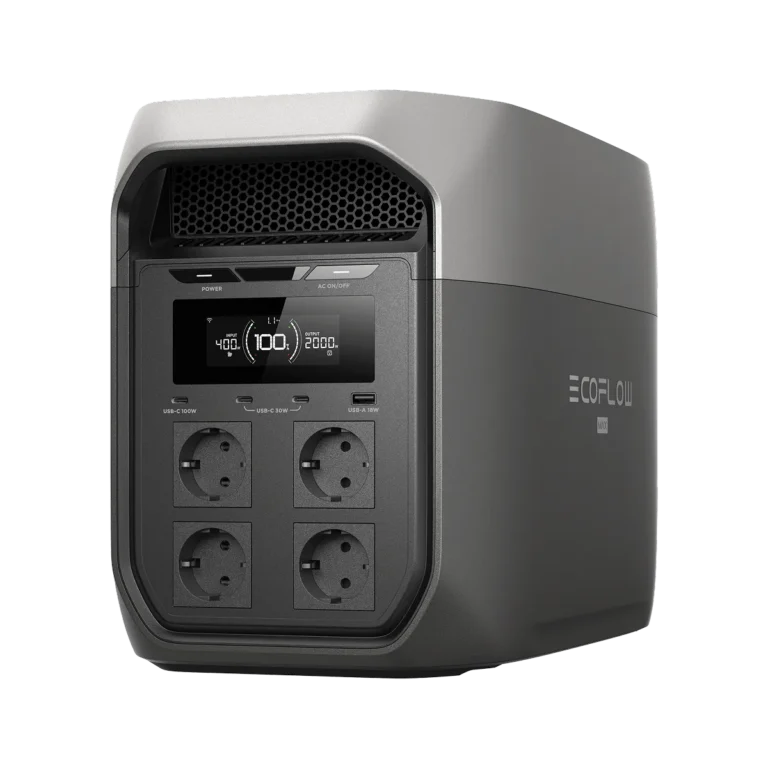
20.3 kg instead of 23 kg
According to EcoFlow, DELTA 3 Max is 13% lighter than DELTA 2 Max at the same capacity. The difference is noticeable when the station has to be carried from an apartment to a car or lifted to the second floor of a country house.
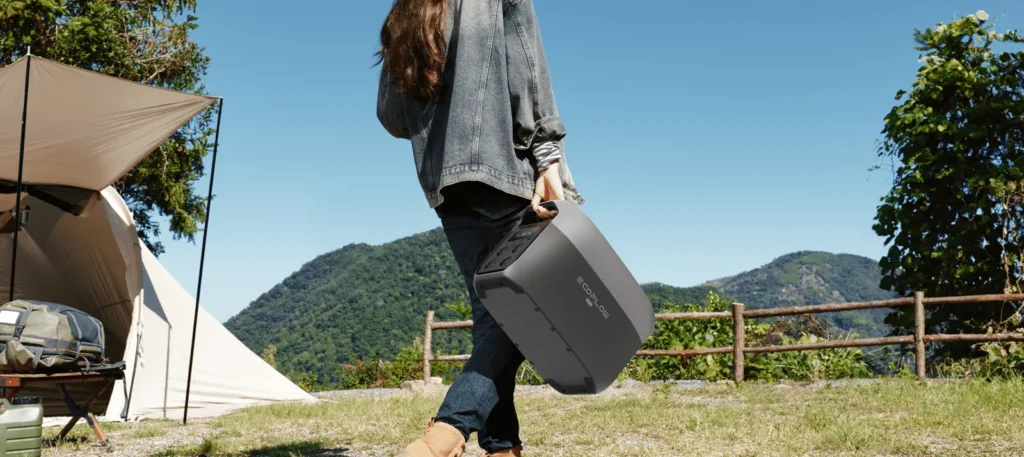
Quiet operation next to a bedroom
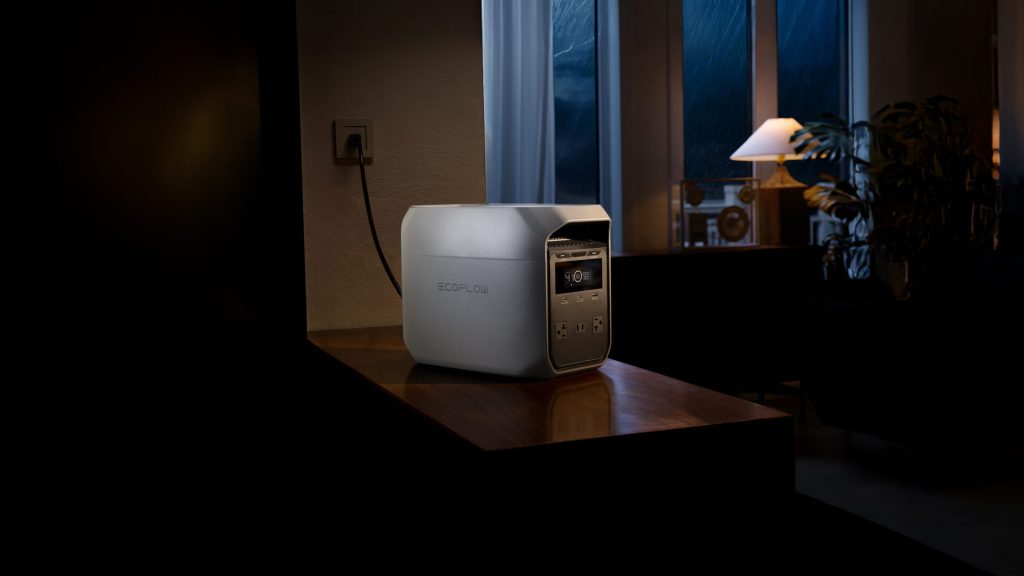
At a load of up to 600 W the manufacturer states no more than 25 dB at half a metre. That is the level of a whisper, so the station can be kept in a living room at night.
A new type of LFP cell
The battery is built from full-tab LiFePO4 cells. According to EcoFlow, their internal resistance is a quarter lower than that of the previous generation of cells, so they heat less during fast charging. For a battery this means slower ageing.
Switching to battery in 10 ms
If the equipment is connected through DELTA 3 Max and the station itself to the mains, when the power disappears it takes over in 10 milliseconds. A router and computer usually do not notice this moment.
What can be connected to DELTA 3 Max
The station has about 1700 Wh of usable energy at the 230 V outlets: the rest of the capacity is spent on running the inverter. Divide this figure by the consumption of the equipment and you get an approximate run time. The calculations below are an estimate; the real result depends on the specific appliances and temperature.
A private house with a gas boiler
A boiler with a circulation pump (80–150 W) and a fridge (on average 40–60 W taking compressor cycles into account) together consume roughly 130–200 W. Such a set lasts 8–13 hours, that is a typical night outage. Add a few LED lamps and a router and the time drops by roughly an hour or two.
Kitchen
- a 2200 W electric kettle works without X-Boost; one boiling of 1.5 l is about 0.15 kWh;
- a 1300 W microwave: 10 minutes of heating is about 0.2 kWh;
- one 2000 W induction hob: half an hour of cooking eats roughly a kilowatt-hour, that is half the reserve;
- a coffee maker and blender switch on for minutes and barely affect the overall calculation.
Working from home
Two laptops with monitors, a router and a desk lamp are about 200–250 W. The station runs such a set for 7–8 hours, a full working day for two people.
Garage and workshop
A drill, jigsaw, 1400 W circular saw or angle grinder run directly, and the 4800 W peak helps at motor start. Tools switch on in short bursts, so real consumption over a working day is usually much lower than the rated power suggests.
Country house
At a country house DELTA 3 Max powers a fridge, lighting, an electric grill and a small pump. For a 0.75 kW borehole pump the starting current is usually several times the rating, so before the season it is worth testing the start of your particular pump.
What will overload the station
A 2 kW boiler will work, but will take most of the charge in an hour. A washing machine consumes about 2 kW at the water heating stage and much less afterwards, so one cycle at 30–40 °C is quite realistic. An electric oven, a two-ring hob or an electric heater above 3200 W are too powerful for this station.
How it works
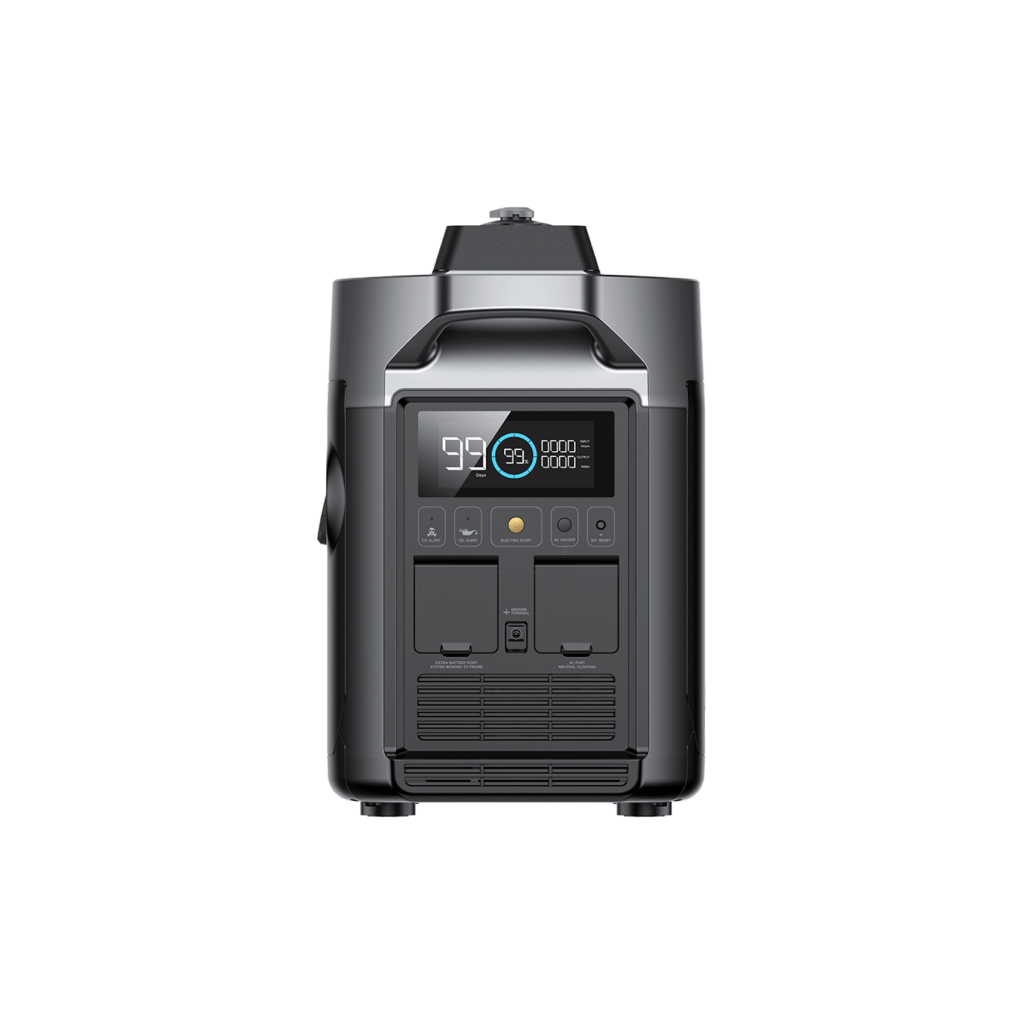
From the mains the station charges with the supplied cable, without a separate power brick. If mains power comes from a generator, DELTA 3 Max accepts up to 2400 W from it, so petrol goes on fast charging rather than on the generator running around the clock.
Solar panels connect to the XT60 port, which accepts up to 500 W. The car Alternator Charger of up to 500 W also works through it, and from an ordinary 12 or 24 V cigarette lighter the station charges at up to 8 A, slowly but without extra devices.
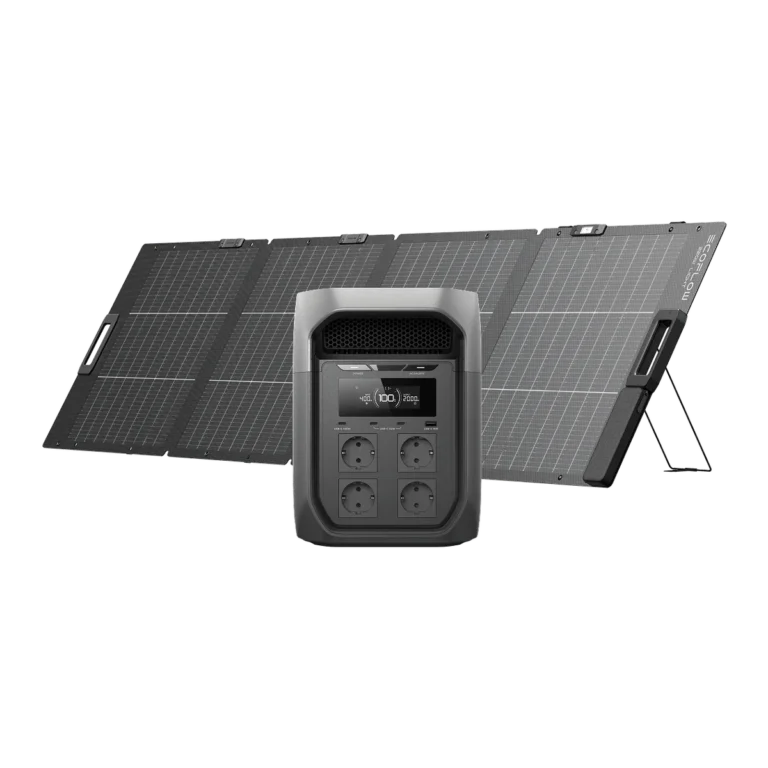
In backup power mode the station stands between the socket and the devices. While the mains is on, equipment runs from it and the battery holds its charge. In an outage DELTA 3 Max switches to the battery in 10 ms with no human involvement.
Through the EcoFlow app over Wi-Fi or Bluetooth you can see the charge and the input and output power, change the charging speed and switch on Storm Guard mode: it follows bad-weather warnings and charges the station in advance.
DELTA 3 Max, DELTA 3 Max Plus or DELTA 2 Max
| DELTA 3 Max | DELTA 3 Max Plus | DELTA 2 Max | |
|---|---|---|---|
| Output / peak | 2400 / 4800 W | 3000 / 6000 W | 2400 / 4800 W |
| X-Boost | 3200 W | 3900 W | 3100 W |
| Solar | 500 W | 1000 W | 1000 W |
| Expansion | no | up to 10 kWh | up to 6 kWh |
| Weight | 20.3 kg | 22.1 kg | 23 kg |
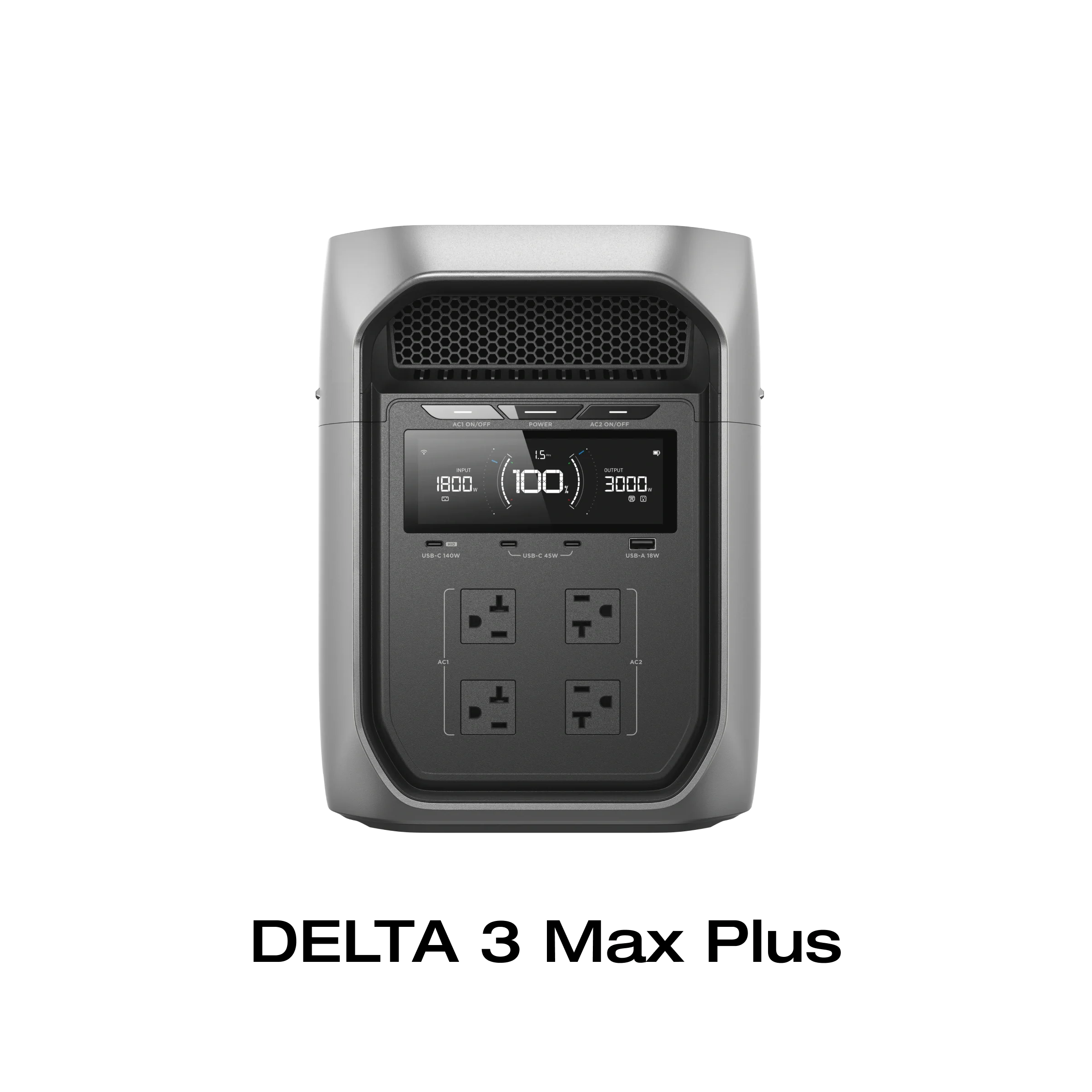
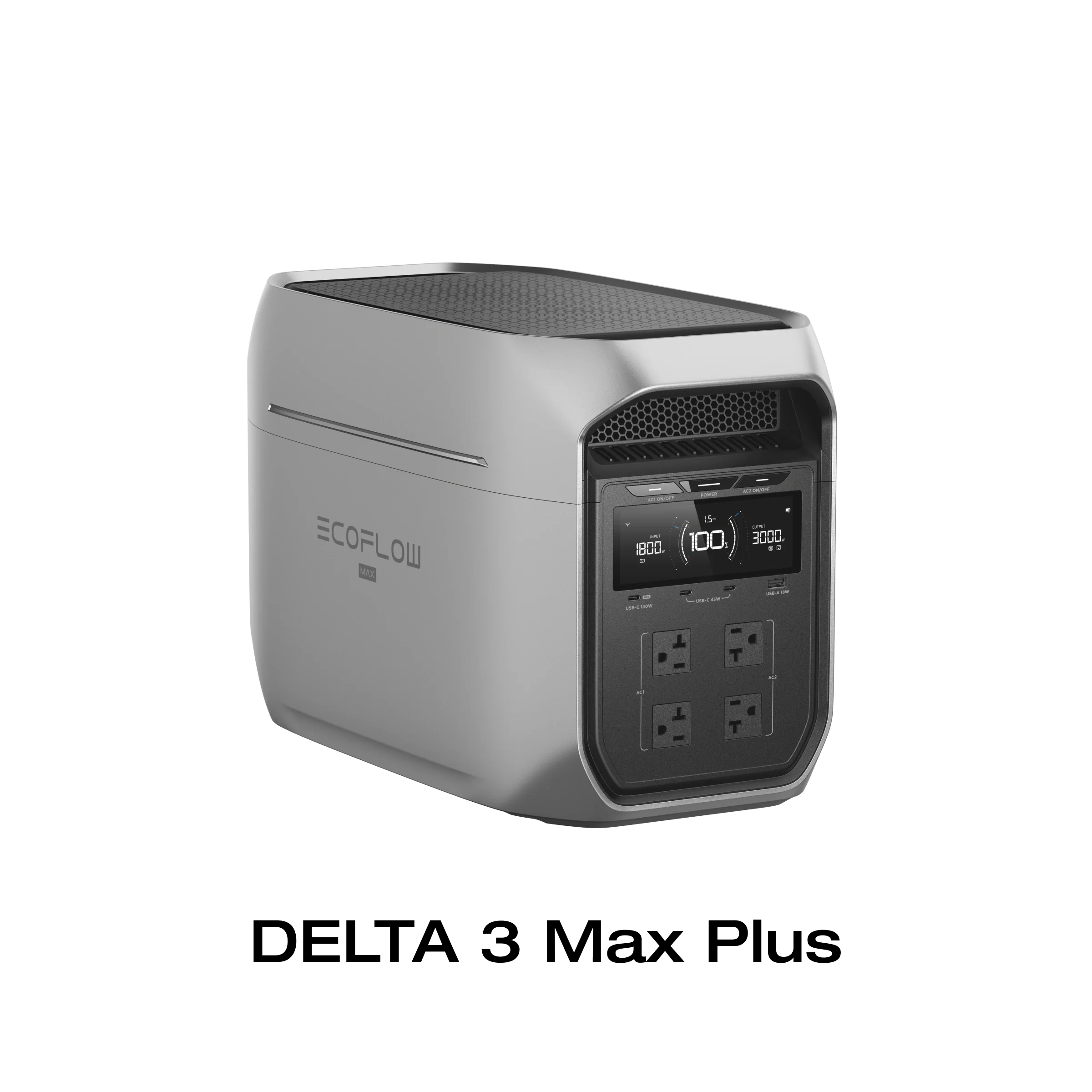
EcoFlow DELTA 3 Max Plus has the same capacity but delivers 3000 W, accepts 1000 W from the sun and supports extra batteries. It can also switch off secondary outlets at a set charge threshold so that a fridge runs longer. If you plan to grow to 4–10 kWh or often switch on equipment above 2400 W, it pays off more in the long run.
EcoFlow DELTA 2 Max is the previous generation: 2.7 kg heavier, but it has two solar inputs and expands to 6 kWh. Worth considering if you plan a 1 kW or larger solar system.
We will also mention separately the EcoFlow DELTA 3 1500: a compromise at 1536 Wh and 1800 W, 4 kg lighter and expandable. It suits you if you do not need kitchen appliances above 1800 W.
DELTA 3 Max is logical when you need 2 kWh right away, fast charging and silence, and you do not plan to grow the capacity.
Who DELTA 3 Max suits and who it does not
It suits you if:
- in a house a gas boiler and fridge must survive a night outage;
- in the kitchen you need a kettle, microwave or coffee maker during outages;
- between outages there is a short window in which the station must be charged;
- the station will stand in a living room and must run quietly.
Consider another option if:
- you want to grow the capacity with batteries later — then look at DELTA 3 Max Plus;
- you plan a solar system above 500 W;
- you need to power a boiler, electric cooker or air conditioner for hours — that is a task for systems of the DELTA Pro 3 class;
- the station has to be carried often by one person over long distances: 20.3 kg is noticeable;
- a router, laptop and lights are enough — a 1 kWh model will do.
FAQ
Can an extra battery be connected to DELTA 3 Max?
No, this model has no extra battery port, and the capacity is always 2048 Wh. If you need expansion, look at DELTA 3 Max Plus, which supports DELTA 3 Max Plus, DELTA 2 Max, DELTA 3 and DELTA Pro 3 batteries.
How is DELTA 3 Max different from DELTA 3 Max Plus?
Max Plus is more powerful (3000 W versus 2400), has a solar input twice as powerful and supports extra batteries. DELTA 3 Max is 1.8 kg lighter, has fewer ports and cannot be expanded.
Will DELTA 3 Max run a washing machine?
Yes, 2400 W is enough for most household washing machines. Most of the energy goes into heating water, so a wash at 30–40 °C uses noticeably less charge than at 60 °C.
How long does it take to charge the station from the sun?
By calculation, at a steady 500 W input — about 4–5 hours to a full charge. In reality panels rarely deliver their full rating, so on a clear day allow more time, and in winter much more.
Can DELTA 3 Max be charged from a generator?
Yes, through the ordinary AC input at up to 2400 W. The generator must provide a stable voltage and be rated for that load.
Does the station protect a computer during a power outage?
Yes, switching takes 10 ms, and for most computers and monitors this is enough. Servers that need zero switching require an online UPS.
Will DELTA 3 Max survive winter in an unheated garage?
Yes, but with limits: it can be stored from -10 to 45 °C, run from the battery from -10 °C and charged only at a temperature from 0 °C.
Summary
DELTA 3 Max is a balanced 2 kWh station for home and country house: powerful enough for the kitchen, charges quickly between outages and does not make noise. To buy an EcoFlow DELTA 3 Max, add it to your cart on this page. If you are unsure about your boiler or pump, describe your equipment through the contacts page and we will calculate the load.