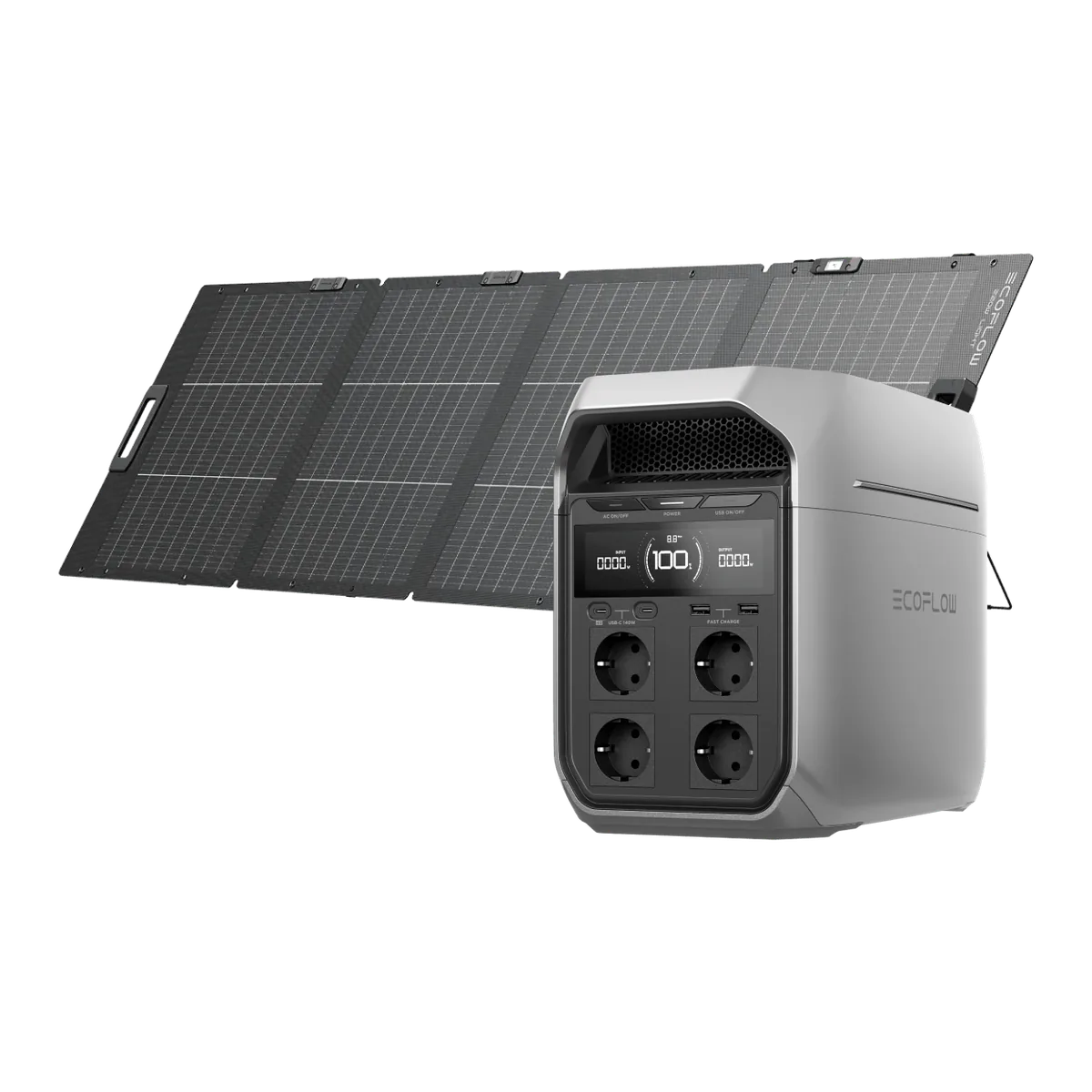
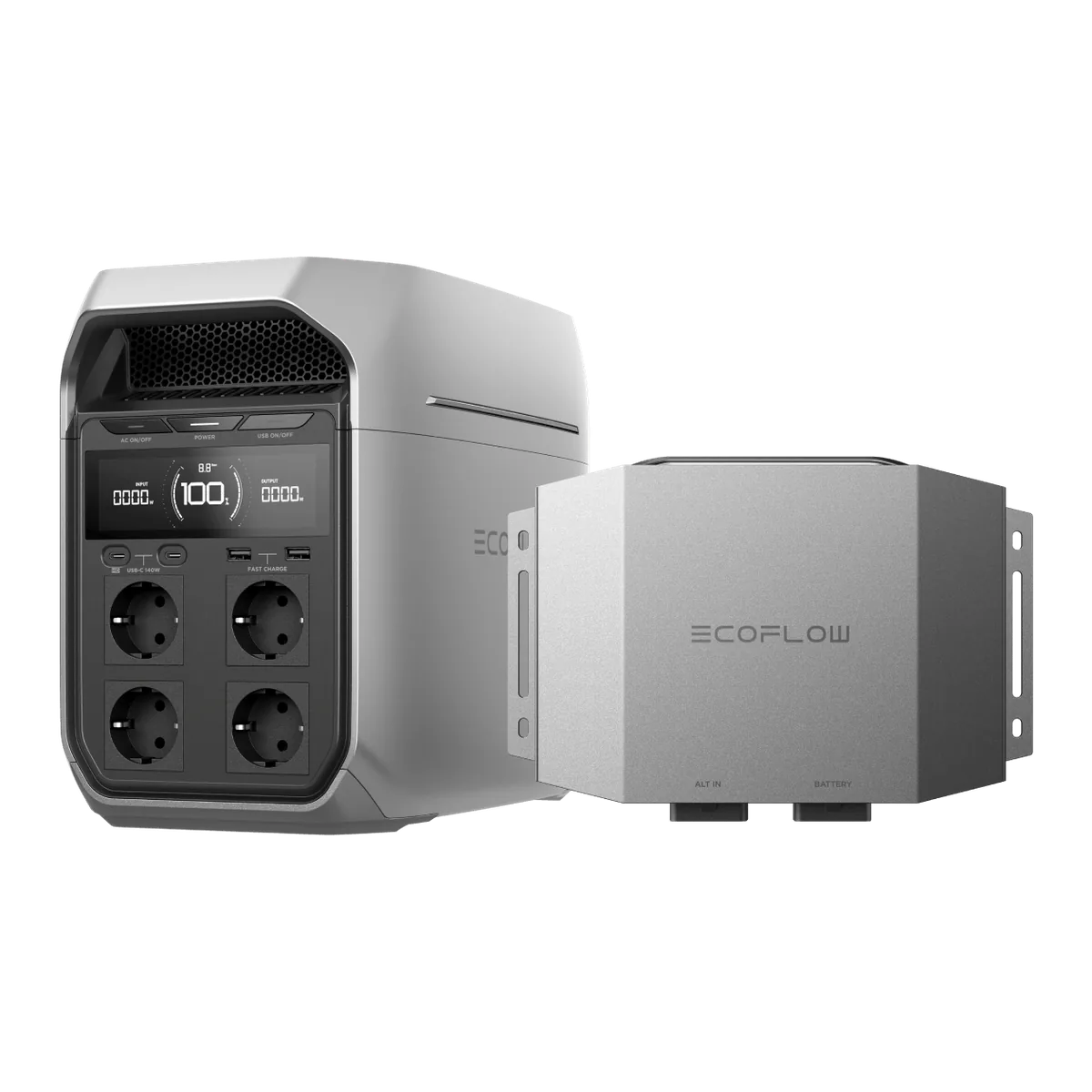
Connect appliances to the station
Choose what has to keep running during a blackout — we will work out how long the station lasts and whether it can carry the load. Choose appliances — we will work out how long the station lasts.
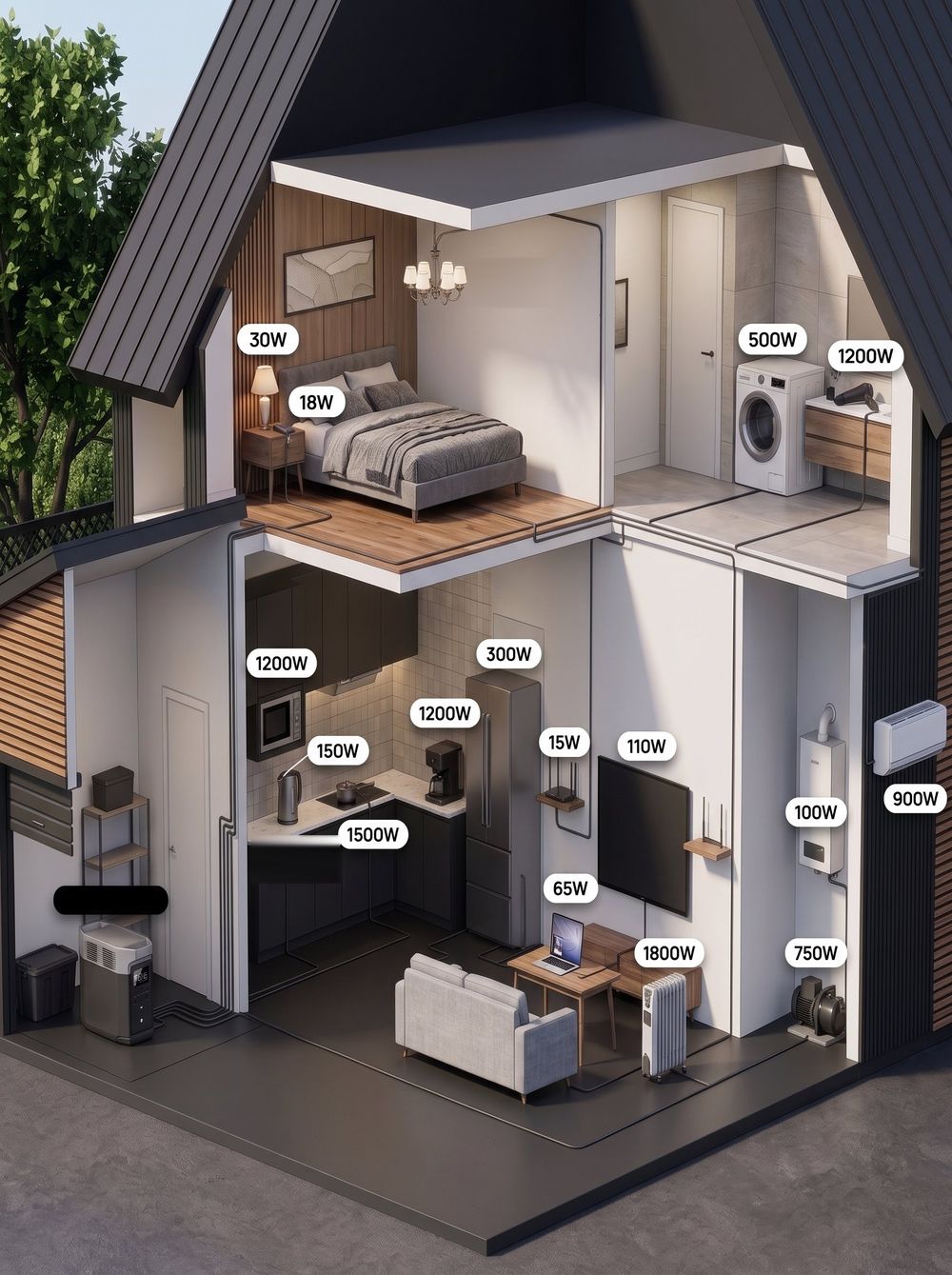
An estimate: 85% of the station capacity (inverter efficiency) divided by the total power of the appliances; charge is shown after a 4-hour blackout. Real figures depend on how the appliances are used.
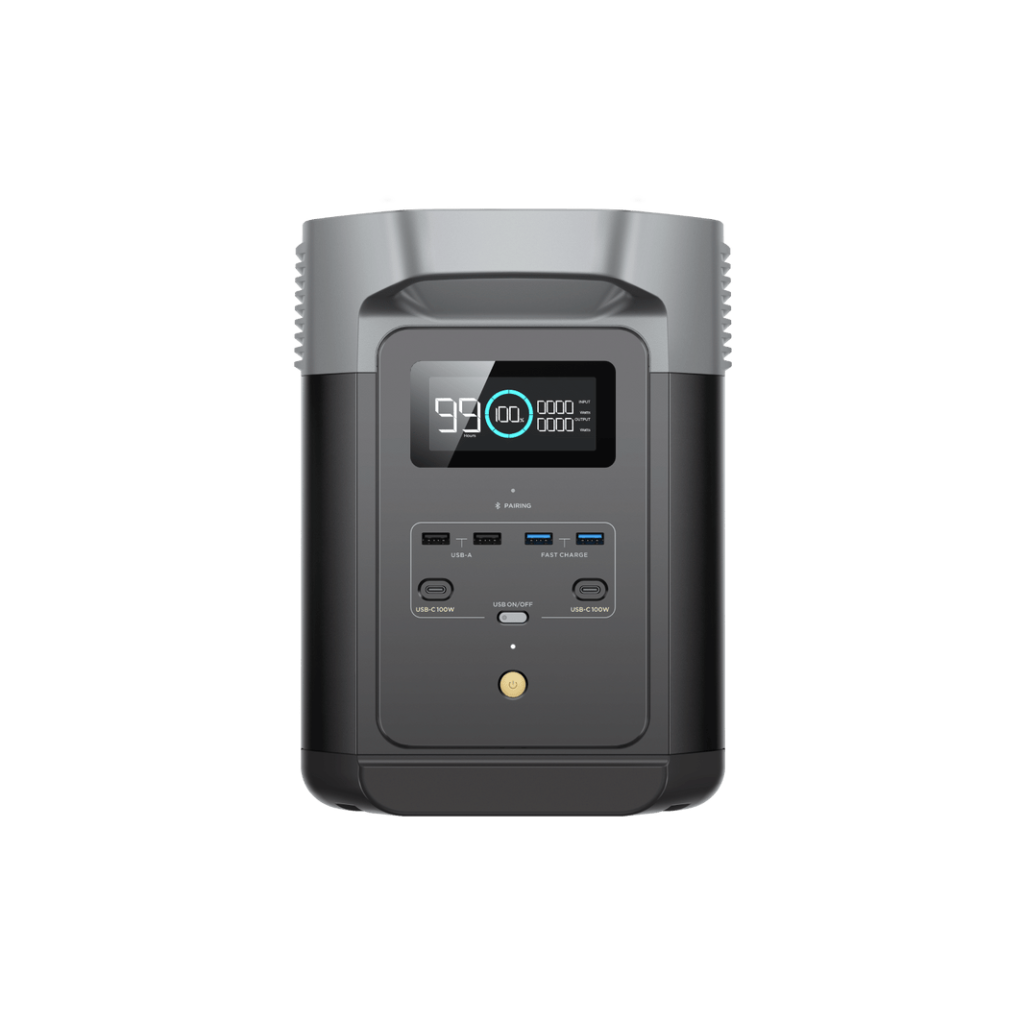
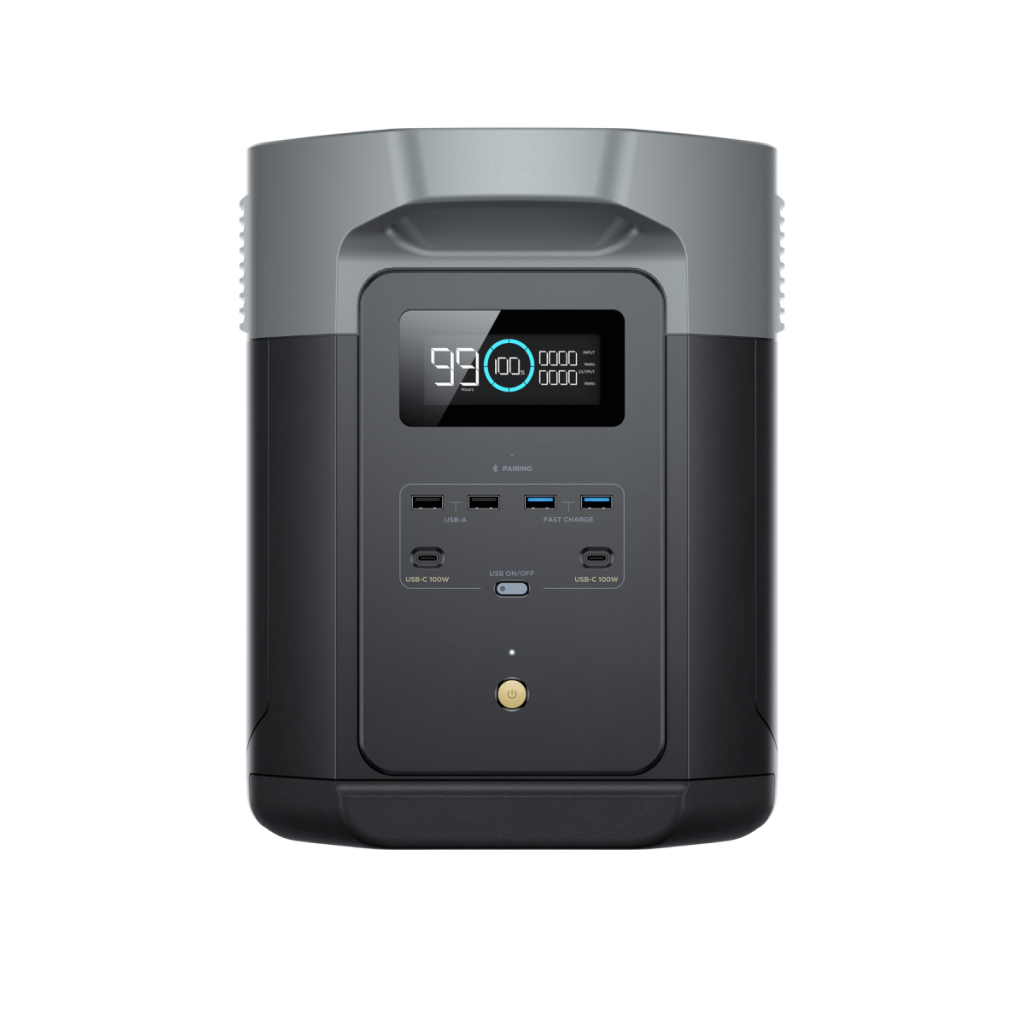
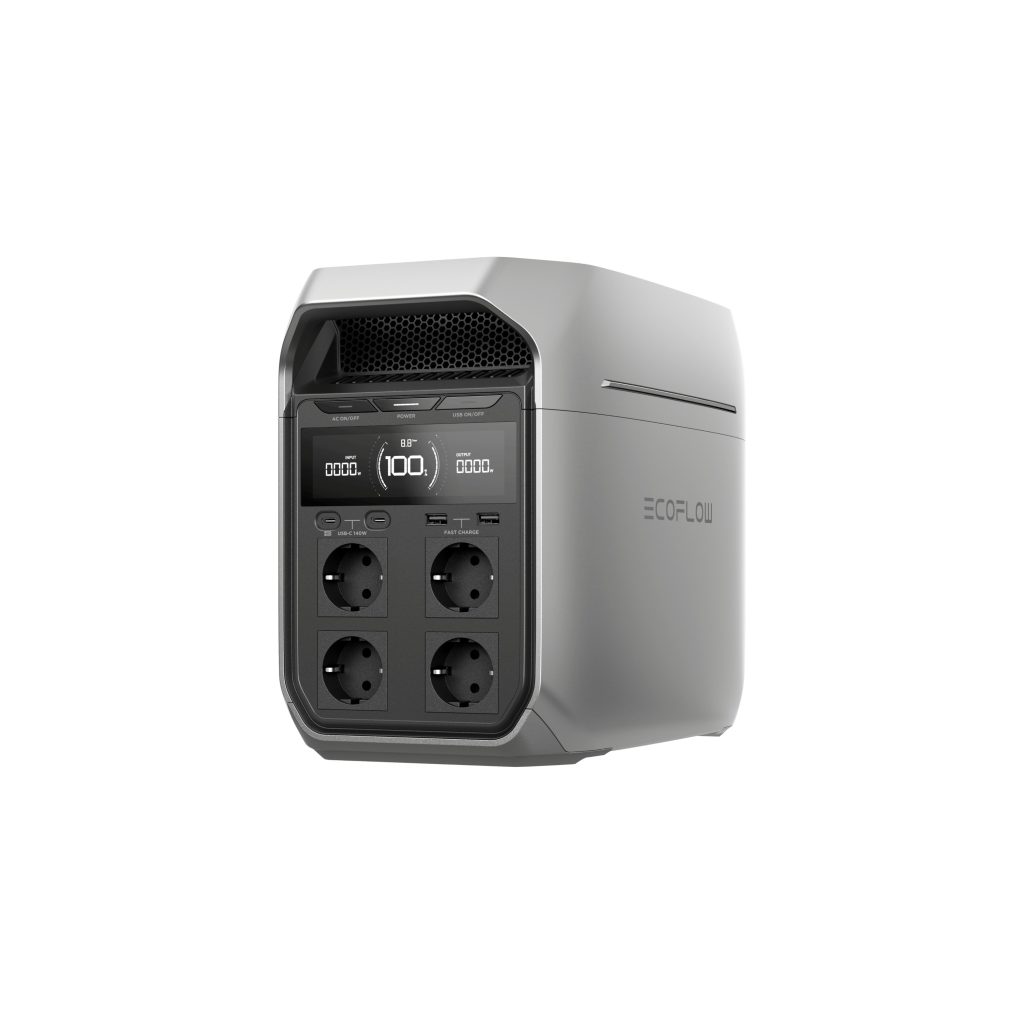
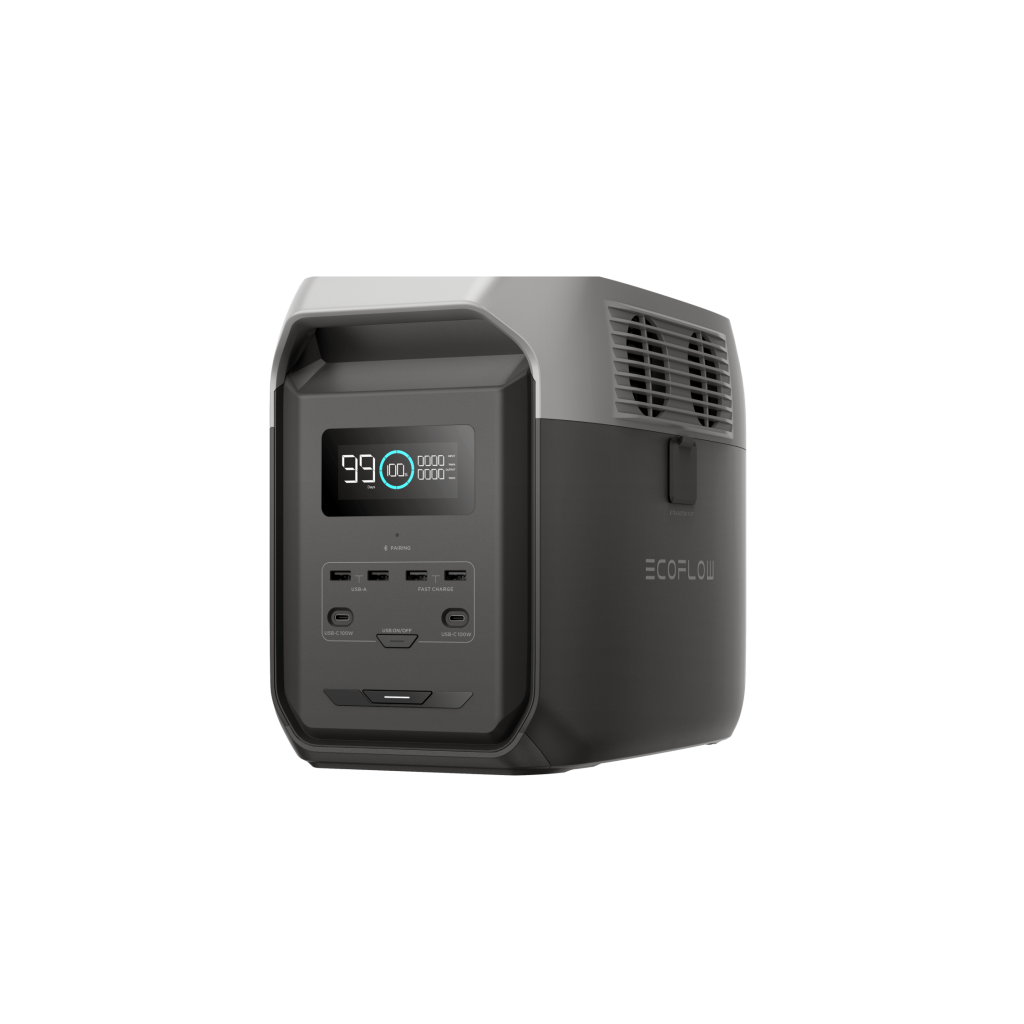
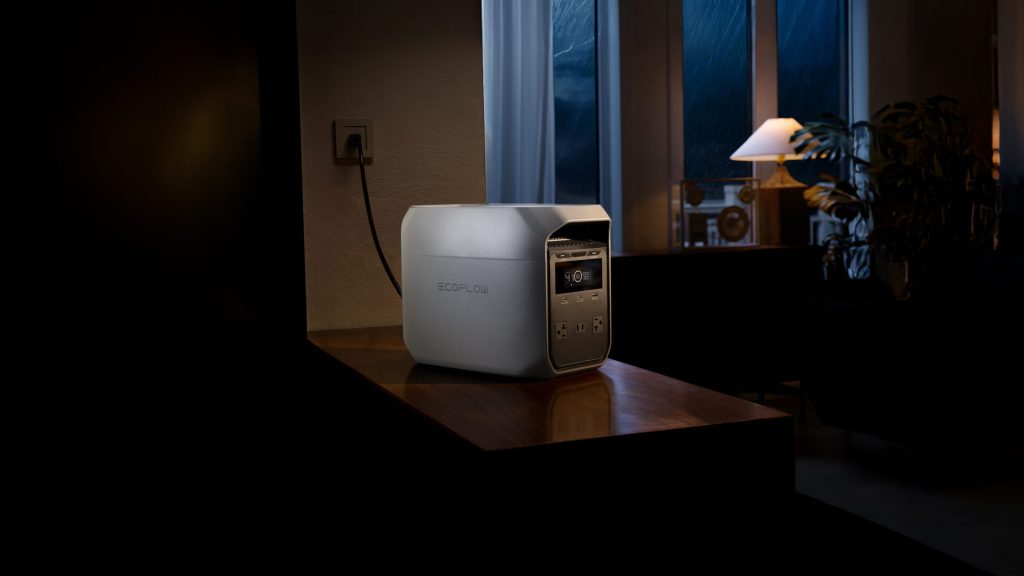
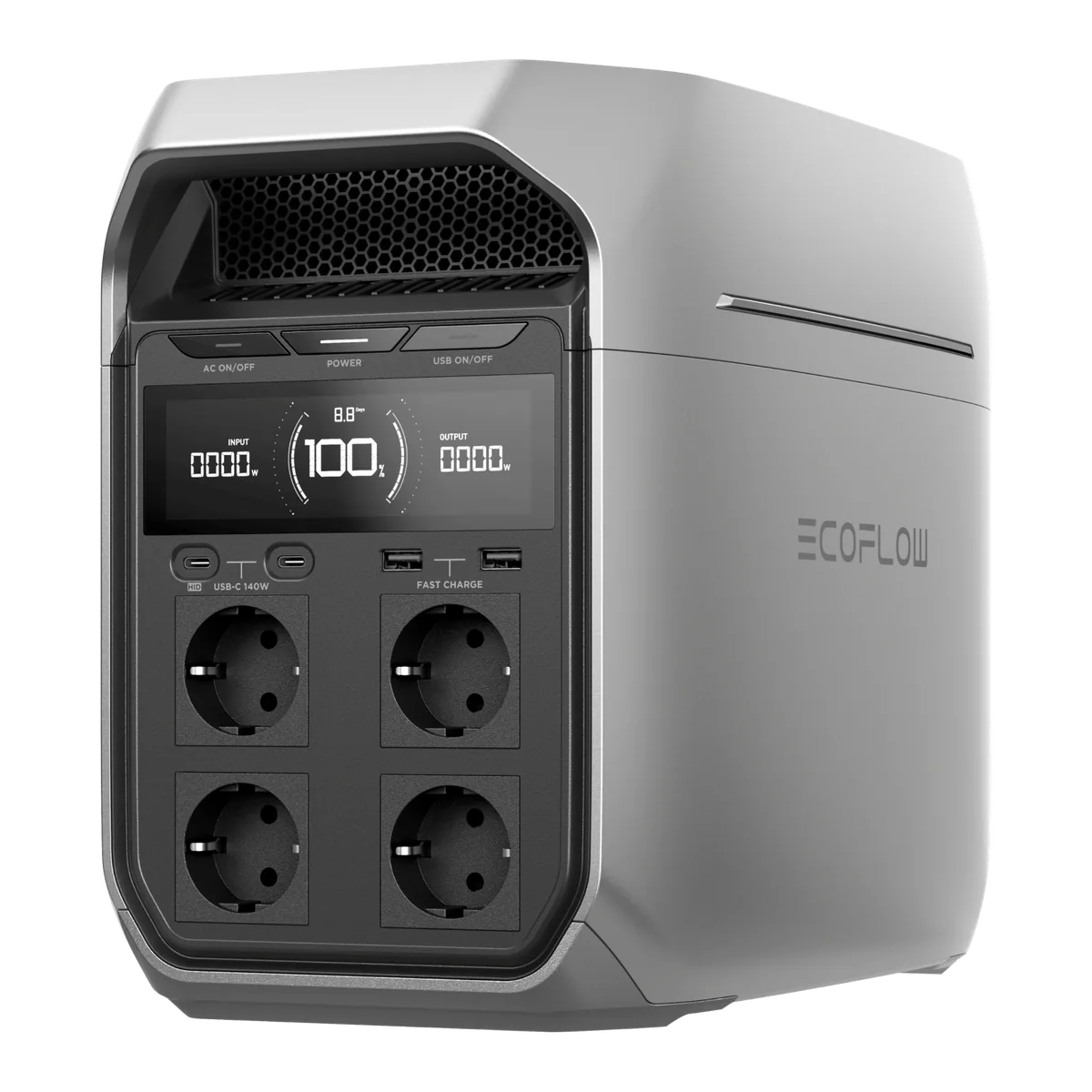
EcoFlow DELTA 3 Plus is the higher version of the 1024 Wh DELTA 3 in a silver case. The inverter is the same, 1800 W, but the solar input is twice as powerful (up to 1000 W), the USB-C ports deliver 140 W each and backup power can notify a computer about an outage. If you are planning to buy an EcoFlow DELTA 3 Plus for an apartment, private house or country house with panels, these three differences are the main reason to choose the Plus.
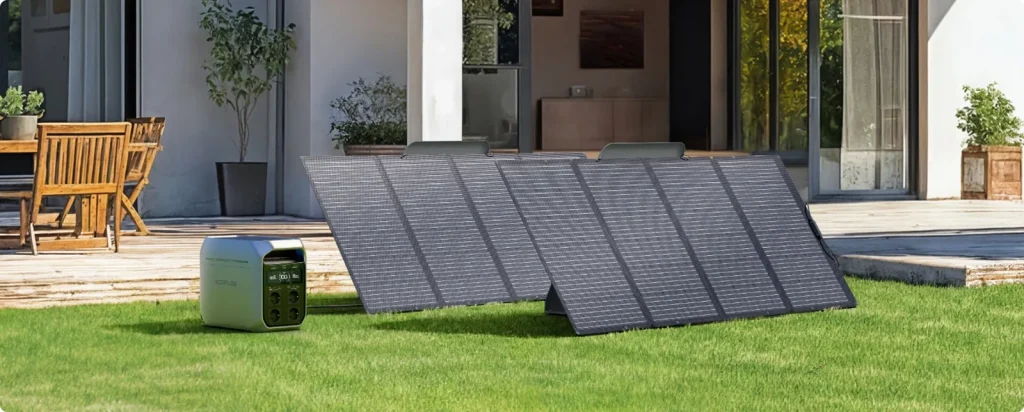
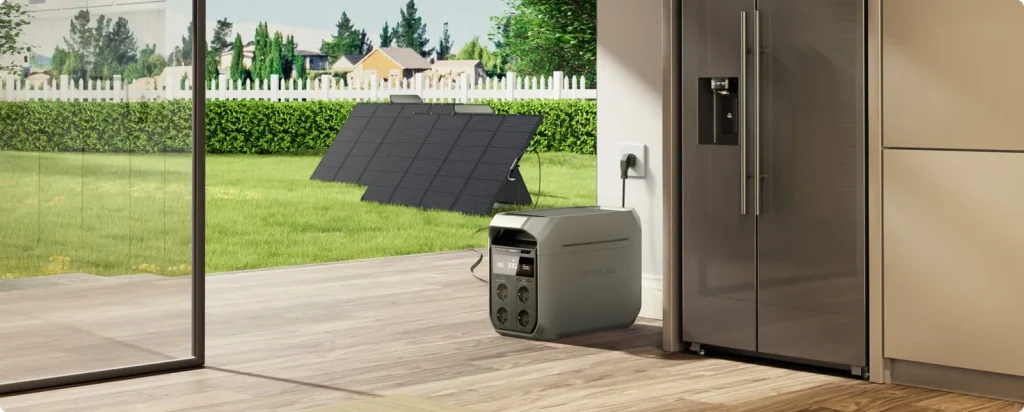
During power outages in Ukraine the station takes over a router, fridge, laptop and lighting, and when the mains returns it charges from a socket in about 56 minutes. At a country house it can be filled from the sun, and with two 500 W panels this takes about 70 minutes in ideal conditions.
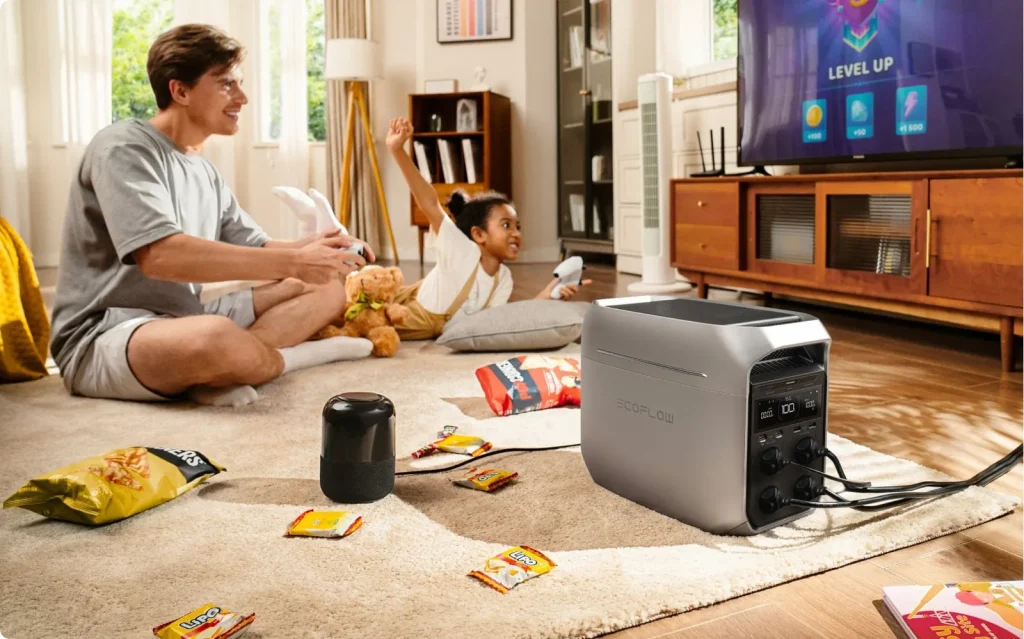
Why DELTA 3 Plus
Two 1000 W solar inputs
DELTA 3 Plus has two independent panel inputs of 500 W each, that is up to 1000 W together. If both inputs work at full power, EcoFlow promises a charge from zero to 100% in about 70 minutes. For comparison, the regular DELTA 3 has one 500 W solar input, and a full charge from the sun takes about two hours.
Switching up to 10 ms and an HID signal for the computer
In UPS mode the equipment is connected to the station and the station to the mains: as soon as the mains disappears, the battery takes over, and this takes under 10 ms. In addition, DELTA 3 Plus supports the HID protocol, so a computer or NAS network storage receives power data from it, like from an ordinary UPS, and can shut down correctly before the charge runs out.
140 W USB-C
Both USB-C ports deliver up to 140 W, and the two fast USB-A ports up to 36 W. A powerful laptop charges directly at full speed, without a mains power brick and unnecessary inverter losses.
56 minutes from a socket
The X-Stream input accepts up to 1500 W, so from zero to full charge takes less than an hour. The mains and panels can be connected at the same time, but the total input is still limited to 1500 W.
LiFePO4 rated for 4000 cycles and a protected battery pack
The third-generation LiFePO4 battery is rated for 4000 full cycles, after which over 80% of the capacity remains. The battery pack inside has IP65 protection against dust and splashes, and the management system has over 40 protection mechanisms.
What DELTA 3 Plus will run and how long it will last
Conversion to 230 V alternating current costs about 15% of the energy, so the station’s usable reserve is about 870 Wh. Run time is the reserve divided by the power of the devices switched on. All the figures below are an estimate that depends on the specific equipment and the room temperature.
An apartment without power
- a fridge with an average consumption of 40–60 W: 14–20 hours;
- internet — a router and optical terminal together (15–25 W): over a day and a half;
- a 100 W TV and a few LED lamps: about 7 hours;
- a fridge, router, lights and laptop together (about 170 W): 5 hours.
A private house with a boiler
A gas boiler with a circulation pump consumes 80–150 W, so one station is enough for about 6–10 hours of heating. If outages are longer, connect an extra battery: with it the reserve grows to 2048 Wh or more.
A country house with panels
At a country house DELTA 3 Plus shows its main advantage: two 400–500 W panels on a clear summer day can fully charge it in a few hours, so a fridge, a low-power pump and lights run practically on the sun. In the evening the station gives back what it has stored, and in the morning the panels fill it again.
Working from home
A laptop, second monitor and router together take 120–150 W, that is 6–7 hours of work. Thanks to HID a desktop computer or NAS will see the outage and have time to save data if the charge runs out.
Kitchen and powerful appliances
A microwave up to 1200 W, a coffee maker or an iron run from the station without restrictions, and the peak of up to 3600 W covers the starting currents of compressors. X-Boost mode lets you switch on a heater of up to 2400 W, but it heats more weakly at the reduced voltage. A boiler, oven or 2 kW heater drains the station in under half an hour.
Solar energy in practice
A panel’s rating is reached only in direct sun at the right angle. Usually a 400 W panel gives 250–350 W in summer and several times less on a cloudy day or in winter. So 70 minutes to a full charge is the limit, not the daily norm: count on 2–4 hours on a good day.
One more detail: with two inputs it is convenient to combine panels of different power or with different orientation, for example one on the balcony and another in the yard. Each input works with its own controller, so the weaker panel does not drag down the stronger one.
How it works
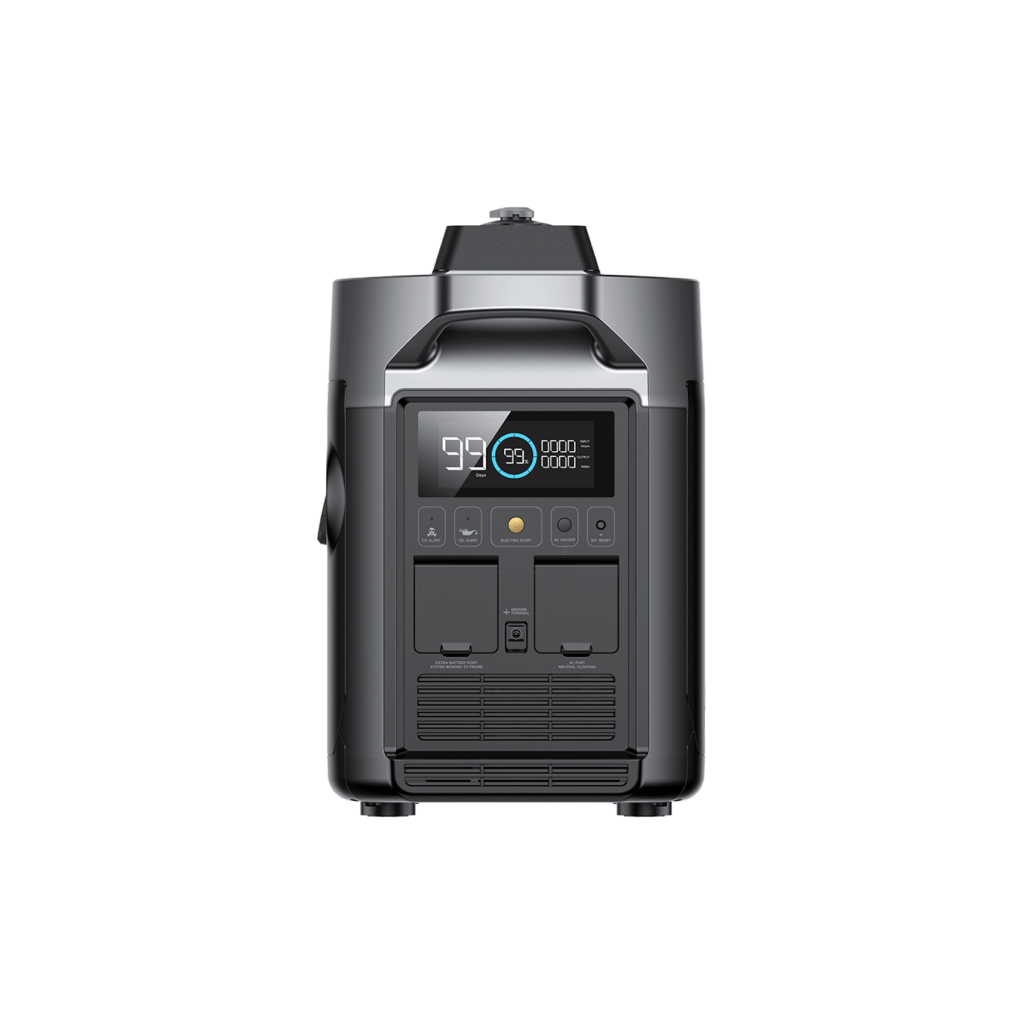
The power brick is built in: only the supplied cable is needed to charge from a socket. The charging speed can be lowered in the app if the wiring is not rated for 1500 W. From an EcoFlow Smart Generator DELTA 3 Plus also accepts up to 1500 W.
Solar panels connect to two 11–60 V inputs, each up to 500 W, and each has a separate MPPT controller.
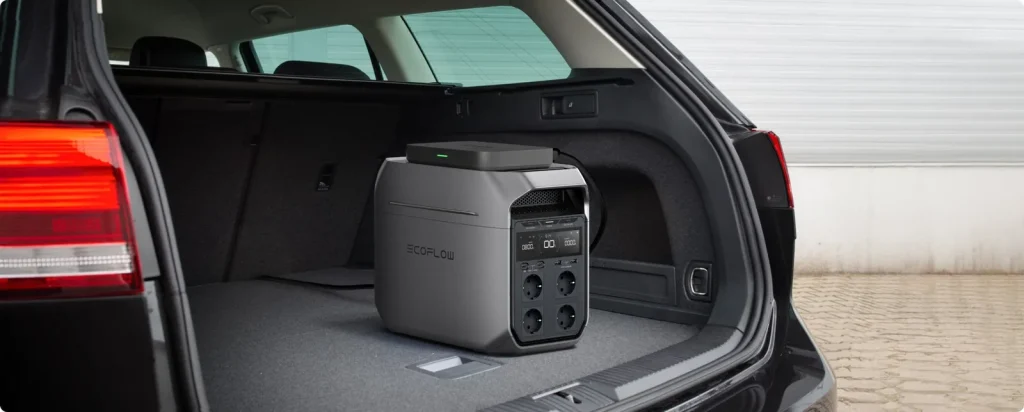
On the road the station is charged by an 800 W EcoFlow Alternator Charger from the car alternator: a full charge in about 1.3 hours. It is sold separately.
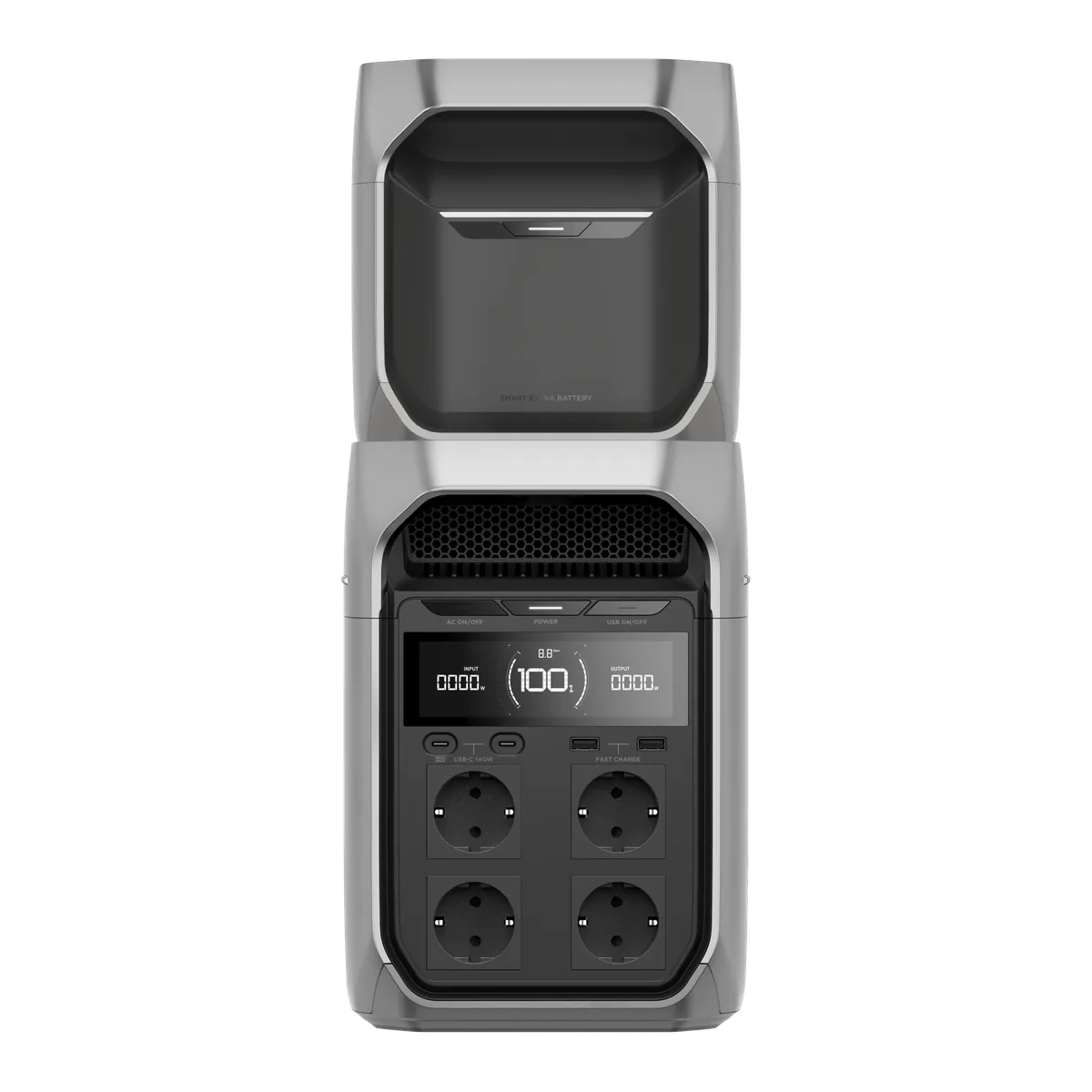
The capacity grows through a separate connector on the case, to which one battery connects. According to EcoFlow’s official compatibility table, the DELTA 3 Plus works with the DELTA 3 Smart Extra Battery (2048 Wh together), batteries from DELTA 2 and DELTA 2 Max and the 4096 Wh DELTA Pro 3 Smart Extra Battery, with which the system reaches about 5 kWh.
The station can be controlled from a phone, at home over Wi-Fi and without internet over Bluetooth. The EcoFlow app shows the charge and power, lets you set the charging speed, a schedule for a two-zone tariff and a storm warning mode in which the station charges in advance.
Plus versus the basic DELTA 3 and the 1500 version
| DELTA 3 Plus | DELTA 3 | DELTA 3 1500 | |
|---|---|---|---|
| Capacity | 1024 Wh | 1024 Wh | 1536 Wh |
| Solar | 2 × 500 W | 500 W | 500 W |
| USB-C | 2 × 140 W | 2 × 100 W | 2 × 100 W |
| UPS | up to 10 ms, HID | up to 10 ms | up to 15 ms |
| Weight | 12.5 kg | 12.5 kg | 16.5 kg |
The EcoFlow DELTA 3 has the same capacity, inverter, AC charging speed and expansion. If panels are not in your plans and 100 W is enough for your laptop, the basic version handles the same tasks.
The EcoFlow DELTA 3 1500 is the choice when you need a larger energy reserve in one case: 1536 Wh instead of 1024, but it is 4 kg heavier and takes longer to charge from the mains.
If 1800 W is not enough, for example for a 2.2 kW electric kettle or several kitchen appliances together, look at the EcoFlow DELTA 3 Max Plus: 3000 W and 2048 Wh.
Who DELTA 3 Plus suits and who it does not
It suits you if:
- you have or plan solar panels of 600–1000 W;
- a computer or NAS runs at home and needs an outage signal;
- you need a 1 kWh station that is easy to carry, with the option to expand;
- you charge a powerful laptop from the station through USB-C.
Better another option if:
- you will have no panels and do not need HID — DELTA 3 will give the same;
- you need 2 kWh or more right away for a boiler and fridge all night;
- your equipment constantly demands more than 1800 W;
- you only need a router and phones — a compact RIVER series station is enough.
FAQ
What does the Plus give beyond the regular DELTA 3?
The solar input, USB-C and HID support. The Plus accepts up to 1000 W from two inputs instead of 500 W, delivers 140 W through USB-C instead of 100 W and can pass an outage signal to a computer. The capacity, inverter and AC charging are the same.
What does HID give in UPS mode?
The computer or NAS sees the station as an uninterruptible power source, receives charge data and can automatically save work and shut down before the energy runs out. According to EcoFlow, the function is set up through the EcoFlow PowerManager app, and a NAS additionally needs a NUT server.
What panels are enough for fast solar charging?
Up to 500 W per input at 11–60 V. For example, one 400–500 W panel on each input will give about 1000 W on a clear day, and in winter generation will be noticeably lower.
Is a socket plus panels faster?
No, the station’s total input is still limited to 1500 W; the panels just provide part of the energy. In the app you can set solar priority so the station takes energy from the panels first.
Does the station work with a balcony solar system?
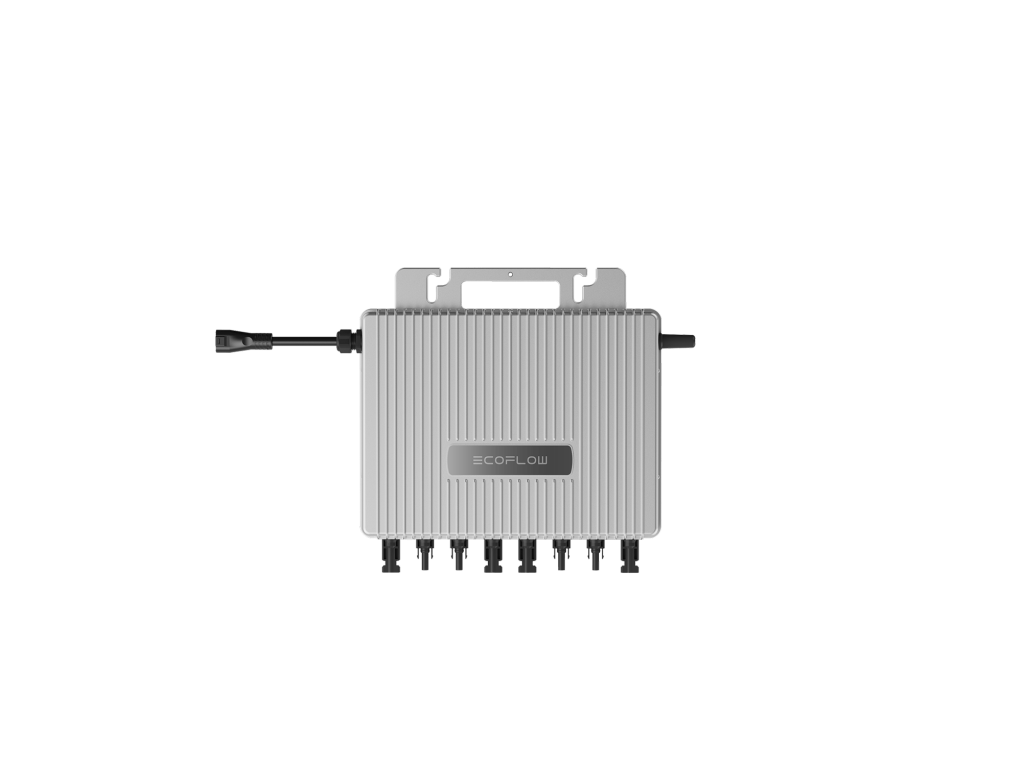
Yes, on EcoFlow’s European page the DELTA 3 Plus is offered in a bundle with a STREAM microinverter. The scheme and rules for connecting to the home network depend on the country, so consult an electrician before buying such a system.
How many batteries can be connected?
Only one: the DELTA 3 Plus case has just one connector for it. The maximum, about 5 kWh, comes with the 4096 Wh DELTA Pro 3 Smart Extra Battery.
Will DELTA 3 Plus survive frost on an unglazed balcony?
Only under a roof and taking the temperature into account. Discharge is possible in frost down to -10 °C, charging only above zero, from 0 °C. The case itself is not protected from precipitation: IP65 applies only to the battery pack inside.
Summary
DELTA 3 Plus is a DELTA 3 for those who think about solar panels and computer equipment: a solar input twice as powerful, 140 W USB-C and HID. If you are ready to buy an EcoFlow DELTA 3 Plus, the order is placed right here, through the cart. Not sure whether you need the benefits of the Plus specifically? Describe your equipment and panels through the contacts page and we will calculate.